Best Dental Insurance Verification Software in 2026: 8 Tools Compared
Compare the best dental insurance verification software for 2026, with real-time eligibility checks, benefits breakdowns and tools for dental practices.

- Editor's choice
 Vyne Dental
dental practices that want real-time eligibility checks
Starts atSee websiteVisit vynedental.comFull review - Great alternative
 DentalXChange
practices that need eligibility, claims and attachments in one place
Starts atSee websiteVisit dentalxchange.comFull review - Also consider
 Zentist
dental groups that want verification handled by a dedicated team
Starts atSee websiteVisit zentist.ioFull review
TL;DR:
- Our pick for most readers is Vyne Dental, because it covers the core dental insurance verification tools job well without forcing a complex setup.
- If price is the main concern, check the free or trial options first, since several tools on this list offer a free plan or a free trial.
- The best choice depends on your size and workflow, so test the top two on a real task before you commit to a yearly plan.
- Watch for quote-based pricing and add-ons, since the headline price often excludes features you will actually need.
- Our pick for most dental practices is Vyne Dental for its dental-first eligibility workflow, with DentalXChange as a strong alternative for offices that want a long-established claims portal.
Quick comparison
| Tool | Best for | Starts at | Free plan? | |
|---|---|---|---|---|
| Vyne Dental | dental practices that want real-time eligibility checks | See website | No | Visit |
| DentalXChange | practices that need eligibility, claims and attachments in one place | See website | No | Visit |
| Zentist | dental groups that want verification handled by a dedicated team | See website | No | Visit |
 Dental Intelligence | practices that want verification plus practice analytics | See website | No | Visit |
 CareStack | dental practices that want an all-in-one management system | See website | No | Visit |
 Adit | growing practices that want verification with patient communication | See website | No | Visit |
 Modento | practices that want verification linked to patient forms and reminders | See website | No | Visit |
 Weave | dental offices that want verification with phones and messaging | See website | No | Visit |
The best Dental Insurance Verification Software
We compared official feature pages, pricing pages and public reviews for dental insurance verification tools, and we focused on tools that exist and work today. The list below mixes well-known leaders with strong smaller options, so you can find a fit whether you are a solo user or a larger team.
Vyne Dental is built around the daily front-office job of checking a patient plan before treatment is booked. It pulls eligibility and benefit details so staff can quote copays and coverage with fewer phone calls. It covers eligibility checks, benefit breakdowns, claim submission and attachments, which keeps the main workflow in one place rather than spread across several tools.
For a busy practice that verifies dozens of patients a week, that time saving is the main point. The trade-off is transparency on price, so ask for a full quote and a demo with your own payer mix before signing.
- Real-time eligibility and benefits data
- Built for dental workflows
- Claim and attachment tools included
- Pricing is not published on the site
- Setup can take time for large practices
DentalXChange
Best for: practices that need eligibility, claims and attachments in one place
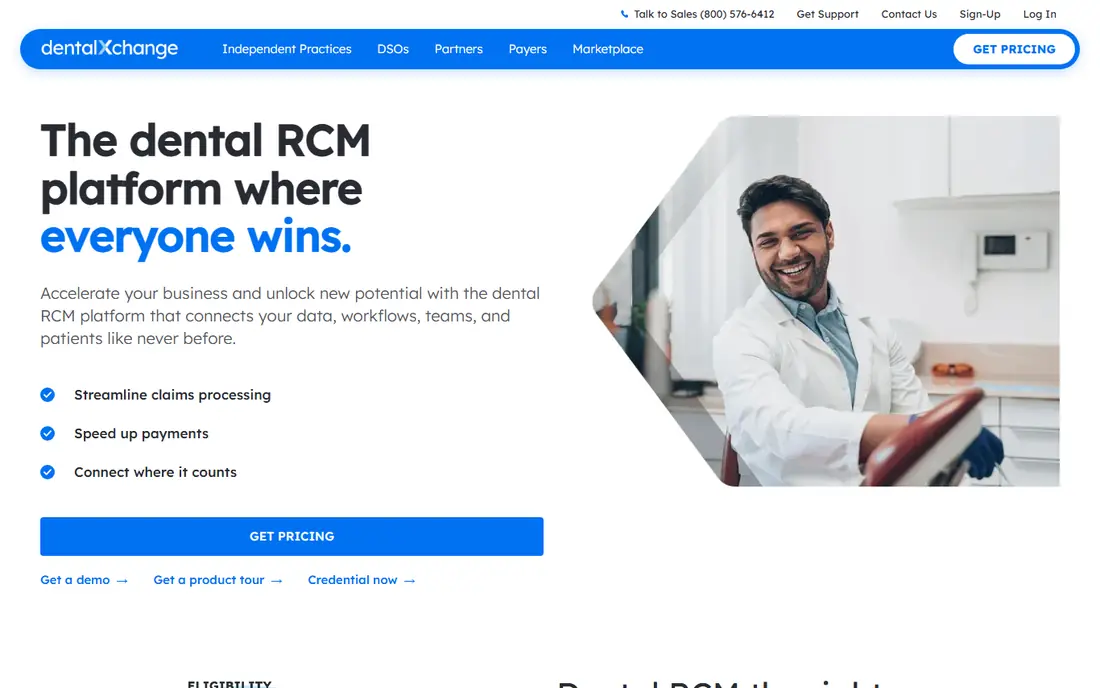
DentalXChange has been a workhorse for dental offices that send claims and check eligibility every day. Its strength is breadth, with connections to many payers and a single place to handle the paperwork around a claim. It covers eligibility verification, electronic claims, claim attachments and real-time status checks, which keeps the main workflow in one place rather than spread across several tools.
Smaller offices may find the older interface takes a little learning, but the core workflow is steady once staff know it. Check that your main payers are covered in real time rather than in batch, because that detail decides how useful it is at the front desk.
- Wide payer connections
- Eligibility and claim tools in one portal
- Attachment handling for claims
- Interface feels dated next to newer tools
- Pricing requires a sales quote
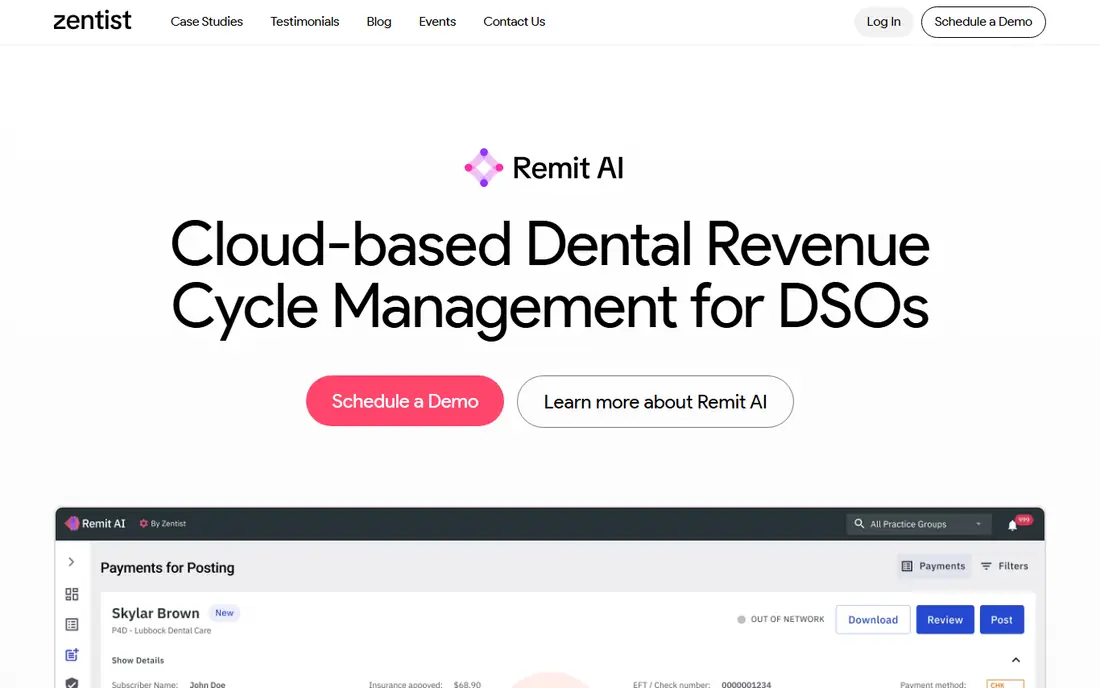
Zentist pairs software with people who run verification checks for the practice. That model suits groups that cannot keep a full verification team in house, or offices that keep finding errors in manual checks. It covers insurance verification, benefit breakdowns, eligibility automation and reporting, which keeps the main workflow in one place rather than spread across several tools.
The catch is that you are buying a service as well as software, so compare its monthly cost with the staff time it replaces. Ask how it handles plan changes mid-year and what turnaround time it promises for routine checks.
- Combines software with a verification service
- Detailed benefit breakdowns
- Reporting for group practices
- Service model costs more than a basic tool
- Less suited to a solo office that only checks a few plans
Dental Intelligence
Best for: practices that want verification plus practice analytics
Dental Intelligence is best known for practice analytics, but its verification tools sit beside scheduling and follow-up in the same system. That helps a practice spot patients who need a benefits check before a treatment plan is presented. It covers insurance verification, patient scheduling insights, practice analytics and follow-up lists, which keeps the main workflow in one place rather than spread across several tools.
If you only need verification, the wider platform may be more than you want, and the price will reflect that. Use a trial or demo to test the verification flow alone, not just the analytics dashboards.
- Insurance verification alongside scheduling and analytics
- Clear patient and practice dashboards
- Follow-up tools for unscheduled treatment
- Verification is one part of a larger platform
- Smaller offices may pay for features they do not need
CareStack is a full dental practice management system, and insurance verification is one workflow inside it. Eligibility checks connect to scheduling and billing, so a verified plan feeds straight into estimates and claims. It covers eligibility verification, scheduling, billing, patient messaging and reporting, which keeps the main workflow in one place rather than spread across several tools.
That only makes sense if you want, or already use, CareStack for the wider practice, because moving systems for one feature is rarely worth it. For practices already on CareStack, the verification tools are a strong reason to use them well rather than adding a separate tool.
- Full practice management with eligibility checks
- Scheduling, billing and patient communication in one system
- Cloud based access
- Switching a whole practice system is a big project
- Verification alone is not the reason to move
Adit combines verification with the communication tools a growing practice uses every day, including calls, texts and scheduling. Verification results therefore sit next to the patient record and the appointment, not in a separate portal. It covers insurance verification, call tracking, patient messaging and online scheduling, which keeps the main workflow in one place rather than spread across several tools.
Practices that only need a quick eligibility check may find Adit broader than necessary, but growing offices often use the extra tools quickly. Confirm which payers return real-time benefits in your area, since coverage depth varies by region.
- Insurance verification plus call tracking and patient messaging
- Centralized practice dashboard
- Online scheduling tools
- Pricing is quote based
- The wider feature set can distract from a narrow verification need
Modento
Best for: practices that want verification linked to patient forms and reminders
Modento focuses on the patient side of the front office, with forms, reminders and communication, and verification fits into that flow. A patient who completes forms online arrives with cleaner data for the eligibility check. It covers insurance verification, digital patient forms, appointment reminders and two-way messaging, which keeps the main workflow in one place rather than spread across several tools.
The verification tools work best when the practice also uses Modento for forms and reminders, so judge it as a combined setup. If you already have a forms tool you like, compare the verification depth directly before adding another system.
- Verification tools alongside digital forms and reminders
- Patient-facing forms reduce front-desk data entry
- Reminders cut no-shows
- Best used as part of a wider patient communication setup
- Standalone verification is not its main focus
Weave is mainly a communication platform for dental and other healthcare offices, and its insurance verification tools sit inside that front-desk system. Staff can check a plan and then message the patient about an estimate without switching apps. It covers insurance verification, business phone, text messaging and payment requests, which keeps the main workflow in one place rather than spread across several tools.
That convenience is the appeal, but offices that need detailed verification reporting for a group should test that part carefully. Weave suits a single office that wants one front-desk hub, while larger groups may need a dedicated verification tool beside it.
- Verification features inside a communication platform
- Phone, text and payments in one place
- Useful for front-desk teams
- Core strength is communication, not deep verification reporting
- Pricing is quote based
How we picked these
We started from the main keyword for this article and the related terms readers also search for, then we checked each vendor site for current features, pricing and free options. We kept only products that exist and work today and that truly fit dental insurance verification tools, and we left out tools that were discontinued, that did not fit the topic, or whose pricing we could not verify without inventing a number.
We also weighed who each tool is really for, not just its feature list. A tool that is excellent for a large team can be a poor fit for a small one, and the write-ups above try to make that distinction clear, including an honest weakness for each product.
How to choose dental verification software
Start with your payer mix, because a tool that covers your top ten payers in real time will save more time than a tool with a longer feature list and weaker coverage. Next, check how benefit breakdowns are shown, since staff need annual maximums, deductibles, waiting periods and frequency limits in plain form. Finally, test the workflow on a real patient record during a demo, from scheduling through estimate to claim, and ask what happens when a plan is inactive or a benefit is unclear.
Questions to ask before you pay
Ask about total cost at your actual size, including per-user fees and add-ons. Ask about contract length, data export and support hours, since those details matter when you need help or want to leave. Ask for a trial on your own data, because a demo with sample data can hide problems that show up on real work.
A practical shortlist method
Pick two finalists, run the same real task in both during a trial, and score them on ease of use, accuracy and total cost. Involve the people who will use the tool daily, since their adoption decides whether the purchase pays off. Keep notes from the trial, so the final decision rests on evidence rather than a sales demo.
FAQ
What is dental insurance verification software?
It checks a patient dental plan before treatment, confirming eligibility, coverage levels, deductibles and annual maximums so the practice can give a reliable estimate.
Is the best insurance verification software for dental offices worth it for a small practice?
For a practice that verifies even a handful of patients a day, fewer phone calls and fewer denied claims often repay the cost, but a small office should start with a narrow tool rather than a full management system.
Does verification software replace calling the insurer?
Not always. It handles routine checks well, but unusual plans, recent changes and disputed benefits still need a call, so keep a clear process for those cases.
How accurate are real-time eligibility checks?
They are usually accurate for active plans and standard benefits, but they depend on payer data, so staff should still review breakdowns for complex treatment plans.
What should we check before buying?
Check payer coverage in your area, how breakdowns are displayed, how estimates feed into claims, and the total monthly cost including any per-check fees.