Best Dental Answering Services in 2026: 8 Providers Compared
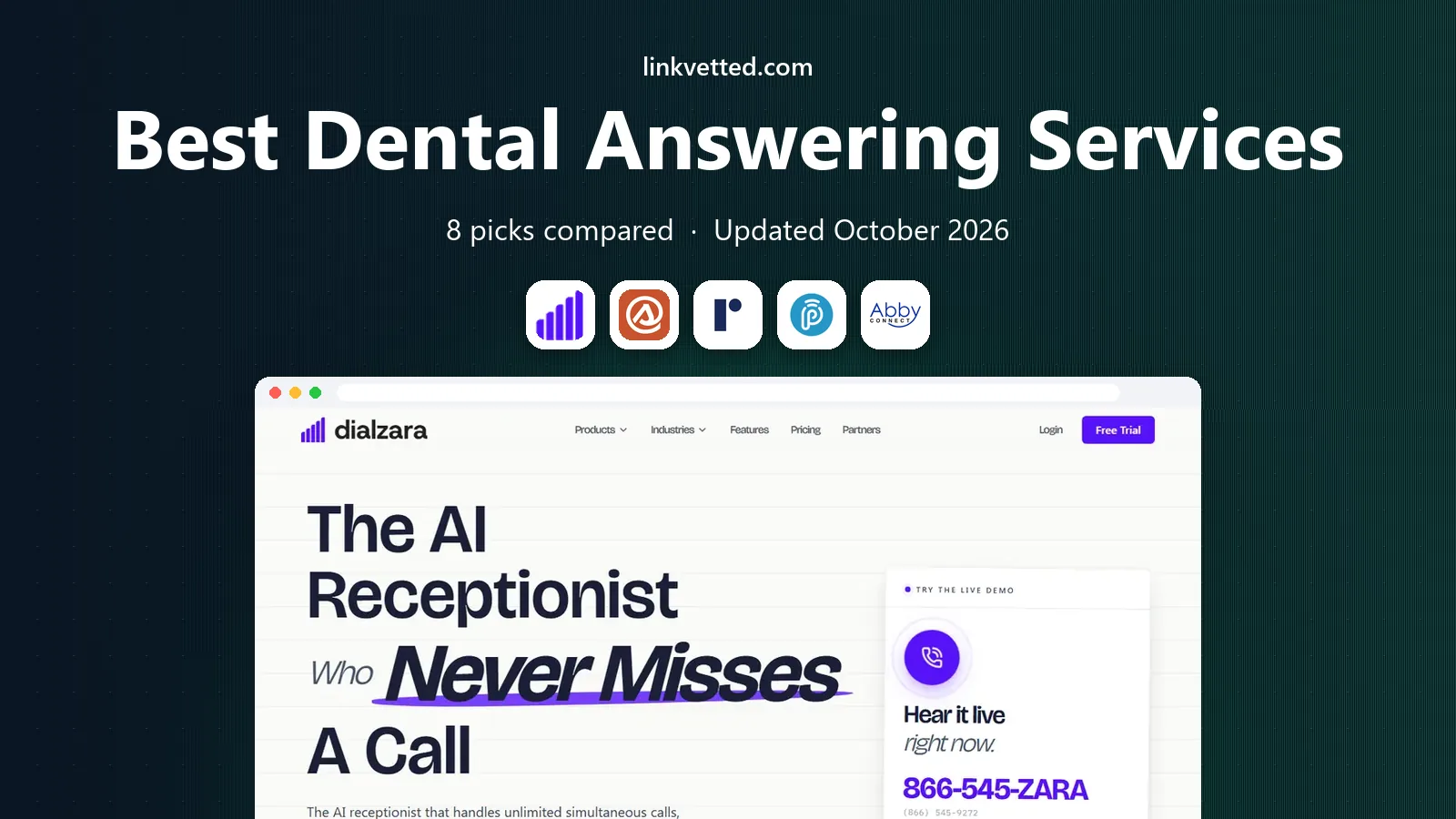
We compare the best dental answering services in 2026, covering live receptionists, AI agents, appointment booking, HIPAA handling and prices for practices.
- Editor's choice
 Dialzara
Small practices on a budget
Starts at$29 per monthVisit dialzara.comFull review - Great alternative
 Smith.ai
Polished hybrid answering
Starts at$300 per monthVisit smith.aiFull review - Also consider
 Ruby
Warm human reception
Starts at$250 per monthVisit ruby.comFull review
TL;DR:
- Dialzara at $29 per month is the cheapest AI option for small practices, while Ruby and Smith.ai suit practices that want a human voice.
- Appointment booking, emergency triage and practice software integration matter more than the headline per-minute price.
- For patient health information, confirm HIPAA handling and get a signed business associate agreement before going live.
- Count a real month of calls before choosing, because per-minute, per-call and flat plans cross over at different volumes.
Quick comparison
| Tool | Best for | Starts at | Free plan? | |
|---|---|---|---|---|
| Dialzara | Small practices on a budget | $29 per month | No | Visit |
| Smith.ai | Polished hybrid answering | $300 per month | No | Visit |
| Ruby | Warm human reception | $250 per month | No | Visit |
 PATLive | After-hours overflow | $49 per month | Free trial | Visit |
 Abby Connect | Human plus AI teams | $165 per month | Free trial | Visit |
 AnswerConnect | Bilingual live coverage | See website | No | Visit |
 Nexa | Multi-location practices | See website | No | Visit |
 MAP Communications | Consistent long-term teams | $44 per month | No | Visit |
The best dental answering services
We compared services that answer dental practice phones, book appointments, handle emergencies and take messages, including live receptionists, AI agents and hybrid options.
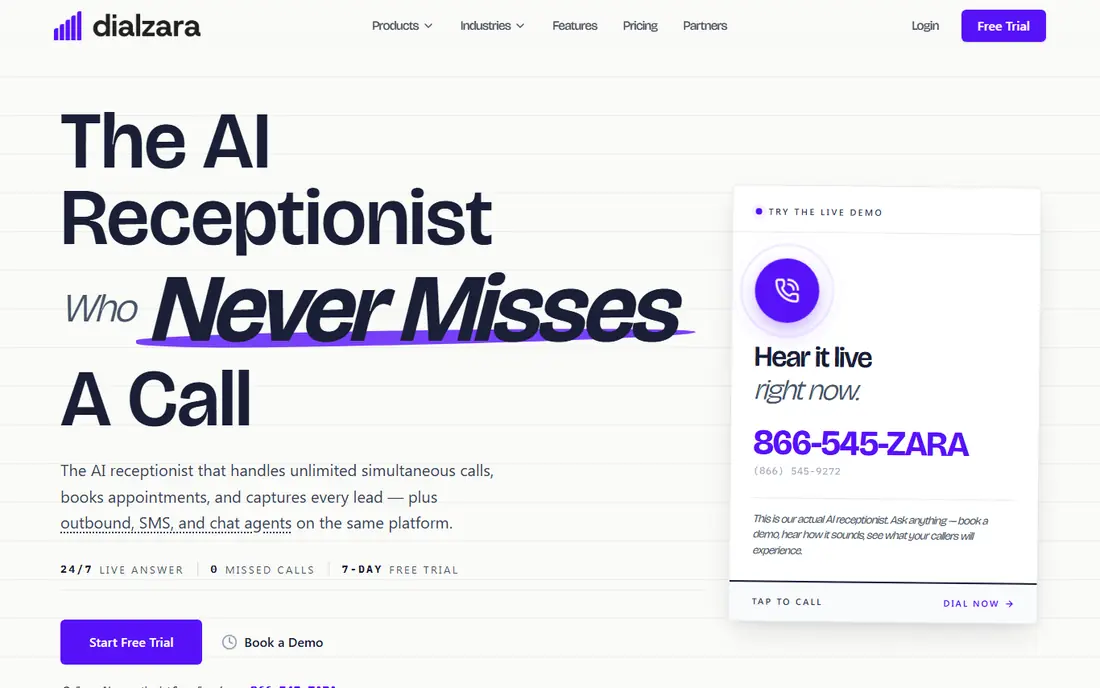
Dialzara at $29 per month is the budget pick for solo and small dental practices. Its AI receptionist answers around the clock, books appointments, and links to major practice systems such as Dentrix, Open Dental, Eaglesoft and Curve through integrations, which helps a small front desk stay covered without hiring. Call transcripts and summaries give the morning team a clear list to work from.
The trade-off is voice and judgment. An AI agent handles routine booking well, but anxious patients, complex insurance questions and emergency triage may still need a human. HIPAA handling and a business associate agreement are available on request, so confirm those in writing before sharing patient information. For low call volumes and tight budgets, Dialzara is excellent value.
- Lowest starting price
- AI answering with practice software links
- 24/7 coverage
- AI voice, not human
- HIPAA agreement is on request, so confirm before launch
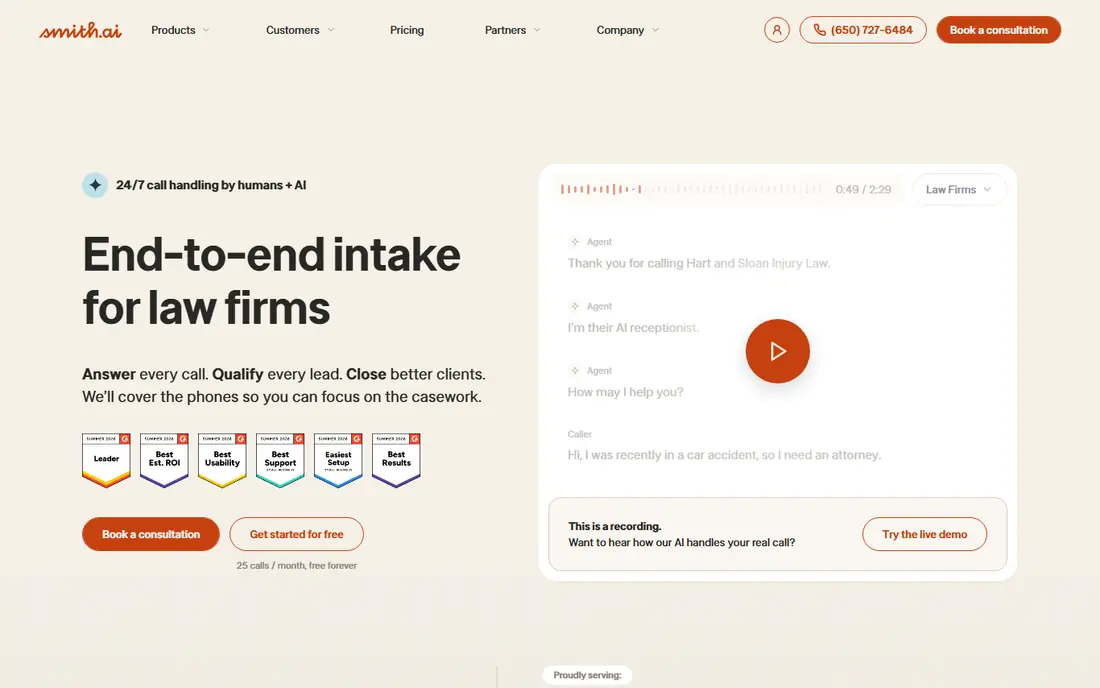
Smith.ai suits practices that want a polished, human-led experience with AI help behind it. Live plans start at $300 per month for 30 calls in recent pricing summaries, with appointment booking as a paid add-on per booking and AI receptionist plans from lower price points. Agents can answer, book, screen spam and transfer urgent calls, with integrations to calendars and practice tools.
Per-call billing is the catch. A busy month with many calls can push the bill well above the starting price, so model your real call count, not just the included calls. For practices where every new patient call matters and a human voice protects the brand, Smith.ai's quality justifies the price.
- Live agents plus AI options
- Appointment booking
- Broad integrations
- Higher starting price
- Per-call billing can rise fast at volume
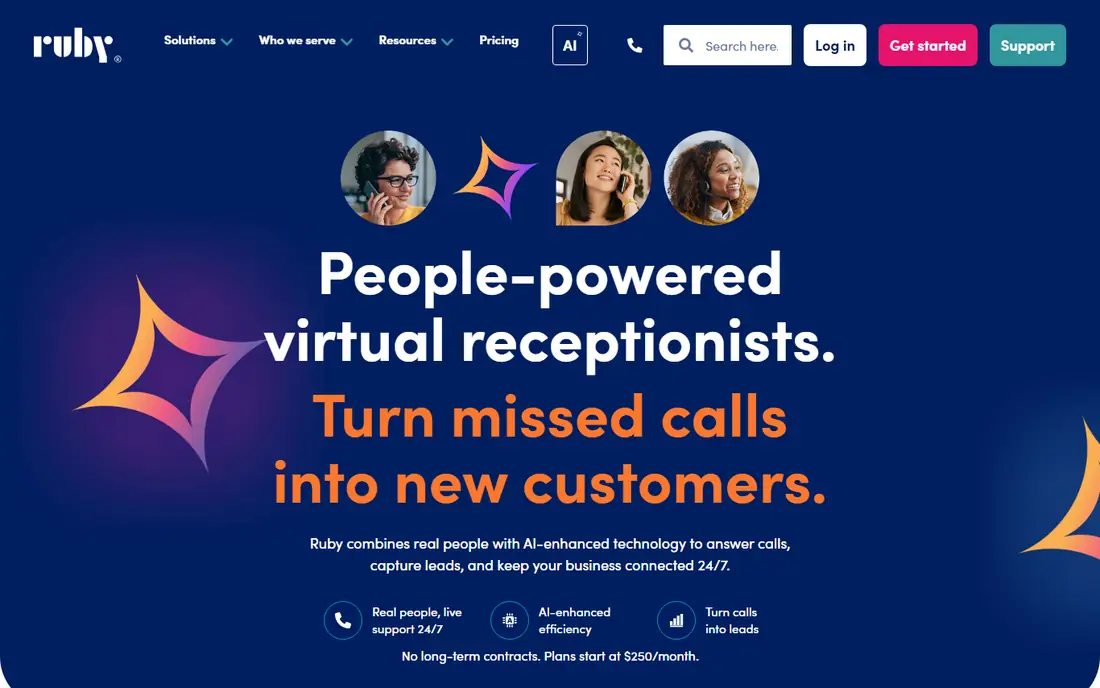
Ruby, formerly Ruby Receptionists, starts at $250 per month for 50 minutes in recent pricing summaries, with live US-based receptionists answering in your practice name. The warm, human handling suits practices that want callers to feel cared for, especially new patients and anxious callers who may not respond well to an automated voice. Bilingual support is available for practices serving Spanish-speaking patients.
Per-minute billing means long calls cost more, and round-the-clock coverage costs extra, so Ruby fits practices that want premium daytime cover more than unlimited night cover. Dental insurance depth is also thinner than with dental-specialist services, so check how Ruby handles insurance questions before buying.
- US-based live receptionists
- Warm, professional call handling
- Bilingual options
- Per-minute billing
- 24/7 coverage is a paid add-on
- Insurance depth is limited
PATLive is a practical choice for after-hours and overflow cover. A pay-as-you-go plan from $49 per month plus per-minute charges lets a practice pay mainly for the calls it actually receives, with custom scripts for appointment requests, emergencies and messages. Larger minute bundles run from $759 per month for 500 minutes in recent summaries, which suits busier practices.
The per-minute model rewards low, steady volume and punishes long, chatty calls, so count minutes, not just calls, from a real month. Integration with practice software is usually through third-party connectors rather than native links. For overflow cover that does not sit idle on quiet weeks, PATLive is a flexible option.
- Low pay-as-you-go entry
- Custom scripts
- No long contracts on many plans
- Per-minute overage adds up
- Practice software integration is via third-party tools
Abby Connect blends human receptionists and AI on the same line, starting at $165 per month for 50 Abby Minutes, where a human minute counts as one minute and an AI minute counts as half. That blend lets a practice use AI for routine calls and humans for complex ones, without buying two separate services. Dedicated teams learn your practice scripts and preferences over time.
The blended minute system needs careful reading before you sign, because human and AI minutes consume the allowance at different rates. Higher tiers at $329, $599 and $1,380 per month cover larger practices. For a practice that wants both human warmth and AI efficiency, Abby is a thoughtful middle path.
- Blended human and AI minutes
- Dedicated teams
- Clear minute-based plans
- Minute counting is blended and needs reading
- Higher tiers needed for high volume
AnswerConnect provides live human answering around the clock, with bilingual English and Spanish agents and integrations to calendars and practice tools. That combination suits practices in bilingual communities, multi-location groups and practices that want every call answered by a person, day or night. Recent summaries place entry around $320 to $350 per month for 200 minutes, though pricing is presented as bundles and quotes.
Per-minute rounding and overage rates need checking, because they change the effective cost for practices with many short calls. For practices where a human voice at any hour is non-negotiable, AnswerConnect is a strong, established option.
- 24/7 live human coverage
- Bilingual agents
- Practice and calendar integrations
- Pricing by quote or bundle
- Per-minute rounding needs checking
Nexa, formerly Nexa Receptionists, is built for dental groups, multi-location practices and dental service organisations that need consistent answering across sites. Human agents handle booking, messages and triage, with coverage for most major practice management systems and a standard business associate agreement for HIPAA handling. That group focus is the point.
Pricing is not published, so smaller practices face a sales process before they can compare costs. Solo practices may prefer a published-price option such as Dialzara, PATLive or Abby. For groups that need one answering standard across many locations, Nexa's scale and software coverage justify the quote process.
- Human answering for groups and DSOs
- Broad practice software coverage
- Standard HIPAA agreement
- Pricing not published
- Smaller practices may find the process heavy
MAP Communications starts at $44 per month plus per-minute charges, which makes it one of the lowest entry prices for live human answering. As an employee-owned company, MAP emphasises agent retention and consistency, so callers are more likely to speak to agents who know your practice over time. Messages arrive by email and SMS, which suits practices that do not need deep software integration.
The base fee does not include a large minute allowance, so busy practices should model per-minute costs carefully. Integration is lighter than with dental-specialist services. For a small practice that wants a human voice at a low entry price and can work from email and SMS messages, MAP is a solid choice.
- Low entry price
- Employee-owned company
- Long-term agent consistency
- Per-minute charges on top of the base fee
- Integration is mainly by email and SMS
How we picked these
We compared official pricing pages, dental answering guides and HIPAA summaries for services available in October 2026. We kept only services that answer dental practice phones, that offer appointment booking or message handling, and that fit a clear need: budget AI, human reception, overflow, bilingual cover or multi-location groups. Prices are published list prices where available, and See website where vendors price by quote.
How to choose a dental answering service
Start with a real month of call data. Count calls, minutes, after-hours calls, new patient calls and emergency calls separately, because each billing model favours a different pattern. A per-minute plan wins for short calls, a per-call plan wins for long calls, and a flat AI plan wins when volume is high or spiky.
Check booking, triage and software links
Ask exactly what the service can book: new patient exams, hygiene recalls, emergency slots, or just messages for the front desk to book later. Check how emergencies are triaged and transferred, and whether the service writes directly into your practice software or only sends email and SMS. A service that books badly creates more front-desk work, not less.
Confirm HIPAA handling before launch
Dental practices handle protected health information, so confirm HIPAA compliance, staff training, data handling and a signed business associate agreement before the service takes live patient calls. Do not assume a general answering service meets dental HIPAA needs. Get the agreement in writing and keep it with your compliance records.
Script for the calls that matter most
Write scripts for new patients, emergencies, cancellations, insurance questions and after-hours pain calls, and test them with real calls before launch. Include what the service must never promise, such as diagnosis or treatment advice, and when it must transfer to the practice or advise emergency care. Review call recordings or transcripts weekly in the first month and refine the scripts.
FAQ
What is the best dental answering service for a small practice?
Dialzara at $29 per month is our budget pick for small practices, while PATLive and Abby Connect suit practices that want human cover at a moderate price. Ruby and Smith.ai suit practices that prioritise a polished human voice and can pay more per call or per minute.
How much does a dental answering service cost?
Prices in this list run from $29 per month for Dialzara AI, to $44 to $49 per month plus per-minute charges at MAP and PATLive, to $165 to $300 per month for Abby and Smith.ai starting plans. Your real cost depends on call volume, minutes and booking fees, so model a real month before choosing.
Should a dental practice use AI or live receptionists?
AI suits routine booking, hours and directions at low cost and at any hour. Live receptionists suit anxious callers, complex insurance questions and emergencies where judgment matters. Hybrid services such as Smith.ai and Abby Connect give you both, with AI for routine calls and humans for complex ones.
Do dental answering services integrate with practice software?
Some do, including Dialzara with Dentrix, Open Dental, Eaglesoft and Curve, and Nexa with most major systems. Others integrate mainly by email, SMS, calendar or third-party connectors. Test the integration end to end with a real booking before signing a long contract.
Is a dental answering service HIPAA compliant?
It depends on the provider. Confirm HIPAA training, data safeguards and a signed business associate agreement before launch, and do not share patient health information with a service that cannot provide one. This article is general information, not legal or compliance advice.