Best Database Software for Integration in 2026: 8 Tools Compared
We compare the best database software for integration, from Fivetran and Airbyte to Talend and Hevo, with prices, connectors, and honest limits in 2026.
- Editor's choice
 Fivetran
Managed ELT with broad connectors
Starts atFreeVisit fivetran.comFull review - Great alternative
 Airbyte
Open source ELT with cloud option
Starts atFreeVisit airbyte.comFull review - Also consider
 Qlik Talend Cloud
Enterprise integration and quality
Starts atSee websiteVisit qlik.comFull review
TL;DR:
- Fivetran suits teams that want managed ELT with a broad connector catalogue and little pipeline code.
- Airbyte suits teams that want open source control or a lower entry cost on cloud.
- Qlik Talend Cloud suits enterprises that need data quality and governance with integration.
- Usage-based pricing can grow fast, so model your row or volume tiers before you commit.
Quick comparison
| Tool | Best for | Starts at | Free plan? | |
|---|---|---|---|---|
| Fivetran | Managed ELT with broad connectors | Free | Yes | Visit |
| Airbyte | Open source ELT with cloud option | Free | Yes | Visit |
| Qlik Talend Cloud | Enterprise integration and quality | See website | Free trial | Visit |
 Integrate.io | Fixed-fee ETL and reverse ETL | See website | Free trial | Visit |
 Hevo Data | No-code ELT for small teams | Free | Yes | Visit |
 Stitch | Simple, low-cost extract and load | See website | Free trial | Visit |
 Matillion | Warehouse-native ELT and transforms | See website | Free trial | Visit |
 Estuary Flow | Streaming CDC with low latency | Free | Yes | Visit |
The best database software for integration
Database integration tools move data from apps and databases into a warehouse or another system, on a schedule you can trust. The best database integration tools differ in connector breadth, change capture, pricing model, and how much code your team must write.
Fivetran is a good match for data teams that want reliable ELT without building connectors. It offers a broad connector catalogue and managed change capture, so new sources often need configuration rather than code. That managed approach saves engineering time, especially for SaaS sources with changing APIs. A clear display matters more than a long feature list, because a result that is hard to check is hard to trust when a deadline is close.
The main catch is costs can rise with monthly active rows, so volume needs care. Start with your highest-value sources, and track row counts in the first month before adding more. Set up a small trial with real work, not sample data, and note how long each step takes from start to finish.
- 700 plus connectors
- Managed change capture
- Low pipeline maintenance
- Usage-based pricing can grow
- Annual minimums on contracts
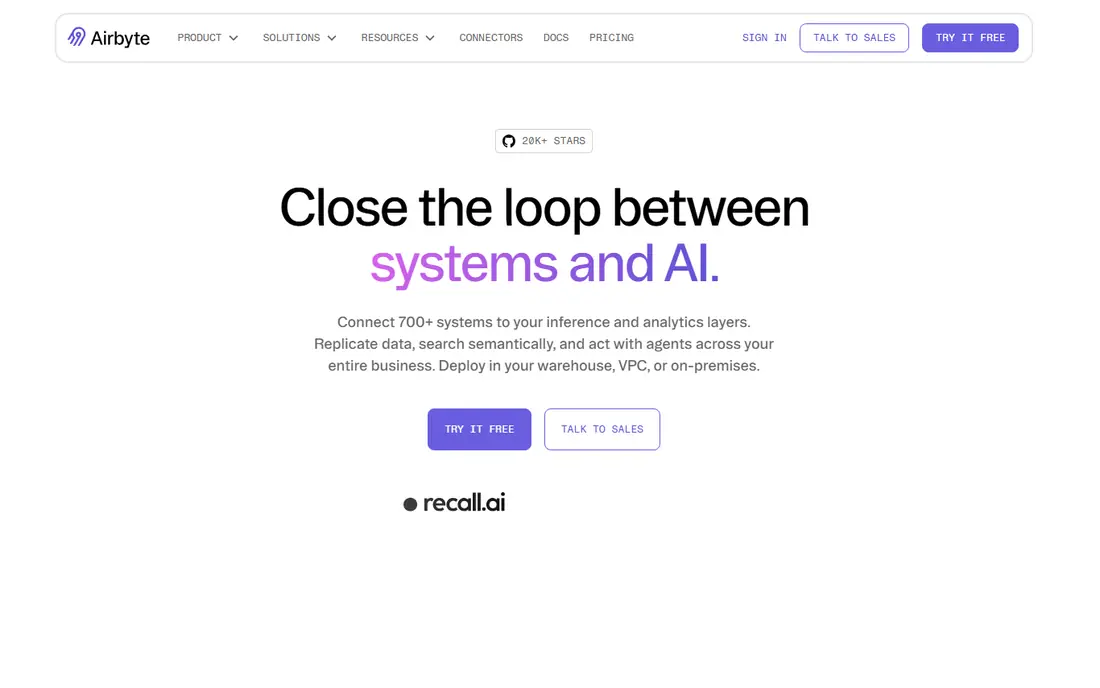
Airbyte is a good match for teams that want control, open source, or a lower cloud entry cost. It gives a self-hosted open source core plus a managed cloud, so teams can choose control or convenience. The connector builder helps when a needed source is not yet covered. Price alone is a weak guide here, since the cheapest option can cost more time if it needs manual checking at every step.
The main catch is self-hosted setups need monitoring, upgrades, and support planning. Run a proof of concept with your hardest source first, since connector quality varies. Ask who will use the tool each week, since a tool that suits one specialist may slow down a wider team.
- Open source self-hosted option
- Large connector catalogue
- Cloud plans from low entry prices
- Self-hosting needs engineering time
- Some advanced features sit in paid tiers
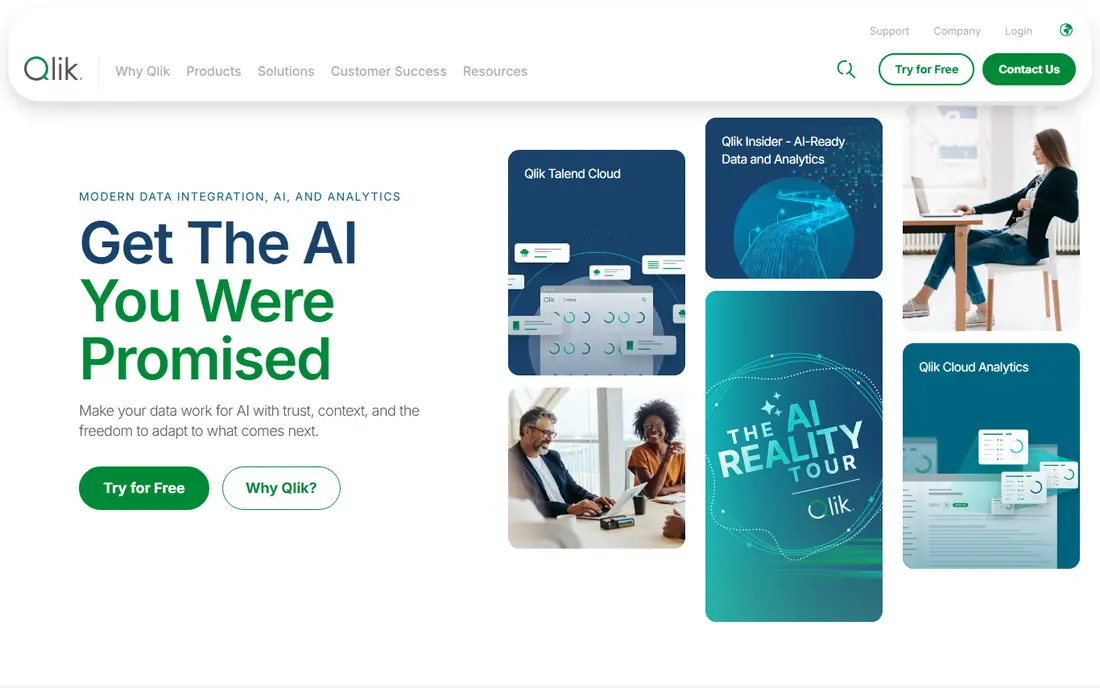
Qlik Talend Cloud is a good match for enterprises that need integration plus quality and governance. It combines integration with data quality, governance, and master data features in one platform. That breadth suits regulated or complex estates where data trust matters as much as movement. We found the shortlist easier to judge once we compared the same basics for every option: fit for the job, clarity of the results, and what the paid tier actually adds.
The main catch is small teams may find the platform heavy and costly. Scope the governance needs first, since that scope drives much of the setup effort. Before you commit, test the tool on a case you already know well, so you can judge its output against a result you trust.
- Broad integration components
- Data quality and governance
- Hybrid deployment options
- Quote-only pricing
- Setup can be complex for small teams
Integrate.io is a good match for mid-size teams that want predictable pricing and reverse ETL. It offers ETL, ELT, change capture, and reverse ETL in one platform with a flat fee model. Predictable pricing helps teams that dislike usage meters, and reverse ETL sends warehouse data back to apps. A clear display matters more than a long feature list, because a result that is hard to check is hard to trust when a deadline is close.
The main catch is the entry price is higher than low-cost ELT starters. List your reverse ETL destinations early, since that need separates it from simpler tools. Set up a small trial with real work, not sample data, and note how long each step takes from start to finish.
- Fixed-fee pricing
- ETL, ELT, CDC, and reverse ETL
- Guided onboarding
- Higher entry price than simple ELT tools
- Fewer connectors than Fivetran
Hevo Data is a good match for small and mid-size teams that want no-code ELT. It focuses on no-code pipelines with a free tier for small volumes, which helps teams without data engineers. Change capture and transformation options cover many common warehouse jobs. Price alone is a weak guide here, since the cheapest option can cost more time if it needs manual checking at every step.
The main catch is larger volumes move into higher event tiers. Start on the free tier with one warehouse destination, then check event counts before scaling. Ask who will use the tool each week, since a tool that suits one specialist may slow down a wider team.
- No-code pipelines
- Free tier for small volumes
- Change capture support
- Connector depth varies
- Costs rise with event tiers
Stitch is a good match for teams that need simple replication without complex transforms. It keeps extract and load simple, with row-tier pricing and a fast setup for standard sources. That simplicity suits teams that transform data in the warehouse with other tools. We found the shortlist easier to judge once we compared the same basics for every option: fit for the job, clarity of the results, and what the paid tier actually adds.
The main catch is complex transformation needs another tool. Use it where replication is the job, and pair it with warehouse transformation for richer models. Before you commit, test the tool on a case you already know well, so you can judge its output against a result you trust.
- Simple setup
- Low entry price
- Good for basic replication
- Limited transformation
- Fewer connectors than leaders
Matillion is a good match for analytics teams that transform heavily inside the warehouse. It runs transformations inside the warehouse with SQL and Python, which suits teams that model data there. That warehouse-native design can cut data movement for transform-heavy jobs. A clear display matters more than a long feature list, because a result that is hard to check is hard to trust when a deadline is close.
The main catch is credit costs need careful modelling for large jobs. Test a typical transform job and measure credits, since that cost drives the total. Set up a small trial with real work, not sample data, and note how long each step takes from start to finish.
- Warehouse-native processing
- Strong transformation
- Agentic pipeline help in newer tiers
- Credit pricing needs modelling
- Less suited to simple replication alone
Estuary Flow is a good match for teams that need fresh data fast, not just nightly batches. It focuses on streaming change capture with low latency, which suits dashboards and operational use. The free tier lets small teams test streaming without an upfront contract. Price alone is a weak guide here, since the cheapest option can cost more time if it needs manual checking at every step.
The main catch is connector coverage should be checked for niche sources. Test latency on your busiest table first, since streaming value depends on that table. Ask who will use the tool each week, since a tool that suits one specialist may slow down a wider team.
- Streaming change capture
- Free tier for small volumes
- Real-time and batch options
- Smaller connector set than leaders
- Pricing mixes volume and connectors
How we picked these
We compared official pricing and feature pages, connector catalogues, and public comparisons for each tool. We checked connector breadth, change capture, transformation options, deployment models, and pricing units. We did not claim hands-on pipeline testing, and we focused on tools that integrate databases and apps, not general iPaaS tools alone.
What to check before you buy
Model pricing on your real volumes
Top database integration software solutions use different units, from rows to credits to gigabytes. Run your actual tables through the pricing model before you sign, since a cheap starter tier can grow fast.
Check change capture for key tables
Batch replication suits many reports, but operational dashboards may need change capture or streaming. Confirm which tables support log-based capture in your chosen tool.
Test your hardest source first
Connector lists can mislead, since depth varies by source. A proof of concept with your trickiest SaaS app or database reveals auth, schema, and update quirks early.
Plan transformation ownership
Some tools transform in the pipeline, others leave it to the warehouse. Decide who owns transformation, since that choice shapes team skills and total cost.
FAQ
What are the best database integration tools for a small team?
Airbyte Cloud, Hevo Data, and Stitch suit small teams, with free or low entry tiers and simpler setup. Fivetran suits small teams that want managed reliability and can accept usage-based pricing.
What is the difference between ETL and ELT?
ETL transforms data before loading, while ELT loads raw data first and transforms it in the warehouse. ELT suits cloud warehouses and flexible modelling, while ETL suits cases where data must be cleaned before it lands.
Do database integration tools support real-time sync?
Some do, notably Estuary Flow and tools with streaming change capture, while many others sync on a schedule from minutes to hours. Check latency for your specific tables, since marketing claims vary by source.
How much does database integration software cost?
Costs range from free tiers for small volumes to quote-based enterprise contracts. Usage units differ, so compare your row, event, or volume counts across tools rather than headline prices alone.
Can I self-host a database integration tool?
Yes, with open source options such as Airbyte, though self-hosting needs engineering time for monitoring and upgrades. Managed cloud suits teams that prefer to avoid that operational work.