Best Daily Rank Software for SERPs in 2026: 8 Tools Compared
best daily rank software serps compared: 8 tools for daily keyword tracking, SERP features, and client reports, with pricing and picks for SEOs and agencies.

- Editor's choice
 SE Ranking
Best value daily tracking
Starts at$129 per monthVisit seranking.comFull review - Great alternative
 Semrush
Full SEO suite teams
Starts at$139 per monthVisit semrush.comFull review - Also consider
 AccuRanker
Agencies needing speed
Starts at$224 per monthVisit accuranker.comFull review
TL;DR:
- SE Ranking is our best value daily tracker, with 2,000 keywords tracked daily from $129 per month, or $103.20 per month billed annually on Core.
- Semrush Position Tracking suits teams that also need a full SEO suite, with daily tracking for 500 keywords from $139 per month.
- AccuRanker is the speed and accuracy pick for agencies, with daily and on-demand tracking from $224 per month, but it costs more than simpler tools.
- Wincher and Mangools SERPWatcher are the lowest cost daily and weekly options for small sites, while Ahrefs suits teams that value backlink data over daily updates.
Quick comparison
| Tool | Best for | Starts at | Free plan? | |
|---|---|---|---|---|
| SE Ranking | Best value daily tracking | $129 per month | Free trial (14 days) | Visit |
| Semrush | Full SEO suite teams | $139 per month | Free trial (7 days) | Visit |
| AccuRanker | Agencies needing speed | $224 per month | Free trial | Visit |
 Ahrefs | Backlink-led SEO teams | $129 per month | No | Visit |
 Moz Pro | Small business SEO learning | $99 per month | Free trial | Visit |
 Wincher | Simple low-cost tracking | $49 per month | Free trial | Visit |
 Nightwatch | Local and AI search tracking | See website | Free trial (14 days) | Visit |
 Mangools SERPWatcher | Beginners on a budget | $49 per month | Free trial | Visit |
The best daily rank software for SERPs
Daily rank software checks your positions in search results each day, so you can spot drops, gains, and SERP feature changes before they affect traffic. We compared tools on update frequency, keyword limits, SERP feature coverage, reporting, and price per keyword at real tracking volumes.

SE Ranking is our pick for most teams because it pairs daily updates with a large keyword allowance at a fair price. Core costs $129 per month, or $103.20 per month billed annually, for 2,000 keywords, and it includes site audit, backlink checks, and keyword research in the same plan. Daily data helps agencies prove progress to clients and helps in-house teams react to algorithm shifts quickly.
The catch is add-on pricing for some AI search features, which can raise the total for teams that need AI Overview and AI Mode tracking in depth. For classic Google ranking work, SE Ranking covers the main need without a separate tracker. For teams tracking tens of thousands of keywords, check higher tiers and API limits before committing.
- 2,000 keywords tracked daily on Core
- Full SEO suite included
- Clear reporting and competitor tracking
- AI Overview tracking may need a paid add-on
- Entry plan limits still apply at high volume
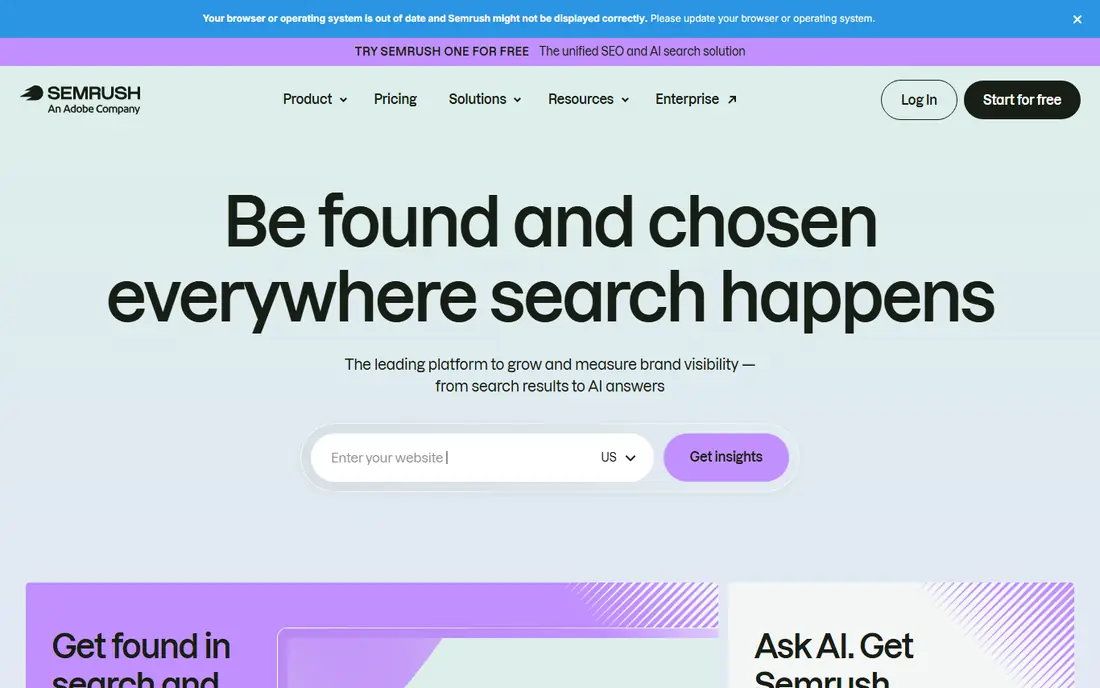
Semrush suits teams that want rank tracking inside a broader SEO platform. Position Tracking updates daily, flags SERP features including AI Overviews, and pairs rank data with keyword research, site audits, and competitor analysis. That combination helps a team explain why a rank changed, not only that it changed, because content, links, and technical issues sit in the same workspace.
The trade-off is cost per keyword. At $139 per month for 500 keywords on the SEO plan, Semrush costs more per keyword than SE Ranking, and annual billing lowers it to $117.33 per month. Teams that only need tracking may find Wincher or SE Ranking cheaper. Teams that already use Semrush for research will find daily tracking a natural add-on rather than a separate purchase.
- Daily Position Tracking for 500 keywords
- Huge keyword and competitor database
- Strong reporting and integrations
- Higher cost per keyword than SE Ranking
- Full suite can be more than a tracker-only team needs

AccuRanker is built for agencies and enterprises where rank data speed and accuracy matter most. It updates daily and on demand, covers many SERP features, and lets teams tag keywords, build client reports, and pull data through an API. Unlimited users on many plans helps agencies share dashboards without paying per seat, which is a real saving for larger teams.
The price is the main barrier. Professional starts at $224 per month for 2,000 keywords, with annual billing lowering it in some listings, and some plans carry higher keyword minimums. Small sites with a few hundred keywords will not need this speed or scale. Agencies with large keyword sets, strict reporting needs, and on-demand checks will find AccuRanker worth the premium.
- Fast daily and on-demand updates
- Unlimited users on many plans
- Strong SERP feature data and API access
- High entry price
- Keyword minimums on some plans
- No free plan, only trial or refund terms
Ahrefs is included here because many SEO teams already use it, but its rank tracking differs from the daily tools above. Lite costs $129 per month for 750 tracked keywords, and Rank Tracker pairs position data with backlink, content, and site audit tools. For teams that judge SEO by links and content as well as ranks, that breadth is valuable.
The key limit is update frequency. Ahrefs help pages state that tracked keywords update weekly by default on standard plans, so it is not a true daily tracker for teams that need day-to-day movement. If daily SERP data is the main job, choose SE Ranking, Semrush, or AccuRanker. If backlink research drives your work and weekly ranks are enough, Ahrefs remains a strong suite choice.
- Strong backlink and content research
- Rank Tracker for 750 keywords on Lite
- Trusted data for competitive analysis
- Rank Tracker updates weekly by default on standard plans, not daily
- No free trial for paid plans
Moz Pro suits small businesses and in-house teams that are still learning SEO. Standard costs $99 per month, or $79 per month billed annually, for 300 keywords, with daily tracking, site audits, and keyword research in one place. The interface is approachable, and Moz metrics and guides help new users interpret rank changes without jargon.
The trade-off is scale. At 300 keywords, Moz Pro covers a small site well but will strain for an agency or a large ecommerce catalog. Teams that outgrow the keyword limit will need a higher tier or a move to SE Ranking. For a small business tracking its core terms daily, Moz Pro is a clear and manageable choice.
- Clear interface for beginners
- Daily rank tracking for 300 keywords on Standard
- Useful learning resources and metrics
- Smaller keyword allowance than SE Ranking at a similar price
- Suite depth is thinner than Semrush or Ahrefs
Wincher is the lean daily tracker on this list. Basic costs $49 per month for 500 keywords, with daily updates and simple reporting that small teams and agencies can share with clients. The focus is rank data, not a full research suite, which keeps the interface fast and the learning curve low.
The limit is breadth. Wincher does not match Semrush or Ahrefs for keyword research, audits, and link data, and its AI search coverage is less documented. Teams that only need daily ranks, competitor positions, and clean reports will like Wincher. Teams that need research and audits in the same tool should pair Wincher with another suite or choose SE Ranking instead.
- Simple daily tracking for 500 keywords
- Unlimited websites on some plans
- Easy reports for clients
- Fewer suite features than Semrush or SE Ranking
- AI Overview coverage is thinner in public documentation
Nightwatch suits small teams and agencies that track local rankings and AI search results alongside classic ranks. It offers daily and on-demand updates, unlimited seats, and ZIP-level local tracking, which helps firms that depend on map and local pack visibility. AI search tracking for ChatGPT, AI Overviews, and AI Mode is a growing strength.
The pricing note matters for US buyers. Nightwatch prices in euros, with Starter listed around 79 euros per month billed annually for 500 keywords in recent listings, so the dollar total depends on exchange and plan. Check the current pricing page for the exact plan and currency before budgeting. For local and AI-focused teams, Nightwatch is a distinctive pick.
- Daily plus on-demand updates
- Unlimited seats
- Local ZIP-level tracking and AI search tracking options
- Pricing is in euros on many pages, so US totals vary with exchange
- Entry plans cap keywords at 500
Mangools SERPWatcher is the beginner-friendly option, sold as part of the Mangools suite with KWFinder and other tools. Basic costs $49 per month, or less billed annually in some listings, for 200 keywords, with weekly updates and simple performance tracking. For a blogger, freelancer, or small site owner who checks ranks weekly, that is enough and affordable.
The catch is in the name of this article. SERPWatcher on Basic is weekly, not daily, and daily updates require the Agency plan. Teams that truly need daily SERP data should not choose Basic for that job. Beginners who want a low-cost suite and weekly checks, with room to upgrade to daily tracking later, will find Mangools a friendly starting point.
- Lowest cost entry in the Mangools suite
- Simple weekly tracking for 200 keywords
- Easy for bloggers and freelancers
- Weekly updates on Basic, not daily
- Daily tracking requires the higher Agency plan
- Small keyword allowance
How we picked these
We compared official pricing pages, rank tracker guides, and vendor documentation, and we focused on tools that track Google SERP positions with a stated update frequency. We favored tools with daily updates where possible, and we noted where a tool updates weekly so readers are not misled by a daily label. We left out free-only baselines like Search Console as a main pick, though it remains a useful free check alongside any paid tracker.
What to check before you buy
Rank data is only useful if it matches how your customers search. Test location, device, and language settings before you commit, because a national desktop rank can hide a local mobile drop that drives calls.
Update frequency and keyword math
Divide the plan price by the keyword allowance to get cost per keyword, and confirm whether updates are daily, weekly, or on demand. A cheap plan with weekly updates is not comparable to a daily plan at the same price. Count mobile and desktop separately if your tool does, since one keyword can use two slots.
SERP features and AI results
Check whether the tool records AI Overviews, featured snippets, local packs, and other SERP features for your keywords, and whether AI Mode or chatbot tracking is included or an add-on. A rank alone can mislead when an AI answer pushes organic results down the page. Choose a tool that shows the full SERP context for your most valuable terms.
Reporting for clients or managers
Test scheduled reports, white-label options, and dashboard sharing before buying for an agency. A tracker with strong data but weak reporting will cost staff time each month. Confirm that reports can show rank history, SERP features, and competitor movement in one view, without manual exports.
FAQ
What is the best daily rank software for SERPs?
SE Ranking is our best value daily tracker, Semrush suits teams that want a full suite, and AccuRanker suits agencies that need speed and on-demand data. Wincher is a strong low-cost daily option, while Moz Pro suits small businesses learning SEO. The best pick depends on keyword count, update needs, and whether you also need research tools.
How much does daily rank tracking cost?
Published prices in 2026 run from $49 per month for Wincher Basic to $224 per month for AccuRanker Professional, with SE Ranking Core at $129 per month and Semrush at $139 per month. Cost per keyword matters more than headline price, so divide the plan price by the keyword allowance at your volume.
Do rank trackers track AI Overviews?
Many do, in different ways. Semrush, Ahrefs, and AccuRanker record AI Overviews as a SERP feature, Nightwatch tracks AI search prompts, and SE Ranking sells some AI tracking as an add-on. Check whether AI coverage is included in your plan or requires a higher tier before you buy for AI visibility work.
Is daily tracking better than weekly tracking?
Daily tracking helps when you need to spot drops fast, test changes, or report to clients each week. Weekly tracking is enough for small sites with stable ranks and limited staff time. If you react to rank changes within days, choose daily. If you review monthly, weekly data may save money without losing insight.
Can I use Google Search Console instead of a paid tracker?
Search Console is a free and useful baseline for average position, clicks, and impressions, but it reports with a delay and does not give daily competitor ranks or full SERP feature history in the same way. Most teams use Search Console alongside a paid tracker, not as a full replacement for daily rank software.