7 Best Customer Service Training Programs for Teams and Individuals in 2026
Compare the best customer service training programs for 2026, with courses, certifications, and team training that build real service skills today, now.

- Editor's choice
 CVS Health Customer Service Certificate on Coursera
Job-ready credential
Starts atSee websiteVisit coursera.orgFull review - Great alternative
 Microsoft Customer Service Certificate on Coursera
Service work with AI and CRM tools
Starts atSee websiteVisit coursera.orgFull review - Also consider
 LinkedIn Learning Customer Service Foundations
Short, practical skill refresh
Starts atSee websiteVisit linkedin.comFull review
TL;DR:
- The best customer service training program depends on whether you need a credential, a team rollout, or a quick skill refresh.
- Short courses work well for a single skill, while a certificate program suits someone building a service career.
- Practice matters more than video hours, so favor programs with role-play, case work, or graded practice.
- For a team, check manager tools, progress tracking, and whether content fits your industry and channels.
- A free or low-cost course is a good first step, but a paid certificate may carry more weight with an employer.
Quick comparison
| Tool | Best for | Starts at | Free plan? | |
|---|---|---|---|---|
| CVS Health Customer Service Certificate on Coursera | Job-ready credential | See website | Free trial | Visit |
| Microsoft Customer Service Certificate on Coursera | Service work with AI and CRM tools | See website | Free trial | Visit |
| LinkedIn Learning Customer Service Foundations | Short, practical skill refresh | See website | Free trial | Visit |
 Udemy Customer Service Mastery | Low-cost, focused course | See website | No | Visit |
 Alison Diploma in Customer Service | Free, self-paced learning | Free | Yes | Visit |
 Lorman Customer Service Training | Ongoing professional courses | $99 per course | No | Visit |
 ICMI Training and Certification | Contact center teams and leaders | See website | No | Visit |
The best customer service training programs
Good service training teaches communication, empathy, problem solving, and de-escalation, then gives learners a chance to practice those skills before a real customer is on the line. The best customer service training programs below include certificates, short courses, and team programs, so an individual job seeker and a support manager can both find a fit.
CVS Health Customer Service Certificate on Coursera
Best for: Job-ready credential

This certificate program is a strong starting point for someone entering customer service or moving into a call center role. It starts with an introduction to customer service, then builds frameworks for communication, time management, problem solving, and de-escalation, with hands-on activities and community projects. Because it was built with CVS Health, the examples reflect the kind of high-volume, process-driven service work many employers actually hire for. The weakness is breadth. A learner who already works in service may find the early modules basic, and the program does not go deep into one industry such as health care, retail, or tech support. Coursera pricing is subscription-based, so a slow learner pays more than a fast one. Still, for a resume credential that an employer can recognize, and for a learner who wants structure rather than a loose set of videos, this is a sensible first pick. Check the current Coursera subscription price and free trial terms before enrolling.
- Built with a large employer that hires service staff
- Covers communication, time management, and de-escalation
- Shareable certificate
- Subscription cost adds up if you learn slowly
- Content is broad rather than industry-specific
Microsoft Customer Service Certificate on Coursera
Best for: Service work with AI and CRM tools
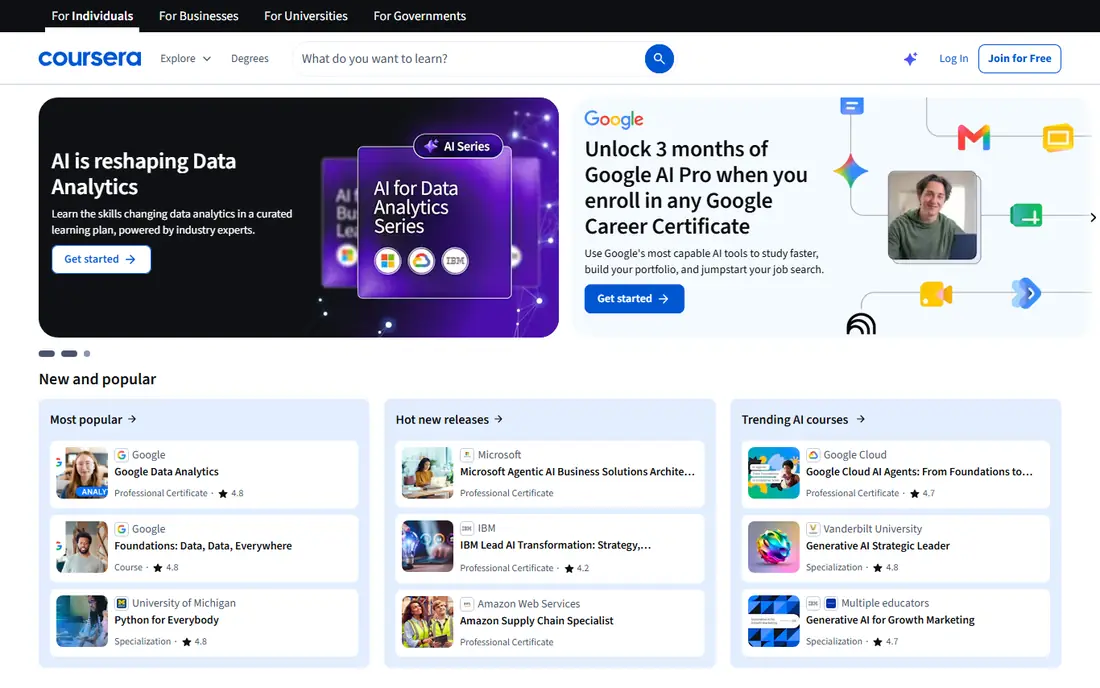
This Microsoft certificate suits a service worker who will use AI assistants, chatbots, and CRM systems every day, not just phone and email. It pairs core service skills with modern tool use, so learners practice handling cases in a system, using AI to draft replies, and keeping records that a team can follow. That mix is increasingly what hiring managers ask for, because service roles now involve software as much as conversation. The trade-off is that it assumes a basic comfort with digital tools, so a complete beginner may want a fundamentals course first. Like other Coursera certificates, it is sold as a subscription, so the total cost depends on how quickly you finish. If your goal is a modern service desk or a tech support role, this program gives you both the service habits and the tool familiarity. If your goal is a simple retail or hospitality role, a shorter fundamentals course may be enough.
- Adds AI and CRM tool skills to core service skills
- Employer-built certificate
- Practical, job-focused projects
- Assumes some comfort with digital tools
- Subscription pricing, not a one-time course fee
LinkedIn Learning Customer Service Foundations
Best for: Short, practical skill refresh
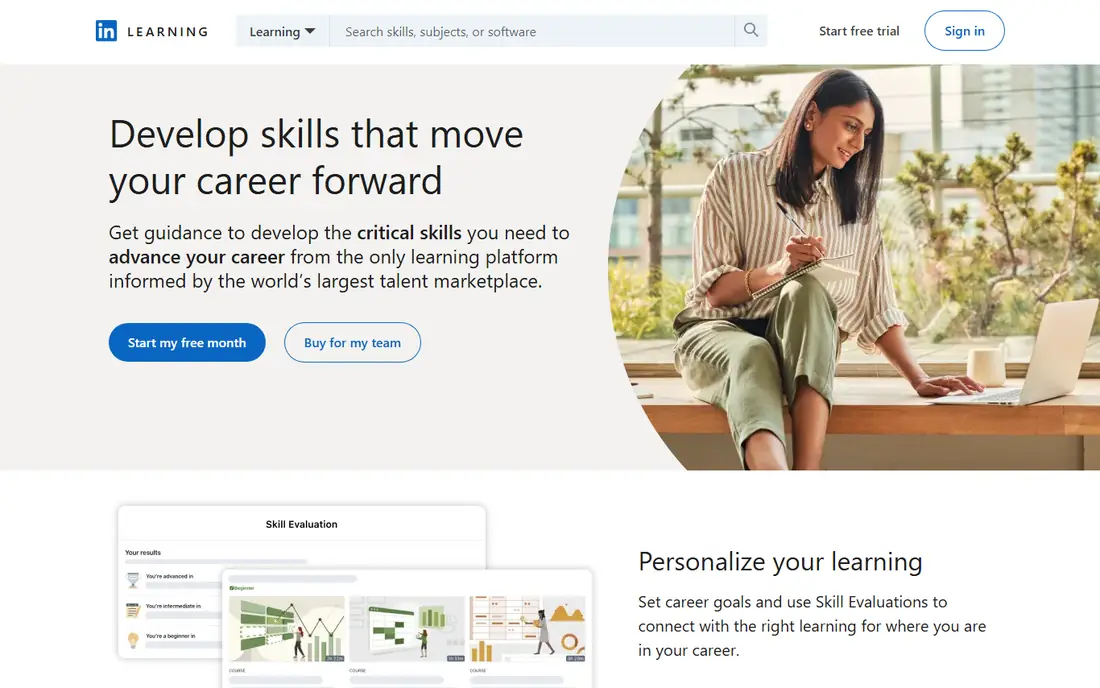
LinkedIn Learning's customer service foundations course is a good refresher for someone who already works with customers and wants to sharpen communication, empathy, and handling of difficult conversations. It runs about two hours, so a manager can assign it in a week without pulling a team off the phones for days. The certificate appears on a LinkedIn profile, which helps a job seeker show recent learning to recruiters. It is not a full certification program. Two hours cannot cover de-escalation, systems, metrics, and industry practice in depth, and the value depends on actually applying the lessons at work. Access also needs a LinkedIn Learning subscription after any trial period. For a quick team refresh, a new hire orientation add-on, or a personal skill tune-up, it is a practical pick. For a career change into service leadership, pair it with a longer certificate program.
- Short and easy to fit into a work week
- Certificate appears on a LinkedIn profile
- Covers empathy and difficult customers
- Too short for a deep credential
- Full access needs a subscription after any trial
Udemy's customer service mastery course, taught by Chris Croft, is a popular low-cost option for a learner who wants practical techniques without a subscription. It covers how to delight customers, handle complaints, and recover a bad interaction, in short lessons that fit around work. Because Udemy sells courses one at a time, often at a discount, the total cost is usually far below a certificate subscription, and you keep access after purchase on the platform's terms. The limit is credential weight. A Udemy certificate shows completion, but it does not carry the same employer recognition as a certificate built with CVS Health or Microsoft. Udemy courses also vary by instructor, so check the current course page for length, last update date, and learner reviews before buying. For a self-funded learner, a small business owner training a new hire, or someone who wants usable techniques this week, this is a strong value pick. For a formal job application, pair it with a recognized certificate.
- Focused, practical lessons in a few hours
- One-time purchase rather than a subscription
- Strong learner ratings
- No formal employer credential
- Course quality depends on the instructor and the specific course version
Alison's diploma in customer service is the best free starting point in this list. It covers phone, email, and in-person service in a broad overview that takes roughly ten to fifteen hours, and learners can study at their own pace. For a job seeker with no training budget, a student, or a small business owner who wants to give a new hire a foundation before day one, free access removes the main barrier. Alison courses lean on written content and quizzes rather than video role-play or live practice, so a learner who needs to practice tone of voice or de-escalation should add practice elsewhere. The certificate also carries less weight with employers than a Coursera certificate built with a large employer. Treat Alison as a foundation, not a finish line: learn the basics free, then add a paid certificate or a workplace practice program if you need a stronger credential.
- Free to study
- Self-paced modules for phone, email, and in-person service
- Diploma-level overview
- Mostly written content and quizzes, with less video practice
- Certificate recognition is weaker than employer-built certificates
Lorman suits a professional who needs ongoing training rather than a single certificate. Its catalog includes live webinars and on-demand courses on customer service topics, with individual courses starting at a published price and an annual all-access pass for frequent learners. That model fits a manager who wants a team member to take a course on handling difficult customers this month and another on service recovery next quarter, without enrolling in a full program each time. The drawback is consistency. Because Lorman offers many courses from many instructors, quality and depth vary by topic, so read the course outline and instructor background before buying. The annual pass also costs more upfront, and it only pays off if you actually use it through the year. For a small business that trains staff regularly, or an individual building a training habit, Lorman is a flexible option. For a one-time credential, a certificate program is a clearer path.
- Large catalog of live and on-demand courses
- Individual courses start at a clear price
- Annual pass for frequent learners
- Courses vary by topic and instructor
- Annual pass is a bigger upfront cost
ICMI, the International Customer Management Institute, is a specialist in contact center training, and it suits a support leader who needs more than general service tips. Its programs cover agent skills, supervisor coaching, quality, workforce topics, and service operations, with certifications aimed at contact center roles. For a manager building a team, that specialist focus matters, because a general course rarely covers scheduling, quality scoring, or escalation design in useful depth. ICMI pricing is often quote-led, especially for team training, so budgeting takes a conversation with its sales team. It is also less suited to a solo learner who wants a cheap, quick course, because the programs are built for professionals and teams. If you run or aspire to run a contact center, ICMI deserves a place on your shortlist alongside a general certificate. If you are new to service work, start with a fundamentals course and return to ICMI when you move into a supervisory role.
- Contact center focus for agents, supervisors, and leaders
- Industry-recognized training in service operations
- Team training options
- Pricing is quote-led for many programs
- Less suited to a solo learner seeking a quick course
How we picked these
We compared official course pages, program lengths, credential types, pricing models, and target audiences, and we cross-checked them against recent course comparisons and public learner reviews. We favored programs with a clear syllabus, a real practice element or employer connection, and a published price or trial where one exists. We left out retired courses and programs with no current course page, because a recommendation is only useful if a reader can enroll today.
How to choose training that actually changes behavior
Start with the skill gap, not the certificate
List the three service problems your team or you face most, such as angry customers, slow first replies, or poor handoffs between teams. Then pick training that practices those exact situations. A general course may be interesting, but a course with role-play on your hardest cases will change more behavior in the same hours.
Add practice after the course ends
Training fades without practice. After a course, run short weekly role-plays, review real cases as a team, and coach one skill at a time for a month. Managers should listen to calls or read tickets with the learner and give specific feedback, not just a score. That follow-up is what turns a certificate into better service.
Measure one outcome before and after
Pick one measure, such as first-contact resolution, customer satisfaction on a short survey, or repeat contacts on the same issue, and track it for a month before and after training. If the number does not move, the training may have been too general, too short, or missing practice. Use that result to choose the next program, rather than buying another course on hope.
FAQ
What is the best customer service training program?
For a job-ready credential, the CVS Health certificate on Coursera is a strong pick. For a short refresh, LinkedIn Learning foundations works well. For a contact center team, ICMI training fits better. Match the program to your goal, not just to its price.
What is the best customer service training for a small team?
A mix often works best: a short LinkedIn Learning or Udemy course for all staff, plus a certificate program for team leads. Lorman courses can fill specific gaps, such as handling difficult customers, without enrolling everyone in a full program. Add weekly practice, because a course alone rarely changes habits.
How long does customer service training take?
It ranges from about two hours for a foundations refresher to several weeks for a certificate program, depending on study pace. Alison's diploma takes roughly ten to fifteen hours, while Coursera certificates take longer because they include projects and multiple courses. Plan study time in your work week, not just in theory.
Are free customer service courses worth it?
Yes, as a foundation. Alison's free courses teach core concepts well, and Coursera and LinkedIn Learning offer trials or audit options on some courses. Free courses are less strong on practice and credential weight, so add a paid certificate if an employer credential matters for your next role.
What skills does customer service training teach?
Core skills include clear communication, empathy, active listening, problem solving, de-escalation, time management, and product knowledge. Modern programs add CRM use, AI-assisted replies, and handling cases across chat, email, phone, and social channels. The best programs also teach when to escalate a case rather than trying to solve it alone.
Do employers value customer service certifications?
Employer-built certificates, such as those from CVS Health and Microsoft on Coursera, tend to carry more weight than a generic completion certificate, because they signal job-relevant skills. Contact center employers also recognize ICMI training. A certificate helps most when paired with examples of real cases you handled well.