Best CRM Software for Ecommerce in 2026: 8 Tools Compared
We compared the best crm software for ecommerce, covering Shopify and WooCommerce sync, email and SMS flows, pipelines and pricing for online stores today.
- Editor's choice
 Klaviyo
Shopify and DTC email and SMS
Starts at$20 per monthVisit klaviyo.comFull review - Great alternative
 HubSpot
All-in-one CRM, sales and service
Starts atFreeVisit hubspot.comFull review - Also consider
 Omnisend
Fast multichannel automation for SMB stores
Starts at$16 per monthVisit omnisend.comFull review
TL;DR:
- The best crm software for ecommerce keeps orders, customers and marketing in one view, so a store does not run on separate spreadsheets.
- Klaviyo is the strongest specialist for Shopify and direct-to-consumer brands that live on email and SMS flows.
- HubSpot is the best all-in-one choice when a store also needs sales pipelines and service tools under one roof.
- Ecommerce CRM pricing grows with contacts or profiles, not just seats, so model the bill at your real list size.
- A free plan is a good trial, but check what happens to automation, segments and support when you move to paid.
Quick comparison
| Tool | Best for | Starts at | Free plan? | |
|---|---|---|---|---|
| Klaviyo | Shopify and DTC email and SMS | $20 per month | Yes | Visit |
| HubSpot | All-in-one CRM, sales and service | Free | Yes | Visit |
| Omnisend | Fast multichannel automation for SMB stores | $16 per month | Yes | Visit |
 Drip | Deep behavioral automation at one price | $39 per month | Free trial | Visit |
 ActiveCampaign | Advanced automation plus a real CRM | $15 per month | Free trial | Visit |
 Zoho CRM | Budget traditional CRM for stores | $14 per user per month | Yes | Visit |
 Pipedrive | Sales-driven stores with a pipeline | $14 per user per month | Free trial | Visit |
 Salesforce | Enterprise merchants and Shopify Plus | $25 per user per month | Free trial | Visit |
The best crm software for ecommerce
An ecommerce CRM is different from a general CRM. It must sync orders, products and customer behavior from your store, then turn that data into segments, flows and repeat purchases. The tools below range from store-first marketing platforms to traditional sales CRMs that connect to a store.
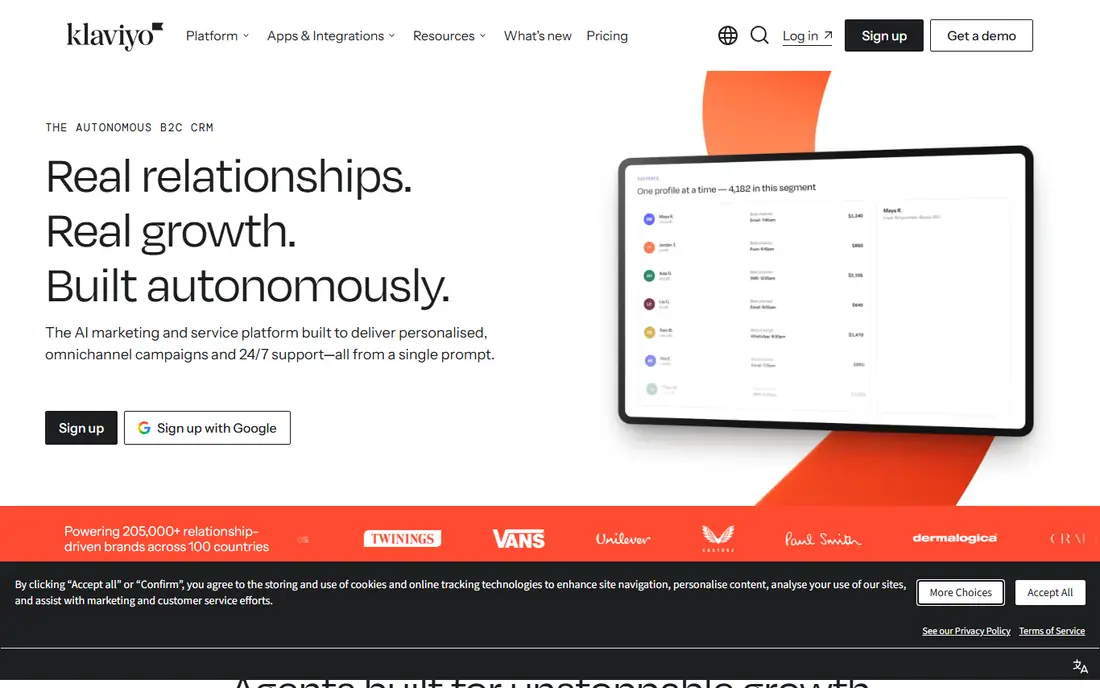
Klaviyo is our pick for most Shopify and direct-to-consumer brands. It syncs orders, browsing and purchase history in real time, then lets you build segments from that behavior rather than from guesswork. Abandoned cart, browse abandonment, post-purchase and win-back flows are its core strength, and SMS can run inside the same flows as email.
The cost model needs attention. Paid email plans start at 20 dollars per month for 500 profiles, and the bill grows as your list grows, even if your team stays the same. The free plan covers up to 250 profiles, which is enough to test the basics. For a store where repeat revenue matters, Klaviyo depth usually pays for itself, but a small list should start free and upgrade only when flows are working.
- Deep Shopify sync
- Strong flows and segmentation
- Email and SMS in one platform
- Price rises with profile count
- Learning curve for advanced flows
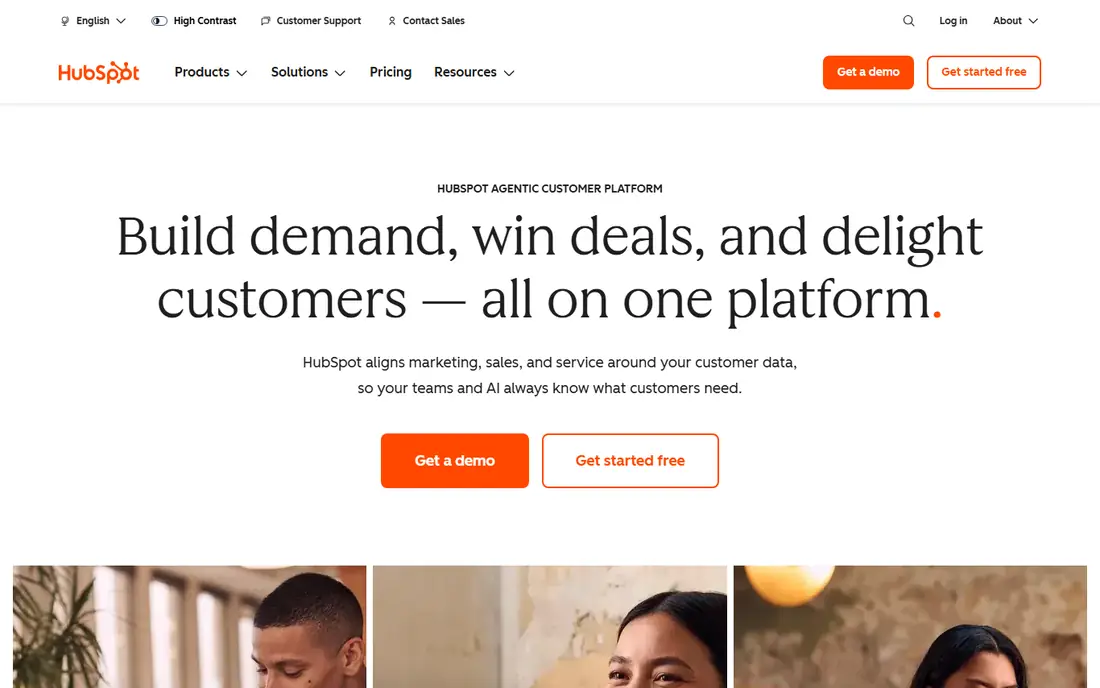
HubSpot suits a store that is also a business with sales calls, support tickets and content. The free CRM covers contacts, deals and tickets, and paid hubs add marketing automation, pipelines and service tools. That breadth helps when a store sells wholesale as well as retail, or when support quality drives repeat orders.
The trade is price at scale. Marketing Hub Starter is low cost, but Professional tiers are far more expensive, and the free tier limits automation. Shopify sync also needs care to map orders and products correctly. If your main need is store email flows, Klaviyo is sharper. If you need one system for the whole business, HubSpot is the better base.
- Free CRM with contacts and deals
- Sales, marketing and service in one system
- Strong integrations
- Paid marketing tiers jump sharply in price
- Store sync needs setup
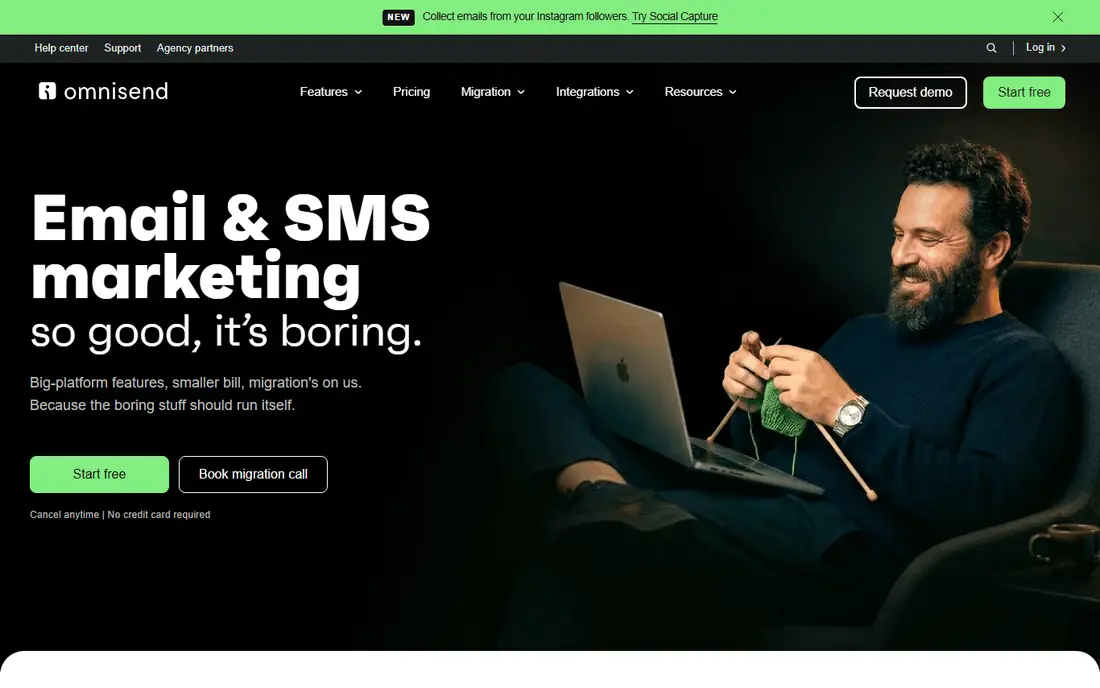
Omnisend is the fastest route to working automation for a small or midsize store. Prebuilt flows for welcome, cart recovery and post-purchase cover the highest-value emails, and SMS and push can be added without a second tool. Setup is measured in hours for a typical Shopify store, not weeks.
The limit shows up as a store grows. Segmentation and predictive features are less deep than Klaviyo, and very large or complex catalogs may outgrow it. Paid plans start at 16 dollars per month for 500 contacts, with a free plan for smaller lists. For a store that wants good automation now without a steep learning curve, Omnisend is a strong value pick.
- Quick setup for small stores
- Email, SMS and push in one place
- Ready-made flows
- Segmentation depth is below Klaviyo
- Enterprise features are limited
Drip appeals to direct-to-consumer brands that want every feature at one flat price, rather than paying more to access automation. Its workflow builder uses on-site behavior, purchase history and tags to trigger personalized emails, and the plan includes the full feature set from the start. Pricing starts at 39 dollars per month for up to 2,500 contacts.
The main gaps are a free plan and SMS depth. Drip offers a 14-day trial instead of a free tier, and brands that rely heavily on SMS may need a separate tool. For an email-first DTC brand that wants deep automation without tier games, Drip is a clear and honest pricing model.
- All features in one plan
- Strong behavioral triggers
- Clean visual workflow builder
- No free plan, only a trial
- SMS is not a core strength
ActiveCampaign sits between a pure email tool and a full CRM. It offers deal pipelines, contact scoring and automation logic that goes well beyond simple flows, at a starting price of 15 dollars per month for 1,000 contacts on annual billing. That makes it good value for a store that also runs B2B sales or a longer buying cycle.
The interface takes time to learn, and complex workflows need planning to avoid tangled logic. Pricing also rises with contacts, so a large list should be modeled before committing. For a store owner who enjoys building detailed customer journeys and wants CRM depth, ActiveCampaign gives more control per dollar than most rivals.
- Deep automation logic per dollar
- Real CRM with deals
- Strong integrations
- Learning curve for complex workflows
- Contact-based pricing grows with list size
Zoho CRM is the budget traditional CRM on this list. At 14 dollars per user per month on annual billing, with a free tier for small teams, it covers contacts, deals, pipelines and workflows at a fraction of enterprise CRM prices. The wider Zoho suite adds inventory, accounting and support apps for teams that want one vendor.
It is not a store-first marketing platform. Email flows, SMS and segmentation need add-ons or integrations, and setup takes care to connect a store cleanly. For a store that needs a proper sales CRM first and marketing automation second, Zoho CRM is good value. For an email-driven DTC brand, a store specialist higher on this list will work faster.
- Low per-user price
- Wide Zoho app ecosystem
- Solid pipeline and workflow tools
- Store marketing depth is weaker
- Setup and customization take time
Pipedrive is built around a visual sales pipeline, which suits stores with wholesale, B2B or high-value orders that need human follow-up. Reps can see every deal stage at a glance, move deals by drag and drop, and set reminders without learning a complex CRM. Pricing starts at 14 dollars per user per month on annual billing, with a 14-day trial.
The limit is marketing. Pipedrive does not replace Klaviyo or Omnisend for lifecycle email, and store data arrives through integrations rather than native depth. For a store where the pipeline is the main job, Pipedrive is easy to adopt and easy to run. For a store where automated email drives revenue, pair it with a marketing tool or pick a specialist.
- Clear visual pipeline
- Easy for sales teams to adopt
- Good automation on paid tiers
- Marketing automation is limited
- Store features need integrations
Salesforce is the enterprise choice for large merchants, especially Shopify Plus brands with complex sales, service and B2B needs. Starter Suite starts at 25 dollars per user per month, and the platform can be customized to almost any process. Its partner ecosystem covers store connectors, marketing tools and service apps at scale.
That power comes with cost and complexity. Implementation often needs a consultant, and admin time is a real ongoing expense. A small store will find Salesforce heavy and expensive for the value it gets. A large merchant that needs custom workflows, multi-channel service and enterprise reporting will find the investment justified.
- Deep customization and scale
- Strong partner ecosystem
- Commerce Cloud for large stores
- Setup and admin cost is high
- Overkill for a small store
How we picked these
We compared official pricing pages, store integration documentation and public reviews for CRM tools that are still sold in October 2026. We favored tools with a real store sync, customer segmentation, order history and automation, and we mixed store-first platforms with traditional CRMs so the list fits a small Shopify store and a large merchant. Tools without a credible ecommerce connection were left out.
How to choose for your store size
Start with your store platform and your main revenue driver. A Shopify DTC brand that lives on repeat purchases should shortlist Klaviyo, Omnisend or Drip first. A store with wholesale or B2B sales should shortlist HubSpot, Zoho CRM or Pipedrive. A large merchant with custom needs should talk to Salesforce.
Check the total bill at your list size
Ask each vendor for a price at your current contact count and at double that count. Some tools charge per contact, some per profile and some per seat, and those models diverge fast as a list grows. Also check SMS costs separately, since SMS is often billed apart from email. A cheap email plan with expensive SMS can cost more than a pricier all-in-one plan.
Test one flow end to end
Before you commit, build one real flow: abandoned cart, welcome or post-purchase. Check that order data syncs correctly, that segments update, that emails look right on mobile, and that unsubscribes and bounces are handled. A tool that passes a demo but fails on your real order data will cost you sales, not just time.
FAQ
What is the best crm software for ecommerce?
For most Shopify and DTC stores, Klaviyo is the strongest specialist because of its store sync, flows and segmentation. HubSpot is the best all-in-one choice when you also need sales and service tools. Small stores on a budget should also look at Omnisend, which is faster to set up and cheaper to start.
Is Klaviyo a CRM?
Klaviyo is a customer platform with CRM-like profiles, segments and order history, but it is built for marketing first. It works well as the customer system for a DTC store, and many stores pair it with a sales CRM if they also run B2B sales. Check whether you need deal pipelines before deciding if Klaviyo alone is enough.
What is the best ecommerce crm software for a small business?
Omnisend and HubSpot free CRM are strong small-business starting points. Omnisend gives fast store automation at a low price, while HubSpot free CRM gives contacts, deals and basic tools at no cost. Zoho CRM is also worth a look if you want a traditional CRM on a tight budget.
How much does ecommerce CRM software cost?
Entry prices run from free to about 39 dollars per month for small lists, but costs rise with contacts or profiles. A growing store should expect 50 to 200 dollars per month for a midsize list, and far more for enterprise CRM tiers. Always price SMS separately, since it is often billed apart from email.
Can I switch ecommerce CRMs later?
Yes, but it takes planning. Export contacts, segments, order history and flow logic before you cancel, and rebuild your highest-value flows first in the new tool. Keep the old tool running during the switch so no customer data or active flow is lost. Most vendors offer import tools, but flow logic rarely transfers cleanly.
Do I need a CRM if I already use Shopify?
Shopify stores customer and order data, but it is not a full CRM or marketing automation system. A CRM adds segmentation, lifecycle flows, pipelines and service tools that Shopify alone does not cover. A small store can start with Shopify plus a free CRM, then add a specialist tool as repeat revenue grows.