Best CRM for Pharmaceutical Companies: 9 Tools Compared
We compared the best crm for pharmaceutical companies on compliance, sample tracking, HCP engagement and data, so life sciences teams can shortlist well.
- Editor's choice
 Veeva Vault CRM
Large pharma field teams
Starts atSee websiteVisit veeva.comFull review - Great alternative
 Salesforce Life Sciences Cloud
Salesforce based enterprises
Starts atSee websiteVisit salesforce.comFull review - Also consider
 IQVIA OCE
Data driven commercial teams
Starts atSee websiteVisit iqvia.comFull review
TL;DR:
- Veeva Vault CRM and Salesforce Life Sciences Cloud are the two main enterprise choices in 2026, after the end of the Veeva Salesforce partnership.
- Sample tracking, consent management and compliant interaction logging are not optional extras in pharma, and generic CRMs need heavy configuration to cover them.
- IQVIA OCE suits data driven commercial teams, while TikaMobile and similar specialists suit smaller field and medical affairs teams.
- Migration timing matters, because Veeva CRM on Salesforce is moving to Vault CRM over several years, so buyers should ask about support dates.
- Pricing is mostly quote based at enterprise level, so compare total cost including implementation, data and validation, not just license fees.
Quick comparison
| Tool | Best for | Starts at | Free plan? | |
|---|---|---|---|---|
| Veeva Vault CRM | Large pharma field teams | See website | No | Visit |
| Salesforce Life Sciences Cloud | Salesforce based enterprises | See website | No | Visit |
| IQVIA OCE | Data driven commercial teams | See website | No | Visit |
 Microsoft Dynamics 365 | Enterprise Microsoft shops | See website | No | Visit |
 Exeevo Omnipresence | Omnichannel pharma engagement | See website | No | Visit |
 TikaMobile | Medical affairs and smaller teams | See website | No | Visit |
 Zoho CRM | Smaller pharma and biotech teams | See website | No | Visit |
 HubSpot CRM | Marketing led smaller teams | See website | No | Visit |
 LeadSquared | Pharma marketing and lead teams | See website | No | Visit |
The best CRM for pharmaceutical companies
Pharma CRM is different from general sales software, because every health care professional interaction, sample and consent record can be audited. We compared systems on pharma specific workflows, compliance support, data integration and fit by company size.
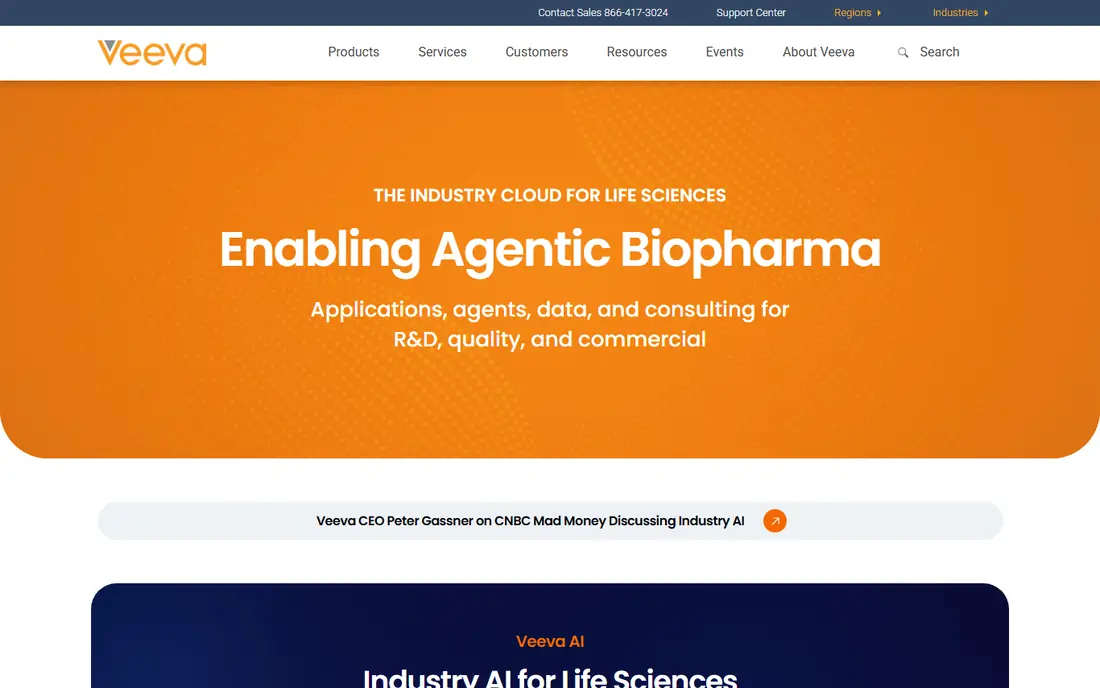
Veeva Vault CRM is the successor to the long running Veeva CRM, now built on Veeva own Vault platform rather than Salesforce. It covers field planning, call reporting, sample accountability, approved content and compliance controls that pharma commercial teams rely on daily. For large companies with many reps across many countries, that depth is hard to match with a generic CRM.
The cost is the catch. Licenses, implementation, validation and change management add up, and the migration from the older Salesforce based Veeva CRM is a multi year program for many customers. If you are already on Veeva, staying on Vault CRM is often the lowest risk path. If you are new to pharma CRM, get a scoped quote and timeline before you commit.
- Deep pharma workflows including sample tracking
- Large life sciences customer base
- Vault platform integration
- Enterprise cost and implementation time
- Migration from older Veeva CRM needs planning
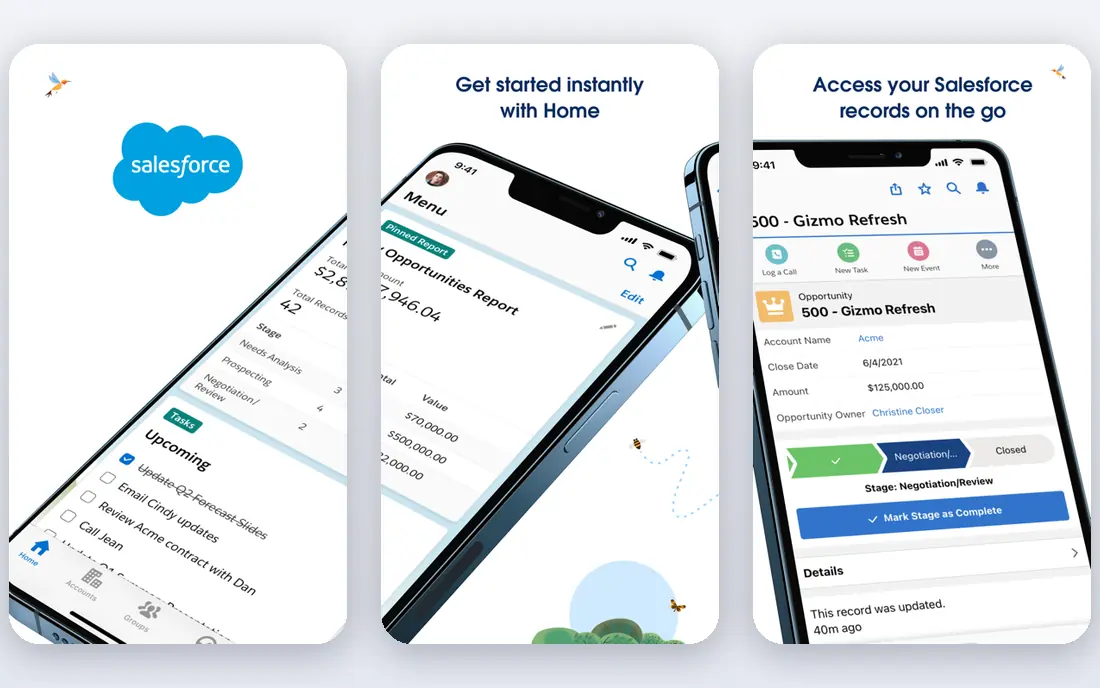
Salesforce Life Sciences Cloud brings pharma data models, compliance layers and AI assisted engagement to the Salesforce platform. It suits enterprises that already run Salesforce for other functions, because it keeps customer data, service and commercial work in one ecosystem. The IQVIA partnership also gives buyers a route to health care data and targeting that generic Salesforce lacks.
Generic Salesforce alone is not a pharma CRM, and Life Sciences Cloud still needs careful configuration, validation and governance. Teams that lack Salesforce expertise will need partners and internal admins. For Salesforce centric companies, though, this is now the main alternative to Veeva, and its momentum in 2026 makes it a must compare option.
- Strong platform and AI tools
- IQVIA partnership and data options
- Familiar to Salesforce teams
- Needs life sciences configuration to be pharma ready
- Enterprise cost and complexity
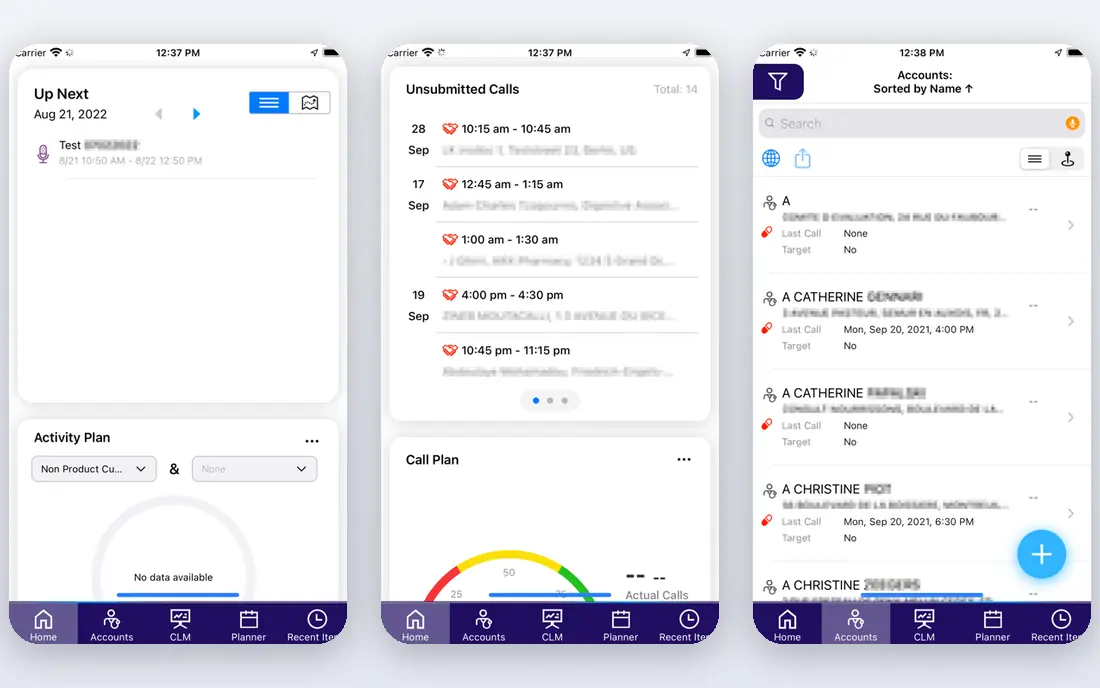
IQVIA Orchestrated Customer Engagement, known as OCE, pairs CRM workflows with IQVIA data assets, so targeting, segmentation and next best action suggestions draw on a deep health care data base. That fusion suits commercial teams whose engagement model depends on data quality and scale. Analytics and reporting are central, not an afterthought bolted onto a sales tool.
Buyers should ask direct questions about OCE long term direction, because IQVIA is also partnering with Salesforce on Life Sciences Cloud. Support timelines, migration paths and data contract terms matter as much as features. If data driven targeting is your core need and you can get clear answers on direction, OCE is a strong contender.
- Ties CRM to IQVIA health care data
- Next best action guidance
- Strong analytics
- Long term platform direction needs clarifying with Salesforce partnership
- Enterprise pricing
Microsoft Dynamics 365 gives large life sciences companies a CRM inside the wider Microsoft stack, with links to ERP, Office tools and data platforms. That integration appeals to IT teams that already standardize on Microsoft, and partners such as Exeevo build pharma specific layers on top of it. Customization is broad, which helps companies with unusual commercial models.
Breadth is also the limit. Out of the box Dynamics is not a pharma CRM, so sample tracking, consent and compliance workflows need partner work and validation. Smaller companies may find the platform heavier than they need. For Microsoft enterprises with strong IT capacity, Dynamics is a credible, flexible choice.
- Broad enterprise platform
- ERP and Office integration
- Partner ecosystem for life sciences
- Pharma specific workflows need partner configuration
- Can be heavy for smaller teams
Exeevo Omnipresence is built on Microsoft Dynamics and designed for life sciences omnichannel engagement. It helps commercial teams plan across field visits, email, web and events, with a single view of health care professional interactions. That omnichannel focus suits companies moving beyond rep only models toward coordinated digital and field engagement.
As a smaller vendor, Exeevo needs closer due diligence on support capacity, roadmap and reference customers in your region. Ask for customers of similar size and for implementation timelines. If omnichannel planning is your main gap and you already use Microsoft tools, Exeevo offers a focused alternative to the two giants.
- Built on Dynamics for pharma
- Omnichannel HCP engagement
- Commercial operations focus
- Smaller vendor than Veeva or Salesforce
- Partner and support capacity needs checking
TikaMobile focuses on medical affairs, MSL teams and smaller commercial teams, with modules for KOL engagement, insights capture, conference planning and medical information requests. Implementation is typically faster and less costly than a full enterprise Veeva program, which matters for biotech companies that need field tools without a huge IT project. Adoption is a stated focus, and that matters because an unused CRM wastes budget.
Large global commercial teams may still need Veeva or Salesforce for sample and territory scale. TikaMobile can also sit alongside an existing commercial CRM, giving medical affairs its own workflows. For small to mid size life sciences teams, it is one of the most practical specialist picks.
- Purpose built for medical affairs and MSL teams
- Faster implementation than enterprise systems
- KOL and insights tools
- Not a full replacement for large commercial CRM at global scale
- Validation depth needs checking
Zoho CRM suits early stage biotech and small pharma teams that need contact management, pipeline tracking and automation without enterprise pricing. Its customization and workflow tools let a small team build call logging, consent fields and sample notes, and its app ecosystem covers email, support and analytics. For a pre launch or small field team, that can be enough.
The limit is clear. Zoho is not built for pharma compliance, so regulated workflows, validation and audit controls need custom work and careful governance. Companies with field samples, strict reporting or multi country compliance should treat Zoho as a stepping stone, not a long term regulated platform. Use it while you are small, and plan a migration path.
- Lower cost entry point
- Automation and customization
- Wide app ecosystem
- Pharma compliance workflows need custom building
- Not a pharma specialist system
HubSpot CRM is best known for marketing, and its free starter tier makes it an easy first system for small life sciences companies. Contact management, email tracking, forms and reporting are straightforward, and the learning curve is far gentler than enterprise pharma systems. Marketing led teams that need to manage leads, events and content will feel at home quickly.
Field sales, sample accountability and regulated interaction logging are not native strengths, so a growing pharma company will outgrow HubSpot for commercial operations. Treat it as a marketing and early pipeline tool, and budget for a specialist CRM when field teams, samples and compliance reporting become core work.
- Free starter CRM tier
- Strong marketing and content tools
- Easy to learn
- Pharma field and sample workflows are not native
- Compliance needs custom configuration
LeadSquared focuses on lead capture, distribution and automation, which suits pharma marketing teams that need to manage inquiries, events and campaigns. Its automation rules help route leads, track follow up and report on campaign performance without a heavy enterprise build. For teams where marketing is the bottleneck, that focus is useful.
It is not a full field CRM for large rep teams, and regulated workflows still need configuration and oversight. Use LeadSquared where lead and marketing operations are the priority, and pair it with a specialist field CRM if your company also runs a large sales force. That split can work well for mid size companies.
- Lead management and automation focus
- Marketing team friendly
- Health care use cases
- Less depth for large field sales operations
- Pharma compliance needs configuration
How we picked these
We compared official product pages, pharma specific feature descriptions, partner ecosystems and public migration guidance for 2026. We favored systems with real life sciences customers, sample or consent workflows, or a clear role for smaller teams, and we flagged where a generic CRM needs extra configuration. We did not test systems ourselves, and pricing is quote based for most enterprise options, so we direct readers to vendor sites for scoped quotes.
How to buy a pharma CRM without a costly mistake
A pharma CRM purchase locks in years of workflow, data and compliance practice, so the buying process deserves more care than a feature checklist. Use the steps below to avoid the most common errors.
Map compliance before features
List every regulated workflow first, including sample accountability, consent, adverse event handling, interaction logging and approved content use. Ask each vendor to show those workflows live, with audit trails, rather than accepting a slide that says compliance is supported. If a vendor cannot show a workflow, assume you will have to build it, validate it and maintain it yourself.
Ask about migration and support dates
Veeva customers should ask about Vault CRM migration timelines, support end dates and partner capacity. Salesforce and IQVIA buyers should ask about platform direction and data contract terms. Get support dates and migration options in writing, because a CRM chosen in 2026 will still be in use when those dates arrive.
Pilot with real field users
Run a pilot with actual reps or MSLs on real territory data, not just a vendor demo with clean sample data. Measure call logging time, offline mobile use, sample handling and reporting effort. A system that looks strong in a demo can still fail if field users find it slow on a mobile device or awkward during a clinic visit.
Price the whole program
Add licenses, implementation, data subscriptions, validation, training and internal admin time to get total cost. Data costs can rival software costs in pharma, and a low license quote can hide a large data or services bill. Compare three year total cost across vendors, not first year license fees alone.
FAQ
What is the best crm for pharmaceutical companies in 2026?
Veeva Vault CRM and Salesforce Life Sciences Cloud are the leading enterprise choices, with IQVIA OCE strong for data driven teams and TikaMobile strong for smaller medical affairs teams. The best choice depends on your current stack, team size, sample needs and data strategy. Shortlist two vendors, run a field pilot and compare three year total cost before you decide.
Do small pharma companies need a specialized CRM?
If field teams meet health care professionals under regulatory rules, a specialist system is usually worth it, because sample tracking, consent and compliant logging are core needs. Very small pre launch teams can start with Zoho CRM or HubSpot CRM for contacts and marketing, then move to a specialist system when field work begins. Plan that migration early so data does not get trapped in a generic tool.
What happened to Veeva CRM on Salesforce?
Veeva is moving customers from its older Salesforce based CRM to Vault CRM, built on its own platform, with migration running through the late 2020s. Customers face a reimplementation rather than a simple upgrade, which is why many companies are reviewing Salesforce Life Sciences Cloud and other options now. Ask Veeva for your support timeline and partner options before you plan a budget.
Can Salesforce be used for pharma?
Yes, through Salesforce Life Sciences Cloud, which adds pharma data models and compliance layers to the Salesforce platform. Generic Salesforce without life sciences configuration is not suitable for regulated pharma commercial work, because sample, consent and audit workflows would need to be built from scratch. Budget for configuration, validation and partner help if you choose this route.
How much does pharma CRM cost?
Enterprise pharma CRM usually costs six or seven figures per year once licenses, implementation, data and validation are included. Mid market specialists cost less, and small team tools such as Zoho CRM or HubSpot CRM start far lower. Get a quote scoped to rep count, countries, modules and data needs, because unscoped quotes hide the largest costs.
What should medical affairs teams look for in a CRM?
Medical affairs teams should look for KOL tiering and engagement planning, insights capture, conference planning and medical information request handling. TikaMobile is built for those workflows, while larger CRMs need configuration to cover them well. Pilot with MSLs and check mobile offline use, because field usability decides whether insights actually get recorded.