Best CPQ Service for Software Companies in 2026: 8 Services Compared
We compared the best CPQ service for software companies, from Salesforce to DealHub, so SaaS teams can quote subscriptions, usage and renewals well today.
- Editor's choice
 Salesforce Revenue Cloud
Salesforce native SaaS teams
Starts at$150 per user per monthVisit salesforce.comFull review - Great alternative
 DealHub
Mid-market guided selling
Starts atSee websiteVisit dealhub.ioFull review - Also consider
 Conga CPQ
Complex Salesforce catalogs
Starts at$35 per user per monthVisit conga.comFull review
TL;DR:
- Salesforce Revenue Cloud is the default for software companies already running on Salesforce, but implementation is rarely quick or cheap.
- DealHub and HubSpot suit mid-market SaaS teams that want faster setup and guided selling without a large enterprise project.
- Conga and Oracle suit complex catalogs and enterprise pricing rules, at the cost of longer implementations.
- QuoteWerks and PandaDoc suit smaller software teams that mainly need accurate quotes and clean proposals.
- Budget for implementation, not just licences, since enterprise CPQ projects often cost well above the licence fee in services.
Quick comparison
| Tool | Best for | Starts at | Free plan? | |
|---|---|---|---|---|
| Salesforce Revenue Cloud | Salesforce native SaaS teams | $150 per user per month | Free trial | Visit |
| DealHub | Mid-market guided selling | See website | Free trial | Visit |
| Conga CPQ | Complex Salesforce catalogs | $35 per user per month | Free trial | Visit |
 HubSpot CPQ | HubSpot revenue teams | $90 per user per month for Sales Hub Pro | Free trial | Visit |
 Oracle CPQ | Oracle ERP software firms | $240 per month | No | Visit |
 SAP CPQ | SAP centred software firms | $62 per user per month | No | Visit |
 PandaDoc | Proposal led SaaS quoting | $19 per user per month | Free trial | Visit |
 QuoteWerks | Small software teams | $15 per user per month | Free trial | Visit |
The best CPQ service for software companies
CPQ stands for configure, price, quote. For software companies, that means turning a messy mix of plans, seats, usage, add-ons, discounts and renewals into a quote that matches what billing will actually charge. We compared pricing pages, product documentation and public user reviews, focusing on SaaS use cases such as subscriptions, usage pricing and amendments.
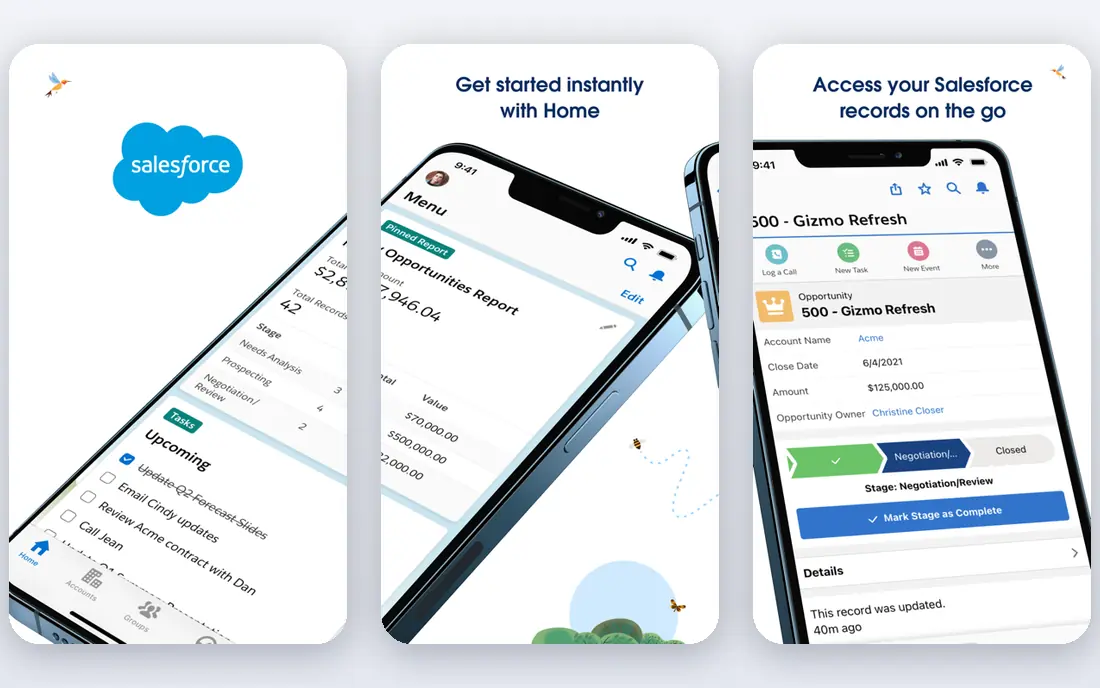
Salesforce Revenue Cloud, formerly Salesforce CPQ, is the default for software companies already running their sales process on Salesforce. Quotes, approvals, subscriptions, usage and renewals live in the same system as opportunities, so reps do not need to copy data between tools. Recent releases add Agentforce guided quoting and revenue lifecycle automation, which helps with complex SaaS deals.
That depth comes with a heavy project. Six to nine months is typical for a serious implementation, and services costs often exceed licence costs. Salesforce no longer sells classic Salesforce CPQ to new customers, pointing them to Revenue Cloud instead, so new buyers should plan around Revenue Cloud pricing and migration, not the older CPQ editions.
- Native Salesforce integration
- Covers subscriptions, usage and renewals
- Agentforce guided quoting features
- Implementation often takes six to nine months
- Total cost includes platform and services, not just licences
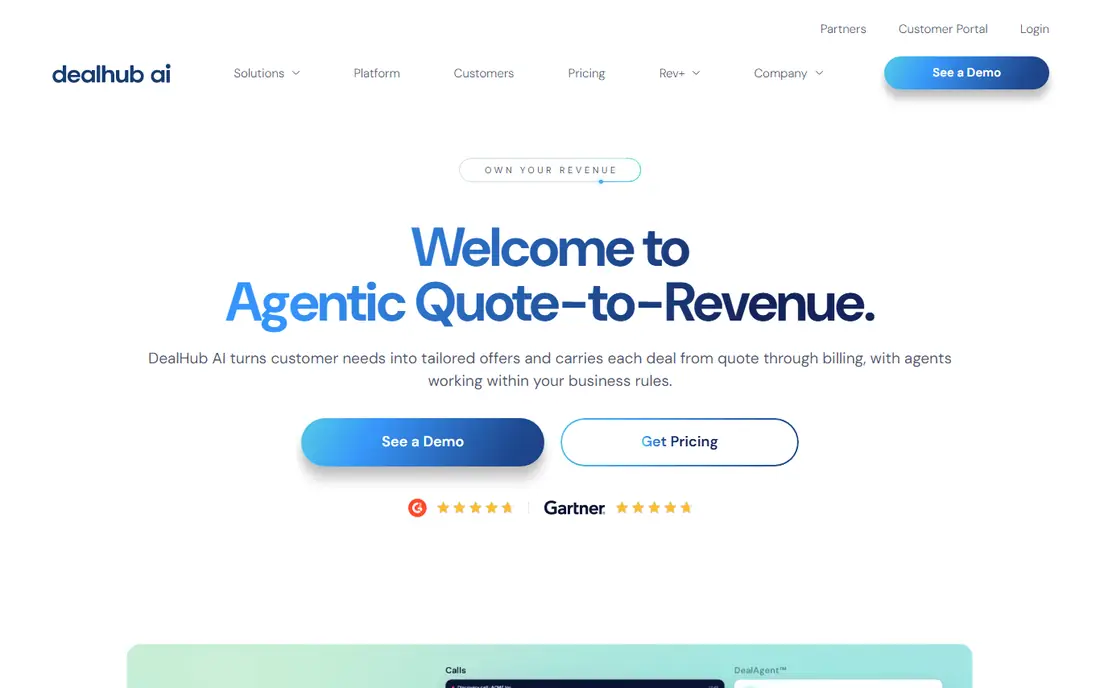
DealHub is built for sales led SaaS teams that want reps to build correct quotes without memorising pricing rules. Guided selling walks reps through options, DealRoom gives buyers a single place to review the quote and contract, and approvals keep discounting under control. Implementation is usually faster than enterprise CPQ, at around three to six months.
Pricing is quote based in current listings, with earlier guides citing around 50 to 75 dollars per user per month, so you will need a vendor quote for a firm number. DealHub is less suited to highly engineered products with complex configuration rules, but for subscription software it is one of the most practical mid-market choices.
- Guided selling and DealRoom features
- Faster implementation than enterprise CPQ, often three to six months
- Strong mid-market SaaS fit
- Pricing is quote based in current listings
- Less suited to highly engineered manufacturing catalogs
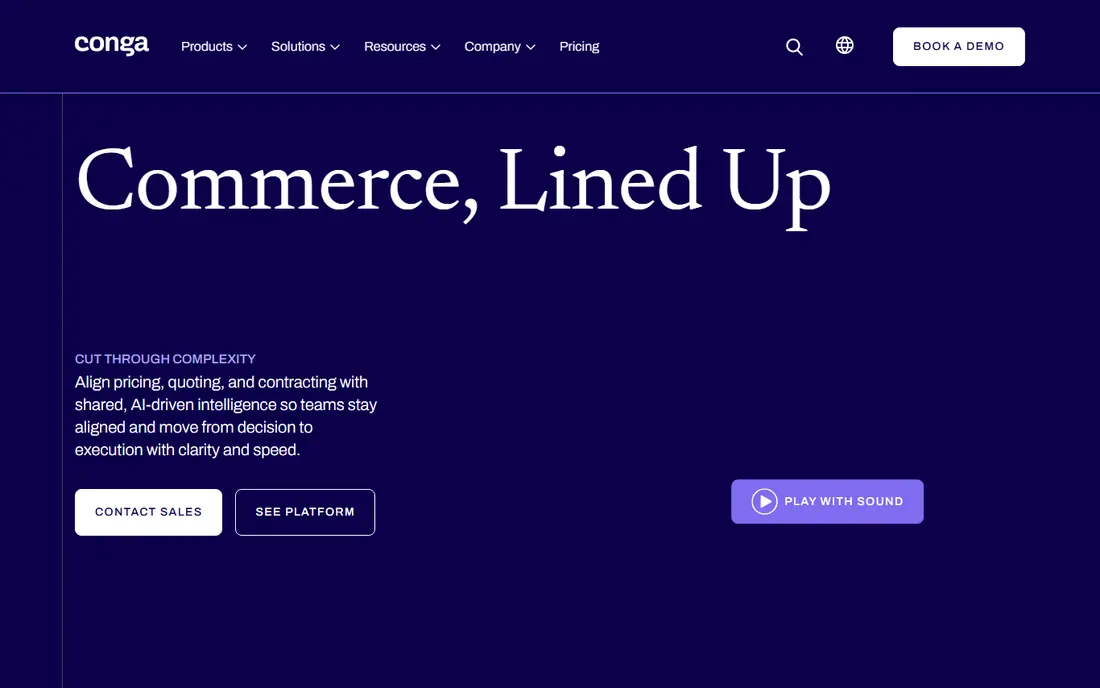
Conga CPQ, now part of the Conga Advantage suite, suits software companies with complex catalogs that have outgrown native Salesforce quoting. It handles configuration rules, pricing, approvals and document generation inside Salesforce, with more flexibility for large product catalogs and discount structures. User reviews rate it well for value relative to its feature breadth.
Large implementations are still large projects, with nine to 18 months cited for complex orgs, and ongoing admin skill matters. If your catalog is simple, Conga may be more than you need. If your catalog has many bundles, tiers and pricing rules, Conga is a strong enterprise alternative to Revenue Cloud.
- Strong fit for complex Salesforce orgs
- Flexible configuration and pricing rules
- Well rated for value in user reviews
- Implementation can take nine to 18 months for large orgs
- Needs skilled admins to maintain
HubSpot CPQ is the obvious choice for software companies already running sales and marketing on HubSpot. Quotes are built from CRM products and line items, with approvals and e-signature through connected tools, and no separate CPQ system to integrate. Sales Hub Pro, at 90 dollars per user per month, includes CPQ features, which makes the marginal cost low for existing HubSpot customers.
Power is the limit. HubSpot CPQ handles standard SaaS quoting well, but it is not built for the deepest configuration rules or multi-entity enterprise pricing. Teams that already live in HubSpot and sell standard plans and add-ons will find it fast and practical, while complex catalog teams should look at DealHub or Conga.
- Quoting inside HubSpot CRM
- Included in Sales Hub Pro
- Simpler setup for HubSpot first teams
- Less powerful than enterprise CPQ for complex pricing
- Best value only if you already use HubSpot
Oracle CPQ suits software and technology companies already running Oracle ERP, where quoting must match ERP pricing, inventory and order rules. It handles complex configuration and B2B pricing well, and industry buyers guides rank Oracle highly for product experience. That ERP native fit reduces the risk of quotes that billing cannot fulfil.
Cost and complexity are the drawbacks. Reviewers describe Oracle CPQ pricing as high, and implementations are long, service heavy projects. For Oracle shops with complex deals, it is often the right choice despite that. For non Oracle SaaS teams, a Salesforce or HubSpot native tool will usually be simpler.
- Strong fit for Oracle ERP customers
- Handles complex manufacturing and B2B configuration
- High product experience scores in industry guides
- Pricing is seen as high by reviewers
- Enterprise implementation is long and service heavy
SAP CPQ is built for companies running SAP, especially SAP S and 4HANA, where product, pricing and order data already live in SAP. Standard edition starts at 62 dollars per user per month, with a professional edition at 99 dollars per user per month for deeper configuration and pricing rules. That published pricing is clearer than many enterprise rivals.
Outside SAP, the case weakens quickly. Integration, data models and admin skills all assume SAP, so a SaaS team on Salesforce or HubSpot gains little from choosing SAP CPQ. For SAP centred software firms, though, it keeps quoting, pricing and order data in one system, which reduces errors downstream.
- Standard edition from 62 dollars per user per month
- Strong fit for SAP S and 4HANA shops
- Professional edition adds deeper rules
- Best value only inside SAP
- Implementation and integration need SAP expertise
PandaDoc is a proposal and document tool with CPQ features, rather than a full enterprise CPQ platform. For small software teams, that is often enough: build a quote, turn it into a clean proposal, get e-signature, and track when the buyer opens it. Essentials starts at 19 dollars per user per month, and setup is fast compared with enterprise CPQ.
The limit matters for complex SaaS pricing. Full CPQ features in PandaDoc sit in Enterprise plans with contact sales pricing, and highly complex configuration rules are better handled by DealHub or Conga. PandaDoc is best for teams whose main problem is messy proposals, not messy pricing logic.
- Essentials from 19 dollars per user per month
- Clean proposals, quotes and e-signature
- Fast setup for small teams
- Proposal tool first, not full enterprise CPQ
- CPQ features sit in higher Enterprise plans with contact sales pricing
QuoteWerks is the cheapest credible CPQ option for small software companies, resellers and managed service providers. Standard pricing starts at 15 dollars per user per month, with quoting, product configuration and proposal features that cover most small team needs. It integrates with common CRMs and accounting tools, which helps small teams keep quotes and invoices aligned.
The interface feels dated next to DealHub or HubSpot, and it is not built for very large enterprise catalogs. For a small software team that needs accurate quotes without an enterprise project, QuoteWerks offers the best price to capability balance on this list.
- Standard from 15 dollars per user per month
- Cheapest real CPQ for small businesses
- Strong fit for software resellers and MSPs
- Interface feels dated compared with newer SaaS tools
- Less suited to large enterprise catalogs
How we picked these
We compared pricing pages, product documentation and public user reviews, with a focus on software and SaaS use cases: subscriptions, seat tiers, usage pricing, amendments and renewals. We favoured tools that are active in 2026, that publish at least a starting price or a clear quote process, and that fit a recognisable software company size, from small teams to enterprises. Pure proposal tools were included only where they offer real CPQ features.
How to choose CPQ for a software company
Start with your CRM and billing system, since CPQ must agree with both. A quote that looks right in sales but cannot be billed correctly will create amendments, credits and churn. Map your pricing model first: flat plans, per seat tiers, usage, add-ons, discounts, multi-year terms and renewals.
Test the amendment, not just the first quote
The hardest CPQ test for SaaS is not the first quote, it is the mid-term change. Ask each vendor to demo an upgrade, a co-term of two subscriptions, a usage overage and a renewal with a price change, all without a manual workaround. If that flow needs spreadsheets or developer help, the tool will cost you far more in operations than the licence suggests.
Implementation, admin and total cost
Ask for a realistic implementation timeline, the internal admin time needed each month, and the services cost on top of licences. Enterprise projects often take six to 18 months, while mid-market tools take three to six months and small team tools take weeks. Choose a tool your team can actually administer after go live, not just one that demos well.
Pricing discipline and approvals
Good CPQ should stop reps from quoting impossible combinations and from discounting below margin without approval. Check approval workflows, discount guardrails, price books by segment or region, and audit trails. For SaaS, also check how the tool handles trials, free tiers and grandfathered pricing, since those edge cases cause many billing disputes.
FAQ
What does CPQ do for a software company?
CPQ helps sales teams configure the right product mix, apply correct pricing and discount rules, and generate an accurate quote. For software companies, that includes plans, seats, usage, add-ons, contract length and renewal terms, so the quote matches what billing will charge.
Is CPQ the same as a CRM?
No, a CRM manages customer data and opportunities, while CPQ works with the CRM to build accurate quotes from product and pricing rules. Many CPQ tools, including Salesforce Revenue Cloud and HubSpot CPQ, are built to run inside a CRM, which is why the CRM choice often drives the CPQ choice.
How much does CPQ software cost?
Costs range from 15 dollars per user per month for QuoteWerks and 19 dollars for PandaDoc Essentials, to quote based enterprise pricing for DealHub, Conga and Oracle. Implementation services often add substantially to the licence cost, especially for enterprise tools, so ask for total project cost, not just the licence rate.
How long does CPQ implementation take?
Small team tools can go live in weeks, mid-market tools such as DealHub often take three to six months, and enterprise tools such as Salesforce Revenue Cloud, Conga and Oracle often take six to 18 months. Timeline depends on catalog complexity, pricing rules, integrations and how clean your existing product data is.
Do small SaaS teams need full CPQ?
Not always. Small teams with simple plans and few discount rules may do well with HubSpot CPQ, PandaDoc or QuoteWerks. Full enterprise CPQ becomes worth it when pricing rules, bundles, usage and amendments grow complex enough that manual quoting causes errors and billing disputes.
Can CPQ handle usage based pricing?
Most modern CPQ tools handle usage pricing, but the depth varies, so test it directly. Ask vendors to demo usage tiers, overage rates, minimum commitments and how usage quotes convert to invoices, rather than accepting a general claim that usage is supported.