Best Contract Management Software for Legal Teams in 2026: 9 Products Compared
Compare the best contract management software for legal teams on drafting, redlining, approvals, repository search and price, for in-house teams in 2026.
- Editor's choice
 Ironclad
Legal workflow automation
Starts atSee websiteVisit ironcladapp.comFull review - Great alternative
 DocuSign CLM
Teams already using DocuSign
Starts atSee websiteVisit docusign.comFull review - Also consider
 Juro
Modern in-house collaboration
Starts atSee websiteVisit juro.comFull review
TL;DR:
- Ironclad, DocuSign CLM, Agiloft and Icertis suit larger legal teams that need workflow automation, approvals and a searchable contract repository.
- Juro and SpotDraft suit mid-market in-house teams that want modern collaboration and AI-assisted review without enterprise implementation timelines.
- LinkSquares suits teams whose main pain is finding and analyzing signed contracts, rather than drafting new ones.
- Concord and PandaDoc suit smaller legal and business teams that need templates, signatures and renewals at a lower price.
- Most enterprise contract pricing is quote-based, so get a written quote that covers users, contracts, AI features and implementation.
Quick comparison
| Tool | Best for | Starts at | Free plan? | |
|---|---|---|---|---|
| Ironclad | Legal workflow automation | See website | Free trial | Visit |
| DocuSign CLM | Teams already using DocuSign | See website | Free trial | Visit |
| Juro | Modern in-house collaboration | See website | Free trial | Visit |
 Agiloft | Highly customizable workflows | See website | Free trial | Visit |
 Icertis | Enterprise governance | See website | Free trial | Visit |
 LinkSquares | Contract analytics and search | See website | Free trial | Visit |
 SpotDraft | Legal operations automation | See website | Free trial | Visit |
 Concord | Smaller teams and renewals | $499 per month | Free trial | Visit |
 PandaDoc | Low-cost contracts and signatures | $19 per user per month | Free trial | Visit |
The best contract management software for legal teams
Contract management software for legal teams covers the full lifecycle: drafting, negotiation, approval, signature, storage, obligation tracking and renewal. The best tool depends on contract volume, negotiation complexity and how much control legal needs over templates and playbooks. We compared official feature pages, pricing pages and public reviews for tools used by in-house legal teams today. Disclaimer: these tools support legal work, they do not provide legal advice, and final contract terms still need review by qualified counsel for your situation.
Ironclad is built for in-house legal teams that process a high volume of contracts and need workflow control. Teams build approval chains, use templates and playbooks, negotiate with AI-assisted redlining, and store signed contracts in a searchable repository with renewal and obligation alerts. That structure helps legal stop being a bottleneck while still controlling risk.
Pricing is custom and enterprise, with marketplace medians around $40,000 per year in recent comparisons, though your quote will depend on users and volume. Implementation also takes time, typically weeks, as workflows and templates are configured. For a mid-market or enterprise legal team with significant contract volume, Ironclad is a leading shortlist pick. For a small team, the price and setup will likely outweigh the benefit.
- Flexible workflow designer for approvals
- AI-assisted redlining and playbooks
- Searchable repository with obligation tracking
- Enterprise pricing, often tens of thousands per year
- Implementation takes weeks, not days
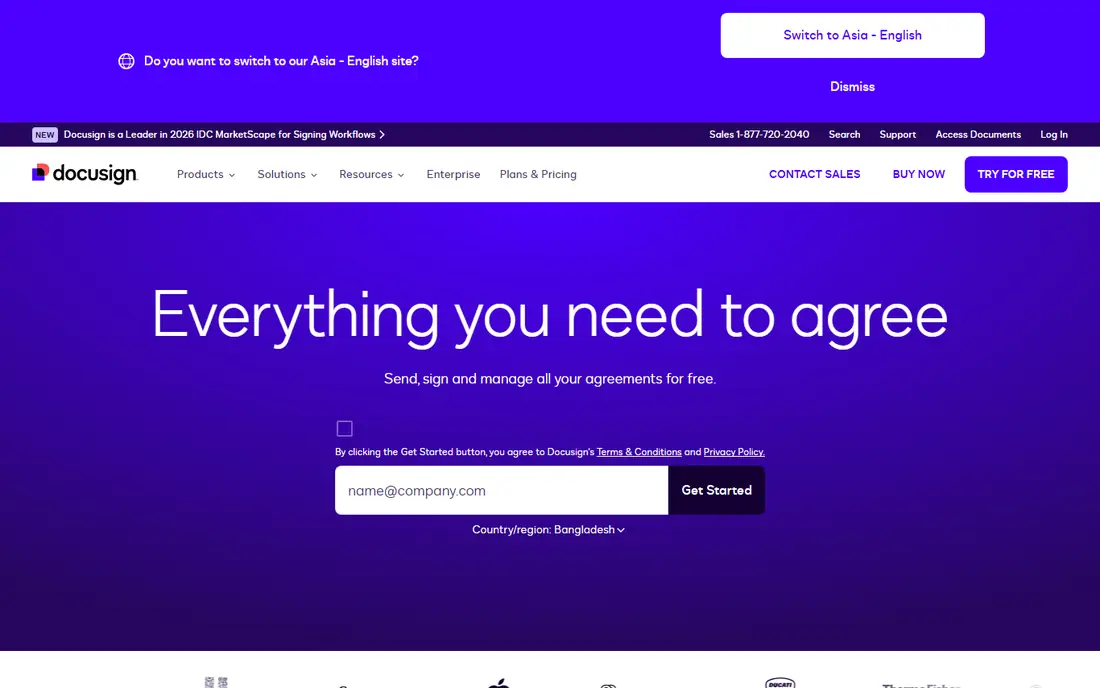
DocuSign CLM extends the signature tool many companies already use into full contract lifecycle management. Sales teams can generate contracts from Salesforce data, legal can review and approve in a workflow, and signed documents feed a repository with clause extraction and obligation tracking. That continuity from drafting to signature to storage is the main advantage.
Pricing is quote-based and varies by users, modules and volume, so a sales conversation is needed for a firm number. Teams that do not use DocuSign for signatures or Salesforce for deals will get less of the integration benefit. For a company already committed to DocuSign, CLM is a natural, low-friction upgrade from signatures alone.
- Builds on widely used DocuSign signatures
- Document generation from CRM data
- AI clause extraction and obligation tracking
- Pricing is quote-based and depends on modules
- Full value needs DocuSign and CRM adoption
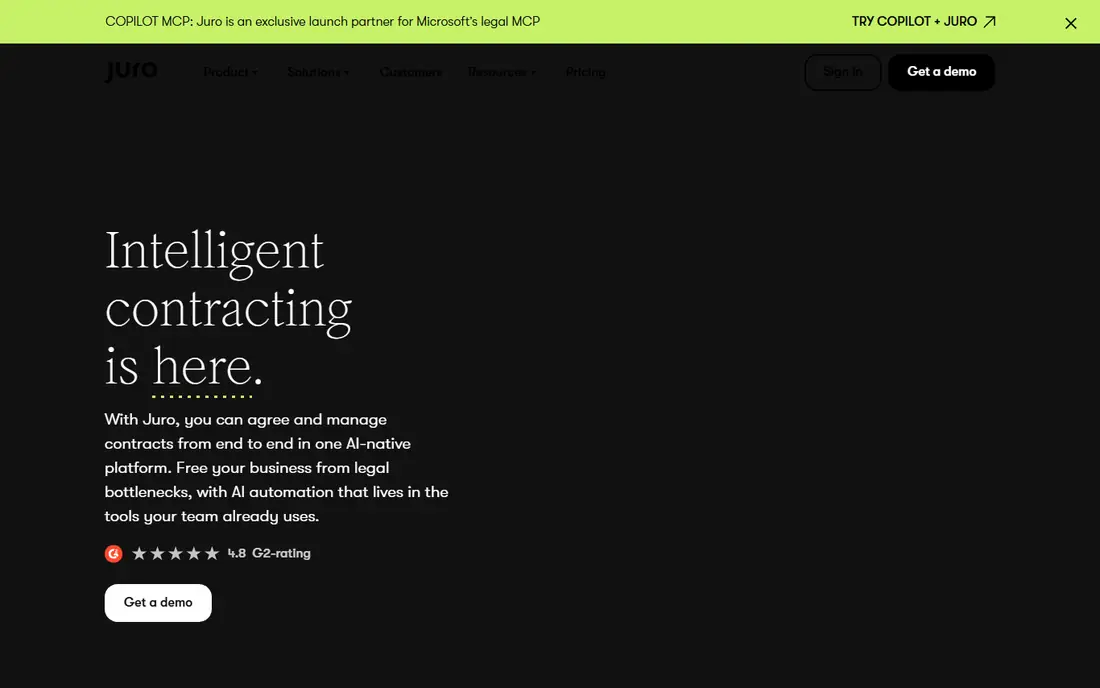
Juro is designed for in-house and commercial teams that negotiate in the browser, not in emailed Word files. Parties edit, comment and approve in a shared workspace, AI tools assist with drafting and review, and signed contracts stay searchable with renewal alerts. That collaboration model reduces version confusion, which is a common source of delay.
Pricing is custom, so budget planning needs a written quote for your user count and contract volume. Juro is less of an enterprise workflow builder than Ironclad or Agiloft, which matters for very complex approval chains. For a fast-growing team that values clean collaboration and quick setup, Juro is a strong modern option.
- Browser-native editor for collaborative drafting
- AI draft and review assistance
- Native signatures and repository search
- Pricing is quote-based, with medians around $32,000 per year in some comparisons
- Enterprise workflow depth is lighter than Ironclad
Agiloft is the customization pick for legal teams whose processes do not fit a standard template. Its no-code platform lets teams build contract workflows, approval rules, permissions, reports and integrations to match their exact process, from intake to signature to obligation tracking. That flexibility suits legal operations teams that manage many contract types and stakeholders.
The trade-off is effort and cost. Pricing is quote-based and often enterprise, and deep customization needs a skilled admin or partner to maintain. A small team with simple contracts will find Agiloft more platform than needed. A larger team with complex, changing workflows will value the control Agiloft provides.
- Very flexible, no-code workflow customization
- Strong fit for complex legal and procurement processes
- Deep reporting and permissions
- Pricing is quote-based, with medians around $67,000 per year in some comparisons
- Customization needs skilled admin
Icertis serves global enterprises that need contract governance across many business units, countries and contract types. It offers contract creation, negotiation, approval, repository search, obligation management and analytics at scale, with playbooks that help large legal teams apply consistent positions. That governance strength matters when contract risk spans procurement, sales and partnerships worldwide.
Implementation is a major program, pricing is enterprise and quote-based, and ongoing admin needs dedicated legal operations support. A small or mid-size team will find Icertis more system than it needs. For a large enterprise with global contract volume and strict governance needs, Icertis belongs on the shortlist.
- Enterprise contract intelligence and governance
- Strong negotiation playbooks at scale
- Wide integrations for global companies
- Enterprise pricing and long implementation
- Overkill for small legal teams
LinkSquares focuses on what happens after signature: finding contracts, understanding terms, tracking renewals and analyzing risk across a portfolio. AI extraction pulls key clauses and dates from signed documents, so legal can answer questions such as which contracts auto-renew next quarter, without opening each file. That post-signature strength complements, rather than replaces, drafting tools.
Pricing is quote-based, and teams that need heavy drafting, negotiation playbooks and approval design may prefer Ironclad or Juro as the core system. For a legal team drowning in signed contracts and audit requests, LinkSquares offers the fastest path to visibility. It also works well alongside a drafting tool, if the budget allows both.
- Strong AI search across signed contracts
- Clear analytics on terms, renewals and risk
- Good fit for post-signature management
- Pricing is quote-based
- Drafting and negotiation tools are lighter than full CLM rivals
SpotDraft aims to automate legal operations for mid-market in-house teams, from intake and drafting to review, approval, signature and repository management. AI review tools help flag risky clauses, while workflows route contracts to the right reviewer and track status in one place. That automation helps a small legal team handle growing volume without adding headcount at the same rate.
Pricing is quote-based, so a written quote for users and contract volume is needed before budgeting. SpotDraft sits between simple signature tools and full enterprise CLM, which means very complex enterprise workflows may still need a larger platform. For a mid-market team that wants modern legal automation at a lower enterprise price point, SpotDraft is worth a demo.
- Modern legal operations workflows
- AI review assistance
- Good fit for mid-market in-house teams
- Pricing is quote-based, with medians around $25,000 per year in some comparisons
- Enterprise depth varies by module
Concord suits smaller legal and business teams that need contracts online without enterprise complexity. Parties draft, negotiate, sign and store contracts in a shared online workspace, with deadline and renewal alerts to prevent missed dates. Pricing starts from $499 per month when billed annually, which is clearer than many quote-based rivals and easier to budget for a small company.
The limit is depth: approval workflows, AI review and enterprise reporting are lighter than Ironclad, Agiloft or Icertis. That is fine for a team with moderate volume and straightforward contracts, and it is a reason to look elsewhere for complex global programs. For a small team moving off email and shared drives, Concord offers a practical, affordable step up.
- Published starting price from $499 per month when billed annually
- Online negotiation and signatures in one place
- Clear renewal and deadline tracking
- Workflow depth is lighter than enterprise CLM
- Larger teams may outgrow reporting and permissions
PandaDoc is not a dedicated legal CLM, but it belongs here for small legal and business teams that need contracts fast at low cost. Teams use templates, send documents for e-signature, track opens and store signed copies, with payment collection where needed. Essentials starts at $19 per user per month, which is far below enterprise CLM pricing.
The honest limit is legal depth: playbooks, obligation tracking, clause libraries and advanced approvals are lighter than Ironclad or Juro. A team with high contract volume, complex negotiations or strict governance should choose a dedicated CLM instead. For a small team that mainly needs clean contracts and signatures, PandaDoc is a fast, affordable starting point.
- Low entry price at $19 per user per month
- Templates, e-signatures and payment links
- Easy setup for small teams
- Legal workflow and repository depth is lighter than dedicated CLM
- AI contract review is limited
How we picked these
We compared official feature pages, pricing pages and public reviews for contract tools used by in-house legal teams today. We kept tools with drafting or negotiation, approvals, signatures, repository search and renewal tracking, and we excluded pure e-signature tools without contract lifecycle features, except where a low-cost option clearly serves small legal teams. Prices are starting prices from vendor pages or recent marketplace listings, and we wrote See website where vendors do not publish a starting price.
What to check before you buy
Start with your contract types and volume, not with AI marketing. List your top five contract types, who drafts them, who approves them, and where delays happen today. A vendor demo should use one of your real contracts, with your template, approval chain and playbook, so you can see redlining, routing and repository search in practice. If a demo only uses sample contracts, the workflow gaps will appear after you sign.
Check security, privilege and data control
Ask how contracts are stored and encrypted, who can access them, and whether the vendor offers role-based permissions, audit logs and data residency options that fit your policy. For sensitive matters, ask about data retention, AI training use, and whether AI review tools process privileged material outside your control. Get those answers in writing, since contract data is among the most sensitive data a company holds.
Price users, contracts and AI separately
Enterprise CLM quotes often bundle users, contract volume, AI features, implementation and support in ways that are hard to compare. Ask for each line separately, plus renewal terms and what happens to your repository if you leave. A pilot with one contract type and a small legal team will show adoption, workflow fit and true admin effort before a wider rollout.
FAQ
What is contract lifecycle management software?
Contract lifecycle management, or CLM, software manages contracts from request and drafting through negotiation, approval, signature, storage and renewal. It replaces email, shared drives and manual tracking with templates, workflows, a searchable repository and alerts for deadlines. Legal teams use CLM to reduce risk, speed up deals and keep a clear record of each contract.
How much does contract management software for legal teams cost?
Small-team tools start at $19 per user per month for PandaDoc and $499 per month for Concord, while enterprise CLM tools are quote-based and often run tens of thousands of dollars per year. Marketplace medians in recent comparisons range from about $25,000 per year for SpotDraft to about $67,000 for Agiloft, depending on users and scope. Always request a written quote with implementation included.
Do legal teams still need lawyers if they use CLM software?
Yes. CLM software automates workflows, templates and review assistance, but it does not replace legal judgment. Lawyers still set playbooks, review high-risk clauses, approve exceptions and advise on complex deals. The software helps legal handle more volume consistently, not remove legal review.
Can contract software handle redlining and negotiation?
Yes, most dedicated CLM tools support redlining, comments, version tracking and approval routing, with Juro, Ironclad and DocuSign CLM offering browser or Word-based negotiation. Check whether counterparties can redline without a license, how versions are tracked, and whether AI review flags deviations from your standard positions. Test negotiation with a real counterparty workflow during a pilot.
How does contract software track renewals and obligations?
CLM tools extract key dates and obligations from signed contracts and send alerts before renewals, expirations and notice deadlines. Repository search lets legal find contracts by clause, counterparty, value or date, which helps audits and renegotiations. Check extraction accuracy on your own contracts, since poor extraction undermines trust in alerts.
Is contract data safe in cloud CLM software?
Reputable vendors offer encryption, role-based access, audit logs and compliance certifications, but security details vary by vendor and plan. Review the vendor security and privacy pages, ask about data residency and AI data use, and limit access to staff who need it. For highly sensitive contracts, get security answers in writing before migration.