Best Contact Center Analytics Platforms in 2026: 9 Platforms Compared
Compare the best contact center analytics platforms in 2026, from NiCE CXone and Genesys to Talkdesk, Five9, and Observe.AI, with pricing compared today.
- Editor's choice
 NiCE CXone
Large centers needing deep analytics
Starts at$110 per agent per monthVisit nice.comFull review - Great alternative
 Genesys Cloud CX
Global enterprise analytics
Starts at$75 per user per monthVisit genesys.comFull review - Also consider
 Talkdesk
Mid-size centers wanting AI analytics
Starts at$85 per user per monthVisit talkdesk.comFull review
TL;DR:
- NiCE CXone and Genesys Cloud CX suit large centers that need deep analytics, workforce tools, and AI quality scoring in one suite.
- Talkdesk and Five9 suit mid-size and growing centers that want strong analytics without the longest enterprise deployment.
- Observe.AI and Cresta suit teams focused on conversation intelligence, coaching, and agent guidance rather than full contact center replacement.
- Verint and Calabrio suit centers that already run a phone system and want standalone quality, workforce, and analytics tools.
- Dialpad suits smaller teams that want native voice intelligence inside a simpler communications platform.
Quick comparison
| Tool | Best for | Starts at | Free plan? | |
|---|---|---|---|---|
| NiCE CXone | Large centers needing deep analytics | $110 per agent per month | No | Visit |
| Genesys Cloud CX | Global enterprise analytics | $75 per user per month | No | Visit |
| Talkdesk | Mid-size centers wanting AI analytics | $85 per user per month | No | Visit |
 Five9 | Easy deployment with strong analytics | $119 per user per month | No | Visit |
 Verint | Enterprise quality and analytics | See website | No | Visit |
 Calabrio | Standalone quality and workforce analytics | See website | No | Visit |
 Observe.AI | Conversation intelligence and coaching | See website | No | Visit |
 Cresta | AI coaching and agent guidance | See website | No | Visit |
 Dialpad | Smaller teams wanting native voice AI | $80 per user per month | No | Visit |
The best contact center analytics platforms
We compared analytics platforms by conversation analysis, quality scoring, dashboards, workforce features, and integrations, using vendor pricing pages and recent comparisons. We focused on tools that analyze calls, chats, and other contacts to improve service, coaching, and compliance, rather than simple call recording. Prices are per user or per agent per month where published, and See website where pricing is quoted.
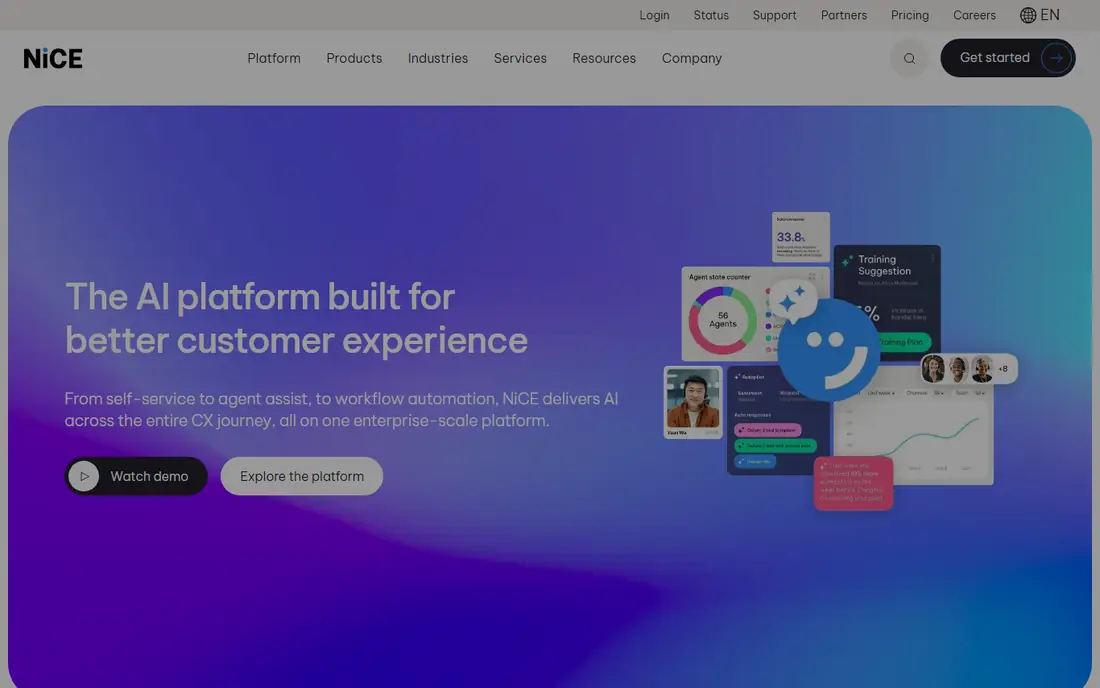
NiCE CXone suits large contact centers that want analytics, quality management, and workforce tools in one suite. Its Enlighten AI features analyze conversations, score quality, and surface coaching opportunities, while dashboards track service levels, handle time, and customer sentiment across voice and digital channels. For a center with hundreds of agents, that breadth helps managers move from sample-based quality checks to a fuller view of every contact.
The trade-off is complexity and cost. CXone suites start around $110 per agent per month and rise with higher tiers, and deployment needs planning, integration work, and training. Smaller teams may find the platform larger than they need. If you run a large, regulated, or multi-channel center, NiCE is a leading shortlist option. If you run a small team, a simpler tool may serve you faster.
- Enlighten AI analytics
- Quality and workforce tools
- Wide channel coverage
- Higher price and complex setup
- Smaller teams may find it too large
Genesys Cloud CX suits global enterprises that need analytics across voice, chat, email, and social channels in one cloud platform. Its workforce engagement tools link analytics to scheduling, quality, and coaching, so managers can act on what the data shows rather than only reporting it. A large integration catalog also helps firms connect Genesys to Salesforce, Zendesk, and other business systems they already use.
The catch is tiering. Basic analytics are included, but deeper AI, predictive routing, and advanced workforce features sit on higher tiers, so the starting price does not tell the full story. Deployment also takes time for a large center. If you need a global, integrated platform, Genesys is a strong choice. If you need quick standalone analytics, a specialist tool may be faster.
- Predictive engagement and journey analytics
- Workforce engagement
- 350 plus integrations
- Higher tiers needed for advanced AI
- Deployment can take weeks
Talkdesk suits mid-size and enterprise centers that want AI analytics with industry-specific templates for healthcare, retail, and financial services. Its analytics tools track conversation quality, sentiment, and agent performance, while AI Trainer helps teams tune models for their own language and compliance needs. That industry focus can shorten setup compared with a generic platform that needs heavy customization.
Pricing and tiering need care. The starting price covers a digital or voice tier, while fuller analytics and workforce features sit on higher tiers, so a buyer must map the tier to the analytics they actually need. Talkdesk is a strong pick for centers that want AI analytics plus industry templates, provided the quoted tier includes the quality and reporting features you plan to use daily.
- AI analytics and quality tools
- Industry templates
- Strong integrations
- Analytics depth varies by tier
- Pricing structure can be complex
Five9 suits centers that want a reliable cloud platform with strong analytics and a reputation for easier deployment than some enterprise rivals. Its analytics cover voice and digital contacts, with AI coaching, sentiment scoring, and supervisor dashboards that help managers spot struggling agents early. Salesforce integration is a particular strength for firms that already run their service work in Salesforce.
The limits are seat minimums and customization. Some Five9 tiers carry a 50-seat minimum, which rules out very small teams, and reporting customization can feel limited compared with specialist analytics tools. If you run a mid-size or larger center and want a dependable platform with good analytics, Five9 is a solid choice. If you run a tiny team, a smaller tool may fit better.
- Omnichannel analytics
- AI coaching and automation
- Salesforce integration
- 50-seat minimum reported on some tiers
- Reporting customization can be limited
Verint suits large and regulated centers that need deep quality management, speech analytics, and workforce tools, often on top of an existing phone system. Its analytics help firms analyze every interaction for compliance, risk, and service quality, rather than relying on a small sample of calls. That depth matters in financial services, healthcare, and other regulated settings where a missed compliance phrase can carry real risk.
The trade-off is enterprise complexity. Pricing is quoted, deployment needs specialist help, and the platform can feel heavy for a small center. If you already use Verint or a compatible phone system, adding its analytics is a natural step. If you want a quick cloud analytics tool for a small team, a lighter platform will move faster.
- Quality management and speech analytics
- Workforce tools
- Compliance strengths
- Pricing is quoted
- Deployment and setup can be complex
Calabrio ONE suits centers that want quality, analytics, and workforce management without replacing their phone system. Its tools analyze interactions, score quality, and link findings to scheduling and coaching, so managers can fix a service problem and adjust staffing in one workflow. That standalone model appeals to centers that like their current voice platform but need better insight into what agents actually say and do.
The limit is scope. Calabrio is an analytics and workforce layer, not a full contact center replacement, so buyers who need routing, IVR, and omnichannel handling will still need a core platform. Pricing is quoted, which makes early comparison harder. If you want to add analytics to a working system, Calabrio is a strong specialist pick.
- Calabrio ONE quality and analytics
- Workforce management
- Agent coaching tools
- Pricing is quoted
- Best as an add-on to an existing contact center
Observe.AI suits teams that want to understand every conversation and coach agents on what actually happened, not just on handle time. Its platform transcribes and analyzes calls and chats, scores quality automatically, and offers real-time guidance during live contacts. That focus helps quality teams move from manual call sampling to a fuller, fairer view of agent performance and customer issues.
The catch is that Observe.AI is a conversation intelligence layer, not a full contact center. You will still need a phone or omnichannel platform to route contacts, and pricing is quoted after a demo. If your main problem is quality, coaching, and insight, Observe.AI is a leading specialist. If you need a complete contact center replacement, start with NiCE, Genesys, Talkdesk, or Five9.
- Conversation intelligence
- Automated quality scoring
- Real-time agent guidance
- Pricing is quoted
- Works best alongside a core contact center platform
Cresta suits centers that want AI to guide agents in real time, not just report after the call ends. Its tools analyze live conversations, suggest next steps, and coach agents on compliance and service language, while analytics track which behaviors lead to better outcomes. That live guidance can help new agents perform closer to experienced staff, and it can reduce compliance errors in regulated sales and service calls.
The trade-off is enterprise fit and effort. Cresta pricing is quoted, implementation needs tuning for your products and compliance rules, and the value depends on agent adoption. If agents ignore live prompts, the benefit fades. For a center with a clear coaching or compliance problem and the capacity to support AI rollout, Cresta is a strong specialist choice.
- Real-time agent guidance
- AI coaching
- Conversation analytics
- Pricing is quoted
- Enterprise focus and implementation effort
Dialpad suits smaller and mid-size teams that want voice intelligence built into a communications platform they already use for calls and meetings. Its AI transcribes calls, summarizes conversations, and surfaces sentiment and action items, while the Ai Contact Center tier adds supervisor dashboards and analytics. Setup is faster than a large enterprise suite, which helps teams that cannot wait months for deployment.
The catch is tiering. The well-known $15 phone price does not include contact center analytics, which sit on the $80 Support tier, so buyers must compare the right plan. Analytics depth is also lighter than NiCE or Genesys for very large centers. If you run a smaller team and want native AI with fast setup, Dialpad is a practical pick, provided you price the Support tier.
- Native AI transcription and summaries
- Contact center analytics on Support tier
- Fast setup
- Full contact center analytics need the $80 Support tier, not the basic phone price
How we picked these
We compared vendor pricing pages, analytics features, and recent platform comparisons, focusing on conversation analysis, quality scoring, dashboards, and workforce links. We favored platforms that analyze a high share of contacts, not just a sample, and that connect findings to coaching and scheduling. We also noted tiering, since many platforms advertise a low starting price that does not include the analytics buyers actually need.
We did not run live call tests, since analytics quality depends on audio quality, language, and the specific use case. Use this list to shortlist by center size and by whether you need a full platform or a specialist layer, then run a pilot on your real contacts and judge transcription accuracy, dashboard usefulness, and coaching impact before you sign.
How to choose contact center analytics without overspending
Start with the question you need answered every week. If the question is agent quality, you need conversation intelligence and scoring. If it is staffing, you need workforce analytics linked to volume and handle time. If it is compliance, you need phrase detection and audit trails. Naming that weekly question will separate a full suite from a specialist tool faster than a feature checklist.
Next, pilot on real contacts, not demo calls. Test transcription accuracy for your accents, products, and background noise, and check whether supervisors can find and act on a coaching moment in under a few minutes. A beautiful dashboard that no supervisor uses is wasted spend, while a simpler tool that managers open daily will improve service faster.
Finally, price the tier you will actually use, including seat minimums, AI add-ons, and implementation. Ask for the total monthly cost for your agent count on the tier that includes your required analytics, and get the contract term and exit terms in writing. That total, not the advertised starting price, is the fair comparison figure.
FAQ
What is contact center analytics?
Contact center analytics is the analysis of calls, chats, emails, and other contacts to improve service, coaching, and compliance. It includes transcription, sentiment analysis, quality scoring, dashboards, and workforce forecasting. Modern tools aim to analyze most contacts, not just a small sample, so managers see real patterns.
Do I need a full contact center platform or just analytics?
If you already have a phone system you like, a specialist tool such as Observe.AI, Cresta, or Calabrio can add analytics without replacement. If you need routing, IVR, and omnichannel handling as well, a full platform such as NiCE CXone, Genesys, Talkdesk, or Five9 makes more sense.
How much do contact center analytics platforms cost?
Published starting prices range from about $75 to $119 per user per month for full platforms, while specialist tools are usually quoted. Advanced AI, quality, and workforce features often sit on higher tiers, so ask for the total price for your agent count on the tier you need.
Can analytics tools monitor agents fairly?
They can help, if used well. Automated scoring of every contact is often fairer than manual sampling of a few calls, but models can still misread accents, sarcasm, or complex cases. Use analytics to guide coaching, review flagged cases with a human, and tell agents how scores are used.
What is conversation intelligence?
Conversation intelligence is the use of transcription and AI analysis to understand what was said in calls and chats, why customers contacted you, and how agents handled the contact. It powers quality scoring, coaching, trend detection, and compliance checks, and it differs from simple call recording, which only stores audio.