Best Construction Equipment Maintenance Software in 2026: 8 Tools Compared
Compare the best construction equipment maintenance software for fleets, covering PM schedules, work orders, telematics, parts and pricing in 2026 today.
- Editor's choice
 Tenna
Heavy equipment fleets with GPS tracking
Starts atSee websiteVisit tenna.comFull review - Great alternative
 Fleetio
Mixed vehicle and equipment fleets
Starts at$4 per vehicle per monthVisit fleetio.comFull review - Also consider
 HCSS Equipment360
Heavy civil contractors
Starts atSee websiteVisit hcss.comFull review
TL;DR:
- Tenna and HCSS Equipment360 suit heavy construction fleets that need GPS, telematics and jobsite utilization data.
- Fleetio suits mixed vehicle and equipment fleets that want maintenance-first scheduling, work orders and cost tracking.
- MaintainX, UpKeep and Limble suit smaller shops that want mobile work orders, preventive maintenance and parts tracking.
- Samsara suits large fleets where telematics, fault codes and safety data drive maintenance decisions.
Quick comparison
| Tool | Best for | Starts at | Free plan? | |
|---|---|---|---|---|
| Tenna | Heavy equipment fleets with GPS tracking | See website | No | Visit |
| Fleetio | Mixed vehicle and equipment fleets | $4 per vehicle per month | Free trial | Visit |
| HCSS Equipment360 | Heavy civil contractors | See website | No | Visit |
 Samsara | Telematics-driven fleet operations | See website | No | Visit |
 MaintainX | Mobile-first work orders | Free | Yes | Visit |
 UpKeep | Technician-friendly maintenance | $24 per user per month | Free trial | Visit |
 Limble CMMS | Easy CMMS setup and dashboards | See website | Free trial | Visit |
 Fiix | Plant, facility and fleet maintenance | See website | Free trial | Visit |
The best construction equipment maintenance software
Construction equipment maintenance software keeps machines serviced, inspected and ready, instead of reacting to breakdowns on site. The best tools schedule preventive maintenance by hours, miles or dates, turn failed inspections into work orders, track parts and costs, and connect to telematics where available. We compared fleet fit, mobile tools, telematics links and pricing.
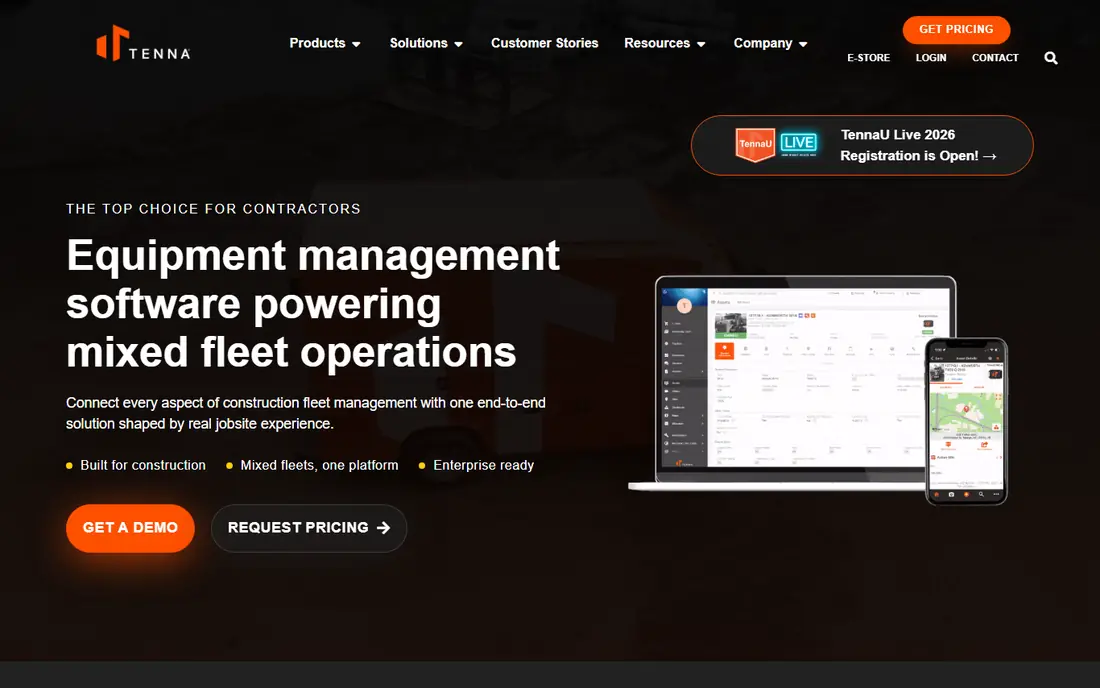
Tenna exists because generic fleet software rarely understands a construction yard. It tracks owned excavators, rented lifts, trucks and small tools in one system, using GPS for powered equipment and Bluetooth or QR options for everything else. Utilization reports show which machines sit idle, which rentals should become purchases, and where equipment spends time across jobsites.
Pricing is quoted and hardware is extra, so small contractors should confirm total cost before committing. Implementation also takes coordination across jobsites to tag and register assets. For a mid-size to large contractor, Tenna utilization data often pays for the system by cutting unnecessary rentals.
- Purpose-built for construction fleets
- GPS and Bluetooth tracking for powered and non-powered assets
- Utilization reporting
- Quote-based pricing with hardware costs extra
- Best value at fleet scale
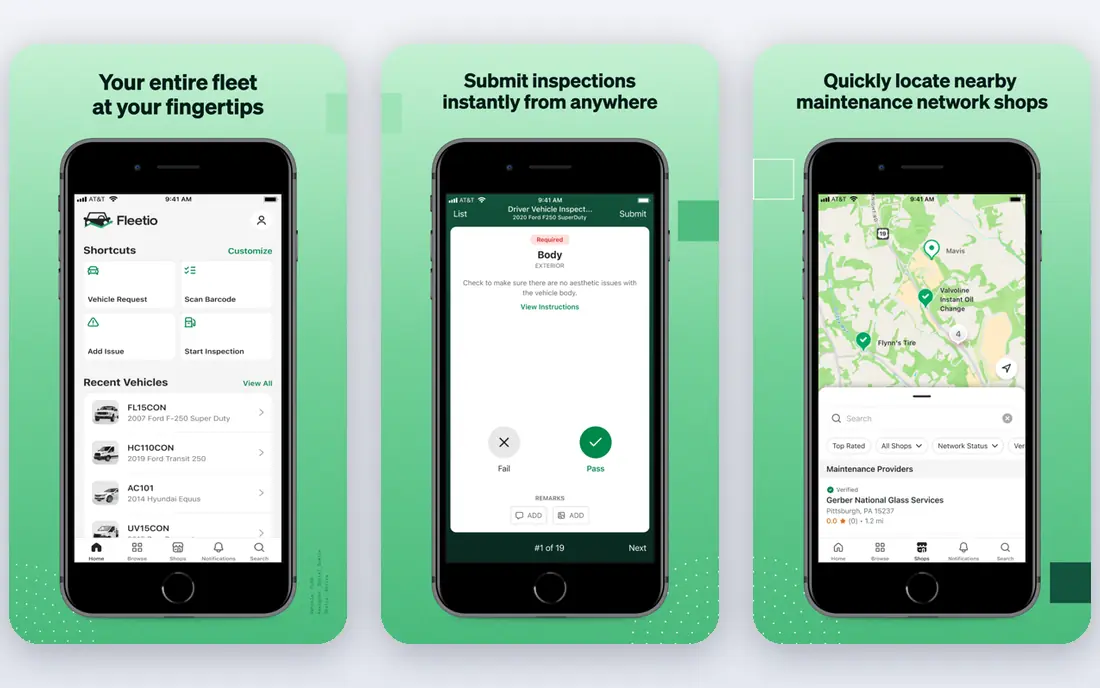
Fleetio approaches maintenance from the shop rather than the jobsite. It schedules preventive maintenance, creates work orders, tracks parts inventory and fuel, and reports cost per vehicle or machine. Per-vehicle pricing, starting at $4 per vehicle per month on annual billing in recent listings, favors fleets where many drivers and mechanics share the same assets.
GPS tracking comes through integrations with telematics providers, which adds a vendor to manage but keeps hardware choices flexible. Construction firms like the maintenance depth but may miss Tenna or HCSS equipment-specific workflows. For a mixed fleet of trucks and machines, Fleetio is a strong maintenance-first choice.
- Per-vehicle pricing favors many users
- Automated PM reminders
- Work orders, parts and fuel tracking
- GPS works through telematics integrations, not own hardware
- Less equipment-specific workflow than Tenna
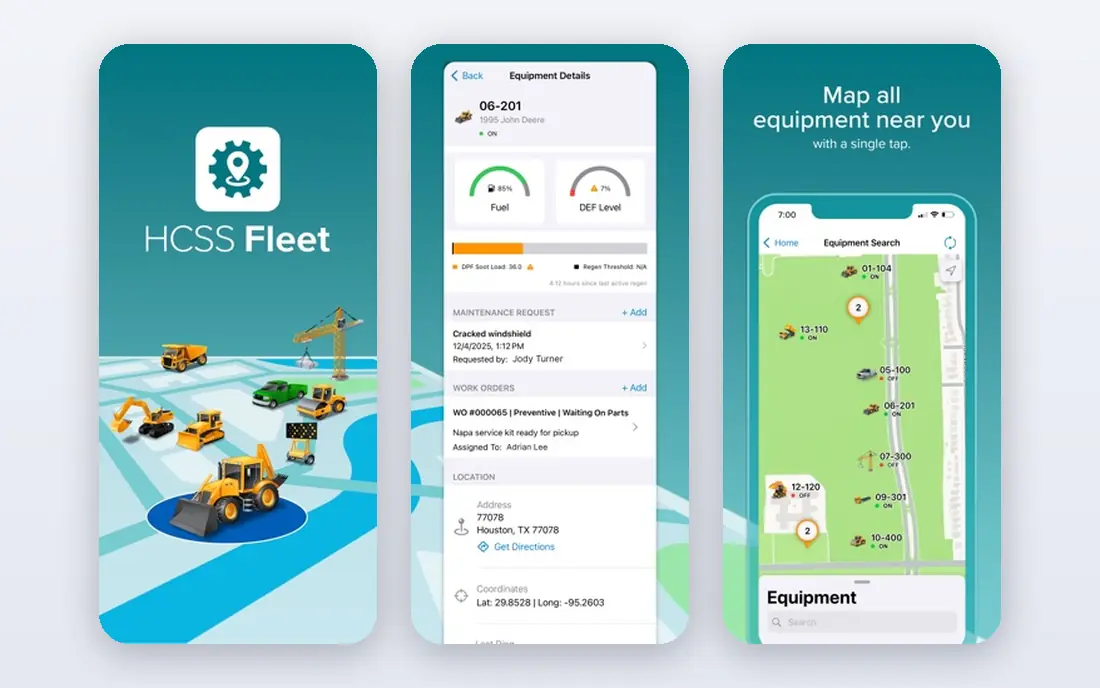
HCSS Equipment360 suits heavy civil contractors that already run HCSS estimating, scheduling or job costing. It offers PM alerts by hours or dates, a mechanic planner, field repair requests, work orders and fuel integration, with telematics data feeding maintenance schedules. Repair costs flow into job costing, which helps managers see true equipment cost by project.
Pricing is quoted, and the best value comes when Equipment360 sits inside a broader HCSS system. Smaller contractors without HCSS may find a standalone CMMS faster to adopt. For a large heavy civil firm, the integration with estimating and job cost tools is a decisive advantage.
- Built for heavy civil work
- PM alerts and mechanic planner
- Integrates with HeavyJob and accounting tools
- Quote-based pricing
- Implementation suits larger contractors with established HCSS workflows
Samsara is a telematics-first platform that turns live vehicle and equipment data into maintenance action. GPS location, engine fault codes, utilization and safety events feed maintenance reminders, so service is triggered by real condition, not just a calendar date. Dash cameras and driver safety tools add value for fleets with many road vehicles.
It is not a full shop CMMS in the same way MaintainX or Fiix are, so parts inventory and detailed shop workflows may need a companion system. Pricing is quoted and contracts are often multi-year, so confirm hardware, installation and term costs. For large mixed fleets, Samsara live data is a powerful maintenance trigger.
- Real-time GPS and fault code alerts
- Maintenance reminders from live data
- Safety and driver tools
- Quote-based pricing, often multi-year contracts
- Parts and shop depth is lighter than a full CMMS
MaintainX is the easiest CMMS for a shop that lives on phones and tablets. Technicians receive work orders, complete checklists, attach photos and message the team in the app, while managers schedule preventive maintenance by meter, date or usage. The free plan lets a small team start without a purchase order, and paid plans from around $20 per user per month add more features.
Telematics integration is limited compared with Tenna or Samsara, so fleets that need live fault data should check integrations first. Parts tracking also sits on higher tiers. For a small to mid-size shop focused on work orders and PM discipline, MaintainX is an excellent, mobile-friendly pick.
- Free starter plan
- Mobile work orders and checklists
- Meter-based PM on paid plans
- In-app messaging
- Telematics links are limited
- Parts tracking needs Premium tiers
- Advanced integrations cost more
UpKeep suits teams that want technicians to actually use the system, not just managers. The mobile app is clean, work orders and preventive maintenance are easy to create, and a request portal lets site staff report a broken machine without calling the shop. Asset history, photos and costs build a useful record over time.
Entry pricing, at $24 per user per month for Essential in recent listings, covers core work, but meter readings and deeper integrations may need a higher tier. Count technicians, not just assets, when budgeting, since per-user pricing rises with team size. For a shop that values adoption, UpKeep is a strong choice.
- Simple mobile app for technicians
- Work orders, PM and asset tracking
- Request portal for staff
- Meter readings sit on higher tiers in some listings
- API access needs Enterprise in some listings
Limble CMMS, often called Limble, is known for fast setup and a dashboard that managers understand without training. Work orders, preventive maintenance, asset hierarchies and QR scanning cover the core shop workflow, and custom dashboards show overdue PM, open work and costs at a glance. Small to mid-size teams can be running in days, not months.
Pricing is now quote-based in many listings, so use the vendor calculator or sales quote for your team size. ERP integrations may also cost extra on some plans. For a team that wants a CMMS without a long implementation, Limble balances ease and depth well.
- Fast setup and easy dashboards
- Work orders, PM and asset hierarchy
- QR scanning for assets
- Quote-based pricing in recent listings
- ERP integrations may cost extra
Fiix, now part of Rockwell Automation, suits shops that maintain both construction equipment and fixed plant or facilities. Work orders, preventive maintenance by meter readings, asset tracking and parts management cover the core CMMS job, and the interface is straightforward for technicians and planners. It scales from a single shop to multi-site operations.
ERP integrations sit on Enterprise tiers and may cost extra, so confirm integration pricing if you need job costing or accounting links. For a contractor with shops, yards and facilities to maintain in one system, Fiix offers a broad, proven CMMS foundation.
- Meter-based PM on all plans in recent listings
- Work orders and asset tracking
- Enterprise integrations on higher tiers
- Free plan limits in some listings
- ERP integrations cost extra on Enterprise
How we picked these
We compared official vendor information, published and reported pricing, preventive maintenance triggers, work order tools, mobile apps and telematics links. We favored tools still offered in October 2026 for construction and heavy equipment, and we mixed construction-specific platforms with general CMMS tools that fit shop work. Where pricing is quoted, we wrote See website rather than repeating a third-party estimate as a vendor price.
What to check before you buy
Count both sides of pricing before comparing. Per-vehicle tools such as Fleetio favor fleets with many users per machine, while per-user CMMS tools favor few technicians covering many machines. Model your vehicle count, technician count and the tier you will actually need, since PM scheduling, meter readings and offline mode often sit above the headline plan.
Test inspections, PM triggers and offline work
Run a trial with real assets, not sample data. Create a PM plan by engine hours, fail an inspection item, turn it into a work order, and complete it offline on a phone, then sync when signal returns. That test reveals whether the tool fits jobsite reality, where signal is weak and machines move between sites. Confirm telematics links for your OEM brands, since Cat, Deere, Komatsu and Volvo feeds vary by platform.
FAQ
What is construction equipment maintenance software?
It schedules and tracks the work that keeps machines running, including preventive maintenance by hours, miles or dates, work orders, inspections, parts and cost reporting. The best tools trigger service from real usage or telematics data, rather than a calendar guess, and build a history for each machine.
Is Fleetio or Tenna better for construction fleets?
Fleetio is better for mixed vehicle and equipment fleets that want maintenance-first scheduling and per-vehicle pricing. Tenna is better for heavy construction fleets that need GPS, utilization and rental decisions across jobsites. Choose by whether shop maintenance or jobsite tracking is your main pain.
Do I need telematics with maintenance software?
Not always, but it helps. Telematics feeds engine hours and fault codes into maintenance schedules automatically, reducing manual meter entry. Small shops can start with manual hours and inspections, then add telematics when fleet size or breakdown costs justify it.
Can a CMMS work offline on a jobsite?
Many modern tools, including MaintainX and Fiix, support offline inspections and work orders that sync when signal returns. Test offline mode on your actual devices and sites during the trial, since coverage varies by app version and device. Offline reliability matters more than any dashboard feature on remote sites.
How much does construction equipment maintenance software cost?
Pricing varies by model: Fleetio starts around $4 per vehicle per month, while per-user CMMS tools start around $20 to $24 per user per month, and construction-specific platforms such as Tenna and HCSS are quoted. Add hardware, implementation and integration costs to the subscription price for a true total.