Best Concept Testing Platforms for CPG Companies in 2026: 8 Tools Compared
Best concept testing platforms for CPG companies compared for product, pack, and claim testing, with survey speed, benchmarking, and food trend data today.
- Editor's choice
 Zappi
CPG concept testing and benchmarking
Starts atSee websiteVisit zappi.ioFull review - Great alternative
 NielsenIQ BASES
Launch forecasting and CPG norms
Starts atSee websiteVisit nielseniq.comFull review - Also consider
 Qualtrics
Enterprise surveys and research
Starts atSee websiteVisit qualtrics.comFull review
TL;DR:
- Zappi and NielsenIQ BASES are our picks when CPG benchmarking and launch forecasting matter most.
- Suzy and Pollfish suit teams that need fast survey results without a long enterprise procurement process.
- Tastewise and Datassential add food trend and menu data that survey-only platforms cannot provide.
- Budget for sample and analysis costs, not just platform fees, because respondent incentives and custom studies add to the total.
Quick comparison
| Tool | Best for | Starts at | Free plan? | |
|---|---|---|---|---|
| Zappi | CPG concept testing and benchmarking | See website | No | Visit |
| NielsenIQ BASES | Launch forecasting and CPG norms | See website | No | Visit |
| Qualtrics | Enterprise surveys and research | See website | Free trial | Visit |
 Suzy | Fast consumer insights for CPG | See website | No | Visit |
 Tastewise | Food trend and concept validation | See website | No | Visit |
 Datassential | Foodservice and CPG food trends | See website | No | Visit |
 Pollfish | Fast self-serve consumer surveys | See website | No | Visit |
 UserTesting | Qualitative concept feedback | See website | Free trial | Visit |
The best concept testing platforms for CPG companies
Concept testing for CPG companies means checking a product, pack, claim, or flavour idea with real shoppers before launch. The platforms below cover fast surveys, CPG benchmarking, food trend data, and qualitative feedback.

Zappi is built around the kind of concept work CPG teams do every week: testing product ideas, packs, claims, and advertising concepts with consumers, then comparing results with category benchmarks. Its automated workflows speed up fielding and reporting, which helps teams make go or no-go calls without waiting weeks for a custom study.
The trade-off is access. Zappi is an enterprise-style platform with quote-based pricing, so a small brand with one concept to test may find a lighter survey tool cheaper. For CPG teams testing often, the benchmarking and repeatable templates are the reason to pay.
- Built for CPG concept, pack, and claim testing
- Benchmarking against category norms
- Fast automated reporting
- Enterprise pricing needs a quote
- Less suited to tiny one-off surveys
- Depth depends on study design
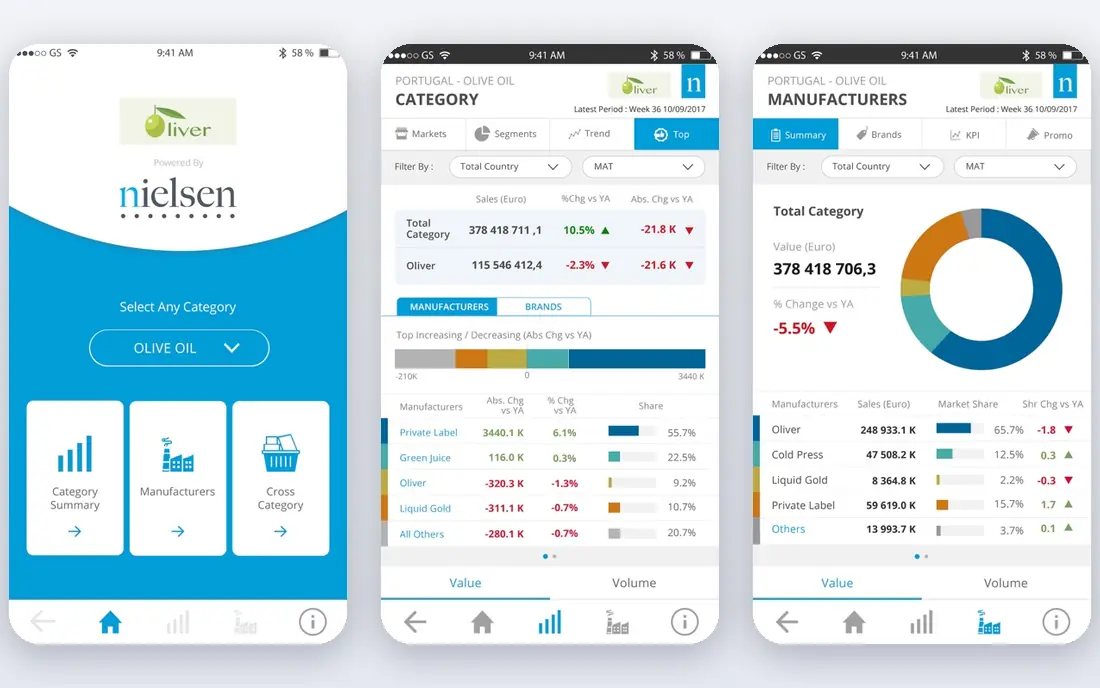
NielsenIQ BASES is the established name for CPG concept testing at scale, with norms and forecasting models built from many years of product launches. It helps large manufacturers judge whether a concept is likely to succeed in market, not just whether survey respondents say they like it. That forecasting depth is hard for a general survey tool to match.
The cost and process are the honest downsides. BASES is an enterprise service, not a quick self-serve survey, and it suits teams with research budgets and launch stakes to match. Smaller CPG brands should start with Zappi, Suzy, or Pollfish, and use BASES when a major launch decision needs the strongest forecast.
- Deep CPG benchmarking and sales forecasting
- Large consumer panels
- Trusted by large manufacturers
- High enterprise cost
- Slower and heavier than self-serve survey tools
- Needs experienced research planning
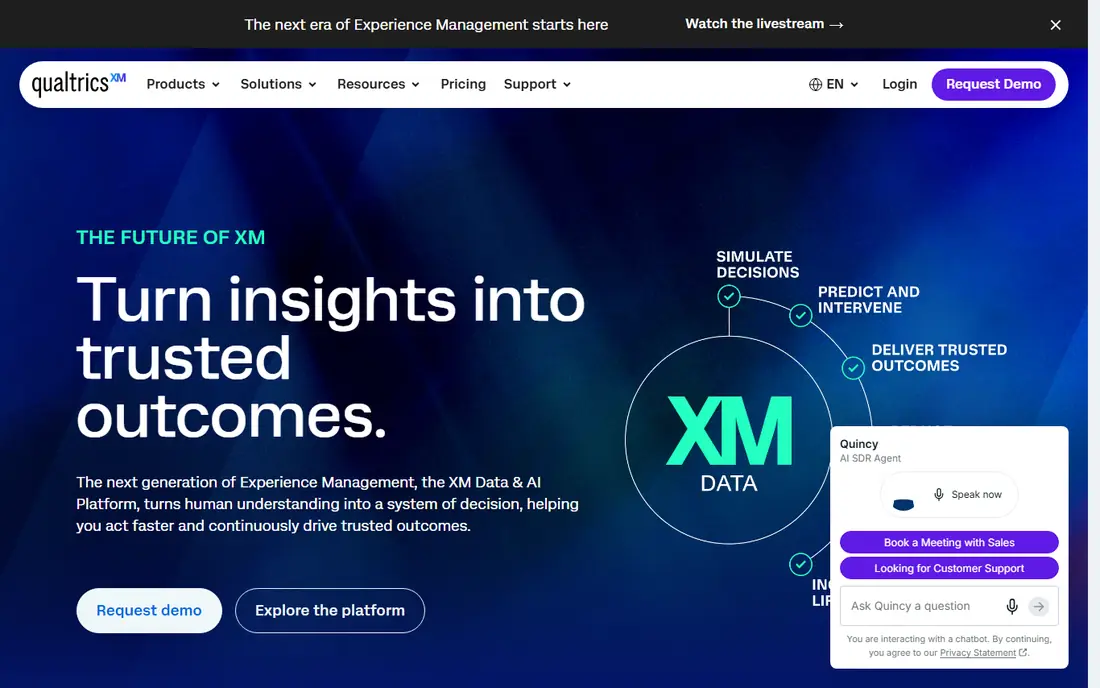
Qualtrics is a general enterprise research platform that many large CPG companies use for concept testing, brand tracking, and product research. Its survey design, logic, and analytics are flexible, and it can handle complex monadic and sequential monadic designs that concept testing often requires.
The weakness is that Qualtrics is not CPG-specific out of the box. You will need to design the concept test, choose norms, and interpret results yourself or with a research partner. Teams with strong internal researchers will get a lot from it, while teams that want ready CPG templates may prefer Zappi.
- Flexible survey design and logic
- Panel access
- Strong analytics and dashboards
- No public list price for enterprise plans
- Needs research skill to design valid concept tests
Suzy aims at speed. CPG teams can field concept surveys in hours or days, use templates for common studies, and add qualitative video interviews when they need to hear why consumers reacted a certain way. That mix of speed and context suits fast-moving categories such as snacks, drinks, and personal care.
The limit is forecasting. Suzy is strong for quick reads and iteration, but it does not replace BASES-style launch forecasting for a major national launch. Use Suzy to screen and refine concepts quickly, then validate the strongest ideas with a deeper method before committing to production.
- Fast survey fielding
- Concept testing templates
- Qualitative video interviews in the same platform
- Panel and audience depth varies by target
- Enterprise features need a quote
- Less forecasting depth than BASES
Tastewise uses AI to track food trends across menus, recipes, and social content, helping food and beverage brands see which flavours, ingredients, and dishes are rising. For concept testing, it answers a different question from a survey: not just whether a small sample likes an idea, but whether the idea fits a wider trend.
The catch is scope and validation. Tastewise is food-focused, so household or personal care CPG teams will get less from it, and trend data should still be checked with consumer surveys before launch. Used together, Tastewise for trend fit and a survey platform for concept scores gives a fuller picture.
- AI food trend data from menus, recipes, and social sources
- Helps validate flavours and food concepts
- Food and beverage focus, so less fit for non-food CPG
- Enterprise pricing needs a quote
- Trend data needs survey validation
Datassential provides food trend, menu, and consumer data that food CPG teams use to test and refine concepts before launch. Its operator and menu data show how flavours and formats perform in foodservice, which can hint at retail potential. For food brands, that context adds depth to a standard concept survey.
As with Tastewise, Datassential is not a general CPG survey platform. It is best as a complement to concept testing, not a replacement for it, and its enterprise pricing suits larger food companies. Smaller food brands may start with Tastewise or a survey tool and add Datassential when trend depth justifies the cost.
- Food trend, menu, and consumer data
- Concept and flavour validation for food brands
- Operator insights
- Food-focused and enterprise-priced
- Data depth needs research skill to apply
- Not a simple survey tool
Pollfish is a self-serve survey platform that lets teams field concept questions quickly to mobile respondents. It suits early screening, when you want a fast read on several ideas before investing in a larger study. Pricing is tied to responses, which makes small tests more affordable than an enterprise contract.
The risk is design. Fast fielding does not fix a weak questionnaire, and Pollfish does not provide CPG norms by default. Teams should write clear concept descriptions, screen respondents carefully, and treat results as directional, then confirm winning concepts with a more rigorous method.
- Self-serve surveys with fast fielding
- Mobile-first respondents
- Pay for responses you need
- Sample quality depends on targeting and screening
- Less CPG benchmarking than Zappi
- Needs careful questionnaire design
UserTesting adds the human side of concept testing. Instead of only scores, you get video reactions, interviews, and task-based feedback on a concept, pack, or claim. That helps CPG teams understand confusion, disbelief, or excitement that a survey score alone cannot explain.
The limit is sample size. Qualitative feedback is rich but not statistically representative, so it should sit alongside survey scores, not replace them. Use UserTesting to refine a concept after a survey shows promise, or to diagnose why a concept scored poorly.
- Video feedback and interviews
- Shows how people react to concepts, packs, and claims in their own words
- Qualitative, so not a substitute for large-sample scores
- Pricing needs a quote
- Recruiting the right shoppers takes care
How we picked these
We compared official product pages, pricing pages, and platform descriptions, and weighed CPG fit, survey speed, benchmarking, food trend data, and qualitative depth. We favoured platforms that are actively used for consumer packaged goods work, rather than general survey tools with no CPG use.
We did not claim hands-on testing of live studies. Where pricing is quote-based, we list See website, because repeating a third-party estimate as a vendor price would mislead buyers. Sample costs, study design, and analysis time should be confirmed in any quote.
How to run a CPG concept test well
Start by writing the concept the way a shopper would see it. Include the product idea, the benefit, the pack or format if relevant, and the price point, because a concept without price gives a misleading score. Test a small set of strong ideas, not a long list of weak ones, so respondents can judge each one carefully.
Choose the method to match the decision. Use fast surveys to screen many ideas, use benchmarking and forecasting for a major launch, and use qualitative feedback to fix confusion or weak claims. A single method rarely answers every question, and the best teams combine at least two.
Finally, agree the success bar before fielding. Decide what score, purchase intent, or uniqueness level would justify moving forward, and who will make the call. Without that bar, teams often keep testing until they get the answer they wanted, which defeats the purpose of testing at all.
FAQ
What is concept testing for CPG companies?
Concept testing shows a product, pack, or claim idea to target shoppers before launch and measures appeal, uniqueness, and purchase intent. For CPG companies, it helps decide which ideas to develop, which to drop, and which claims to use. Good tests include price, because price changes how shoppers judge value.
Which platform is best for CPG concept testing?
Zappi is our pick for repeatable CPG concept testing with benchmarking, while NielsenIQ BASES is best for major launch forecasting. Suzy and Pollfish suit faster, smaller tests. The right choice depends on launch stakes, budget, and whether you need norms or just a fast read.
How much does CPG concept testing cost?
Costs vary widely, from self-serve survey fees for a few hundred responses to enterprise contracts for benchmarking and forecasting. Sample incentives, questionnaire design, and analysis all add to platform fees. Get a written quote that separates platform, sample, and services before you commit.
What is the difference between concept testing and taste testing?
Concept testing measures reaction to an idea, pack, or claim, often before a final product exists. Taste testing measures reaction to the actual product flavour, texture, and experience. Many food launches need both: concept testing to pick the idea, and taste testing to confirm the product delivers it.
Can small CPG brands use concept testing platforms?
Yes, self-serve tools such as Pollfish and Suzy make small tests possible without an enterprise contract. Small brands should test fewer concepts, screen respondents carefully, and treat early results as directional. As launch stakes grow, move to benchmarking platforms for stronger validation.