Best Company to Sell Structured Settlement in 2026: 8 Compared
Compare the best company to sell structured settlement payments safely. We review 8 buyers on quotes, discount rates, court help, and partial sale options.
- Editor's choice
 J.G. Wentworth
Largest national buyer
Starts atSee websiteVisit jgwentworth.comFull review - Great alternative
 Peachtree Financial Solutions
Flexible partial sales
Starts atSee websiteVisit peachtreefinancial.comFull review - Also consider
 DRB Capital
Independent competitive quotes
Starts atSee websiteVisit drbcapital.comFull review
TL;DR:
- J.G. Wentworth is the largest national buyer, while Peachtree, its sister brand, often serves as a second quote from the same group, so get outside quotes too.
- DRB Capital, Stone Street Capital, and Catalina Structured Funding offer independent competition that can raise your lump sum.
- The discount rate decides your payout, so compare written offers on the same payments, term, and fees, not on advertised speed alone.
- Selling only part of your payments can preserve long-term income while still meeting a near-term need.
- This is not financial advice. A sale needs court approval, and independent advice is wise before you give up future income.
Quick comparison
| Tool | Best for | Starts at | Free plan? | |
|---|---|---|---|---|
| J.G. Wentworth | Largest national buyer | See website | No | Visit |
| Peachtree Financial Solutions | Flexible partial sales | See website | No | Visit |
| DRB Capital | Independent competitive quotes | See website | No | Visit |
 Stone Street Capital | Long-established buyer | See website | No | Visit |
 Fairfield Funding | Personalized smaller-firm service | See website | No | Visit |
 CBC Settlement Funding | Straightforward national quotes | See website | No | Visit |
 RSL Funding | Complex and life-contingent deals | See website | No | Visit |
 Catalina Structured Funding | Attorney-led independent funder | See website | No | Visit |
The best company to sell structured settlement
Selling structured settlement payments means trading future income for a lump sum today, at a discount. The buyer earns a return on the gap between what it pays now and what it collects later, and that discount rate is the single most important number in any offer. The buyers below are active in 2026, and they differ in size, independence, and service style.
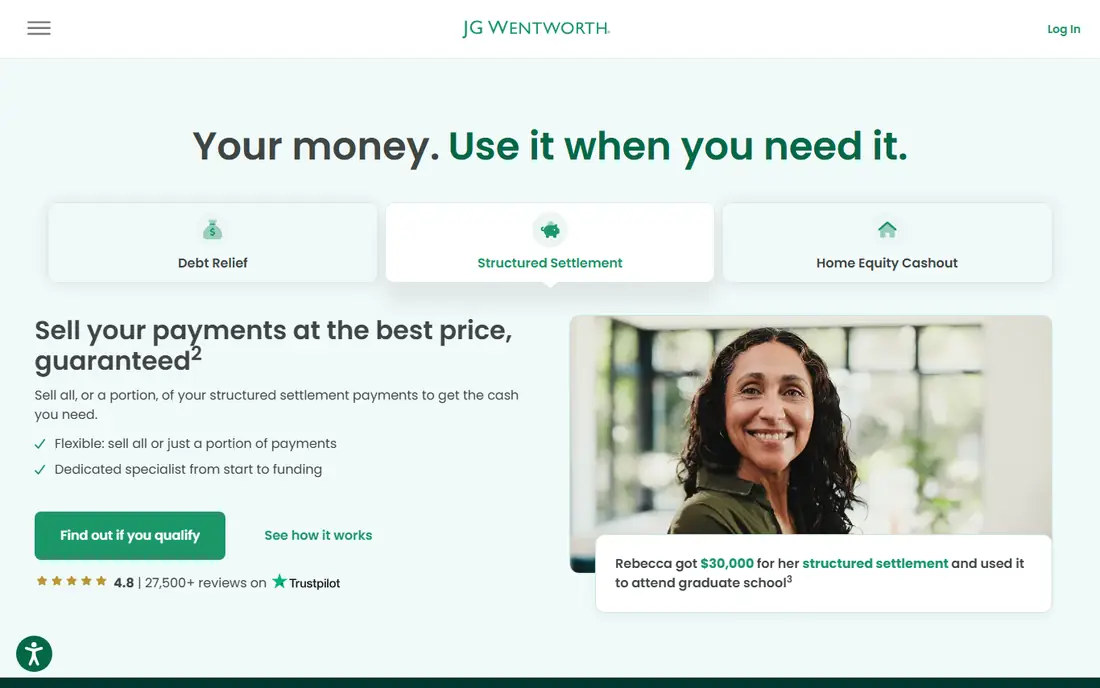
J.G. Wentworth is the largest and most advertised structured settlement buyer in the United States, and it has operated since 1991 in published materials. Its scale means it can fund large transactions and guide sellers through the court approval process, which every transfer requires. For a seller who wants a well-known brand and a structured process, Wentworth is the obvious first quote.
Scale is not the same as the best price. Wentworth owns several brands, including Peachtree and Stone Street, so quotes from those brands may not be truly independent competition. Get at least two quotes from firms outside the Wentworth group, compare discount rates and fees in writing, and negotiate before you accept.
- Largest national presence
- Court filing support
- Handles large settlements
- Heavy advertising does not guarantee the best rate
- Sister brands share pricing
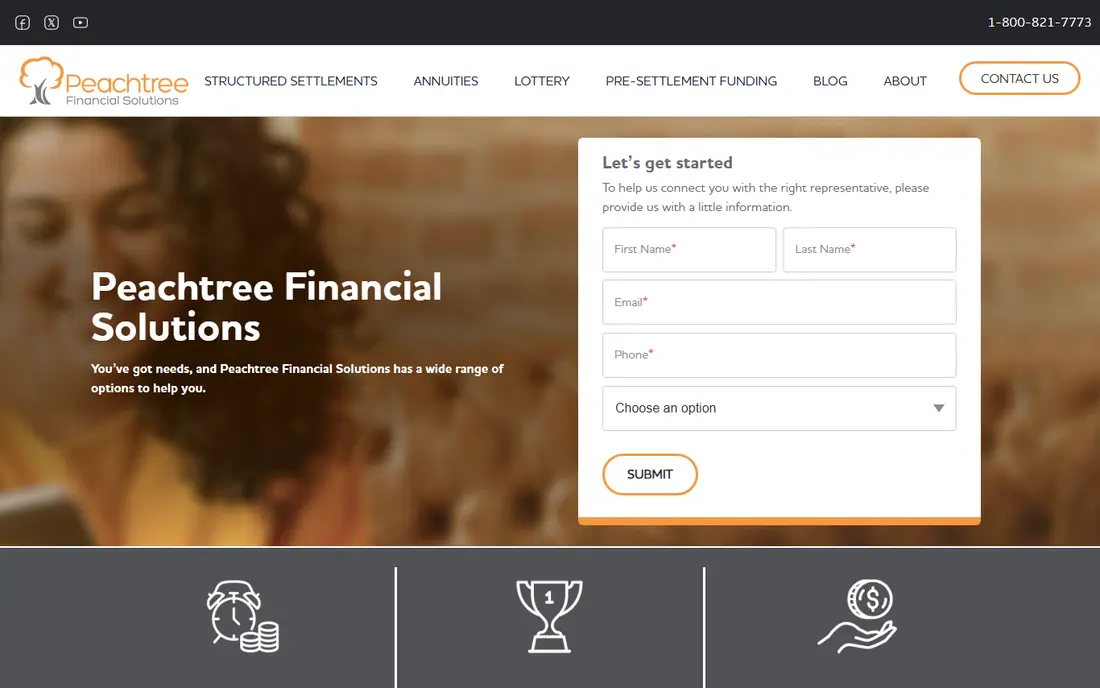
Peachtree Financial Solutions buys structured settlement and annuity payments, and it is often cited for flexible partial sales, where you sell only some payments or a set period of payments. That flexibility matters, since selling everything solves a cash need today but removes income you may need later. Peachtree also handles annuity payments, which widens its use beyond lawsuit settlements alone.
The key fact to know is ownership. Peachtree has been part of the J.G. Wentworth group since 2011, so treat a Peachtree quote as a second look from the same group rather than a fully independent rival. Use it for its partial-sale structure, but pair it with independent buyers when you compare price.
- Partial sale options
- National reach
- Experience with annuity payments
- Part of the J.G. Wentworth group
- Quotes may mirror Wentworth pricing
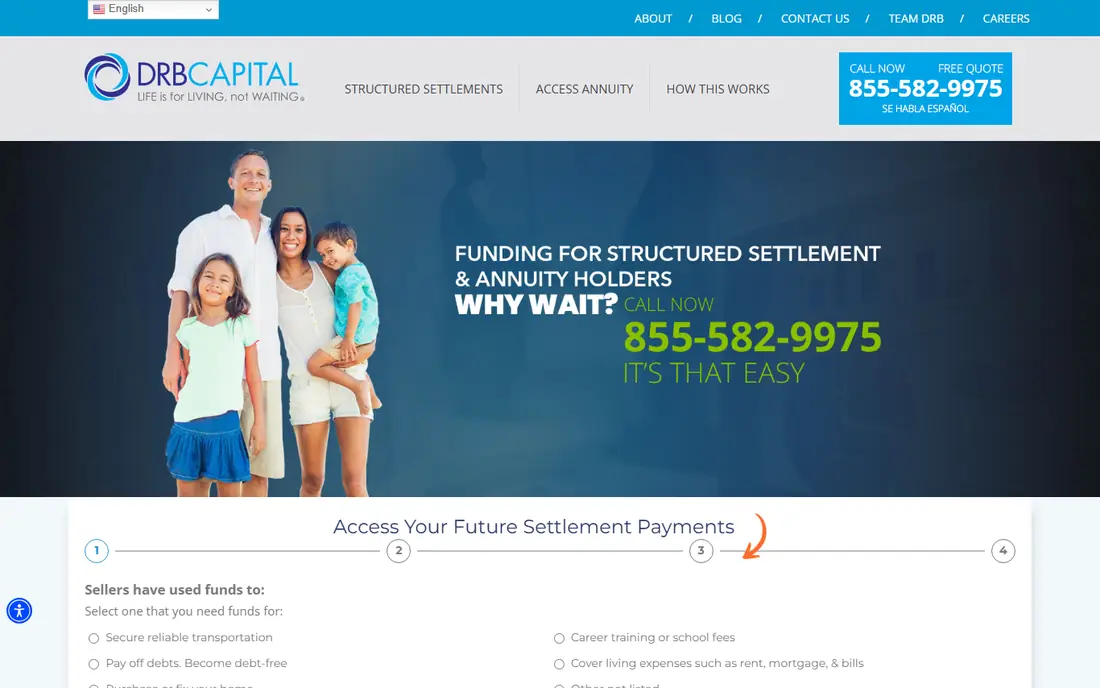
DRB Capital is an independent funder based in Florida, focused on structured settlement and annuity payment purchases. Independence is its selling point: a DRB quote is a genuine second price signal, not a sister-brand echo. Sellers often cite personalized service, which can help when a case involves unusual payment terms or a tight timeline.
DRB is smaller than Wentworth, so it may not fund every very large deal in the same way, and its rate still depends on your payment stream, credit factors in the structure, and court timeline. For most sellers, DRB belongs on the shortlist precisely because it forces larger buyers to compete.
- Independent Florida-based funder
- Structured settlement and annuity focus
- Personalized service
- Smaller than national giants
- Pricing still varies by case
Stone Street Capital has bought structured settlement payments since 1989, giving it one of the longest histories on this list. That experience shows in handling varied payment structures and in guiding sellers through court filings. Some reviews also note it for smaller payment sales, which can suit sellers who only need a modest lump sum.
Stone Street joined the J.G. Wentworth group in 2018, so the same independence warning applies as with Peachtree. Treat it as an experienced brand within a large group, not as a separate price competitor. If its structure or timeline fits your case, use it, but compare it against an independent funder.
- Founded in 1989 in published materials
- Long buying history
- National reach
- Part of the J.G. Wentworth group since 2018
- Smaller-payment focus in some reviews
Fairfield Funding is a smaller independent direct funder that buys structured settlement payments, annuities, and lottery winnings. Sellers who want a direct conversation with the funder, rather than a call center script, often prefer this scale. A smaller firm can also move flexibly on partial sales and on cases that do not fit a large buyer template.
The trade-off is scale and speed. Court timelines vary by state in any case, but a smaller funder may have less capacity for very large or complex deals. Ask Fairfield for a written quote with the discount rate, all fees, and the expected court timeline, then compare that quote line by line with larger buyers.
- Smaller independent direct funder
- Personalized approach
- Annuity and lottery purchases too
- Less scale than national buyers
- Funding timelines vary by court
CBC Settlement Funding focuses on structured settlement purchases across the United States, offering personalized quotes and flexible funding options. For a seller who wants another national quote without a complex product menu, CBC provides a clear comparison point. Its focus on this single market means staff should understand payment structures well.
Offer reports for CBC vary in third-party reviews, with some sellers reporting lower offers than rivals. That variation is normal in this market, since each payment stream prices differently, but it makes written comparison essential. Do not accept a verbal figure. Ask for the discount rate, fees, and net lump sum in writing, then use it to negotiate elsewhere.
- Founded in 2009 in published materials
- National structured settlement focus
- Personalized quotes
- Mixed third-party offer reports
- Verify fees in writing
RSL Funding is a Texas-based independent funder known for life-contingent and complex structured settlement deals, where payments depend on the payee being alive or on other conditions. Those cases price differently from simple fixed payments, and a buyer without that experience may decline or underprice them. RSL gives such sellers a credible quote path.
Complex cases also take longer to underwrite and to clear in court, so do not expect the fastest timeline. If your payments are straightforward, a larger buyer may match RSL on price. If your structure is unusual, RSL is one of the first independent firms to call.
- Texas-based independent funder
- Experience with life-contingent and complex deals
- National reach
- Complex cases take longer to price
- Smaller brand recognition
Catalina Structured Funding
Best for: Attorney-led independent funder
Catalina Structured Funding, often called CSF, is an attorney-led independent funder that buys structured settlements, lottery payments, annuities, and probate advances. It states that it funds its own deals, which can simplify the chain between quote and closing, and it reports thousands of transactions closed since 2011. An attorney-led approach can also help sellers understand the court process in plain terms.
CSF is smaller than Wentworth, and availability and timelines vary by state and court. As with every buyer here, the quote matters more than the brand story. Use Catalina as an independent comparison quote, and judge it on discount rate, fees, and net cash, not on marketing alone.
- Attorney-led firm
- Funds its own deals
- Experience since 2011 in published materials
- Smaller than national giants
- State availability varies
How we picked these
We compared buyer lists, BBB profiles noted in 2026 guides, and official company pages for structured settlement buyers active today. We favored buyers with a clear purchase product, a history in the secondary market, and court-transfer experience, and we mixed large national buyers with independent funders. Independence matters in this market, so we noted group ownership where it affects whether two quotes are truly competing.
We did not rank on advertised speed or on a single reported discount rate, since rates vary by payment stream, term, and state. Instead, we weighed buyer type, partial-sale options, and the value of an independent quote. Always get three to five written offers, and have an independent adviser review the final terms before you sign.
How to compare offers and protect yourself
Start with the net lump sum for the exact same payments. Two buyers can quote different discount rates yet produce similar cash if fees differ, so insist on a written breakdown: gross future value sold, discount rate, fees, court costs, and net cash to you. Ask who pays court and filing costs, and whether any fee appears only at closing. A quote that hides fees is not a better quote, even if the headline rate looks low.
Consider a partial sale before a full sale. Selling a set number of years, or a portion of each payment, can meet a debt, home purchase, or medical need while keeping some future income. Also ask about the court process in your state, since a judge must find the transfer in your best interest. Bring a clear reason for the sale, such as paying high-interest debt or buying a home, and be honest about whether the need justifies giving up future income.
Red flags to avoid
Avoid any buyer that pressures you to sign the same day, discourages outside quotes, or will not put the discount rate and fees in writing. Avoid buyers that suggest hiding the sale from the court or from the annuity issuer, since court approval is required and evasion can void the deal. Avoid selling for a vague want, such as a vacation, when the discount means losing 30 percent or more of future value. If a buyer cannot explain its rate in plain terms, walk away.
FAQ
How much money will I get for my structured settlement?
You will receive less than the total future value, because the buyer discounts future payments to present value and earns a return. Published discount ranges in 2026 guides often fall near 6 to 20 percent, depending on the buyer, payment term, and case. The only reliable figure is a written quote for your exact payments, with fees shown.
Do I need court approval to sell?
Yes. In the United States, a transfer of structured settlement payments generally requires court approval, and a judge must find it in your best interest. The buyer usually files the petition and handles much of the paperwork, but you should attend or be represented as your state requires. Expect the process to take roughly 30 to 60 days in many cases.
Can I sell only part of my settlement?
Yes, most buyers offer partial sales. You can sell a portion of each payment, a set number of payments, or payments for a set period, while keeping the rest. A partial sale often makes more sense than a full sale, since it preserves some long-term income while meeting a current need.
Should I get independent advice before selling?
Yes. Talk to a financial adviser or attorney who is not paid by the buyer, and compare at least three written offers. An independent adviser can check the discount rate, fees, tax effects, and whether a cheaper option, such as a loan, would meet your need without giving up future income. Do not rely only on the buyer to judge your best interest.
What fees should I watch for?
Watch for discount rate differences, court filing costs, legal fees, and any processing fee that appears at closing. Ask whether the buyer pays court costs or passes them to you, and get the net cash figure in writing. If two quotes show the same discount rate but different net cash, fees explain the gap.