Best Company for Digital Outdoor Ads in 2026: 8 Companies Compared
best company for digital outdoor ads guide comparing 8 firms for billboards, transit, programmatic buying and local campaigns, with pricing and reach notes.
- Editor's choice
 Lamar Advertising
Large US billboard reach
Starts atSee websiteVisit lamar.comFull review - Great alternative
 Clear Channel Outdoor
Airports and large markets
Starts atSee websiteVisit clearchanneloutdoor.comFull review - Also consider
 OUTFRONT Media
Urban and transit media
Starts atSee websiteVisit outfront.comFull review
TL;DR:
- Lamar Advertising, Clear Channel Outdoor and OUTFRONT Media own the largest US billboard and transit footprints, while Vistar Media and AdQuick help buyers plan and buy across many owners.
- Blip Billboards is the easiest entry point for a small local budget, since it offers self service digital billboard buying with flexible spend.
- Most large outdoor firms price by market, location and time, so expect a custom quote rather than a fixed national rate.
- Creative must be short and bold for roadside screens, since drivers have only a few seconds to read a message.
Quick comparison
| Tool | Best for | Starts at | Free plan? | |
|---|---|---|---|---|
| Lamar Advertising | Large US billboard reach | See website | No | Visit |
| Clear Channel Outdoor | Airports and large markets | See website | No | Visit |
| OUTFRONT Media | Urban and transit media | See website | No | Visit |
 JCDecaux | Street furniture and transit | See website | No | Visit |
 Vistar Media | Programmatic outdoor buying | See website | No | Visit |
 AdQuick | Planning across owners | See website | No | Visit |
 Broadsign | Running a screen network | See website | No | Visit |
 Blip Billboards | Small local budgets | See website | No | Visit |
The best company for digital outdoor ads options
We compared media owners that sell their own screens with platforms that help advertisers buy across owners. The right pick depends on whether you need one market, national reach, or a self service local campaign.
Lamar Advertising, based in Baton Rouge, is one of the largest outdoor companies in the United States, with thousands of digital billboards plus static boards, transit and logo signs. That scale helps a national or regional advertiser that wants consistent coverage across many cities without negotiating with dozens of local owners. Local sales teams also help smaller advertisers in Lamar markets, since they know which boards sit on commuter routes and which face shopping areas.
The drawback is that there is no single Lamar price. A board on a busy freeway in a large city costs far more than a board in a small market, and digital rotations share time with other advertisers. Ask for the exact board locations, rotation length, daily impressions estimate and contract term before you sign. For a local shop, a single well placed board near your store often beats a broad buy.
- Very large US billboard network, including digital boards
- Strong local sales teams
- Transit and airport options in many markets
- Pricing varies widely by market
- Minimums can be high in top markets
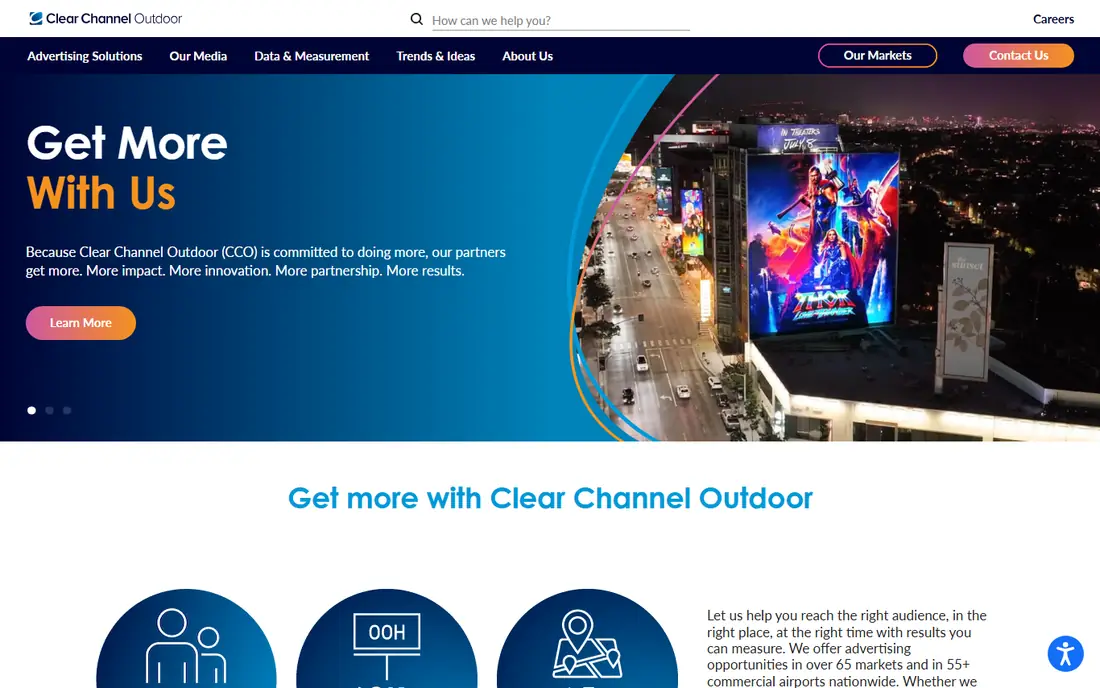
Clear Channel Outdoor is a strong pick for brands that need large cities and airports. Its US network includes billboards, airport media, transit and street furniture, with digital screens in many top markets. Airport screens suit travel, hospitality and business brands, since they reach people with dwell time and a clear intent to travel. Programmatic access also lets digital buyers add Clear Channel inventory to a broader outdoor plan.
Small advertisers may find airport and downtown inventory priced above a local budget. Ask which formats fit your spend, and whether a shorter flight or a smaller set of boards can still reach your target area. Creative for airports can carry more detail than a freeway board, but keep the main message short and the brand mark large.
- Strong airport and large market presence
- Digital billboards and street furniture
- Programmatic access in many markets
- Large market focus can mean higher minimums
- Inventory varies by city
OUTFRONT Media is best known for transit and urban media, with subway, bus, rail and street furniture in major US cities plus billboards and large format screens. For a brand that wants daily commuters, transit screens offer repeated exposure on a fixed route, which suits retail, entertainment and local services. Its large format work in places such as Times Square also suits launches and brand moments that need scale and photos.
The cost of premium urban inventory is the main limit. A Times Square or downtown transit buy is not a small business test budget. Ask for station, line and neighborhood detail, not only city level reach, and check how often creative can change. For a local campaign, a bus shelter or transit shelter near your area may give better value than a famous large screen.
- Leading transit and urban coverage, including New York and Los Angeles
- Times Square and large format screens
- Audience planning tools
- Premium urban inventory is costly
- Transit coverage is strongest in major cities
JCDecaux is a global leader in street furniture, transport and billboard media, with a large network of digital screens in cities, airports and transit systems. Its street furniture formats, such as bus shelters and city information panels, suit pedestrian areas, shopping districts and downtown cores. For international brands, JCDecaux also offers a route to buy similar formats in many countries through one group.
In the United States, JCDecaux is less of a roadside billboard company than Lamar, so a highway focused campaign may need another owner. Ask for the exact city contracts and formats in your target market, and confirm whether digital screens allow dayparting or weather based creative changes. For a downtown retail launch, street furniture near stores can be a precise and visible choice.
- Global street furniture and transport network
- Strong airport and city contracts
- Programmatic and data tools
- US coverage is less broad than Lamar for roadside billboards
- Pricing is quote based
Vistar Media is a platform choice rather than a single billboard owner. Its demand side platform lets advertisers buy digital outdoor screens programmatically, while its supply side tools help media owners sell and manage inventory. That structure suits agencies and brands that already buy digital media and want outdoor to sit in the same planning and reporting flow. Audience targeting, venue types and measurement tools are central to its offer.
A small business buying its first billboard will likely find Vistar more complex than a self service local tool. You need creative in the right sizes, a budget that supports programmatic minimums, and a clear view of which venues matter. For an agency or a brand with a multi city plan, Vistar can cut the work of dealing with many owners separately.
- Demand and supply side platform for outdoor
- Large device and venue inventory
- Measurement and audience tools
- Built for programmatic buyers, not first time local advertisers
- Needs a media budget and creative ready to go
AdQuick helps advertisers plan, buy and measure outdoor campaigns across many media owners, rather than selling only its own boards. That marketplace model is useful when you want billboards, transit and place based screens in several markets but do not want to negotiate each owner separately. Planning tools, proposals, creative help and cross market reporting sit in one workflow, which saves time for marketing teams.
The catch is that AdQuick does not set the underlying media price, so costs still reflect location, format and demand. Ask for a full cost breakdown, including any service fee, and confirm which owners and exact locations are in the plan. For a single market local buy, going direct to the owner may be simpler, while AdQuick shines on multi owner plans.
- Marketplace across many owners
- Planning, proposals and reporting in one place
- Creative services available
- Prices depend on owner inventory
- Service fees may apply on top of media cost
Broadsign is the pick if you own or operate screens and need to run them as a business. Its platform handles content scheduling, inventory management, ad serving and campaign workflows for digital signage and outdoor networks. Media owners use Broadsign to sell programmatic inventory and to report delivery, which makes it a backbone tool for many networks rather than a consumer facing ad buyer.
Advertisers should not approach Broadsign as a simple way to buy one billboard. It fits network owners, venue operators and agencies that manage screens at scale. If you run screens in malls, offices, transit or retail, Broadsign can help you schedule content, sell ad slots and prove delivery. Expect implementation work and a sales quote based on network size.
- Content management and scheduling for screen networks
- Inventory and ad serving tools
- Programmatic supply options
- A network operator tool, not a direct advertiser marketplace
- Setup needs technical work
Blip Billboards is our pick for a small business testing digital outdoor ads for the first time. Its self service marketplace lets you pick local digital boards, upload creative, set a daily budget and control scheduling without a large agency contract. That flexibility suits a restaurant, shop or event that wants a board near its location for a few weeks. Performance reporting shows where ads ran, which helps you judge whether the board drove visits.
Coverage is the limit. Blip sells partner inventory, so board choice in your town may be narrow, and your ad shares rotation time with other advertisers. Set a clear daily budget, use one short message and a large brand mark, and check results by store visits or offer redemptions rather than impressions alone. For a first test, one or two boards near your business beat a scattered national buy.
- Self service digital billboard buying
- Flexible budgets and scheduling
- Local boards in many US markets
- Coverage depends on partner boards in your area
- Shared rotations mean limited share of time
How we picked these
We compared media owners and platforms on US inventory, format range, programmatic access, planning tools and fit for different budgets. We used official company pages and current platform descriptions, and we left out firms that only sell hardware or that have no clear advertiser offer. We did not buy media for this guide, so prices are shown as custom quotes where owners price by market and location.
How to buy digital outdoor ads without wasting budget
Start with one goal and one area. A store launch needs boards near the store, while a brand launch needs high traffic urban screens. Ask for exact locations, daily impressions, rotation share and the number of times a person is likely to see the ad. Creative should carry at most seven words on a roadside board, with a large logo and a simple call to action such as a web address or a short offer.
Measuring results
Track store visits, calls, web visits from the area, and offer redemptions during the flight, and compare them with a period before the campaign. Impressions alone do not prove sales. If a board does not move a local metric after a fair test, move the budget to a better location rather than buying more time on the same board.
FAQ
How much does a digital billboard cost?
Cost varies by city, board location, traffic, rotation share and flight length, so most owners quote case by case. A small market local board can cost far less than a downtown board in a large city. Self service tools such as Blip let you set a daily budget, while large owners usually require a contract and a minimum term.
What size and format should my creative be?
Most roadside digital boards use a 16 by 9 format, while transit and street furniture screens vary by location. Ask the owner or platform for the exact pixel size, file type and duration for each screen. Keep text large, use high contrast, and test the creative at a distance before you submit it.
Can I change my ad during a campaign?
Many digital boards allow creative changes, but timing and fees vary by owner and contract. Programmatic and self service platforms often allow faster swaps than a fixed billboard contract. Confirm the change policy and any fee before you sign, especially for a time sensitive offer.
Is programmatic outdoor better than buying direct?
Programmatic buying suits multi owner, multi city plans and buyers who want audience and venue targeting in one system. Direct buying suits a single market or a single famous location where you want a fixed placement. Many brands use both, with direct buys for key locations and programmatic buys for wider reach.
How long should a digital outdoor campaign run?
A local test can run for two to four weeks, while a brand campaign often needs six to eight weeks for repeated exposure. Shorter flights work for events and offers with a clear end date. Allow time for creative approval and scheduling, since boards book in advance in busy markets.
Do I need an agency to buy outdoor ads?
No, self service tools and local owner sales teams can support a direct buy. An agency helps when you need planning across many markets, creative production and unified reporting. For a first local test, a direct buy keeps costs lower and feedback faster.