Best Commercial Lending Software in 2026: 8 Platforms Compared
Compare the best commercial lending software for banks and credit unions, from origination and underwriting to servicing, pricing, and compliance tools.
- Editor's choice
 nCino
Large banks and credit unions
Starts atSee websiteVisit ncino.comFull review - Great alternative
 Abrigo
Community banks and credit unions
Starts atSee websiteVisit abrigo.comFull review - Also consider
 Finastra Loan IQ
Large syndicated and corporate loans
Starts atSee websiteVisit finastra.comFull review
TL;DR:
- Most commercial lending platforms are sold by quote, so plan for a sales cycle and ask for total cost, including implementation, integrations, and annual fees.
- nCino and Abrigo suit institutions that want one connected workflow from application to servicing, while Baker Hill and Finastra Loan IQ fit larger, more complex loan books.
- Smaller lenders should weigh LendingWise and MeridianLink, which focus on faster origination without the enterprise price tag and project length.
- Spreading financial statements, credit memos, covenant tracking, and document collection matter more than a long feature list, so test those steps in a demo with a real loan file.
Quick comparison
| Tool | Best for | Starts at | Free plan? | |
|---|---|---|---|---|
| nCino | Large banks and credit unions | See website | No | Visit |
| Abrigo | Community banks and credit unions | See website | No | Visit |
| Finastra Loan IQ | Large syndicated and corporate loans | See website | No | Visit |
 Baker Hill NextGen | Commercial and small business lending | See website | No | Visit |
 MeridianLink | Digital origination and decisioning | See website | No | Visit |
 Temenos | Global banks modernizing lending | See website | No | Visit |
 Moody's Lending Suite | Credit analysis and spreading | See website | No | Visit |
 LendingWise | Smaller lenders and private lenders | See website | No | Visit |
The best commercial lending software
Commercial loans carry more documents, more approvals, and more ongoing checks than consumer loans. The platforms below handle that work in different ways, and the right choice depends on loan size, portfolio mix, and how much of your core system you want to replace.

nCino is built for institutions that want commercial, small business, and consumer lending in one place, with customer data, documents, and workflow visible to every team that touches a loan. Its commercial origination tools cover application intake, spreading, credit memos, approvals, and closing, and its servicing tools carry the loan forward after funding. That continuity helps when a relationship manager, analyst, and servicer all need the same file, and it reduces the rekeying that causes errors in spreadsheets and email threads.
The trade-off is scale. nCino is an enterprise platform, so implementation takes planning, data migration, and training, and pricing is quoted by institution size and modules. A community bank with a small commercial book should ask exactly which modules are included and what happens to pricing as volume grows. For a mid-size or large institution that already runs Salesforce or plans to standardize on it, nCino is a strong default shortlist pick.
- Single platform for origination, underwriting, and servicing
- Built on Salesforce
- Broad core and third-party integrations
- Enterprise pricing and implementation effort
- Smaller lenders may find it more than they need
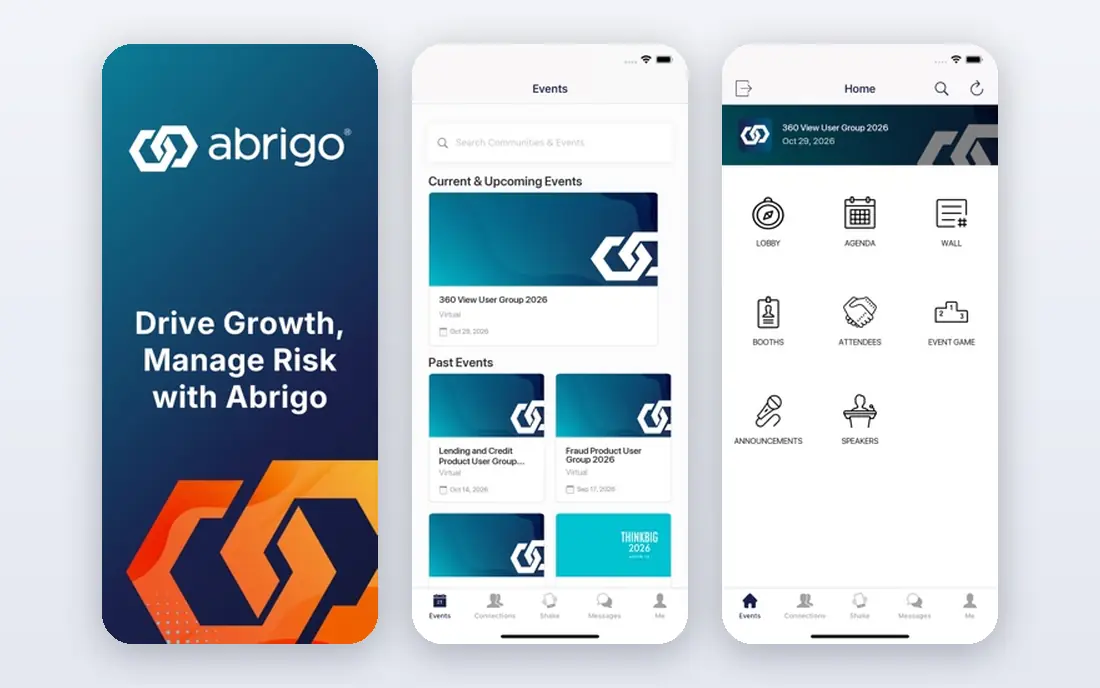
Abrigo brings together loan origination, credit analysis, risk rating, and compliance reporting, which is useful for a community bank that does not want to stitch five vendors together. Its spreading and credit memo tools help analysts build a consistent file, and its portfolio tools help managers watch concentrations, exceptions, and maturities after loans close. For examiners and auditors, having one audit trail across origination and monitoring is a real advantage.
Abrigo is less of a fit if you want a consumer-style, self-serve signup, because this is a relationship sale with demos, scoping, and a quote. Ask which pieces are core and which are add-ons, and confirm core system integrations before signing. Our pick for many community institutions is Abrigo when local support, US regulatory focus, and a broad credit toolkit matter more than a single global platform.
- Lending, credit risk, and compliance tools in one vendor
- Well suited to US community institutions
- Portfolio monitoring included
- Pricing is quote based
- Some modules are sold separately
Loan IQ is the workhorse behind many large commercial and syndicated loan books. It handles complex structures, multiple participants, fees, interest calculations, and agency administration that simpler origination tools do not attempt. If your book includes syndicated deals, participations, or multi-currency facilities, Loan IQ is in a different class from a general loan origination system, and that depth is why large banks stay with it for years.
That depth brings cost and complexity. Implementation is a project, not a setup wizard, and smaller lenders will find the feature set and price hard to justify. Loan IQ makes sense when servicing accuracy and complex deal structures are the main risk, rather than application volume alone. Pair it with a front-end origination tool if your borrower experience needs modern digital intake, since Loan IQ is strongest in the middle and back office.
- Deep support for syndicated, bilateral, and agency lending
- Strong servicing and accounting
- Used by large global lenders
- Complex to implement
- Not aimed at small lenders
Baker Hill NextGen is designed for banks and credit unions that originate commercial, small business, and consumer loans and want risk management in the same platform. Its workflow guides applications from intake through underwriting and decision, and its analytics help managers see pipeline, turnaround, and portfolio risk without exporting data to another tool. That combination suits institutions that want consistency across loan types without buying a separate system for each one.
Because pricing is quoted, compare Baker Hill on total cost and on how much configuration your team can do without vendor services. Ask for a demo using your own credit policy steps, including exceptions and committee approvals, since those steps separate a good demo from a good purchase. For a mid-size institution that wants commercial depth without a global enterprise platform, Baker Hill belongs on the shortlist.
- Commercial, small business, and consumer origination on one platform
- Risk management and analytics included
- US bank focus
- Pricing is not published
- Implementation still needs careful scoping
MeridianLink is best known for digital loan origination that lets applicants apply online, upload documents, and receive faster decisions. For commercial and small business lending, that front-end speed matters, because borrowers compare the experience with consumer lending and expect fewer paper forms and faster answers. Its decisioning and workflow tools help lenders apply policy consistently and move straightforward deals through quickly, while routing complex deals to analysts.
MeridianLink is not a full servicing or syndicated lending platform, so larger institutions may pair it with other systems for the back office. Check which commercial features are included in the package you are quoted, rather than assuming the consumer origination strengths carry over in full. If your main problem is slow intake, lost documents, and manual handoffs, MeridianLink is a practical fix.
- Digital applications and automated decisioning
- Broad lender customer base
- Consumer and business lending coverage
- Commercial depth varies by module
- Pricing is quote based
Temenos offers lending as part of a wider core banking platform, which appeals to banks that want to modernize the core and lending together rather than patching old systems. Its lending tools cover origination, servicing, and collections, and its global customer base means it handles varied products, currencies, and regulatory settings. For a bank already planning a core replacement, evaluating Temenos lending inside that project can save integration work later.
The risk is scope. A core-linked purchase is longer, more expensive, and harder to reverse than a standalone origination tool, so it needs executive sponsorship and a clear migration plan. Smaller US community banks may find Temenos more platform than they need. For a large or international bank, though, the breadth and the ability to run lending on the same platform as deposits and payments are genuine advantages.
- Broad core banking and lending coverage
- Global scale
- Cloud and on-premises options
- Large implementation scope
- Pricing is enterprise and quoted
Moody's Lending Suite, built around its long-standing credit analysis tools, focuses on the analytical heart of commercial lending: spreading financial statements, building credit memos, assigning risk ratings, and monitoring portfolios. Analysts who live in spreadsheets will notice the difference, because consistent spreading templates, covenant tracking, and memo generation reduce manual work and make committee packs easier to review. It also helps institutions apply the same credit standards across branches and teams.
Moody's is not a complete borrower-facing origination system on its own, so many buyers pair it with an origination platform or use it as the credit engine inside a wider stack. Confirm how it connects to your origination system and core before buying, and ask about pricing by user and module. If credit quality and consistent analysis are your main concern, this suite is a strong specialist pick.
- Strong financial spreading and credit memo tools
- Risk rating and portfolio analytics
- Trusted credit data heritage
- Focus is analysis rather than full origination
- Pricing is quoted
LendingWise targets private lenders, hard money lenders, and smaller commercial lenders that need a complete origination system without an enterprise project. It covers application intake, pipeline tracking, document management, underwriting workflow, and a borrower portal, which gives a small team a professional process from first inquiry to closing. For a lender that still runs on email and spreadsheets, that structure alone can cut turnaround time and lost files.
LendingWise will not match Loan IQ for syndicated servicing or nCino for a large multi-line bank, and that is fine, because it is not trying to. The honest check is whether your loan types, reporting needs, and servicing plans fit its model, and whether its integrations cover your accounting and document tools. For a growing private or small commercial lender, it is the most accessible starting point in this list.
- End-to-end origination for private and commercial lenders
- Faster setup than enterprise platforms
- Borrower portal included
- Less suited to large syndicated books
- Fewer large-bank core integrations
How we picked these
We compared official product pages, pricing pages, and public documentation for commercial lending platforms, focusing on origination, credit analysis, servicing, and core integrations. We favored products that are actively sold in 2026, that clearly support commercial or business lending rather than consumer lending only, and that cover different institution sizes, from private lenders to global banks. Where pricing is not published, we say so rather than repeating a third-party estimate, and we checked that each homepage below belongs to the named vendor.
What to check before you sign
Start with a real loan file, not a vendor demo script. Bring a recent commercial deal, including financial statements, guarantors, collateral, and committee conditions, and ask each vendor to walk it through intake, spreading, memo, approval, and closing. That exercise exposes missing steps, manual workarounds, and integration gaps that a polished demo hides, and it gives your analysts a fair basis for comparison.
Next, price the whole project, not just the license. Ask for implementation fees, data migration, training, core integration costs, and annual support, and get the renewal terms in writing. Commercial lending software often lasts a decade, so exit terms, data export, and contract length matter as much as the first-year price. Finally, confirm compliance and audit features, including user permissions, change history, and reporting, because examiners will ask for them. This is general business information, not financial advice, and lending decisions remain subject to your credit policy and applicable regulations.
FAQ
What is the best commercial lending software for a community bank?
Abrigo and Baker Hill are common community bank choices because they combine origination with credit risk and portfolio tools, while MeridianLink suits banks whose main need is faster digital intake. The best fit depends on whether your bottleneck is credit analysis, application volume, or servicing, so shortlist two vendors and run the same loan file through both.
How much does commercial lending software cost?
Most vendors in this category do not publish prices, and cost is quoted by institution size, loan volume, users, and modules. Budget for implementation and integration on top of the annual license, and ask for a written total for year one and for renewal years before you sign.
What is the difference between commercial loan software and a loan origination system?
A general loan origination system handles applications and workflow, while commercial lending software adds spreading, credit memos, risk ratings, covenants, and complex servicing. Many banks use both: an origination front end for intake and a commercial engine for analysis and servicing.
Does commercial lending software replace a core banking system?
No, in most cases it sits alongside the core, pulling customer and account data and posting loan details back. Some platforms, such as Temenos, offer lending as part of a core replacement, but that is a larger project than buying a standalone origination tool.
Can small lenders use commercial lending software?
Yes, and LendingWise and MeridianLink are built for smaller teams, while enterprise platforms may be too large and costly. Small lenders should prioritize fast setup, a borrower portal, and document tracking, and avoid paying for syndicated servicing they will never use.