Best Coin Grading Service in 2026: 8 Services Compared
Compare the best coin grading service options, including PCGS, NGC, and CAC Grading, with fees, turnaround, resale value, and honest trade-offs here now.
- Editor's choice
 PCGS
Widest resale acceptance
Starts at$23 per coinVisit pcgs.comFull review - Great alternative
 NGC
World coins and registry sets
Starts at$25 per coinVisit ngccoin.comFull review - Also consider
 CAC Grading
Strict grading and stickering
Starts at$23 per coinVisit cacgrading.comFull review
TL;DR:
- PCGS and NGC are the two services with the widest dealer acceptance and the strongest resale premiums for most coins.
- CAC Grading is a strong third choice, especially for collectors who value its stickering and grading standards.
- Economy tiers at PCGS, NGC, and CAC Grading run roughly 23 to 25 dollars per coin for lower-value coins, plus handling and insured shipping.
- A coin is usually worth grading only when its graded value clearly exceeds fees, shipping, and insurance, often a value of at least 150 dollars.
- Grading does not improve a coin, it only certifies what is already there, so damaged or cleaned coins will still grade as details pieces.
Quick comparison
| Tool | Best for | Starts at | Free plan? | |
|---|---|---|---|---|
| PCGS | Widest resale acceptance | $23 per coin | No | Visit |
| NGC | World coins and registry sets | $25 per coin | No | Visit |
| CAC Grading | Strict grading and stickering | $23 per coin | No | Visit |
 ANACS | Budget grading for learning | See website | No | Visit |
 ICG | Affordable alternative grading | See website | No | Visit |
 GreatCollections | Submission help and auctions | See website | No | Visit |
 CAC Stickering | Verifying already-graded coins | $26 per coin | No | Visit |
 Legacy grading via dealers | Dealer-assisted submissions | See website | No | Visit |
The best coin grading services
A coin grading service authenticates a coin, assigns it a grade on the 70-point scale, and seals it in a tamper-evident holder with a label. That holder, often called a slab, makes a coin easier to buy, sell, and insure, because the buyer does not have to trust the seller grading alone. We compared official fee pages, submission rules, and market acceptance to find services that collectors and dealers actually use in 2026.
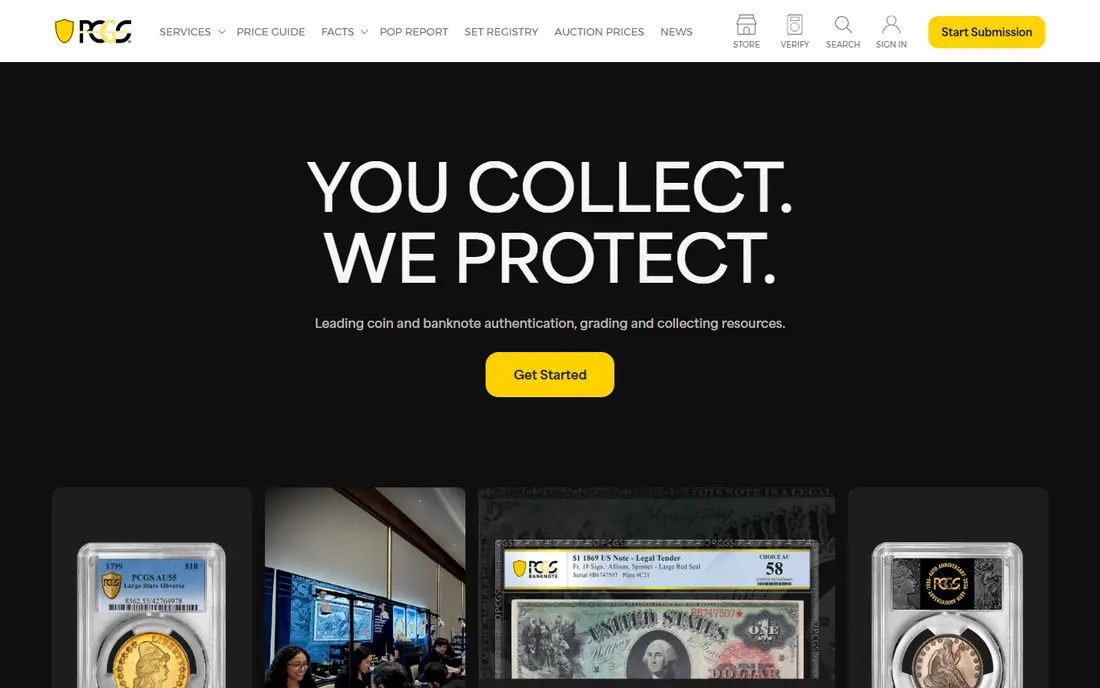
PCGS, the Professional Coin Grading Service, is the default choice for many United States collectors, and its slabs often command a small premium over rivals for the same grade. Its Economy tier runs about 23 dollars per coin for coins valued up to 300 dollars, with Regular at about 40 dollars for coins up to 2,500 dollars. A grade guarantee backs the slab, with a resubmission process if a buyer believes a coin is overgraded or not genuine.
Direct submission requires a paid membership, though collectors without one can submit through an authorized dealer. Turnaround on economy tiers can stretch to several weeks, so patience is part of the deal. For coins you plan to sell, PCGS is our pick for most people, because its acceptance is the widest in the market.
- Strongest dealer and auction acceptance
- Large registry community
- Grade guarantee
- Direct submission requires a paid Collectors Club membership
- Economy turnaround can be slow
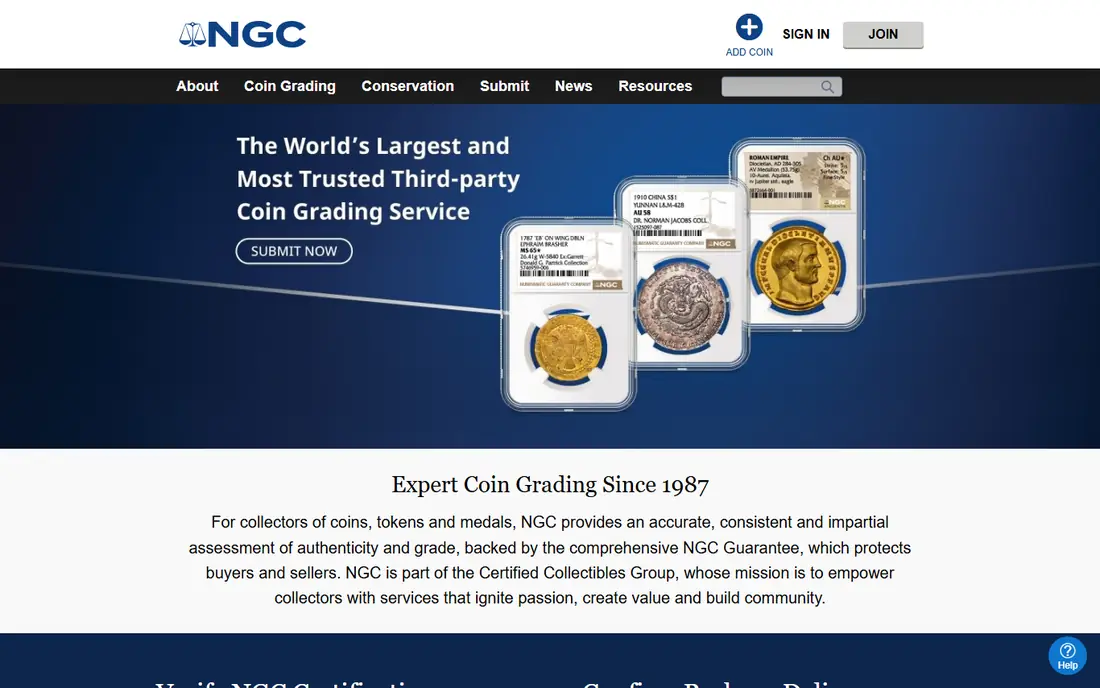
NGC, the Numismatic Guaranty Company, is the other major service, with particular strength in world coins, ancients, and tokens, as well as United States coins. Its Economy tier runs about 25 dollars per coin, with Standard around 45 dollars, and membership starts at a low-cost Associate tier for direct submission rights. NGC slabs are widely accepted by dealers and auction houses, and its registry sets attract competitive collectors.
Fees and turnaround vary by coin type and value, so check the current tier table before sending a coin, since a coin that fits Economy at one service may fit a higher tier at another. For world coins, or for collectors who already build NGC registry sets, NGC is often the better fit than PCGS, even though both are excellent.
- Strong world coin and ancient coverage
- Large registry
- Clear tier structure
- Direct submission requires membership
- Standard fees can exceed PCGS on some tiers
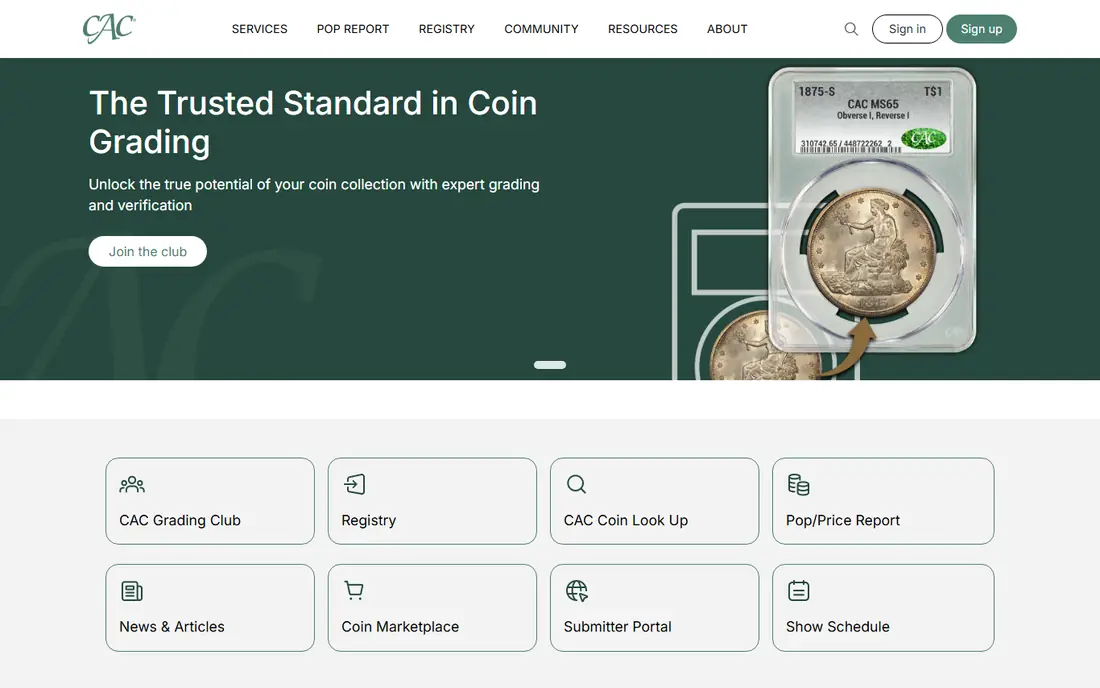
CAC Grading, known as CACG, grew out of Certified Acceptance Corporation, whose green stickers have long marked coins judged solid or high-end for their grade. Its grading fees start at about 23 dollars per coin on Economy for classic coins, with Standard at 40 dollars, and many tiers include high-resolution imaging. Collectors who trust CAC strictness often prefer its slabs for high-quality pieces.
The service is newer as a grader than PCGS and NGC, so its resale premium is still building in some categories, though it is already strong for quality United States coins. For a collector who values strict grading and CAC history, CACG is a compelling third major service, and its imaging is a genuine plus when selling online.
- Reputation for strict, consistent grading
- High-resolution imaging on many tiers
- Growing market acceptance
- Newer grading service than PCGS and NGC
- Economy turnaround can be long
ANACS is the oldest grading service in the United States, and it remains a budget-friendly route to a certified coin. It runs specials, such as low per-coin rates for batches of a given type, which makes it attractive for collectors learning to grade or certifying lower-value pieces. It also has a history with varieties and error coins that some specialists value.
The honest drawback is resale. An ANACS slab at a given grade usually sells for less than a PCGS or NGC slab at the same grade, because dealer acceptance is narrower. For a coin you plan to keep, or for learning, ANACS is a sensible saving. For a coin you plan to sell at top value, PCGS or NGC will usually return more, even after higher fees.
- Often lower fees and frequent specials
- Long history
- Good for varieties and errors
- Slabs usually sell for less than PCGS or NGC at the same grade
- Less registry support
ICG, the Independent Coin Graders, offers another affordable path to certification, with a focus on straightforward grading at a lower cost than the two majors. Collectors who want a coin authenticated and protected, without paying a premium for resale branding, can find ICG a practical choice. Its holders are clear and professional, and the service covers a wide range of United States coins.
As with ANACS, the limit is market acceptance. ICG slabs do not command the same premiums as PCGS or NGC, so they suit keepers better than flippers. If your goal is a certified collection you enjoy, rather than a coin you plan to sell soon, ICG gives you certification without the top-tier fee.
- Lower-cost grading
- Independent service
- Useful for personal collections
- Resale premiums trail PCGS and NGC
- Smaller dealer network
GreatCollections is not a grading service, but it belongs on this list because it solves the submission problem for many collectors. It accepts raw coins, submits them to PCGS, NGC, or CAC Grading, and can then auction the graded coin, which removes the need for a grading membership or dealer relationship. That service is useful for new collectors who find submission forms and tier tables confusing.
Fees stack up: grading fees plus submission handling plus, if you sell, auction fees. For a single valuable coin, the convenience may be worth it, and the auction exposure can help the final price. For bulk submissions, a direct membership with PCGS or NGC is usually cheaper.
- Submits coins to PCGS, NGC, and CAC Grading on your behalf
- Auction platform for selling graded coins
- Not a grader itself
- Auction and submission fees add to grading costs
CAC Stickering is a separate service from CAC Grading: it reviews coins already graded by PCGS or NGC and awards a green sticker to coins judged solid or high-end for the grade. Economy stickering runs about 26 dollars per coin for coins up to 3,000 dollars in value, with higher tiers for more valuable pieces. Dealers and advanced collectors pay attention to the sticker, since it acts as a second opinion on quality within a grade.
Stickering does not raise the numeric grade, and it only covers PCGS and NGC holders, so it is not a route to a higher grade. For a coin you already own in a PCGS or NGC slab, and that you believe is high-end for its grade, a sticker can improve salability without the cost and risk of cracking it out and regrading.
- Green sticker signals a solid or high-end coin for its grade
- Widely respected by dealers
- Lower cost than regrading
- Only applies to PCGS and NGC slabs
- Sticker does not change the numeric grade
Many collectors never submit directly at all. Instead, they take coins to an authorized dealer, who advises whether grading is worthwhile, picks the right tier, and sends the coin with a larger batch. This route avoids membership fees, and a good dealer can save you from grading a coin that will come back as a details piece or at a grade below your hopes.
The cost is less transparent, since dealers add handling to grading fees, and timing depends on their submission schedule. For a first submission, or for a coin you are unsure about, dealer advice is often worth the extra fee. Ask the dealer to explain the tier, the declared value, and the expected turnaround before you hand over a valuable coin.
- Dealer advice on whether a coin is worth grading
- No membership needed
- Local drop-off in many areas
- Dealer handling fees vary
- You rely on the dealer tier and timing choices
How we picked these
We compared official fee pages from PCGS, NGC, and CAC Grading, plus public submission guides, and we favored services with real dealer acceptance rather than every holder maker on the market. We included budget services and a submission helper because not every collector needs, or can afford, a top-tier slab for every coin. We did not claim hands-on testing, and we used See website where fees vary by coin type or are set by a dealer.
We also weighed resale reality over grading theory. A grade is only useful if buyers trust the holder, so market acceptance mattered as much as the grading standard itself. That is why PCGS and NGC lead this list, even though smaller services can grade accurately.
Should you grade your coin
Start with value and condition. A common circulated coin worth a few dollars will cost more to grade than it gains in value, while a key date, a high-grade modern coin, or a rare variety may gain far more than the fee. Look for signs of cleaning, damage, or wear that could lead to a details grade, since a details coin sells for much less than a straight-graded coin at the same numeric level.
Insure the shipment both ways, photograph the coin before sending it, and declare a realistic value, since tier limits are based on that value. Keep the submission receipt and tracking, and be patient: economy tiers can take five to ten weeks. If you are unsure, ask a dealer first, since a short conversation can save a wasted submission fee.
FAQ
How much does it cost to grade a coin?
Common collector tiers run about 23 to 25 dollars per coin at PCGS, NGC, and CAC Grading for lower-value coins, plus a handling fee of roughly 10 dollars per submission and insured shipping both ways. Higher tiers for valuable coins cost more, with express and walkthrough tiers running into hundreds of dollars.
Is PCGS or NGC better?
Both are excellent, and the better choice often depends on the coin. PCGS tends to lead for United States coins and resale premiums, while NGC is strong for world coins, ancients, and registry collectors. For most United States collectors, either slab is widely accepted, and the coin quality matters more than the holder brand.
Do I need a membership to submit coins for grading?
For direct submission, PCGS requires a paid Collectors Club membership and NGC requires at least an Associate membership. Without a membership, you can submit through an authorized dealer or a service such as GreatCollections, which submits on your behalf for a fee.
How long does coin grading take?
Economy tiers usually take about five to ten weeks, standard tiers around two to four weeks, and express tiers about a week. Paying more buys speed and a higher declared-value limit, not a better grade, so choose the tier by coin value and patience, not by hoping for a higher result.
Is coin grading worth it for common coins?
Usually not, since grading fees, handling, and shipping can exceed the value of a common coin. A common guideline is to grade coins worth at least 150 dollars, or coins where a high grade would create a large premium. For common coins, buying an already-graded example is often cheaper.
What does a details grade mean?
A details grade means the coin has a problem, such as cleaning, damage, or corrosion, so the service states the detail level but does not assign a straight numeric grade. Details coins sell for less than straight-graded coins, which is why checking for problems before submitting matters.