Best Cloud-Based HR Management Platform in 2026: 9 Platforms Compared
Compare the best cloud-based hr management platform in 2026, from Workday and Rippling to BambooHR and Gusto, with pricing and fit by company size today.

- Editor's choice
 Workday
Large enterprises
Starts atSee websiteVisit workday.comFull review - Great alternative
 Rippling
HR, IT and payroll together
Starts atSee websiteVisit rippling.comFull review - Also consider
 BambooHR
Small and mid-sized teams
Starts atSee websiteVisit bamboohr.comFull review
TL;DR:
- Cloud HR platforms range from payroll-first tools such as Gusto to full suites such as Workday, so match the platform to your HR maturity.
- Rippling and Deel stand out for firms with contractors, global staff or many apps to manage alongside HR.
- BambooHR and HiBob suit small and mid-sized teams that want clear people data without enterprise complexity.
- Price by employee, plus payroll, benefits and add-on modules, and check implementation fees before you budget.
- Test onboarding, time off and payroll with a real employee journey, because those three flows reveal most HR problems.
Quick comparison
| Tool | Best for | Starts at | Free plan? | |
|---|---|---|---|---|
| Workday | Large enterprises | See website | No | Visit |
| Rippling | HR, IT and payroll together | See website | No | Visit |
| BambooHR | Small and mid-sized teams | See website | Free trial | Visit |
 Gusto | Small business payroll and HR | See website | Free trial | Visit |
 Deel | Global hiring and payroll | See website | No | Visit |
 HiBob | Mid-sized people teams | See website | No | Visit |
 ADP Workforce Now | Established mid-market firms | See website | No | Visit |
 Paylocity | Mid-sized firms needing payroll | See website | No | Visit |
 Personio | European SMBs and HR basics | See website | Free trial | Visit |
The best cloud-based hr management platform
A cloud-based HR management platform, often called an HRIS or HCM, stores employee data, runs onboarding, tracks time off, manages payroll and benefits, and reports on the workforce. The tools below cover that job for firms from ten staff to tens of thousands, with different strengths in payroll, global hiring and people analytics.

Workday is a full human capital management suite for large enterprises, covering HR, payroll, talent, planning and analytics in one cloud system. Large firms value its unified data model, because HR and finance data stay consistent across countries and business units. Reporting, workforce planning and talent tools are built for scale.
Workday is not a small-business tool. Pricing is quoted, implementation takes months and needs skilled project teams. For a large firm that wants one enterprise HR and finance platform, Workday is a leading choice. Smaller firms will find BambooHR, HiBob or Rippling faster and cheaper to run.
- Full HCM suite for large firms
- Strong finance and HR integration
- Deep reporting and planning
- Quoted pricing
- Implementation is a major project

Rippling combines HR, payroll, IT device and app management, and spend controls, so onboarding a new hire can provision accounts, devices and payroll in one flow. That breadth suits growing firms that otherwise juggle separate HR, IT and finance tools. Automation handles many routine changes, such as role moves and access updates.
Pricing is quoted and depends on modules and headcount, so get a full quote for the modules you need. Rippling is less of a fit for a firm that only wants basic HR records. For a growing company that wants HR and IT onboarding together, it is a strong pick.
- HR, payroll, IT and spend in one system
- Fast onboarding
- Strong automation
- Quoted pricing
- Module costs add up as you expand
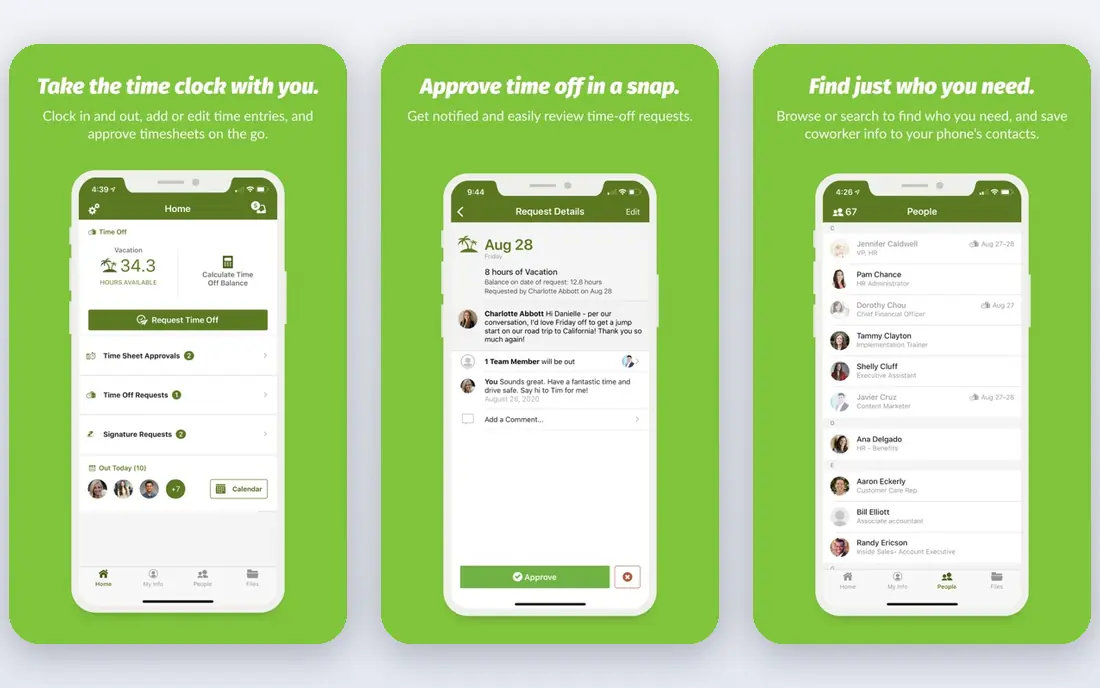
BambooHR is a popular HR platform for small and mid-sized teams that want clean people data without enterprise complexity. It covers employee records, onboarding, time off, performance and reporting in a simple interface that HR teams and managers learn quickly. That clarity helps firms moving from spreadsheets to a real HR system.
Payroll is available as an add-on in the United States, and pricing is quoted, so ask for a full figure for your headcount and modules. BambooHR is less suited to very large global firms. For an SMB that wants a dependable HR core, it is one of the safest choices.
- Clear employee records and reporting
- Easy onboarding and time off
- Good for growing SMBs
- Pricing is quoted
- Payroll is an add-on in some regions
Gusto is built for small businesses that need payroll and basic HR without a large system. It handles payroll, tax filings, benefits, onboarding and time tracking in a friendly interface, with clear tiers for growing teams. Small firms often choose Gusto because payroll just works, and staff can manage pay, benefits and time off from one login.
Gusto is US-focused and less suited to large firms or complex global payroll. International hiring needs a tool such as Deel. For a US small business that wants payroll and HR together, Gusto is an excellent starting point.
- Easy payroll for small firms
- Benefits and onboarding built in
- Clear pricing tiers
- Less deep for large enterprises
- Some features are US-focused
Deel helps firms hire employees and contractors in many countries without setting up local entities. It handles contracts, global payroll, benefits, tax documents and contractor payments, with compliance guidance for each country. That makes it vital for remote-first firms and companies expanding abroad.
Pricing varies by whether workers are employees or contractors and by country, so model your actual workforce mix. Deel is less of a fit for a purely domestic firm that needs deep performance and talent tools. For global hiring, it is one of the leading platforms.
- Hiring in many countries
- Global payroll and contractor payments
- Compliance support
- Pricing varies by worker type and country
- Less of a general HR suite for domestic-only firms
HiBob, known as Bob, is a modern HR platform for mid-sized and multinational teams. It covers core HR, onboarding, time off, performance and people analytics, with a focus on employee experience and company culture. Multinational firms like its support for different locations, languages and time off rules.
HiBob does not run payroll itself in most markets, so payroll needs a partner or integration. Pricing is quoted. For a mid-sized firm that wants a people-first HR platform and already has a payroll route, HiBob is a strong choice.
- Modern people platform
- Onboarding, time off and performance
- Good analytics and culture tools
- Quoted pricing
- Payroll needs a partner or integration
ADP Workforce Now is a long-established HR and payroll platform for mid-market firms. It covers payroll, benefits, time, talent and compliance, with service options for firms that want help with payroll and tax work. Its scale and compliance depth suit firms in regulated industries or with complex payroll needs.
Pricing is quoted and setup can take time, and some users find the interface less modern than Rippling or HiBob. For a firm that values proven payroll, compliance support and a large service network, ADP remains a dependable choice.
- Proven payroll and HR at scale
- Benefits and compliance support
- Broad service options
- Quoted pricing
- Interface and setup can feel dated to some users
Paylocity combines payroll, HR, benefits, time and talent tools for mid-sized firms, with added features for employee communication and engagement. It suits firms that want payroll and HR from one vendor, with reporting that links pay, time and workforce data. The platform is widely used in the US mid-market.
Pricing is quoted, and larger implementations need planning. Paylocity is less known outside the United States, so global firms should check coverage. For a US mid-sized firm that wants payroll-led HR, it is a strong contender alongside ADP and Rippling.
- Strong payroll and HR in one cloud system
- Employee engagement tools
- Good reporting
- Quoted pricing
- Implementation effort for larger firms
Personio is an HR platform for small and mid-sized firms, with particular strength in Europe. It covers employee records, onboarding, time off, payroll preparation and reporting, helping firms move from spreadsheets to a structured HR system. Its design suits HR teams that need a clear core without enterprise complexity.
Personio is less suited to very large global enterprises, and payroll handling varies by country. For a European SMB, or a firm with a large European workforce, it is a practical and well-supported choice.
- Clear HR core for SMBs
- Onboarding, time off and payroll links
- Strong in Europe
- Less deep for large enterprises
- Payroll varies by country
How we picked these
We compared official product pages, pricing pages and public reviews for cloud HR platforms active in 2026. We favoured tools with a real HR core, payroll or payroll integration, onboarding and time off, and a clear fit by company size. We left out single-purpose tools for only recruiting or only time tracking, and we used quoted pricing where vendors do not publish a list price.
What to check before you buy
Start with your employee journey. Map hiring, onboarding, first payroll, time off, a role change and leaving, and ask each vendor to show those flows with your data. That test reveals gaps faster than a feature list. Check payroll coverage for every country and worker type you have, including contractors, because a gap there creates manual work every month.
Check data security, access controls and reporting. Ask who can see pay and personal data, how former employee access is removed and how you export your data if you leave. Price the full package, including payroll, benefits, implementation and support, at your current headcount and at your headcount in two years. Finally, check support hours and implementation help, because HR problems are often urgent.
Rolling out without disruption
Run payroll in parallel for at least one cycle before you switch fully, and keep the old records accessible. Train managers on time off approvals and onboarding tasks, because manager adoption decides whether HR data stays clean. Communicate the change to staff early, with clear dates for pay, time off and benefits access.
FAQ
What is the best cloud-based hr management platform for a small business?
Gusto is our pick for a US small business that needs payroll and HR together, while BambooHR suits small teams that want a clear HR core with payroll as an add-on. Both are easier to run than Workday or ADP for a small team. Choose by whether payroll or HR records are your main need.
What is the best cloud-based hr management platform for a large enterprise?
Workday is our pick for large enterprises that want a full HR and finance suite, while ADP Workforce Now is a strong alternative for payroll-led mid-market and large firms. Both need quoted pricing and real implementation planning. Smaller firms should avoid enterprise suites until headcount and complexity justify them.
How do I hire staff in other countries?
Use Deel for global hiring, payroll and contractor payments, or check whether your HR platform supports employer-of-record services in your target countries. Confirm contracts, benefits, tax documents and termination rules for each country before you hire. Global hiring is a compliance task, not just a payroll task.
Does an HR platform replace payroll software?
Many do, for domestic payroll, including Gusto, Rippling, ADP and Paylocity. Others, such as BambooHR and HiBob, offer payroll as an add-on or through a partner. Check payroll coverage, tax filing and year-end documents for your countries before you assume one system covers both HR and payroll.
How much does cloud HR software cost?
Most vendors price by quote, based on headcount and modules, so direct price comparison is hard. Small-business tools often start with clear tiers, while enterprise suites are quoted and include implementation fees. Get a written quote for your headcount, payroll needs and modules, and ask what rises when headcount grows.
Can I move my HR data if I leave a platform?
Most cloud HR platforms allow data export, but formats and completeness vary. Ask before you buy how employee records, documents, time off history and payroll history are exported, and how long data is kept after cancellation. Keep your own backups of critical records, especially payroll and employment history.