Best Clinical Trial Management Software in 2026: 8 Platforms Compared
We compared the best clinical trial management software for sponsors, CROs and sites, covering study setup, site tracking, compliance and pricing in 2026.
- Editor's choice
 Veeva Vault CTMS
Large sponsors needing a unified clinical suite
Starts atSee websiteVisit veeva.comFull review - Great alternative
 Medidata Rave CTMS
Sponsors and CROs already using Rave EDC
Starts atSee websiteVisit medidata.comFull review - Also consider
 Oracle Clinical One
Enterprises standardized on Oracle clinical tools
Starts atSee websiteVisit oracle.comFull review
TL;DR:
- Veeva Vault CTMS and Medidata lead for large, multi-study sponsors that need a unified clinical suite.
- Site-focused tools such as CRIO and Clinical Conductor suit research sites and smaller teams better than enterprise suites.
- Almost every CTMS in this list is priced by quote, so budget for implementation and validation time as well as the license.
- Check EDC, eTMF and safety integrations before you buy, since a CTMS that sits apart from those systems creates duplicate entry.
Quick comparison
| Tool | Best for | Starts at | Free plan? | |
|---|---|---|---|---|
| Veeva Vault CTMS | Large sponsors needing a unified clinical suite | See website | No | Visit |
| Medidata Rave CTMS | Sponsors and CROs already using Rave EDC | See website | No | Visit |
| Oracle Clinical One | Enterprises standardized on Oracle clinical tools | See website | No | Visit |
 IQVIA CTMS | Large sponsors wanting analytics beside operations | See website | No | Visit |
 Castor | Small and mid-size teams and decentralized trials | See website | Free trial | Visit |
 OpenClinica | Academic and budget-conscious research teams | See website | No | Visit |
 Clinical Conductor | Research sites and site networks | See website | No | Visit |
 CRIO | Sites moving from paper to paperless operations | See website | No | Visit |
The best clinical trial management software
Running a trial means tracking dozens of sites, hundreds of visits and thousands of documents at once. The tools below help sponsors and research sites keep that work in one place, with audit trails that stand up to inspection.

Veeva Vault CTMS sits inside the wider Vault clinical suite, which is its main selling point for sponsors that already use Vault for documents or data. Study setup, site tracking, monitoring visits and document status live in one environment, so operations staff spend less time reconciling spreadsheets across systems. That shared platform also means a change in one area can be visible to the rest of the team without a separate report.
The honest catch is scale and cost. Vault CTMS is built for organizations running many studies, and smaller teams may find the implementation effort and the quote-based price hard to justify for a single trial. If your portfolio is growing and you plan to standardize on Vault, it is a strong pick. If you run one small study, a lighter tool will get you moving sooner.
- Unified Vault clinical applications
- Strong study and site oversight
- Broad life sciences adoption
- Quote-based pricing
- Implementation can be lengthy for smaller teams
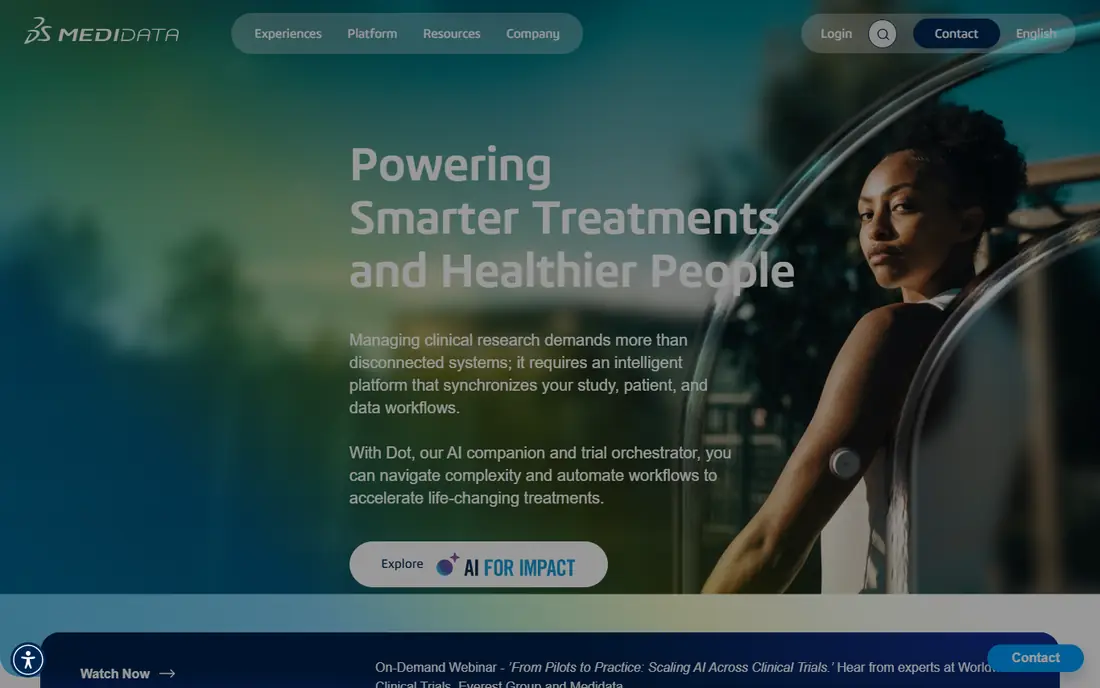
Medidata pairs its CTMS with Rave EDC, and that pairing matters more than any single feature. When enrollment and data capture already live in Rave, operations teams can watch study progress without waiting for manual updates from sites or CROs. Coordinators at many large sites already know the Medidata environment, which cuts training time on new studies.
The trade-off is price and complexity. Medidata does not publish CTMS pricing, and the platform is priced and built for enterprise programs. Small sponsors may find the sales cycle and the setup work out of proportion to one early-phase study. For global sponsors that already run Rave, though, the combined setup is hard to beat.
- Deep link to Rave EDC
- Proven at global scale
- Broad CRO familiarity
- Pricing not published
- Can feel complex for small teams

Oracle Clinical One covers randomization, supplies and study operations alongside CTMS functions, which suits sponsors that want one vendor across the clinical stack. Large enterprises with Oracle infrastructure already in place get consistent security controls and global support from a vendor they already manage. The platform is designed for complex, multi-country trials rather than quick single-site studies.
That enterprise focus is also the weakness. Pricing is not published, and implementation tends to need experienced Oracle staff or a partner. Teams without that background should plan for a longer runway and a larger services budget. If Oracle is already your standard, the fit is natural. If not, compare the total effort against a more focused CTMS.
- Enterprise scale and security
- Broad Oracle life sciences suite
- Global deployment options
- Opaque pricing
- Setup can be heavy without Oracle expertise in house
IQVIA brings trial operations together with analytics and site data, which helps sponsors spot slow-enrolling sites early instead of discovering the problem at a quarterly review. The CRO business behind the software also means the product reflects the daily problems of running large studies. Sponsors that value enrollment forecasting and site selection insight get more here than a plain tracking tool offers.
The catch is fit. IQVIA pricing is quote-based and the platform is aimed at large programs, so a small biotech may pay for depth it will not use in its first years. It also makes sense to ask how much of the value depends on IQVIA services rather than the software alone. For large sponsors, that combination can be a plus. For lean teams, it can be a cost to question.
- Strong analytics and site intelligence
- Global CRO backing
- Broad trial data assets
- Enterprise pricing
- May be more than a small sponsor needs
Castor is a good middle ground for teams that want modern software without an enterprise implementation project. It combines data capture with trial management, and its interface feels closer to a current web app than to legacy clinical software. That matters when coordinators and study managers must enter data every day, since a tool people avoid creates gaps in the record.
Castor is less proven as a single system for a sponsor running dozens of large global studies with complex oversight needs. Advanced requirements may need add-ons or workarounds. For academic centers, device studies and growing biotechs, the balance of speed and capability is attractive. Test the reporting and monitoring views on a realistic study before committing.
- Modern interface
- EDC and CTMS in one place
- Faster setup than enterprise suites
- Less depth for very large sponsor portfolios
- Some advanced modules cost extra
OpenClinica has long served academic and public-sector research, and its open source roots give teams deployment options that closed suites do not. Smaller organizations can start without an enterprise contract and shape the system around their studies. The platform covers data capture and trial operations basics, which is enough for many investigator-led studies.
The limitation is that validation support, hosting and advanced enterprise controls live in paid tiers, so the low entry point is not the full cost. Teams that need formal validation help should price the enterprise edition from the start. For academic centers with in-house technical staff, OpenClinica remains a practical and honest option.
- Open source roots
- Flexible deployment
- Lower entry cost than enterprise suites
- Enterprise features sit in paid tiers
- Support depends on the plan chosen
Clinical Conductor is built around the site, not the sponsor, and that difference shows in daily use. Scheduling, visit tracking, budgeting and payment management are front and center, which matches how site staff actually spend their day. Academic medical centers and site networks use it to manage many investigators and protocols without forcing every coordinator into a sponsor-shaped workflow.
The trade-off is sponsor-side depth. A sponsor that needs cross-study oversight across many CROs may find Clinical Conductor thinner than Veeva or Medidata. As a site system, though, it is one of the clearest fits in this list. Sites should check the billing and reporting views against their own finance process before deciding.
- Built for site operations
- Strong financial and scheduling tools
- Academic center experience
- Sponsor oversight features are thinner than enterprise suites
- Pricing by quote
CRIO focuses on making site work paperless, with eSource capture and trial management in one site-facing system. Coordinators can capture source data at the visit instead of transcribing paper notes later, which reduces errors and speeds up monitoring. Sites that still run on paper often see the biggest practical gain from this kind of tool.
The limit is scope. CRIO is a site product first, so sponsors looking for enterprise-wide oversight across many vendors will need something else at the sponsor level. Pricing is also by quote, so sites should confirm the full cost for their study volume. For sites modernizing their own operations, CRIO is a strong and focused choice.
- Site-friendly eSource and CTMS
- Modern interface
- Quick site adoption
- Less suited as a sponsor enterprise CTMS
- Pricing by quote
How we picked these
We compared official product pages, pricing pages where published, help documentation and public user reviews. We favored tools with clear audit trails, role-based access, site and visit tracking, and documented support for 21 CFR Part 11 style controls. We did not run live trials in these systems, and we did not accept vendor claims at face value where a pricing or feature page was missing. Where pricing was not published, we say so plainly rather than guessing a figure.
How to choose a CTMS without buying more system than you need
Start with who will use the system every day. Sponsors need cross-study dashboards and oversight of CROs, while sites need fast visit scheduling, payment tracking and simple data entry. A tool built for sponsors can feel heavy at a single site, and a site tool can run out of room when a sponsor adds its tenth study. Match the buyer to the workflow, not just the feature list.
Check validation and audit support early
Ask how the vendor handles validation documentation, electronic signatures and audit trails, and who owns that work during implementation. Regulated trials need a clear record of who changed what and when. If validation support is an add-on with its own timeline, build that into your start date. A short demo rarely shows this part, so ask for the validation pack before you sign.
Count the integrations, not just the features
A CTMS earns its keep when visit data, enrollment counts and document status flow from your EDC, eTMF and randomization systems without retyping. Ask for named integrations and for reference customers using the same combination you plan to run. Also confirm how study amendments are handled, since protocol changes mid-study are normal and a rigid system turns each amendment into a project.
FAQ
What is the best clinical trial management platform for a small biotech?
For a small team, a focused tool such as Castor or OpenClinica often fits better than a full enterprise suite, since setup is faster and the cost model is clearer. The trade-off is less depth in sponsor oversight features. Start with one study, confirm the integrations you need, and move up only when study volume demands it.
How is a CTMS different from an EDC system?
An EDC system captures participant data such as lab values and visit outcomes. A CTMS tracks the operations around that data: sites, visits, enrollment, monitoring activity, documents and payments. Many vendors sell both, and the best clinical trial management platforms connect the two so operations staff can see enrollment and data completeness side by side.
Do these tools support 21 CFR Part 11 compliance?
Most enterprise CTMS products describe audit trails, electronic signatures and role-based access that support Part 11 compliant use. Compliance still depends on how your organization validates and operates the system. Ask the vendor for validation documentation and confirm what your quality team must do on top of it.
How much does clinical trial management software cost?
Pricing is almost always by quote and varies with study count, site count, users and modules. Smaller site tools may publish a starting figure, while enterprise suites require a sales conversation. Budget for implementation, training and validation in addition to the subscription.
Can one CTMS serve both sponsors and sites?
Some suites try, but the daily work differs enough that many organizations pair a sponsor CTMS with a site system or a site portal. If you need both sides in one contract, test the site workflow in the demo, not just the sponsor dashboard, since site adoption decides whether data stays current.