Best Clinical Trial Compliance Platform in 2026: 9 Platforms Compared
Compare the best clinical trial compliance platform options for 2026, with eRegulatory, eTMF, audit trails, and 21 CFR Part 11 support for trial teams.

- Editor's choice
 Veeva Vault
Large sponsors and CROs
Starts atSee websiteVisit veeva.comFull review - Great alternative
 Medidata
Data and trial management at scale
Starts atSee websiteVisit medidata.comFull review - Also consider
 Oracle Life Sciences
Oracle-stack trial operations
Starts atSee websiteVisit oracle.comFull review
TL;DR:
- Veeva Vault is our pick for large sponsors and CROs that need a unified clinical operations suite.
- Florence eBinders is the strongest site-focused option for eRegulatory binders and remote monitoring.
- Most platforms are quote-only, so total cost depends on studies, sites, users, and modules.
- Audit trails, version control, and Part 11 controls matter more than a long feature list.
- Always confirm validation support, data residency, and monitor access before a study goes live.
Quick comparison
| Tool | Best for | Starts at | Free plan? | |
|---|---|---|---|---|
| Veeva Vault | Large sponsors and CROs | See website | No | Visit |
| Medidata | Data and trial management at scale | See website | No | Visit |
| Oracle Life Sciences | Oracle-stack trial operations | See website | No | Visit |
 Florence eBinders | Site eRegulatory binders | See website | No | Visit |
 Complion | Site and sponsor eRegulatory | See website | No | Visit |
 Advarra | Research compliance and IRB | See website | No | Visit |
 MasterControl | Quality and document control | See website | No | Visit |
 RealTime CTMS | Site and sponsor trial management | See website | No | Visit |
 Castor | Data capture and compliance | See website | Free trial | Visit |
The best clinical trial compliance platform
A clinical trial compliance platform keeps trial documents, approvals, training, and site records in one controlled system, with audit trails that show who did what and when. That control supports Good Clinical Practice, sponsor audits, and regulator inspections. We compared official feature pages, compliance documentation, and public reviews.
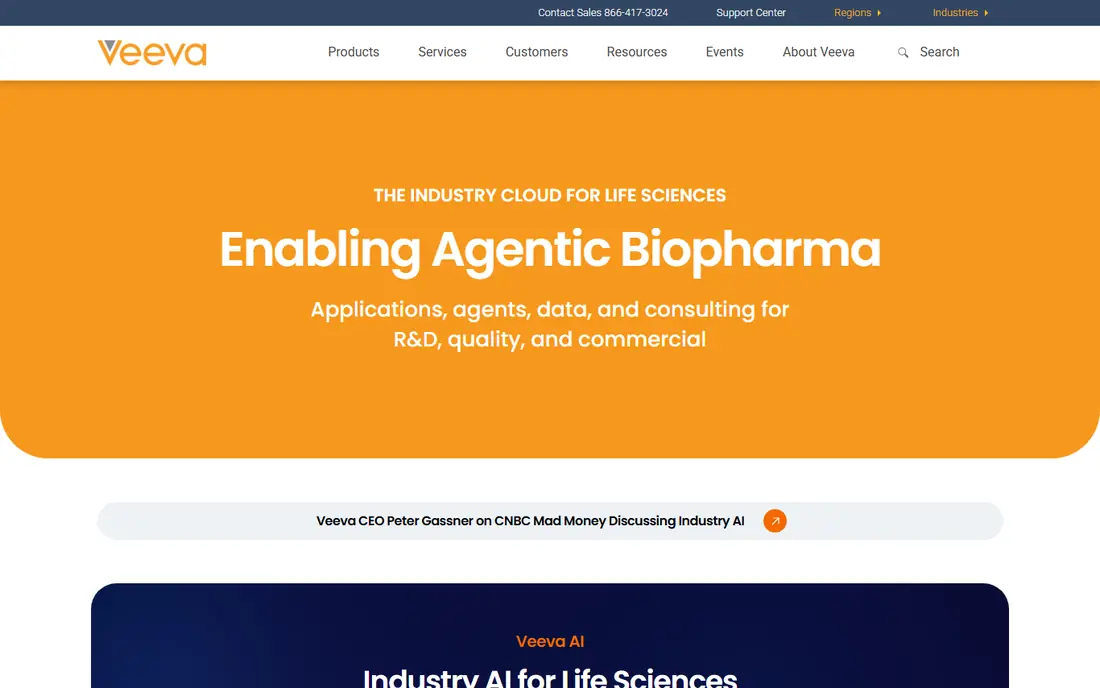
Veeva Vault Clinical Operations Suite brings together trial documents, site management, monitoring, and regulatory content in one cloud platform. Sponsors and CROs value a single source of truth across studies, with controls for versioning, approvals, and audit trails that support 21 CFR Part 11 and ICH GCP workflows.
The platform is enterprise grade, which means cost and implementation need careful scoping. Smaller sites may find a site-focused tool faster to adopt. For large, multi-country trials, Veeva's breadth and integration across clinical and regulatory work are hard to match.
- Unified clinical, regulatory, and quality apps
- Strong eTMF and study management
- Global scale
- Quote-only pricing
- Implementation takes planning
- Heavy for a single small study

Medidata, part of Dassault Systemes, covers electronic data capture, trial management, randomisation, and related clinical tools. Its compliance value comes from controlled data handling, audit trails, and study workflows that keep data, documents, and site activity linked. Large sponsors use it for complex, global trials.
Teams should scope which Medidata products they actually need, since the full platform is broad. Pricing is quoted, and implementation depends on study complexity. For sponsors already using Medidata EDC, adding its compliance and trial management tools can reduce system sprawl.
- Broad trial platform including EDC and CTMS
- Strong data management
- Large trial experience
- Quote-only pricing
- Platform breadth can slow selection
- Training needed

Oracle Life Sciences offers clinical trial management, data, safety, and related tools for sponsors and CROs. Its compliance strengths include controlled workflows, audit trails, and enterprise security controls, with deployment options for global organisations. Teams already using Oracle systems may benefit from shared identity and data standards.
Smaller research sites will likely find a site-focused platform faster and cheaper. Oracle suits large organisations that need scale, integration, and governance across many studies, and that can support an enterprise rollout.
- Clinical trial and safety tools
- Enterprise security and scale
- Global deployment
- Quote-only pricing
- Enterprise implementation
- Less nimble for small sites
Florence eBinders is built for research sites. It replaces paper regulatory binders with electronic binders, automates eRegulatory workflows, tracks study progress, and gives monitors secure remote access. Sites can get up and running quickly, which helps when a study has many sites and tight start-up timelines.
Sponsors that need a full eTMF and clinical operations suite will likely pair Florence with a sponsor platform such as Veeva. For sites, though, Florence is a strong, focused choice, and its remote monitoring support reduces on-site visit burden.
- Industry-standard site eRegulatory platform
- Remote monitor access
- Fast site onboarding
- Pricing not published
- Site-focused, so sponsor needs may need other tools
Complion provides eRegulatory document management and workflows for sites, sponsors, and CROs. It helps teams organise trial documents, manage approvals and signatures, and keep an audit trail for inspections. Its focus on regulatory documents makes it a practical compliance core for organisations that do not need a full clinical suite.
Teams should confirm which modules, integrations, and validation support are included in a quote, since deployments vary. Complion suits organisations that want a dedicated eRegulatory system without the breadth and cost of the largest suites.
- ERegulatory and document management
- Workflows for sites, sponsors, and CROs
- Audit trails
- Pricing not published
- Scope varies by deployment
- Training needed for full use
Advarra covers institutional review, research compliance, site management, and related workflows. Its strength is the compliance layer around a trial, including ethics review, protocol approvals, and site oversight, alongside trial operations tools. That breadth helps research organisations manage both the science and the approvals in linked systems.
Buyers should map which Advarra products fit their role, since site, sponsor, and IRB needs differ. Pricing is quoted, and rollout benefits from a clear owner for review workflows. For organisations with heavy IRB and compliance load, Advarra is a natural shortlist candidate.
- IRB, IBC, and research compliance tools
- Site and sponsor workflows
- Long research focus
- Product breadth can be confusing
- Quoted pricing
- Implementation planning needed
MasterControl is a quality management platform used across life sciences, with document control, training management, audits, and CAPA workflows. For clinical trials, its value is controlled documents, staff training records, and audit trails that support inspection readiness. Teams can link SOPs, training, and trial documents in one quality system.
It is not a trial-only platform, so CTMS or EDC needs may require other tools. MasterControl suits sponsors and manufacturers that already need a quality system and want trial documents governed inside it, rather than in a separate silo.
- Document and quality management
- Training tracking
- Audit-ready controls
- Broader quality focus, not trial-only
- Quoted pricing
- Configuration takes time
RealTime CTMS helps research sites and sponsors manage studies, subjects, visits, documents, and finances in one system. Its eRegulatory and reporting features support compliance, while finance tools help sites track budgets and payments. That combination suits sites that need operations and compliance together, not only document storage.
Larger sponsors may still need a full enterprise suite for global trials. For sites and mid-size sponsors, RealTime offers a practical, integrated option, provided integrations with EDC and other systems are confirmed during evaluation.
- CTMS with eRegulatory and finance features
- Site-focused workflows
- Reporting
- Pricing not published
- Smaller vendor than Veeva or Oracle
- Integration scope needs checking
Castor provides electronic data capture, patient-reported outcomes, and eConsent in a compliant environment, with support for decentralised trials. Its compliance value comes from controlled data collection, audit trails, and validation support, which help teams meet GCP and data integrity expectations. A free trial helps small teams test the platform.
Castor is data-centric, so organisations that need a full sponsor eTMF may pair it with Veeva or Complion. For research teams whose main compliance risk is data quality and consent, Castor is a strong, modern choice.
- EDC, ePRO, and eConsent
- Compliant data handling
- Decentralised trial support
- Data-focused, so full eTMF needs may need another tool
- Pricing varies by study
How we picked these
We compared official feature pages, compliance documentation, and public reviews for platforms that still operate in October 2026. We favoured tools with controlled documents, audit trails, approval workflows, and support for GCP or Part 11 style controls. We left out generic document storage and project tools with no trial compliance controls, since they do not meet the brief for clinical trial compliance software and tools.
What to check before you commit
Start with your role: sponsor, CRO, or site. Sponsors need eTMF and study oversight, sites need eRegulatory binders and monitor access, and CROs need both plus client reporting. A platform built for one role can still work for another, but workflows and pricing will differ.
Confirm validation and audit support
Ask for validation documentation, audit trail samples, electronic signature controls, and data backup and recovery details. Confirm how the vendor supports inspections, including how quickly it can produce a complete trial record. A platform that cannot show its audit trail clearly will create risk during an inspection.
Check integrations and data flow
Trials use EDC, CTMS, eTMF, IRB, and safety systems. Confirm which integrations are native, which need middleware, and how data moves between them. Manual re-entry between systems creates errors and audit gaps, so integration scope should be in the contract, not only in a sales demo.
Plan site adoption
Sites will not use a system that slows start-up. Test onboarding time, monitor access, training, and support hours with a pilot site. A platform that works well for sponsors but frustrates sites will delay enrolment and create workarounds that harm compliance.
FAQ
What is the best clinical trial compliance platform for research sites?
Florence eBinders and Complion are strong site-focused options for eRegulatory binders, while RealTime CTMS adds trial management and finance. The best choice depends on whether the site needs only document control or full study operations. Pilot with one study before rolling out across sites.
What are the best clinical trial compliance platforms for sponsors?
Veeva Vault, Medidata, and Oracle Life Sciences suit large sponsors and CROs with global trials. They offer eTMF, study management, and data tools in broader suites. Smaller sponsors may prefer Castor for data plus Complion for eRegulatory, at lower total cost.
What is the best clinical trial compliance tool for IRB and ethics review?
Advarra is a strong choice for IRB, IBC, and research compliance workflows, alongside site and sponsor tools. Confirm that review timelines, board management, and protocol version control match your institution's process before committing.
How much does a clinical trial compliance platform cost?
Most enterprise platforms are quote-only, with cost depending on studies, sites, users, and modules. Site tools may be priced per site or per study, while sponsor suites are enterprise contracts. Always ask for a quote that lists modules, users, studies, implementation, and validation support separately.
Does a compliance platform replace GCP training and SOPs?
No. Software supports compliance, but staff still need GCP training, SOPs, and oversight. A platform helps by enforcing workflows, version control, and audit trails, but it cannot replace human review, monitoring, and quality checks.
What is 21 CFR Part 11, and why does it matter?
Part 11 is a United States FDA rule for electronic records and signatures, requiring controls such as audit trails, access limits, and signature authentication. Platforms in this list support Part 11 style controls to varying degrees, so confirm the specific controls and validation evidence for your use case.