Best Clinic Software in 2026: 8 Tools Compared
Compare the best clinic software for scheduling, charting, billing and online booking, with current prices, free plans and honest pros and cons for clinics.

- Editor's choice
 Jane App
Multi-discipline allied health clinics
Starts atSee websiteVisit jane.appFull review - Great alternative
 SimplePractice
Therapy and wellness practices
Starts at$49 per monthVisit simplepractice.comFull review - Also consider
 Pabau
Aesthetic and multi-location clinics
Starts atSee websiteVisit pabau.comFull review
TL;DR:
- Jane App and SimplePractice lead for small allied health and therapy clinics that want scheduling, charting and billing in one place.
- Carepatron is the budget-friendly entry point, with a free plan that suits solo clinicians who are just getting started.
- Pabau and Cliniko work well for clinics with several practitioners, rooms and locations to manage.
- Clinic software pricing is usually per practitioner, so check add-on fees for telehealth, insurance billing and messaging before you commit.
- The best choice depends on your specialty, because chart templates and billing workflows differ a lot between therapy, physiotherapy and medical clinics.
Quick comparison
| Tool | Best for | Starts at | Free plan? | |
|---|---|---|---|---|
| Jane App | Multi-discipline allied health clinics | See website | No | Visit |
| SimplePractice | Therapy and wellness practices | $49 per month | Free trial | Visit |
| Pabau | Aesthetic and multi-location clinics | See website | No | Visit |
 Cliniko | Physiotherapy and allied health teams | See website | Free trial | Visit |
 Carepatron | Budget-minded solo clinicians | Free | Yes | Visit |
 PracticeSuite | Clinics that bill insurance heavily | See website | No | Visit |
 ClinicSense | Massage and wellness clinics | See website | Free trial | Visit |
 Noterro | Small clinics that want simple charting | See website | Free trial | Visit |
The best clinic software
Running a clinic means juggling bookings, patient records, payments and reminders, often with a small team and little spare time. The tools below bring those jobs together, so front-desk work takes less time and fewer details slip through the cracks. We compared official feature pages, pricing pages, app store listings and public reviews to build this list.
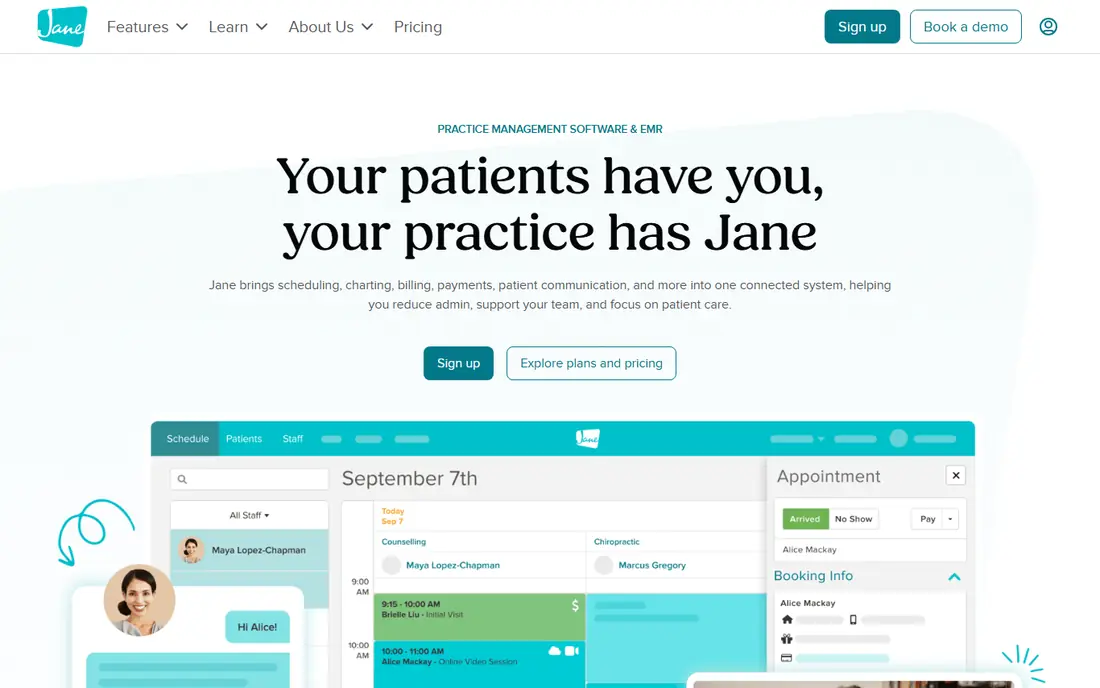
Jane App is a popular choice for physiotherapy, chiropractic, massage, mental health and other allied health clinics. It covers online booking, scheduling, charting with SOAP notes, intake forms, secure messaging and payments in one system. Clinics can set up multiple locations and practitioner profiles, which helps as a practice grows beyond a single room.
The catch is cost structure. Jane prices by practitioner and tier, and features such as insurance billing and group telehealth cost extra. Its prices are also listed in Canadian dollars, so US clinics should convert the total before comparing it with dollar-priced rivals. If your clinic values a tidy booking experience and clear charts, Jane is a strong pick, but get a full quote that includes every add-on you plan to use.
- Clean online booking and charting
- Strong support reputation
- Works for many allied health disciplines
- Pricing is listed in Canadian dollars
- Insurance billing is an add-on
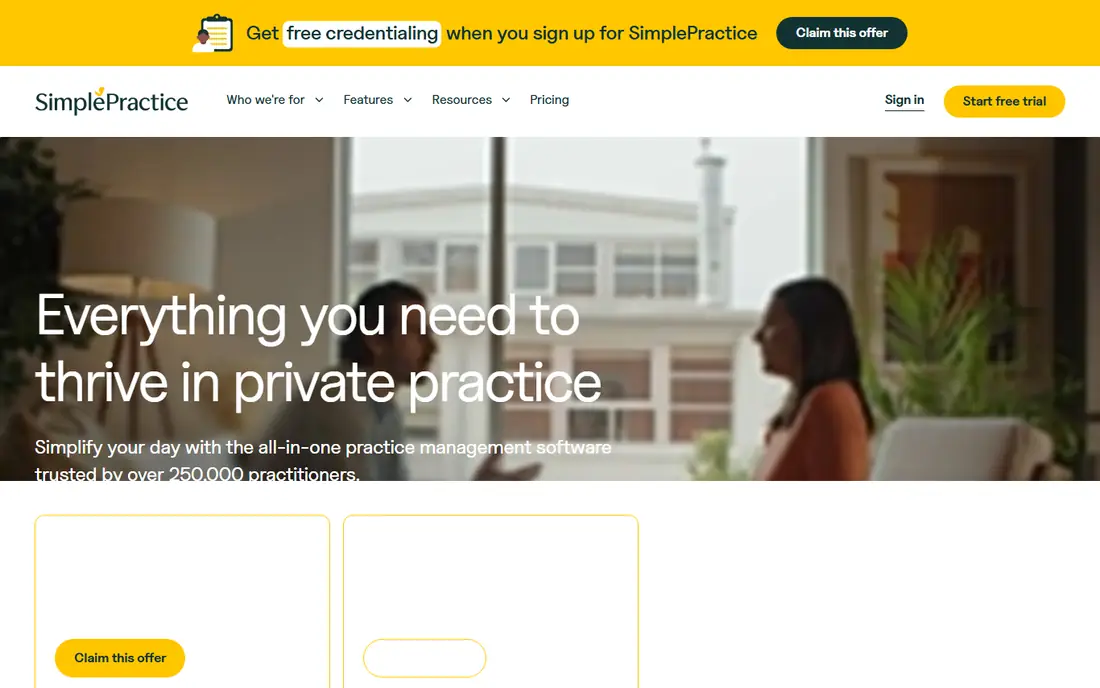
SimplePractice is built for mental health and wellness professionals, and it shows in its templates, client portal and telehealth tools. Scheduling, documentation, billing and secure messaging sit in one workspace, which suits solo therapists and small group practices that do not want to stitch several tools together. A 30-day free trial lets you test the daily workflow before paying.
Pricing starts at $49 per month for the Starter plan, with higher tiers at $79 and $99 per month. Insurance claims beyond the included number, card processing fees and optional AI note tools add to that base price, so the final bill depends on how much you bill through insurance. For therapy-led clinics, SimplePractice remains our pick for most people, thanks to its balance of features, polish and support.
- Well-known practice management for therapists
- Built-in telehealth and client portal
- Clear starter pricing
- Claim fees and card processing add to the monthly cost
- Some note templates feel limited
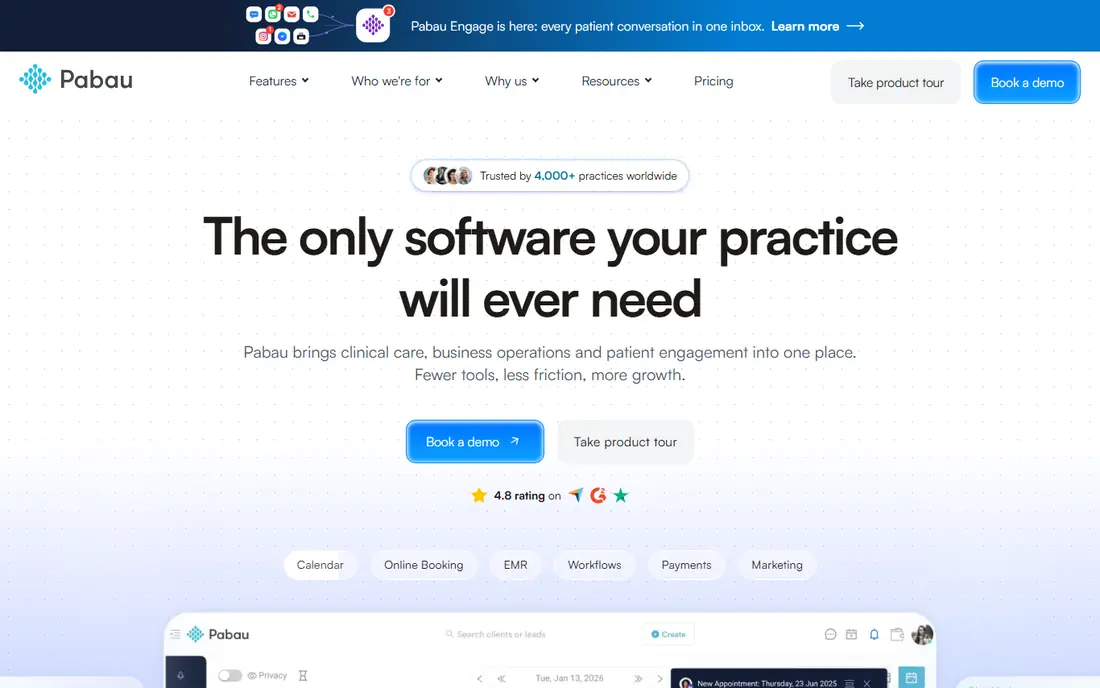
Pabau is an all-in-one platform aimed at aesthetic, medical and wellness clinics that want booking, records, payments, packages and marketing in one place. It supports the full patient journey, from online booking and reminders to treatment notes with photos, point-of-sale payments and memberships. That breadth suits clinics that sell packages or run promotions alongside appointments.
The trade-off is complexity and cost. Pabau pricing scales with practitioner count and location count, so a growing clinic should ask for a quote based on its real staffing plan. Smaller solo practices may find Pabau more than they need. For a busy multi-location clinic, though, having records, payments and marketing together can save real admin time each week.
- Full patient journey from booking to payment
- Built-in marketing and membership tools
- Good for larger teams
- Pricing scales by practitioner and location
- Can be more than a small solo clinic needs
Cliniko is a straightforward practice management tool for physiotherapy, chiropractic, podiatry, massage and similar clinics. It handles appointments, patient records, treatment notes, letters, invoices and online booking without a steep learning curve. Many clinic owners like it because staff can learn it quickly and patients can book online without calling.
Cliniko is less focused on US insurance claims than tools built for the US market, so clinics that bill insurers heavily should check how claims fit into their workflow. It also offers fewer built-in marketing features than Pabau. If your priority is clean scheduling and records for an allied health team, Cliniko is a dependable, easy-to-run option.
- Simple, reliable scheduling and records
- Treatment notes and letters
- Online booking included
- No native insurance billing for US payers in the same depth as US-focused tools
- Fewer marketing tools
Carepatron is a good starting point for solo clinicians and small practices that need scheduling, clinical notes, telehealth and billing without a large monthly bill. Its free plan covers core practice management, and paid tiers stay cheaper than many rivals. That makes it attractive for a new practice that is still building a client base.
The compromise is depth. Reporting, automation and some advanced features are thinner than on SimplePractice or Jane App, and larger teams may outgrow it. Still, for a solo therapist, coach or allied health practitioner who wants one affordable workspace, Carepatron is hard to beat on value. Check which features sit behind paid tiers before you rely on them.
- Free plan available
- Scheduling, notes and billing in one place
- Low-cost paid tiers
- Reporting is more limited than larger platforms
- Support and depth vary by plan
PracticeSuite combines electronic health records, scheduling, billing and practice management, with a clear focus on insurance claims and revenue cycle work. Clinics that submit many claims, track denials and manage payer rules will find more billing depth here than in wellness-focused tools. It also supports patient portals and reminders.
The downside is feel. PracticeSuite looks and feels more traditional than Jane or SimplePractice, and setup can take more time. Pricing is quote-based, so you will need a demo and a written quote to compare it fairly. If insurance billing is the center of your clinic, that depth is worth the trade-off.
- Strong claims, billing and revenue tools
- Scheduling and EHR in one system
- Suits medical practices
- Interface feels dated next to newer rivals
- Pricing is quote-based
ClinicSense is designed for massage therapists, wellness clinics and similar hands-on practices. It offers online booking, SOAP notes, intake forms, appointment reminders and payment processing in a system shaped around treatment sessions rather than medical billing. That focus keeps the daily workflow simple for small wellness teams.
Medical clinics that need diagnosis coding, insurance claims or complex charting will likely find ClinicSense too narrow. Wellness clinics, on the other hand, may prefer its focused templates to a general platform with features they never use. Try the free trial with a real week of bookings to see if its charting style fits your sessions.
- Built for massage and wellness workflows
- SOAP notes and intake forms
- Online booking and reminders
- Narrower specialty focus than general clinic platforms
- Fewer billing options for medical clinics
Noterro is a clinic management tool for physiotherapy, massage, chiropractic and other allied health practices. It covers scheduling, SOAP notes, intake forms, billing and online booking in a clean interface that small teams can pick up fast. Its pricing is aimed at smaller clinics rather than hospital-scale operations.
The limits show at scale. Noterro has a smaller set of integrations than Jane or SimplePractice, and very large clinics may want deeper reporting and multi-location controls. For a small clinic that wants tidy records and bookings without a long setup, Noterro is a sensible, low-friction choice.
- Simple charting and scheduling
- SOAP notes and intake forms
- Affordable for small teams
- Smaller ecosystem of integrations
- Less suited to large multi-location clinics
How we picked these
We compared official feature pages, pricing pages, app store listings, privacy and security pages and public reviews for clinic software that is available in the US in October 2026. We favored tools that cover scheduling, records and payments together, that publish clear pricing or a clear quote process, and that serve real clinic specialties rather than generic booking alone. We left out tools that no longer operate, tools with no working official homepage, and generic calendar apps that lack clinical records.
What to check before you choose clinic software
Start with your specialty. A therapy clinic needs mental health note templates and a client portal, while a physiotherapy clinic needs treatment notes and room scheduling, and a medical clinic needs billing and coding depth. A tool that fits one specialty can feel awkward in another, even if its feature list looks long.
Next, map the true monthly cost. Most clinic tools charge per practitioner, and telehealth, insurance billing, messaging credits and payment processing often cost extra. Ask for a quote that covers your practitioner count, locations and add-ons, and test the free trial with real bookings, notes and invoices. Finally, check data export, security and support. You should be able to export patient and billing data, see HIPAA and security statements, and reach support during clinic hours. A tool that locks your data in or leaves you waiting on support will cost more in time than it saves in fees.
FAQ
What is clinic software?
Clinic software combines scheduling, patient records, billing and communication in one system for a health or wellness practice. It replaces separate booking tools, paper charts and spreadsheets with a single record for each patient. Most tools also offer online booking, reminders and payment processing.
Is clinic software HIPAA compliant?
Many clinic tools state HIPAA compliance and offer a business associate agreement, but compliance also depends on how your clinic uses the tool. Check the vendor security page, confirm a signed agreement is available, and use strong passwords and access controls for staff. This article is general information, not legal or medical advice.
How much does clinic software cost?
Prices vary by practitioner count, tier and add-ons, from free plans for solo clinicians to well over $100 per practitioner per month for larger platforms. SimplePractice starts at $49 per month, while other tools price by quote or in Canadian dollars. Always compare the total with telehealth, billing and messaging included.
Can patients book appointments online?
Yes, most tools on this list offer online booking through a branded booking page. Patients can pick a practitioner, service and time, and the clinic can send automatic reminders. Check whether online booking, reminders and intake forms are included in your plan or sold as add-ons.
What is the difference between clinic software and an EMR?
Clinic software usually covers scheduling, records and billing for smaller practices, while an EMR or EHR is a fuller medical record system used by larger medical practices and hospitals. Some tools blur the line, offering charting, e-prescribing and claims. Choose based on your billing and charting needs, not the label alone.
Do I need separate billing software?
Not always. Many clinic tools include invoicing, payment processing and basic claims, which is enough for cash-pay and small insurance practices. Clinics that bill many insurers may still want a dedicated billing service or a billing-focused platform such as PracticeSuite.