Best Car Price Comparison Tools Online in 2026: 8 Tools Compared
We compared the best car price comparison tools online for new and used cars, covering values, listings and dealer prices, so buyers can negotiate well.
- Editor's choice
 Kelley Blue Book
Starting values buyers trust
Starts atFreeVisit kbb.comFull review - Great alternative
 Edmunds
True Market Value and research
Starts atFreeVisit edmunds.comFull review - Also consider
 CarGurus
Live listing price comparison
Starts atFreeVisit cargurus.comFull review
TL;DR:
- Kelley Blue Book and Edmunds give the best starting values, with trade-in, private party and dealer retail figures explained by condition.
- CarGurus and Cars.com are best for live listing comparison, showing whether a specific car is priced above or below similar cars nearby.
- TrueCar helps new-car buyers see what others paid locally, while iSeeCars adds long-term value and deal ratings for used cars.
- Always compare at least three sources with the same trim, mileage and zip code, because changing any one input can move the value by thousands.
Quick comparison
| Tool | Best for | Starts at | Free plan? | |
|---|---|---|---|---|
| Kelley Blue Book | Starting values buyers trust | Free | Yes | Visit |
| Edmunds | True Market Value and research | Free | Yes | Visit |
| CarGurus | Live listing price comparison | Free | Yes | Visit |
 Cars.com | Searching and comparing listings | Free | Yes | Visit |
 Autotrader | Broad new and used listings | Free | Yes | Visit |
 TrueCar | What others paid for new cars | Free | Yes | Visit |
 iSeeCars | Used-car deal ratings and value trends | Free | Yes | Visit |
 J.D. Power | Lender-style used values | Free | Yes | Visit |
The best car price comparison tools online
Car prices vary by condition, location, trim and history, so one number is never enough. The tools below combine values, live listings and what buyers actually paid, which together give a fair range for negotiation.
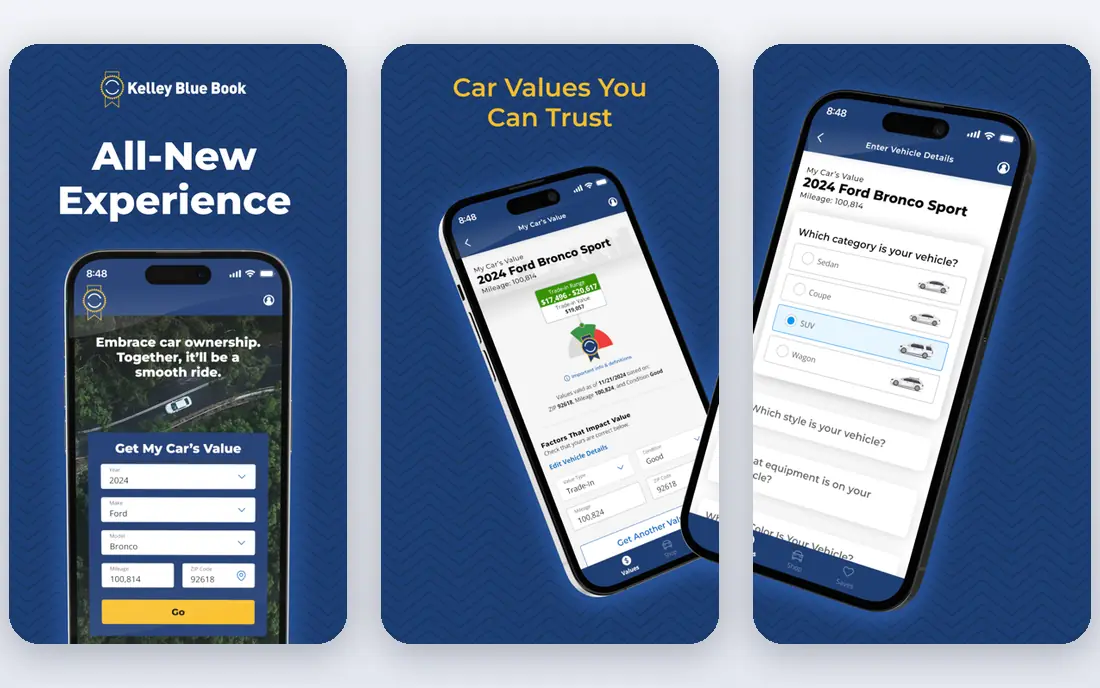
For teams that need starting values buyers trust, this option earns its place. Kelley Blue Book is the first stop for most buyers, because its trade-in, private party and retail values give a shared language for negotiation. In practice, that means a team with this job can get started without a long setup phase, and the core workflow stays close to the task at hand. We checked official feature pages, pricing pages and app listings to confirm what is included at the entry level, rather than trusting marketing summaries alone.
The catch is that a value is not a promise, since local supply, condition and history can move a real offer well away from the published range. Pricing also matters here, because the starting price is free, with a free option listed as yes. Check plan limits, seat rules and export options before committing, since those details decide whether the entry tier fits real work. If those limits fit your volume and team size, this is a sensible shortlist pick, and if they do not, the next tool in this list may fit better.
- Trade-in, private party and retail values
- Wide recognition
- Condition adjustments
- Values are estimates, not offers
- Can lag fast market moves
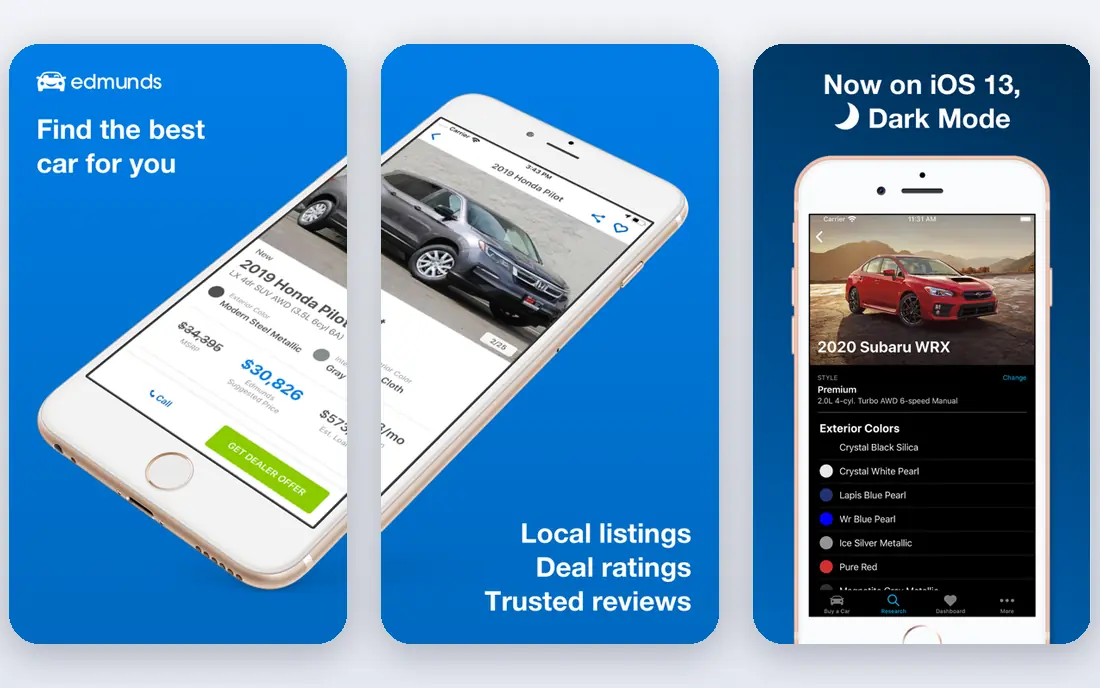
Start here if true market value and research is your main job. Edmunds pairs its True Market Value with reviews, specs and inventory, so buyers can judge both price and car in one place. In practice, that means a team with this job can get started without a long setup phase, and the core workflow stays close to the task at hand. We checked official feature pages, pricing pages and app listings to confirm what is included at the entry level, rather than trusting marketing summaries alone.
The catch is averaging, since a market average hides local shortages and condition differences, so buyers should still compare specific listings nearby. Pricing also matters here, because the starting price is free, with a free option listed as yes. Check plan limits, seat rules and export options before committing, since those details decide whether the entry tier fits real work. If those limits fit your volume and team size, this is a sensible shortlist pick, and if they do not, the next tool in this list may fit better.
- True Market Value estimates
- Deep reviews and specs
- Local pricing context
- Values are averages, not dealer quotes
- Some features vary by market
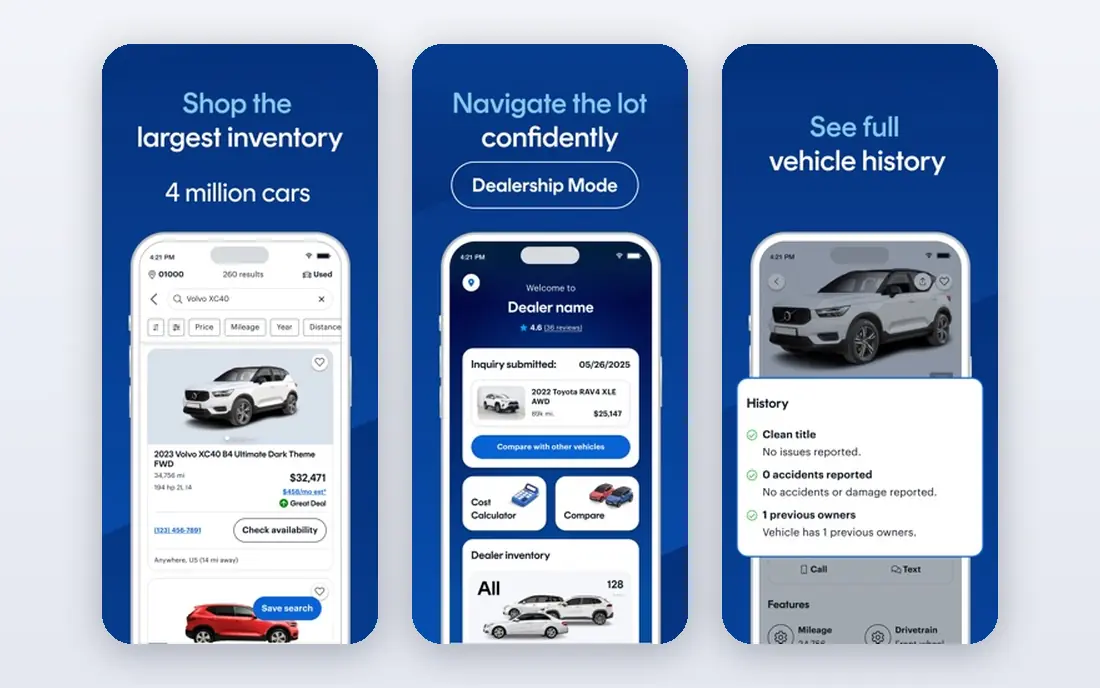
This one suits buyers who put live listing price comparison first. CarGurus shines on live listings, showing whether a car is priced above or below its Instant Market Value compared with similar cars. In practice, that means a team with this job can get started without a long setup phase, and the core workflow stays close to the task at hand. We checked official feature pages, pricing pages and app listings to confirm what is included at the entry level, rather than trusting marketing summaries alone.
The catch is that it compares asking prices, so a car rated as a good deal still needs a history check and inspection before money changes hands. Pricing also matters here, because the starting price is free, with a free option listed as yes. Check plan limits, seat rules and export options before committing, since those details decide whether the entry tier fits real work. If those limits fit your volume and team size, this is a sensible shortlist pick, and if they do not, the next tool in this list may fit better.
- Instant Market Value on listings
- Deal ratings
- Large dealer inventory
- Listing data reflects asking prices
- Ratings depend on model accuracy
If searching and comparing listings matters most, this tool deserves a close look. Cars.com is a practical search home for buyers who want to compare many listings, set alerts and read dealer reviews in one place. In practice, that means a team with this job can get started without a long setup phase, and the core workflow stays close to the task at hand. We checked official feature pages, pricing pages and app listings to confirm what is included at the entry level, rather than trusting marketing summaries alone.
The catch is focus, since it is mainly a marketplace, so buyers should pair its listings with a valuation tool before judging a price. Pricing also matters here, because the starting price is free, with a free option listed as yes. Check plan limits, seat rules and export options before committing, since those details decide whether the entry tier fits real work. If those limits fit your volume and team size, this is a sensible shortlist pick, and if they do not, the next tool in this list may fit better.
- Huge listing inventory
- Price comparison and alerts
- Dealer reviews
- Values are less central than on KBB or Edmunds
- Quality varies by dealer
Consider this tool when broad new and used listings is the priority. Autotrader suits buyers who want the widest net, with strong filters for trim, mileage and features across dealer and private listings. In practice, that means a team with this job can get started without a long setup phase, and the core workflow stays close to the task at hand. We checked official feature pages, pricing pages and app listings to confirm what is included at the entry level, rather than trusting marketing summaries alone.
The catch is valuation depth, since its strength is finding cars, not valuing them, so a separate value check remains essential. Pricing also matters here, because the starting price is free, with a free option listed as yes. Check plan limits, seat rules and export options before committing, since those details decide whether the entry tier fits real work. If those limits fit your volume and team size, this is a sensible shortlist pick, and if they do not, the next tool in this list may fit better.
- Very large inventory
- Advanced filters
- Private seller and dealer listings
- Pricing guidance is lighter than dedicated valuation tools
- Fees vary
Teams focused on what others paid for new cars will find a lot to like here. TrueCar helps new-car buyers set a realistic target, by showing what others in an area have paid and where a price sits on the curve. In practice, that means a team with this job can get started without a long setup phase, and the core workflow stays close to the task at hand. We checked official feature pages, pricing pages and app listings to confirm what is included at the entry level, rather than trusting marketing summaries alone.
The catch is that its prices are guides from dealer data, not binding offers, and skilled negotiation may still beat a no-haggle style price. Pricing also matters here, because the starting price is free, with a free option listed as yes. Check plan limits, seat rules and export options before committing, since those details decide whether the entry tier fits real work. If those limits fit your volume and team size, this is a sensible shortlist pick, and if they do not, the next tool in this list may fit better.
- Price curves and local transaction context
- Certified dealer network
- New-car focus
- Prices are not guaranteed quotes
- Coverage varies by market
This pick makes sense when used-car deal ratings and value trends drives the decision. iSeeCars adds useful context for used buyers, with deal ratings and long-term value trends that show whether a car holds value well. In practice, that means a team with this job can get started without a long setup phase, and the core workflow stays close to the task at hand. We checked official feature pages, pricing pages and app listings to confirm what is included at the entry level, rather than trusting marketing summaries alone.
The catch is regional depth, since inventory and data coverage vary, so buyers in smaller markets should cross-check with larger listing sites. Pricing also matters here, because the starting price is free, with a free option listed as yes. Check plan limits, seat rules and export options before committing, since those details decide whether the entry tier fits real work. If those limits fit your volume and team size, this is a sensible shortlist pick, and if they do not, the next tool in this list may fit better.
- Deal ratings
- Long-term value and depreciation data
- Price analysis
- Inventory depth varies by region
- Values remain estimates
Buyers who need lender-style used values should shortlist this one. J.D. Power values matter because dealers and lenders often use them, so checking them helps buyers understand the other side of a trade negotiation. In practice, that means a team with this job can get started without a long setup phase, and the core workflow stays close to the task at hand. We checked official feature pages, pricing pages and app listings to confirm what is included at the entry level, rather than trusting marketing summaries alone.
The catch is presentation, since the consumer experience is less friendly than rival tools, and its values can sit lower than private party figures. Pricing also matters here, because the starting price is free, with a free option listed as yes. Check plan limits, seat rules and export options before committing, since those details decide whether the entry tier fits real work. If those limits fit your volume and team size, this is a sensible shortlist pick, and if they do not, the next tool in this list may fit better.
- Values used by dealers and lenders
- Trade-in and retail context
- Market data
- Consumer interface is less friendly than KBB
- Values can run lower
How we picked these
We compared official valuation pages, listing tools and pricing explainers for services that help US buyers compare car prices online. We checked whether each tool separates trade-in, private party and retail values, whether it uses local listings or transaction data, and whether it covers new cars, used cars or both. We treated asking prices as different from selling prices, and favoured tools that explain that gap.
How to compare car prices without getting misled
Start by fixing the exact car. Use year, make, model, trim, mileage and zip code, and be honest about condition. A top trim with low mileage is a different car from a base trim with high mileage, even when the model name matches.
Next, compare like with like. Trade-in values are not private party values, and asking prices are not selling prices. Put the same value type side by side, then use instant offers as a floor for what a dealer or buyer might actually pay today.
Finally, check the car, not just the price. A low price can reflect accident history, title issues or missing maintenance. Run a history check, inspect the car, and use a low listing price as a reason to ask questions, not as proof of a bargain.
FAQ
What are the best online tools for car price comparison?
Kelley Blue Book, Edmunds and CarGurus form a strong trio for most buyers, covering values and live listings. Add TrueCar for new cars and iSeeCars for used-car deal ratings.
Why do car valuation tools show different prices?
They use different data and answer different questions. Some model retail values, some model trade-in values, and some reflect live asking prices, so the same car can show a wide range.
Is Kelley Blue Book or Edmunds more accurate?
Neither is exact for every car. Kelley Blue Book is widely used for trade-in and private party ranges, while Edmunds True Market Value leans on transaction and listing data. Use both and treat the overlap as your working range.
Should I trust a dealer listing price?
Treat it as an asking price, not a final price. Compare it with similar listings nearby, check history and condition, and use valuation ranges to negotiate from evidence rather than feeling.
Do these tools cost money to use?
Most consumer valuation and listing comparison features are free. Paid products exist for detailed history reports and dealer tools, but a buyer can compare prices well without paying.