Best Banks for Climate Companies in 2026: 8 Banks Compared
Compare the best banks for climate companies in 2026, from Amalgamated and Triodos to Climate First and Beneficial State, with lending and values compared.
- Editor's choice
 Amalgamated Bank
Values-led business banking
Starts atSee websiteVisit amalgamatedbank.comFull review - Great alternative
 Triodos Bank
Mission-led climate lending
Starts atSee websiteVisit triodos.comFull review - Also consider
 Beneficial State Bank
Community and climate business banking
Starts atSee websiteVisit beneficialstate.comFull review
TL;DR:
- Amalgamated Bank, Triodos Bank and Beneficial State Bank are the clearest values-led choices, with published fossil-fuel policies and climate lending programs.
- Climate First Bank and Atmos Financial focus directly on solar, efficiency and clean energy lending for households and businesses.
- Sunrise Banks, Clean Energy Credit Union and Forbright Bank offer climate-friendly business banking with a broader community lending mix.
- This is not financial advice. Check FDIC or NCUA coverage, fees, lending terms and fossil-fuel policies on each bank's own site before moving business accounts.
Quick comparison
| Tool | Best for | Starts at | Free plan? | |
|---|---|---|---|---|
| Amalgamated Bank | Values-led business banking | See website | No | Visit |
| Triodos Bank | Mission-led climate lending | See website | No | Visit |
| Beneficial State Bank | Community and climate business banking | See website | No | Visit |
 Climate First Bank | Solar and clean energy lending in Florida | See website | No | Visit |
 Atmos Financial | Climate-positive deposits and lending | See website | No | Visit |
 Sunrise Banks | Community banking with impact lending | See website | No | Visit |
 Clean Energy Credit Union | Clean energy loans for members | See website | No | Visit |
 Forbright Bank | Sustainable business and clean energy lending | See website | No | Visit |
The best banks for climate companies
We compared official lending, deposits and sustainability pages for banks and credit unions that serve climate-focused businesses. The list favors institutions with published climate policies, clean energy lending and business accounts, rather than banks that only market a green credit card.
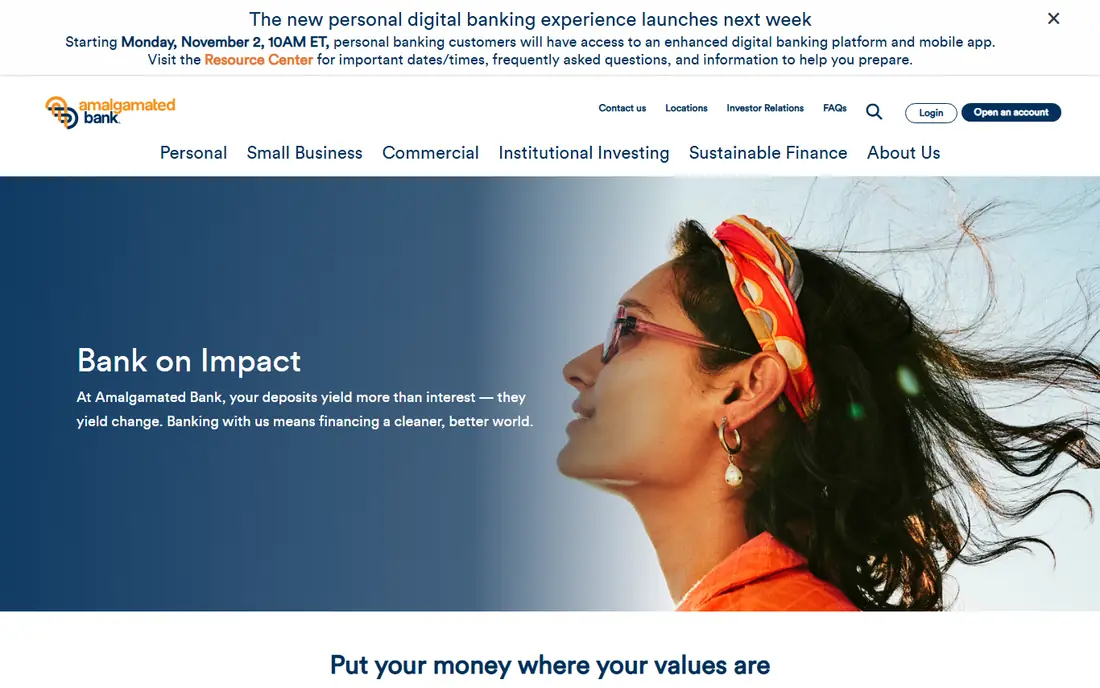
Amalgamated Bank is a frequent first stop for climate companies because its values are written into its lending policy, not just its marketing. It states that it does not lend to fossil-fuel exploration, extraction or production, and it serves businesses, nonprofits and advocacy groups that want their deposits aligned with climate goals.
Business banking includes checking, treasury and lending options, though the branch footprint is smaller than a national bank. For climate startups and nonprofits that bank mainly online or in major cities, that trade-off is usually acceptable. Check account fees and lending criteria for your business size before switching.
- Published fossil-fuel lending policy
- Business and nonprofit banking
- Climate and social lending focus
- Branch network is limited
- Business fees vary by account
- Not a national retail giant
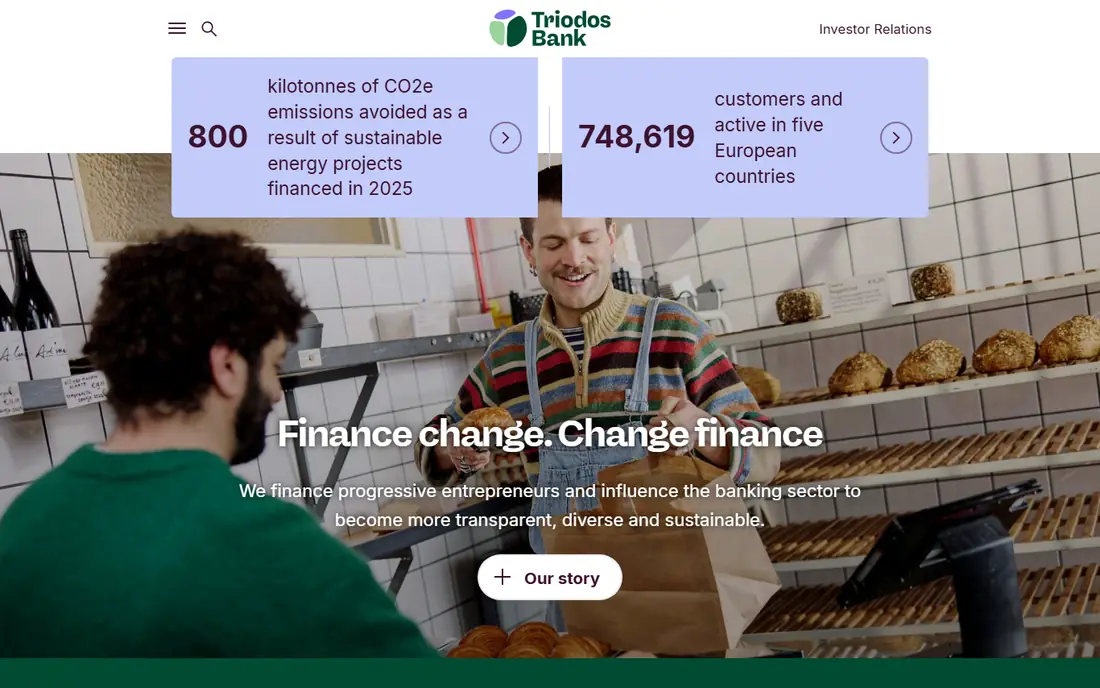
Triodos Bank, headquartered in the Netherlands, is one of the world's best-known sustainable banks, with a long record of lending to renewable energy, organic food, culture and social housing. It publishes details of the organizations it lends to, which gives climate companies unusual transparency about where deposits go.
US-based companies should check current availability carefully, since Triodos services and account options differ by country. For European climate companies, or US firms with European operations, Triodos is a strong mission-aligned banking partner.
- Long mission-led history
- Transparent lending portfolio
- Renewable energy finance expertise
- US availability is limited
- Business services vary by country
- Onboarding can be slow
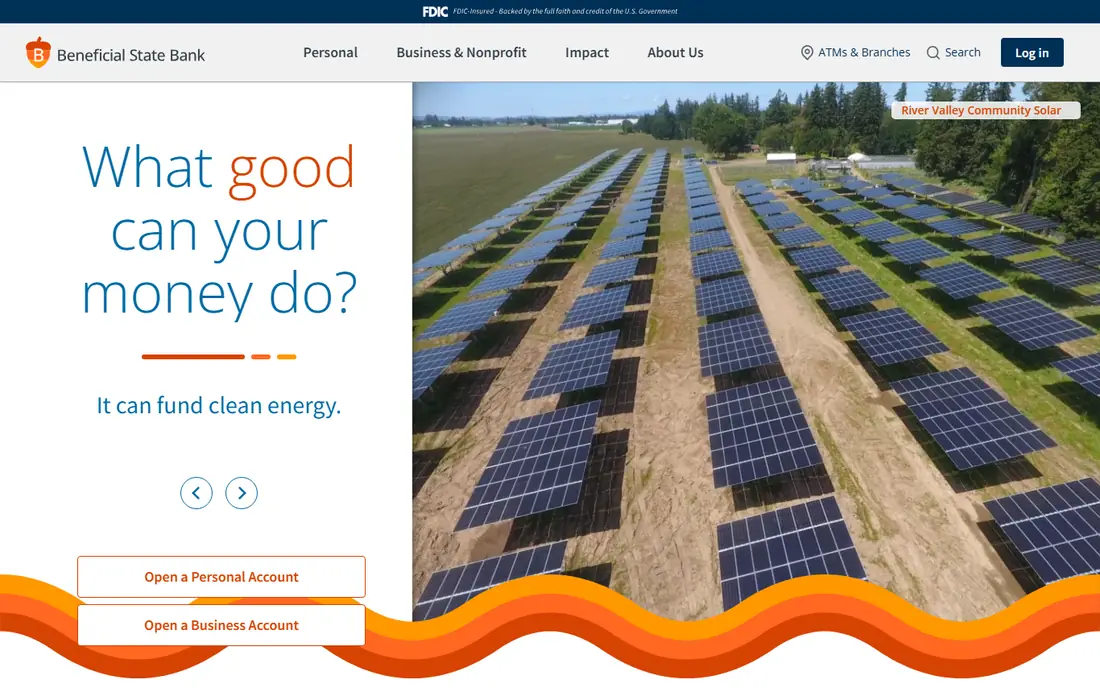
Beneficial State Bank is a community development bank serving California, Oregon and Washington, with lending that covers clean energy, affordable housing and local businesses. Its ownership structure returns profits to a foundation, which appeals to climate companies that want banking to support community outcomes as well as climate goals.
The footprint is regional, so companies outside the West Coast will bank mostly online or through partner networks. For West Coast climate firms, especially those in clean energy, housing and food systems, Beneficial State offers a credible, mission-led business bank.
- Community development focus
- Clean energy and affordable housing lending
- West Coast branches
- Regional footprint
- Business lending criteria are strict
- Online tools are simpler than big banks
Climate First Bank was founded with a climate mission at its core, and its lending leans heavily toward solar, energy efficiency and other clean energy projects. Business accounts and loans are designed for companies and households moving to cleaner energy, rather than as an add-on product line.
Its branch network is Florida-based, so out-of-state companies will use it mainly for lending or online banking. For Florida climate companies, installers and efficiency firms, Climate First is a natural fit, with staff who understand solar project finance.
- Direct solar and efficiency lending
- Florida branches
- Climate-focused business accounts
- Florida-centered footprint
- Smaller scale than national banks
- Lending is concentrated in clean energy
Atmos Financial offers online banking where deposits are used to fund solar loans, with reporting that shows the climate impact of your balance. For climate companies that want their operating cash to support solar deployment, Atmos makes that link direct and visible.
Business features are narrower than a full-service bank, so larger companies may keep Atmos alongside a primary operating bank. For startups and small climate firms that bank online and value transparent impact reporting, Atmos is an easy, low-friction choice.
- Deposits fund solar lending
- Online-first accounts
- Clear climate impact reporting
- Online-only model
- Business features are narrower
- Lending is mainly solar-focused
Sunrise Banks is a Minnesota community development bank with a strong impact lending record, covering affordable housing, small business and clean energy projects. It suits climate companies that also care about community outcomes, such as workforce housing linked to clean energy jobs.
As a regional bank, its branches are Minnesota-centered, though online banking serves wider customers. Climate firms in the Midwest will find the most complete service, while national firms should check treasury and lending options before moving a primary account.
- Community development bank
- Impact lending in housing and clean energy
- Minnesota roots
- Regional footprint
- Business services vary by account
- National companies bank online
Clean Energy Credit Union is a member-owned credit union focused on loans for solar panels, electric vehicles, energy efficiency and green home improvements. Its loan terms for clean energy projects are often competitive, and its member structure appeals to climate-minded borrowers.
Business banking is more limited than at a commercial bank, so it fits best as a lending partner or secondary account for climate companies and their staff. Check membership eligibility and NCUA coverage, and confirm whether business loans are offered for your project type.
- Loans for solar, EVs and efficiency
- Member-owned structure
- Competitive clean energy loan terms
- Membership eligibility applies
- Business services are limited
- Branch access is limited
Forbright Bank, formerly Congressional Bank, rebuilt itself around sustainable lending, including clean energy, affordable housing and healthcare. It offers business banking and lending at a national scale, which makes it more practical as a primary bank than some smaller climate banks.
The brand is less familiar than a national retail bank, and branch access is limited, so companies that need frequent in-person banking should check locations first. For climate companies seeking a full-service bank with a clear sustainability lending program, Forbright is a strong middle path.
- Clean energy and sustainable business lending
- National business banking
- Healthcare and housing lending
- Less well known than big banks
- Branch access is limited
- Account fees vary by product
How we picked these
We compared official sustainability, lending and business banking pages for banks and credit unions with published climate policies or clean energy lending programs. We favored institutions that lend directly to climate projects and publish fossil-fuel or portfolio information, over banks with only a green marketing page. This is not financial advice, and terms change, so verify coverage and fees on each bank's site.
How to choose a bank for a climate company
Start with what your company actually needs from a bank: operating accounts, payment processing, a credit line, project loans or treasury services. A values-led bank that cannot handle your payment volume or lending needs will create friction, no matter how strong its climate policy. Match the bank's business services to your size first, then filter by climate alignment.
Next, read the lending and investment policy, not just the homepage. Check whether the bank lends to fossil fuels, what share of lending goes to clean energy, and whether it publishes portfolio details. Banks that publish that information are easier to hold to account, and they give your own sustainability reporting a stronger story.
Finally, test the practical side. Open a secondary account first, run payroll and vendor payments through it, and check customer service response times, online tools and fee statements. Moving a primary business account is disruptive, so a trial period protects your operations while you confirm the fit.
Questions to ask a climate bank
Ask for the fossil-fuel policy in writing, the clean energy lending share, the fee schedule for your transaction volume, and the lending criteria for your project type. Those four answers separate a real climate bank from a green label.
Keeping a backup bank
Many climate companies keep a larger bank for treasury and payments alongside a values-led bank for deposits and lending. That split can be practical while climate banks grow, provided you track where deposits sit and what each account is for.
FAQ
What is the best bank for climate companies?
Amalgamated Bank and Triodos Bank are the strongest values-led choices, while Climate First Bank and Atmos Financial lead on direct clean energy lending. The best fit depends on your location, business size and whether you need lending, deposits or full treasury services.
Do climate banks offer business accounts?
Yes, most banks on this list offer business checking, savings and lending, though the range varies. Amalgamated, Beneficial State and Forbright offer broader business banking, while Atmos and Clean Energy Credit Union are narrower and more lending-focused.
Is my money safe at a small climate bank?
Check FDIC coverage for banks and NCUA coverage for credit unions, and confirm coverage limits for your account types. Most banks on this list are covered institutions, but verify coverage on the official regulator site before moving large balances.
Can a climate bank fund my solar project?
Climate First Bank, Atmos Financial, Clean Energy Credit Union and Forbright Bank all lend to solar and efficiency projects, though criteria, rates and project sizes differ. Request a lending quote with your project details rather than relying on headline rates.
Should I move all my accounts to a climate bank?
Not necessarily at once. Many companies start with deposits or a secondary operating account, test service and fees, then move more business over time. A phased move reduces disruption and lets you compare service honestly.
What is greenwashing in banking?
Greenwashing is when a bank markets climate credentials while still lending heavily to fossil fuels or publishing little portfolio detail. Check published lending policies and portfolio disclosures, not just marketing pages, to judge a bank's real position.