Best Backlink Monitoring Tools in 2026: 8 Tools Compared
Compare the best backlink monitoring tools for tracking new and lost links, link quality, alerts, competitor research, audits and agency reporting in 2026.
- Editor's choice
 Ahrefs
Largest fresh link index
Starts at$129 per monthVisit ahrefs.comFull review - Great alternative
 Semrush
All-in-one SEO suite
Starts at$139.95 per monthVisit semrush.comFull review - Also consider
 Majestic
Link quality analysis
Starts at$49.99 per monthVisit majestic.comFull review
TL;DR:
- Ahrefs and Semrush give the broadest link data, while Majestic gives the most focused link quality signals for the price.
- Google Search Console is free and remains the ground truth for links to your own site, so pair it with any paid tool.
- Freshness matters: a lost link found a month late is harder to recover than one found the same week.
- Small sites can start with Linkody or Ubersuggest, while agencies usually need SE Ranking or Semrush reporting.
Quick comparison
| Tool | Best for | Starts at | Free plan? | |
|---|---|---|---|---|
| Ahrefs | Largest fresh link index | $129 per month | Yes | Visit |
| Semrush | All-in-one SEO suite | $139.95 per month | Yes | Visit |
| Majestic | Link quality analysis | $49.99 per month | Yes | Visit |
 Moz Pro | Authority metrics and simplicity | $49 per month | Free trial | Visit |
 SE Ranking | Agency monitoring and reporting | See website | Free trial | Visit |
 Linkody | Simple new and lost link alerts | $14.90 per month | Free trial | Visit |
 Ubersuggest | Budget starter research | $29 per month | Yes | Visit |
 Google Search Console | Free own-site link data | Free | Yes | Visit |
The best backlink monitoring tools
A backlink monitoring tool should do more than count links. It should tell you when a valuable link disappears, when a harmful link appears, and how your profile compares with competitors. We compared official pricing pages, feature pages and public documentation for tools that track links continuously in October 2026.
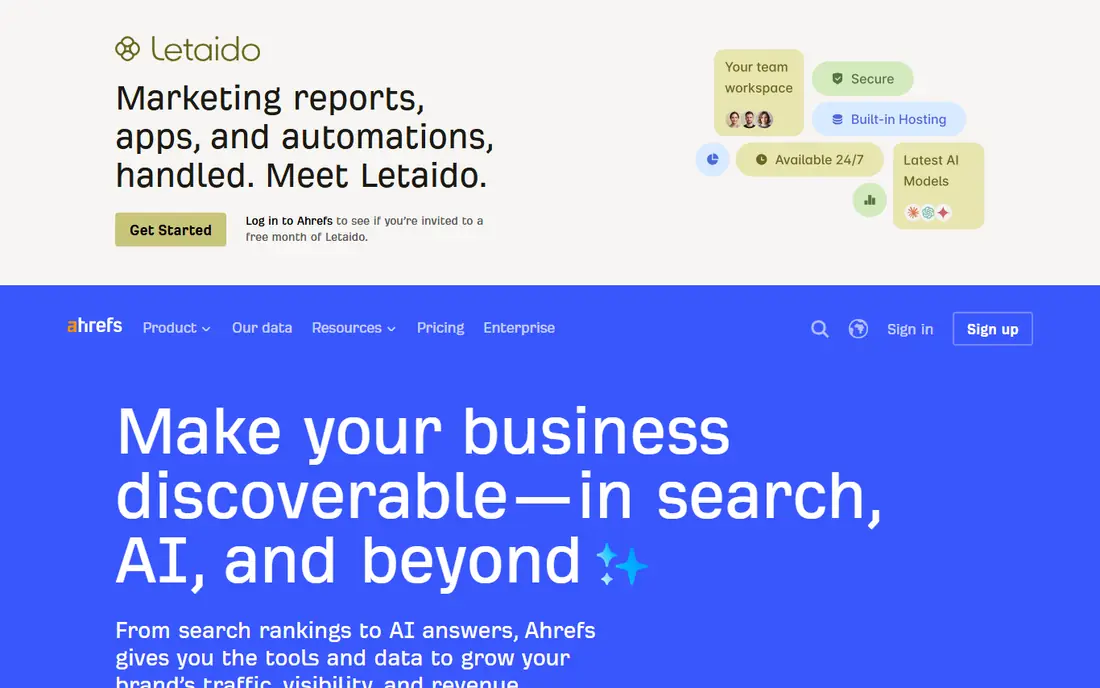
Ahrefs is our pick for most serious link work because its index is refreshed often and its reports are easy to act on. Site Explorer shows referring domains, anchor text and new or lost links, while Link Intersect finds sites that link to competitors but not to you. That combination covers both defence, watching your own profile, and offence, finding new prospects.
The main drawback is cost. The entry paid plan starts at $129 per month in current published pricing, and larger teams will need higher tiers or add-ons. The free checker and the free Webmaster Tools tier for verified sites help smaller owners test the data first. If link building is a core channel for you, the data quality usually justifies the spend.
- Very large and frequently refreshed index
- Strong new and lost link alerts
- Link Intersect for competitor gaps
- Price rises fast for larger plans
- Full data needs a paid plan
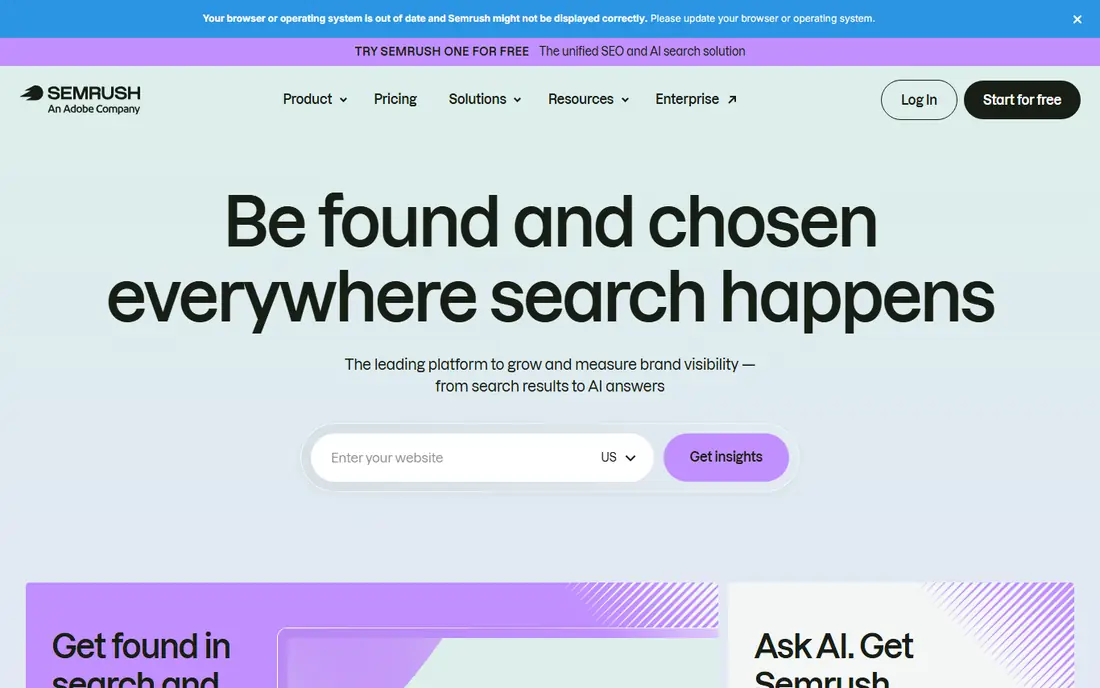
Semrush suits teams that want backlink monitoring inside a wider SEO platform rather than as a standalone tool. Its Backlink Audit scores potentially toxic links and supports a disavow workflow, while Backlink Analytics covers competitor research. Because rank tracking, site audits and content tools live in the same account, one subscription can replace several smaller tools.
That breadth also means a steeper learning curve and a higher entry price, currently $139.95 per month for the entry SEO plan. Small sites that only need link alerts will find Linkody cheaper. Teams that already use Semrush for keywords and audits, though, get monitoring as a natural extension rather than a separate purchase.
- Backlink audit and toxicity scoring
- Outreach tools in the same suite
- Broad keyword and site audit features
- Higher starting price
- Some link features sit behind higher tiers
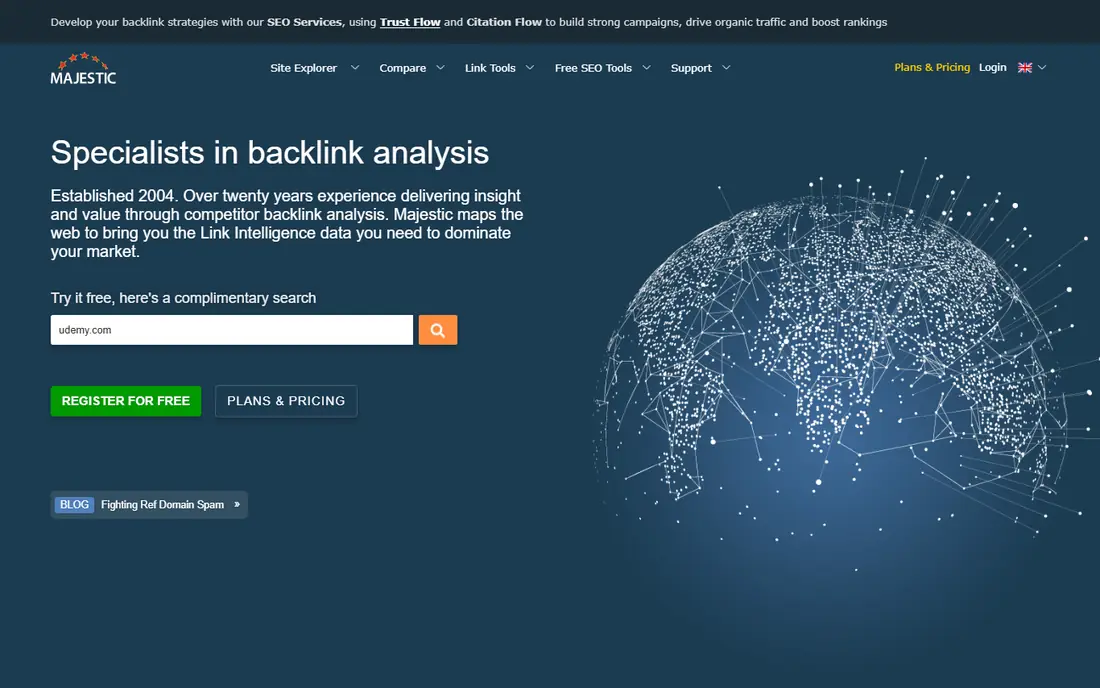
Majestic is the specialist on this list. It focuses on link intelligence, with Trust Flow and Citation Flow giving a quick read on whether a linking site looks trustworthy and influential, plus topical flow for relevance. The Fresh Index updates often, which helps with new and lost link checks, while the Historic Index supports longer research.
Majestic does not try to be a full SEO suite, so teams that also need rank tracking or content tools will pair it with something else. That focus is also its strength: at $49.99 per month for the Lite plan, it gives deep link data for less than the big suites. It works well as a second opinion when you are vetting a link prospect.
- Trust Flow and Citation Flow quality signals
- Fresh and Historic indexes
- Lower entry price than Ahrefs
- Narrower toolset than full suites
- Interface feels dated to some users
Moz Pro is a friendly entry point for teams that find the big suites overwhelming. Link Explorer shows linking domains, anchor text and spam signals, and Domain Authority gives a simple number that clients and managers can understand. The interface is calmer than many competitors, which helps when reports go to non-specialists.
The trade-off is freshness and depth. Moz refreshes its index less often than Ahrefs or Semrush, so a very recent link change may take longer to appear. Pricing starts at $49 per month for the Starter plan, with a free trial to test it. For a small business that checks links weekly rather than daily, that pace is usually fine.
- Domain Authority and Spam Score are widely understood
- Clear interface
- Useful Link Explorer reports
- Index refresh is slower than Ahrefs
- Higher plans needed for larger campaigns
SE Ranking is built for agencies and small teams that monitor many sites at once. Its Backlink Monitor tracks new, lost and toxic links, and its reporting tools, including white-label reports, make client work easier. Rank tracking, site audits and keyword tools are included, so it can serve as a team's main SEO platform.
The link index is smaller than the largest competitors, so it may miss some low-authority links that Ahrefs finds. Pricing varies with billing period and plan, so check the current published price before budgeting. For agencies that value reporting and per-site cost control, SE Ranking is often the best balance.
- Backlink Monitor with alerts
- White-label reporting
- Good value for agencies managing many sites
- Index is smaller than Ahrefs
- Entry pricing varies by billing period
Linkody does one job well: it watches the links you already have and tells you when they change. That focus keeps the price low, from $14.90 per month, and keeps the dashboard simple. You can track competitors, export disavow files and get email alerts without learning a full SEO suite.
It is not a prospecting powerhouse. Its index and discovery features are thinner than Ahrefs or Semrush, so it pairs best with Google Search Console and occasional checks in a larger tool. If you already know your link targets and mainly need to protect what you have built, Linkody is a practical, low-cost choice.
- Low price
- Clear daily alerts for new and lost links
- Disavow file export
- Smaller index than the major suites
- Fewer research features
Ubersuggest gives solo owners and beginners a readable first look at backlinks without a large monthly bill. Paid plans start at $29 per month, and a limited free tier lets you run a few searches a day. The backlink overview, referring domains and top pages are presented in plain language, which helps when you are still learning what matters.
Serious link builders will outgrow it. The index is smaller, refresh is slower, and advanced filters are limited compared with Ahrefs or Majestic. As a starter tool, or as a second check alongside Search Console, it is good value. As a sole tool for an agency, it is not enough.
- Low entry price
- Plain-language metrics
- Useful for beginners and solo owners
- Link data is thinner than specialist tools
- Daily free searches are limited
Every site owner should use Google Search Console, whether or not they pay for another tool. It reports the links Google sees for your verified sites, including top linking sites and top linked pages, at no cost. That makes it the closest thing to ground truth for your own profile, and it is the first place to check when rankings move.
Its limits are clear. It covers only sites you verify, so competitor research is not possible, and it has no built-in alerts for lost links in the way Linkody does. Use it as the foundation, then add a paid tool for alerts, competitor data and toxicity scoring. Together, the pair covers most monitoring needs.
- Free
- Shows links Google reports for your own site
- No subscription needed
- Only your own verified sites
- No competitor link data
- Limited export and alerts
How we picked these
We compared vendor pricing pages, feature pages and public documentation, and we favoured tools that track new and lost links over time rather than tools that only run one-off checks. We included a mix of large indexes, specialist link tools, budget options and the free Google tool, so that small sites, agencies and in-house teams each have a realistic starting point.
What to check before you choose
Start by deciding what you will do with the alerts. A tool that emails you daily about lost links only helps if someone owns the follow-up, such as contacting the site owner or fixing a broken page. Set up alerts for your most valuable pages first, then expand. Check whether the tool tracks the pages that earn revenue, not just the homepage.
Next, compare index coverage on your own site. Run the same domain through two tools and compare referring domain counts and recent links. No index is complete, and the gaps differ by tool, so a side-by-side check on your own data beats any vendor claim. Also check export limits, because a tool that caps exports can slow down audits.
Finally, look at toxicity and disavow handling with care. A high toxicity score is a signal to review a link, not an automatic reason to disavow it. Removing good links by mistake can hurt rankings, so use disavow files sparingly and only after a manual review. The best tool here is the one your team will actually check each week.
FAQ
What are the best backlink monitoring tools?
Ahrefs leads for index size and freshness, Semrush leads for an all-in-one suite, and Majestic leads for focused link quality data. Linkody is the best low-cost alert tool, and Google Search Console is the free foundation for your own site. The best pick depends on whether you need research, alerts or agency reporting most.
Is there a free backlink monitoring tool?
Google Search Console is free for your own verified sites and shows the links Google reports. Ahrefs offers a free checker with limited results and a free Webmaster Tools tier for verified sites. Ubersuggest also offers limited free searches. For competitor data and regular alerts, a paid plan is usually needed.
How often should I check my backlinks?
Most sites should check new and lost links at least weekly, and high-value pages deserve more frequent checks. A tool with email alerts helps because it surfaces changes without a manual login. After a site migration, a redesign or a large link campaign, check daily until the profile settles.
What is a toxic backlink?
A toxic backlink is a link from a low-quality, spammy or irrelevant site that could be associated with manipulative link schemes. Tools score toxicity using signals such as spam patterns and anchor text, but scores differ between tools. Review flagged links by hand before disavowing, and keep a record of what you removed.
Can I monitor competitors with these tools?
Yes, paid tools such as Ahrefs, Semrush, Majestic, Moz Pro and SE Ranking let you inspect competitor backlink profiles and find link gaps. Google Search Console does not offer competitor data, since it only covers sites you verify. Link Intersect and link gap reports are the fastest way to turn competitor data into prospects.
Do I need more than one backlink tool?
Many teams use two: Google Search Console for ground truth on their own site, plus one paid tool for alerts and competitor research. A second paid tool helps when vetting expensive prospects or auditing a large profile. Start with one paid tool and add a second only when you hit a clear gap in data or reporting.