Best B2B Lead Generation Company in 2026: 9 Companies Compared
Compare the best b2b lead generation company options in 2026, with contact data, intent signals, outreach tools and pricing for busy sales teams today.
- Editor's choice
 Apollo
Data plus outreach for SMB teams
Starts at$49 per user per monthVisit apollo.ioFull review - Great alternative
 ZoomInfo
Enterprise go to market data
Starts atSee websiteVisit zoominfo.comFull review - Also consider
 Cognism
European and GDPR focused data
Starts atSee websiteVisit cognism.comFull review
TL;DR:
- Contact data quality matters more than database size, because stale emails hurt deliverability and waste rep time.
- All in one tools that combine data and outreach suit small teams, while enterprise teams often pair a data provider with a separate sales engagement tool.
- Credit models differ widely, so compare cost per usable contact, not just the monthly fee.
- Our pick for most teams is Apollo for its data plus outreach at a clear price, with ZoomInfo as the strongest enterprise option.
Quick comparison
| Tool | Best for | Starts at | Free plan? | |
|---|---|---|---|---|
| Apollo | Data plus outreach for SMB teams | $49 per user per month | Yes | Visit |
| ZoomInfo | Enterprise go to market data | See website | No | Visit |
| Cognism | European and GDPR focused data | See website | No | Visit |
 Lusha | Fast contact lookup for reps | See website | Yes | Visit |
 LinkedIn Sales Navigator | Social selling and relationship data | See website | Free trial | Visit |
 RocketReach | Email and phone lookup | See website | Yes | Visit |
 UpLead | Verified SMB contact data | See website | Free trial | Visit |
 SalesIntel | Human verified data | See website | No | Visit |
 Leadfeeder | Website visitor identification | See website | Yes | Visit |
The best B2B lead generation companies
B2B lead generation covers two different jobs: finding the right companies and contacts, and turning that list into meetings. Some companies in this guide sell contact data, some sell outreach tools, and some do both. We compared official pricing pages, feature lists and published pricing summaries, with a focus on data accuracy, compliance and total cost per usable lead.
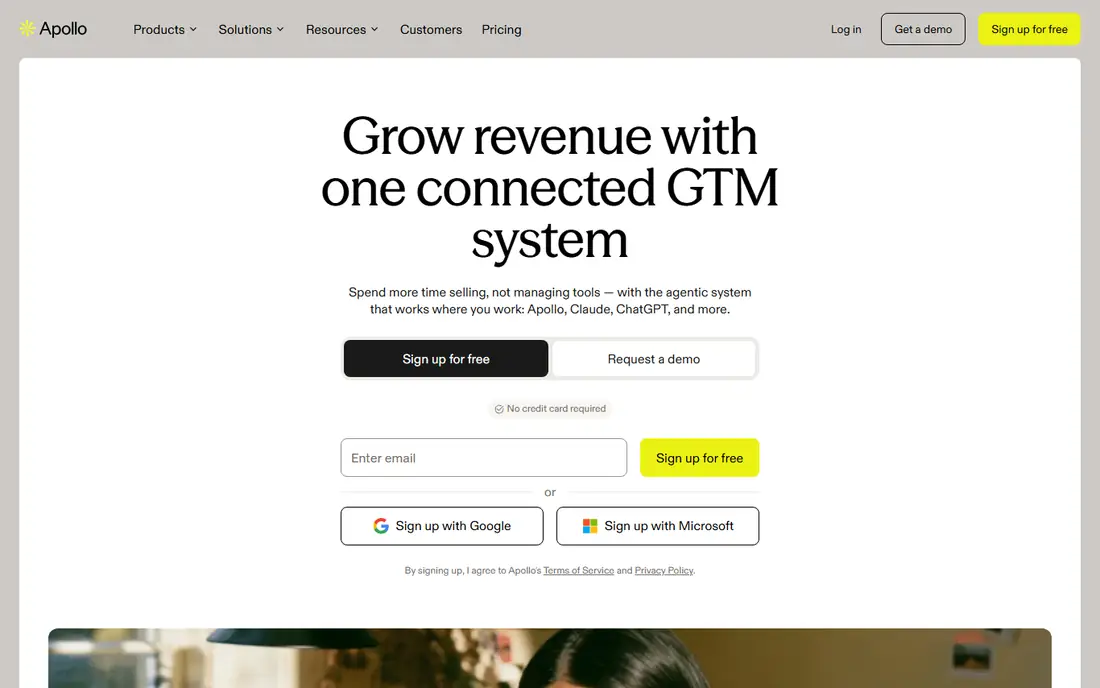
Apollo is our pick for most small and mid sized teams because it combines a large contact database with email sequences, calling tools and CRM sync in one subscription. Published pricing puts Basic at 49 dollars per user per month, Professional at 79 dollars and Organization at 119 dollars when billed annually, with a free plan to start. That clarity helps a small team budget without a sales call.
The drawback is credits. Apollo plans include credits for exports and enrichment, and a team that burns credits on poor lists will pay more in practice. Data accuracy also varies, so a team should test a sample list for bounce rate before scaling. For a team that wants data and outreach in one place at a known price, Apollo is hard to beat.
- Contact database plus sequences in one tool
- Public starting price
- Free plan to test
- Credit limits need watching
- Data accuracy varies by industry and region
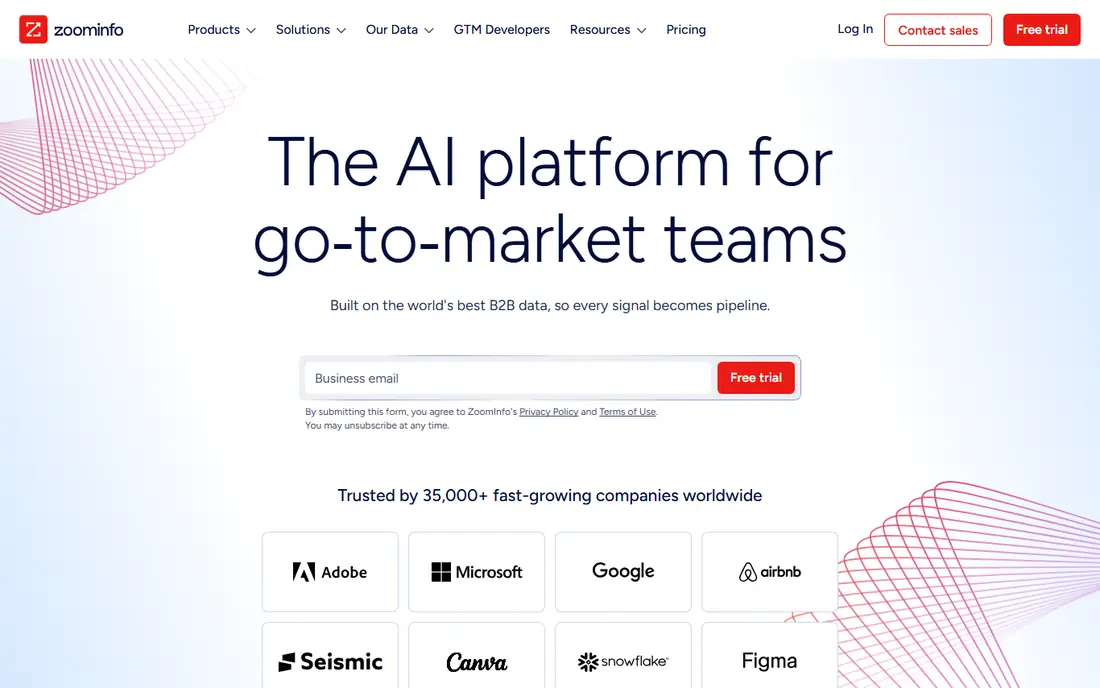
ZoomInfo is the enterprise standard for B2B contact and company data, with intent signals, technographics and workflows that help large revenue teams prioritise accounts. Published summaries put annual costs in the range of 15,000 dollars and above for many teams, with larger deals far higher, and a free Lite tier with limited credits. Its integrations with major CRMs and sales tools are deep.
The main drawback is cost and contract. ZoomInfo is annual only for most paid plans, and published summaries warn of renewal uplifts, so a buyer should negotiate term, credit volume and renewal caps in writing. Small teams often find Apollo or Lusha better value. For an enterprise team that needs scale, intent and workflow depth, ZoomInfo remains the benchmark.
- Very large contact and company database
- Intent data and workflows
- Strong CRM integrations
- Annual contracts and high cost
- Renewal price rises can surprise buyers
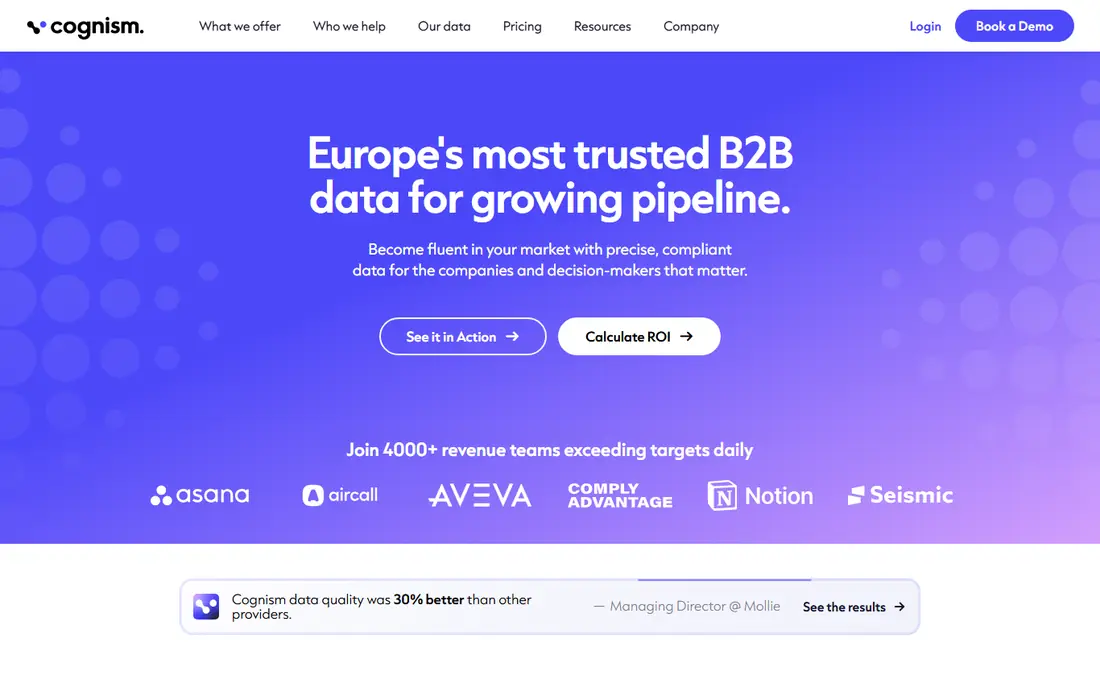
Cognism suits international teams, especially those prospecting in Europe, where GDPR compliance and mobile number accuracy matter. Its data is phone verified in many cases, and it scrubs against do not call and suppression lists, which helps a team stay compliant. Published summaries put Cognism at around 22,500 dollars per year for a five seat team in some cases, with Standard and Pro plans by quote.
The drawback is price and fit. A US only small team may pay for European coverage it does not need, and the annual contract needs a clear business case. Cognism fits teams that prospect across Europe, need mobile numbers, and want a compliance first data provider.
- Strong European mobile coverage
- Phone verified numbers
- GDPR focused compliance checks
- High annual cost
- Less suited to a US only small team
Lusha is built for individual reps who need a contact quickly while browsing LinkedIn or a company site. Its extension shows emails and phone numbers in a click, and its free plan gives a small monthly credit allowance to test. Published pricing puts Starter at around 37 dollars per month when billed annually, with higher tiers by quote. That speed suits a rep who enriches a handful of prospects a day.
The limit is scale. Lower plans have tight credit limits, and accuracy can vary by industry, so a team building large lists should test bounce rates. Lusha fits reps and small teams that need fast lookup, while larger list building teams may prefer Apollo or UpLead.
- Fast Chrome extension lookup
- Free plan with monthly credits
- Buying signals and prospecting tools
- Credit limits are tight on lower plans
- Accuracy gaps appear in some industries
LinkedIn Sales Navigator is different from a contact database: it helps reps find decision makers, follow job changes, get lead recommendations and request warm introductions through shared connections. Published pricing puts Core at around 120 dollars per seat per month and Advanced at around 160 dollars per seat per month, with Advanced Plus by quote. For social selling, that relationship data is hard to replace.
The drawback is export and outreach limits. Sales Navigator is not a bulk list tool, and teams still need an email finder or a CRM workflow to contact prospects at scale. It also costs more per seat than Apollo for a large team. Sales Navigator fits teams that sell through relationships and LinkedIn, paired with a data tool for contact details.
- Direct access to LinkedIn network data
- Lead recommendations and alerts
- Warm intro paths
- No bulk email export in the same way as a data provider
- Per seat price is high for large teams
RocketReach gives reps a simple way to find emails and phone numbers for a person or a company, with search, lookup and some outreach features. Published pricing puts Essentials at around 33 dollars per month, Pro at 75 dollars and Ultimate at 142 dollars when billed annually, with a small free allowance. Recruiters and sales reps who need a quick, self serve lookup often like its simplicity.
The limit is volume. Lower plans cap searches and lookups, so a team building large lists will need a higher tier or a different tool. Accuracy also varies, especially for phone numbers. RocketReach fits individual reps and recruiters who need reliable lookup without an enterprise contract.
- Simple email and phone finder
- Bundled outreach on some plans
- Free searches to test
- Bulk limits on lower plans
- Accuracy varies by contact type
UpLead focuses on verified contact data for small and mid sized teams, with real time email verification at the point of export. That verification step helps keep bounce rates down, and some plans refund credits for contacts that bounce, which reduces waste. Published pricing puts starting plans at around 99 dollars per month, with a trial to test.
The drawback is scale and cost per seat. A larger team will pay per user, and the database is smaller than ZoomInfo, so niche industries may have thinner coverage. UpLead fits SMB teams that value verified emails and a simple list builder over the largest possible database.
- Real time email verification
- Credit refunds for bad contacts in some plans
- Simple list building
- Per user price rises with team size
- Database is smaller than ZoomInfo
SalesIntel uses human verification alongside machine checks to improve contact accuracy, with a focus on direct dials and mobile numbers. Its intent and technographic data help teams prioritise accounts that are actively researching a category. Some plans offer unlimited exports, which can help a team that builds many lists.
The drawback is pricing transparency. SalesIntel is quote based and annual for many plans, with published summaries putting costs in the range of 1,000 to 2,500 dollars per month for some teams. Small teams may find Apollo or UpLead better value. SalesIntel fits mid market and enterprise teams that will pay for verified dials and intent data.
- Human verified contacts and direct dials
- Intent and technographic data
- Unlimited exports on some plans
- Annual pricing and custom quotes
- Cost can be high for small teams
Leadfeeder, now part of Dealfront, turns anonymous website traffic into named companies, so a sales team can follow up with firms that already showed interest. That intent signal is valuable for inbound heavy teams, and its free plan helps small teams test visitor identification. Paid plans are based on the number of companies identified per month.
The limit is that Leadfeeder usually identifies the company, not the individual visitor, so a team still needs a contact data tool to find the right person. It is not a standalone lead list tool. Leadfeeder fits teams with website traffic that want to prioritise warm accounts, paired with Apollo, Lusha or a similar contact provider.
- Identifies companies visiting your website
- Intent signal for inbound heavy teams
- Free plan for small use
- Identifies companies, not individual contacts, in most cases
- Needs a contact tool to reach people
How we picked these
We compared official pricing pages, feature lists and published pricing summaries for B2B lead generation companies and platforms. We gave weight to data accuracy and verification, compliance, database coverage, outreach features, pricing transparency and total cost per usable contact. Where pricing was quote based, we wrote See website rather than presenting a third party estimate as a vendor price.
What to check before you buy
Test data quality with a real sample
Export a sample of 100 contacts in your target industry and region, then check bounce rate, job title accuracy and phone accuracy. A database that looks large on a sales page can still perform poorly in your niche. Set a bounce rate target, such as under 5 percent, and drop a provider that misses it twice.
Check compliance before you send
Confirm how the provider sources data, whether it honours opt outs and suppression lists, and how it handles GDPR and US state privacy rules. Cold email and cold calling rules differ by country and by channel, and a provider that ignores compliance can put your domain and brand at risk. Keep records of consent and suppression handling.
Compare cost per meeting, not cost per contact
Track how many contacts become replies, meetings and pipeline, not just how many contacts you bought. A cheap list with a high bounce rate and low reply rate can cost more per meeting than a costly verified list. Run a small pilot with each shortlisted provider before signing an annual deal.
FAQ
What is the best B2B lead generation company for a small business?
Apollo is our pick for most small businesses because it combines data and outreach at a public starting price of 49 dollars per user per month, with a free plan. Lusha and UpLead are strong alternatives for lookup and verified data, while Leadfeeder suits teams with website traffic.
What is the best B2B lead generation company for enterprise teams?
ZoomInfo is the most common enterprise choice because of its large database, intent data and workflows. Cognism is strong for European prospecting, and SalesIntel suits teams that want human verified direct dials. Enterprise buyers should negotiate contract term and renewal caps.
How much do B2B lead generation tools cost?
Costs range from free plans and 33 to 99 dollars per month for single rep tools, to 15,000 dollars per year and above for enterprise data platforms. Annual contracts, credit limits and seat counts change the real cost, so compare cost per usable contact and cost per meeting.
Are B2B lead lists legal?
Buying contact data is not automatically illegal, but how you use it is regulated. GDPR in Europe, US state privacy laws, do not call lists and anti spam rules all affect cold outreach. Use a provider that documents sourcing and suppression, and follow the rules for each channel and country.
What is the difference between lead generation and lead data?
Lead data is the list of companies and contacts. Lead generation is the full process of finding, contacting, qualifying and booking meetings with those contacts. Some companies sell only data, some sell outreach, and some, such as Apollo, sell both in one tool.
Should I use website visitor identification for B2B leads?
Website visitor identification, such as Leadfeeder, suits teams with steady website traffic that want to prioritise companies already showing interest. It identifies companies rather than individuals in most cases, so pair it with a contact data tool to reach the right person.