Best Automated Penetration Testing Tools in 2026: 8 Tools Compared
Compare the best automated penetration testing tools for continuous validation, web apps and networks, with pricing notes and honest limits for each one.
- Editor's choice
 Pentera
Continuous network and cloud validation
Starts atSee websiteVisit pentera.ioFull review - Great alternative
 Horizon3.ai NodeZero
Autonomous network pentesting
Starts atSee websiteVisit horizon3.aiFull review - Also consider
 Intruder
Web app and API testing with code context
Starts at$4,000 per testVisit intruder.ioFull review
TL;DR:
- Pentera and Horizon3.ai lead on continuous, autonomous validation of networks and cloud environments.
- Intruder and Acunetix are stronger for web apps and APIs, where business logic flaws matter most.
- BreachLock and Cymulate suit teams that want testing plus breach simulation without building a red team.
- Automated testing complements human pentests, it does not replace them for complex logic and chained attacks.
Quick comparison
| Tool | Best for | Starts at | Free plan? | |
|---|---|---|---|---|
| Pentera | Continuous network and cloud validation | See website | No | Visit |
| Horizon3.ai NodeZero | Autonomous network pentesting | See website | Free trial | Visit |
| Intruder | Web app and API testing with code context | $4,000 per test | No | Visit |
 Acunetix | Web vulnerability scanning at scale | See website | Free trial | Visit |
 BreachLock | Managed automated pentesting as a service | See website | No | Visit |
 Cymulate | Breach and attack simulation | See website | No | Visit |
 AttackIQ | Security control validation and testing | See website | No | Visit |
 Core Impact | Hands-on red team exploitation | $9,450 per user per year | No | Visit |
The best automated penetration testing tools
Automated pentesting covers a wide range, from tools that safely exploit real attack paths to scanners that check for known flaws. We compared scope, proof of exploit, reporting and pricing for tools that are actively sold in October 2026. Only test systems you own or have written permission to test.
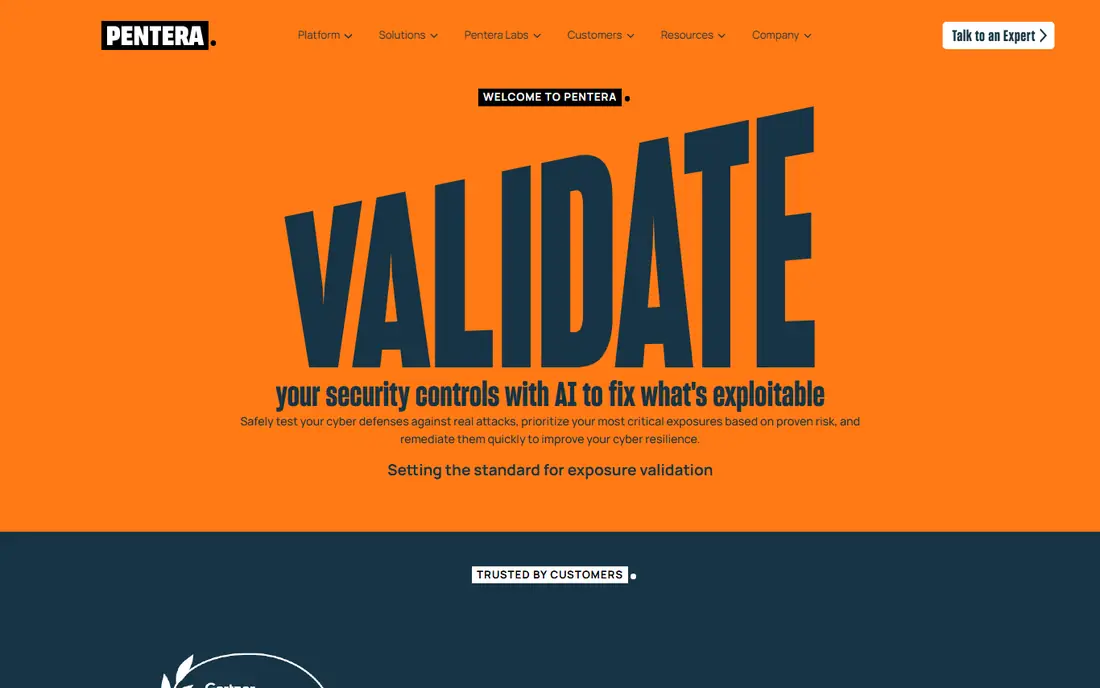
Pentera is the best-known name in automated security validation, and for large internal networks it earns that position. It runs attack simulations continuously, without agents on endpoints, and shows which attack paths actually work in your environment, not just which vulnerabilities exist on paper. That proof matters: a list of 500 flaws is less useful than a short list of paths an attacker could really use to reach critical data.
Pricing is quote-based and aimed at enterprises, so small firms may find it hard to justify. It also validates known attack paths more than it discovers novel web flaws, so web-heavy teams should pair it with an app testing tool. For regulated firms that need ongoing evidence that controls hold up, Pentera is a strong core platform.
- Agentless, continuous attack emulation
- Covers network, Active Directory and cloud
- Prioritized remediation
- Quote-only pricing
- Weaker on deep web app business logic

NodeZero runs autonomous pentests that discover, exploit and report on real weaknesses in networks, cloud and on-prem systems. Its attack path visuals help security teams explain risk to managers who do not read raw scan output: here is how an attacker could move from an exposed service to a domain admin account. One-click retesting after a fix closes the loop, so teams can prove remediation rather than just claim it.
Like Pentera, NodeZero is priced for mid-size and large organizations, and smaller teams may find setup and cost a stretch. It also focuses on infrastructure more than deep application logic. For teams that want a pentest they can run on demand, rather than once a year, NodeZero is one of the most capable options available.
- Truly autonomous testing
- Clear attack path mapping
- One-click retests after fixes
- Enterprise pricing
- Deployment can be heavy for a very small team
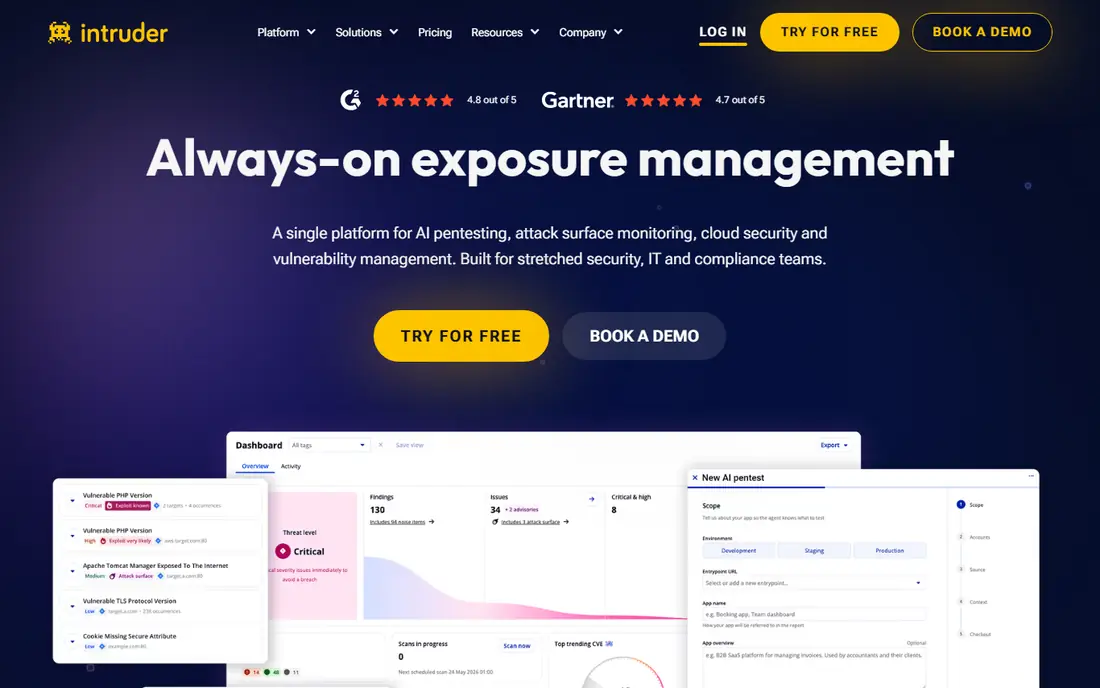
Intruder has moved beyond simple scanning into autonomous testing for web apps and APIs. Its agents can read connected source code, map endpoints and test for flaws such as broken access control and business logic issues, then validate each finding before it reaches your report. That validation cuts false positives, and file-level detail helps developers fix issues fast.
The boundary is scope: Intruder does not cover wider infrastructure, cloud posture or identity in the way Pentera and NodeZero do. Pricing from $4,000 per test also means frequent testing needs a budget conversation. For engineering teams that ship web products and want testing inside their development flow, Intruder is a strong, developer-friendly pick.
- AI agents test web apps and APIs
- Findings cite file and line
- Validation before reporting
- Scope stays on apps and APIs
- Per-test pricing adds up for frequent testing
Acunetix, from Invicti, is a long-standing web application scanner used by firms that need regular, repeatable checks across many sites and APIs. It crawls modern web apps, including single-page apps, and checks for common flaws such as injection, cross-site scripting and misconfiguration. Reporting suits compliance work, and integrations feed results into ticketing and CI pipelines.
Scanning differs from autonomous pentesting: Acunetix finds likely flaws, but it does not chain exploits through a network the way NodeZero does. Pricing depends on target numbers, so a firm with many sites should get a firm quote. For teams that need broad, scheduled web scanning as a baseline, Acunetix remains a reliable choice.
- Mature web scanner
- Wide vulnerability coverage
- Good for compliance scanning
- Scanning is not full exploitation
- Pricing varies by target count
BreachLock blends automated testing with human validation, delivered as a service rather than a tool you run yourself. That model suits firms without an in-house red team: you scope a test, BreachLock runs it, and you receive validated findings with remediation guidance. Coverage spans networks, cloud, web apps and APIs, which makes it a useful single vendor for smaller security teams.
The managed model is also a limit. Teams that want to run tests daily on their own schedule may prefer a platform license such as Pentera or NodeZero. Pricing is custom, so you will need a scoping call. For firms that want a credible pentest result without hiring testers, BreachLock is a practical middle path.
- Combines automation with human review
- Fast delivery
- Cloud and app coverage
- Quote-based pricing
- Service model suits firms that want a managed result
Cymulate focuses on breach and attack simulation: it safely runs attack techniques against your defenses and shows which controls blocked, detected or missed them. That is different from finding a vulnerability. A firm may have patched systems yet still miss an attack because detection rules are weak, and Cymulate exposes that gap. Its reporting helps security leaders track defense performance over time.
It should not be bought as a replacement for a pentest. Simulation tests known techniques against your controls, while a pentest looks for new ways in. Pricing is enterprise and custom. Used alongside a pentest platform, Cymulate gives a fuller picture of whether your defenses work in practice, not just on paper.
- Tests defenses against real attack techniques
- Broad simulation library
- Executive reporting
- Simulation is not a full pentest
- Enterprise pricing
AttackIQ is another control validation platform, built around testing whether security tools actually stop known attack scenarios. Its library maps to the MITRE ATT&CK framework, which helps teams measure coverage by tactic and technique rather than by vendor claim. Continuous testing means a change in a firewall rule or endpoint tool shows up in results quickly, before an incident does.
Setup takes work. Scenarios need tuning to your environment, and results need a team that can act on them. Smaller firms without a security operations team may get less value than a larger firm with staff to triage findings. For mature security teams that want evidence their controls work, AttackIQ is a solid, well-established option.
- Large attack scenario library
- MITRE ATT&CK alignment
- Continuous control testing
- Needs tuning to your environment
- Enterprise focus
Core Impact, from Fortra, is a classic red team tool: it gives skilled testers a large exploit library, plus tools to chain exploits, pivot across systems and run phishing simulations. Unlike fully autonomous platforms, it is built for people who want granular control over how a test runs. That control suits dedicated red teams and consultants who test varied environments.
The price, starting around $9,450 per user per year in third-party listings, and the skill required, put it out of reach for casual use. Teams without experienced testers will get more from an autonomous platform that guides the work. Teams with a red team that wants a powerful, hands-on toolkit will find Core Impact hard to replace.
- Deep exploit library
- Chaining and pivoting
- Phishing and post-exploitation tools
- High per-user price
- Needs skilled testers
- Steep learning curve
How we picked these
We compared official product pages, pricing information and public reviews for tools that are actively sold in October 2026 and that automate some part of penetration testing, from exploitation to simulation and scanning. We kept a mix of autonomous platforms, app tools and control validation, because no single tool covers networks, apps and defenses equally well. We excluded tools that only list vulnerabilities without testing them.
What to check before you buy
Start with scope. List the systems you must test: internal network, cloud, web apps, APIs, identity and endpoints. Then match that list to a tool, because a great network tool will not fix a web app problem. Next, ask for proof: does the tool show a working exploit path, or only a possible flaw, and can you retest after a fix with one click.
Check safety and permission rules carefully. Automated exploitation should run only on systems you own or have written permission to test, and safe-mode settings matter on production systems. Finally, price the full deployment, including per-user, per-target or per-test costs, and confirm whether human review is included. A cheap scan that produces 1,000 unvalidated findings can cost more in staff time than a pricier validated test.
FAQ
What is the best automated penetration testing software?
For continuous network validation, Pentera and Horizon3.ai NodeZero lead. For web apps and APIs, Intruder is the stronger pick. Most firms need more than one tool, or a managed service such as BreachLock, to cover both infrastructure and applications.
Can automated pentesting replace a manual pentest?
No, not fully. Automation is excellent for repeatable checks, known attack paths and continuous validation. Human testers are still better at complex business logic, chained attacks and creative abuse cases. The best programs use automation continuously and a human-led test at least once a year.
How much does automated penetration testing cost?
Costs range from $4,000 per test for Intruder to around $9,450 per user per year for Core Impact, with Pentera, NodeZero and others on custom enterprise pricing. Small firms should budget for a managed test or a scanner first, then move to a platform as testing volume grows.
Is automated penetration testing safe for production systems?
Reputable tools offer safe modes and scope controls, and vendors design them to avoid disruptive techniques on production. Even so, you should test in a staging environment first where possible, agree a scope in writing, and run tests during agreed windows. Never test a system you do not own or lack permission to test.
What is the difference between vulnerability scanning and penetration testing?
Scanning lists possible flaws by checking systems against known patterns. Penetration testing tries to exploit those flaws to prove what an attacker could actually do. Automated pentesting sits between the two: it exploits safely and shows real attack paths, which makes its findings easier to prioritize than a raw scan.