Best Automated Ad Platforms in 2026: 10 Platforms Compared
We compared the best automated ad platforms for 2026, from Google and Meta to AdRoll, Smartly and Birch, on automation, channels and pricing for advertisers.

- Editor's choice
 Google Ads
Automated search and shopping ads
Starts atFreeVisit ads.google.comFull review - Great alternative
 Meta Ads Manager
Automated social campaigns
Starts atFreeVisit facebook.comFull review - Also consider
 AdRoll
Retargeting for small businesses
Starts atFreeVisit adroll.comFull review
TL;DR:
- Google Ads and Meta Ads Manager are free to use and automate much of the buying themselves, so most advertisers should start there.
- AdRoll is the easiest paid step up for small businesses that want retargeting across web and social without a big budget.
- Birch (formerly Revealbot) and AdEspresso give smaller advertisers rule-based automation from $49 per month.
- Smartly, Skai and Marin suit enterprises and agencies managing large budgets across many channels and accounts.
- Automation only helps when targets are clear, since rules and AI will happily scale a bad campaign as fast as a good one.
Quick comparison
| Tool | Best for | Starts at | Free plan? | |
|---|---|---|---|---|
| Google Ads | Automated search and shopping ads | Free | Yes | Visit |
| Meta Ads Manager | Automated social campaigns | Free | Yes | Visit |
| AdRoll | Retargeting for small businesses | Free | Yes | Visit |
 Smartly | Enterprise paid social at scale | See website | No | Visit |
 Birch | Rule-based automation for agencies | $49 per month | Free trial | Visit |
 AdEspresso | Simple Meta ads for small advertisers | $49 per month | Free trial | Visit |
 Madgicx | Meta ads for ecommerce brands | $45 per month | Free trial | Visit |
 Skai | Omnichannel enterprise advertising | See website | No | Visit |
 Optmyzr | PPC automation for Google and Microsoft | See website | Free trial | Visit |
 Marin Software | Enterprise search and social management | See website | No | Visit |
The best automated ad platforms
An automated ad platform takes over the repetitive parts of advertising: adjusting budgets, pausing weak ads, shifting spend to winners and building campaigns in bulk. We compared official pricing pages, feature documentation and public reviews to pick ten platforms that cover free native tools, affordable automation for small advertisers and enterprise systems for agencies.
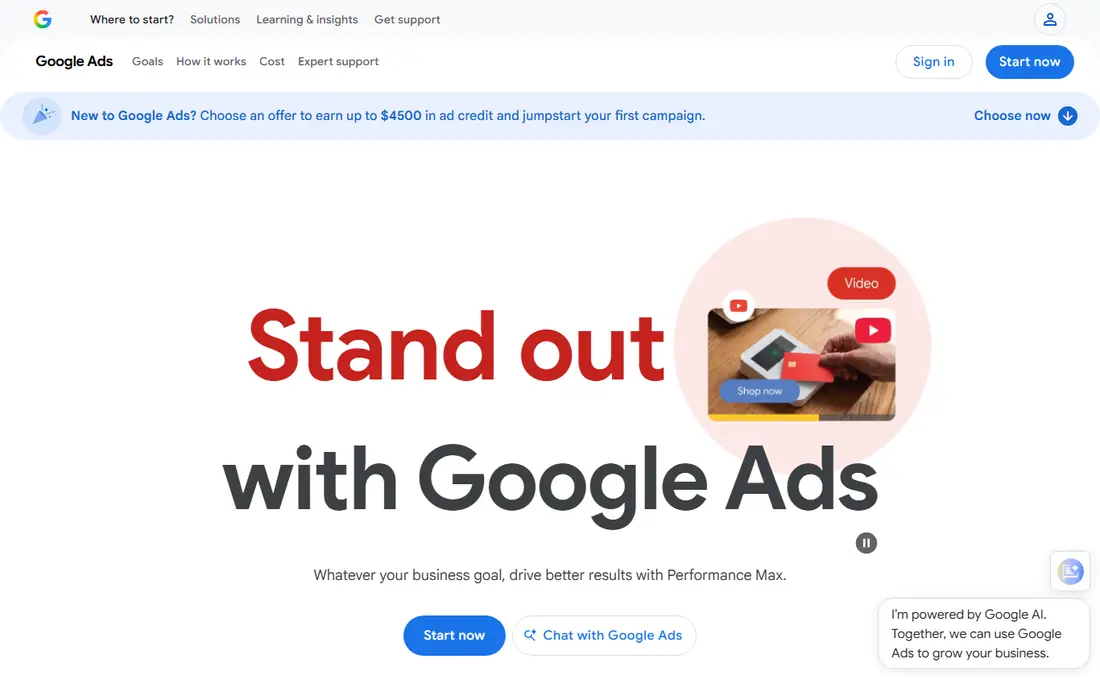
Google Ads is the starting point for most advertisers, and its automation has become the product rather than an add-on. Performance Max campaigns use AI bidding and budget allocation across Search, Shopping, YouTube, Display, Discover, Gmail and Maps from a single campaign. Smart Bidding adjusts bids per auction based on conversion likelihood, which no human could do manually at scale.
The platform itself is free, and you control the budget. The honest risk is the learning period, when performance can swing while the system gathers data, and the fact that Google grades its own homework in reporting. Set clear conversion goals, give campaigns enough budget and time to learn, and check results against your own sales data rather than platform numbers alone.
- Free platform, you pay only for ad spend
- Performance Max automates placement and bidding
- Huge reach across Search, YouTube and Display
- Automation can spend fast during the learning period
- Reporting makes true incremental value hard to see
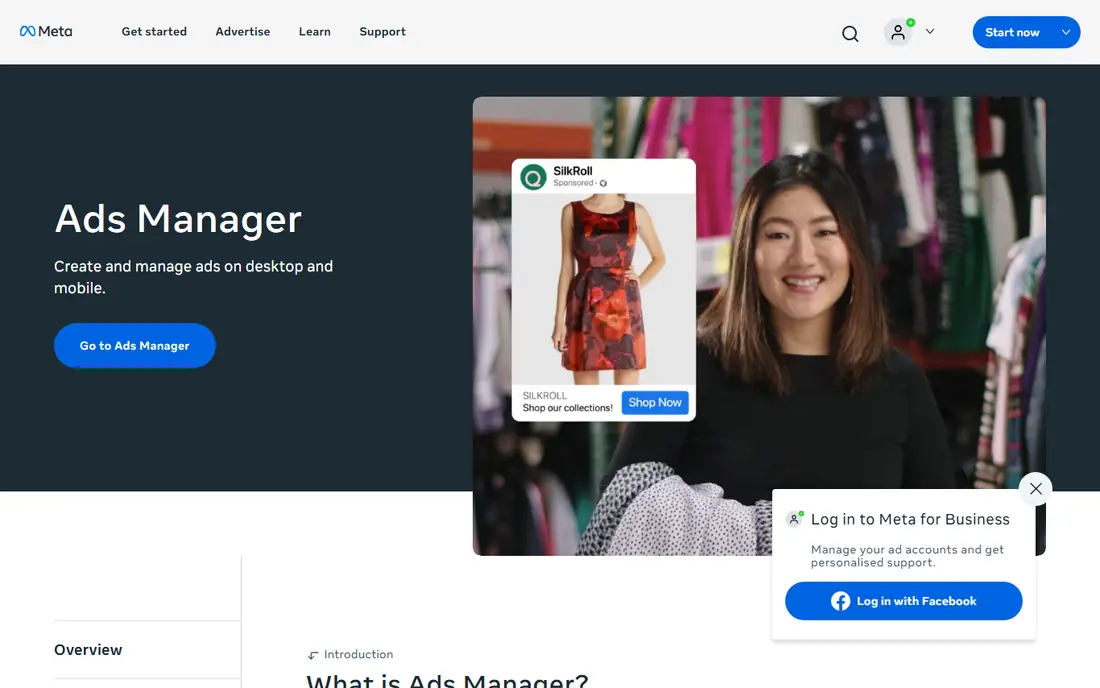
Meta Ads Manager is free to use, and its Advantage+ tools automate targeting, placement and budget distribution across Facebook, Instagram, Messenger and WhatsApp. For most small and mid-size advertisers, Advantage+ shopping campaigns now outperform hand-built structures, because Meta's system sees far more conversion signals than any manual audience list.
Creative is the catch. Automated targeting cannot rescue weak images or video, so testing multiple hooks and formats matters more than ever. Automated placements also need monitoring, since an ad can appear in places that do not fit the brand. Start with Advantage+, feed it good creative, and keep a close eye on the first weeks of spend.
- Free platform with Advantage+ automation
- Reaches Facebook, Instagram, Messenger and WhatsApp
- Strong creative testing
- Performance depends heavily on creative quality
- Automated placements can put ads in odd spots
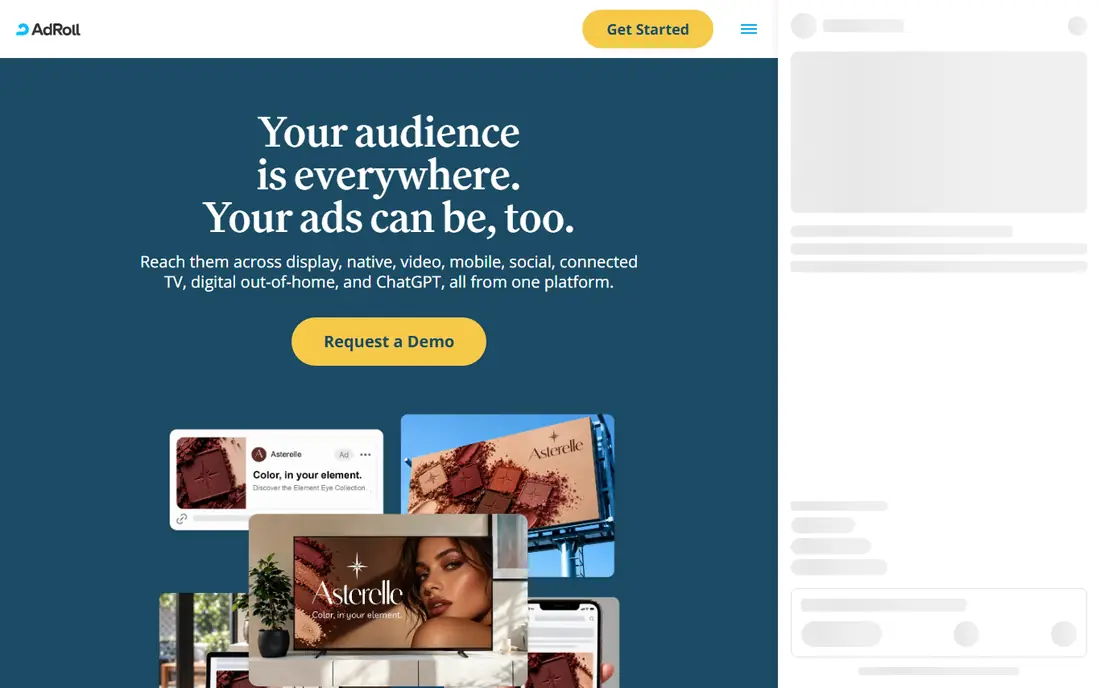
AdRoll is best known for retargeting, showing ads to people who visited your site but did not buy. Its self-service Ads plan charges no platform fee, so you pay only for media, while the Marketing and Ads Plus plan starts around $36 per month and bundles ads with email. Retargeting CPMs for US ecommerce typically run about $2 to $10 for web and $8 to $25 for social.
The cost to watch is AdRoll's margin on media, which industry norms put around 10 to 20 percent, on top of rising CPMs. That is still fair value if retargeting recovers sales you would otherwise lose. Managed services start at $5,000 per month in spend for the Standard tier, so small advertisers should stick with self-service.
- Self-service plan has no platform fee, you pay only for media
- Easy retargeting across web and social
- Email included on paid plans
- Platform takes a margin on media
- Managed services need $5,000-plus monthly spend
Smartly, formerly Smartly.io, is an enterprise paid social platform built for brands running hundreds of campaigns with large creative volumes. Its predictive budget allocation shifts spend toward the best-performing campaigns automatically, and its creative automation builds and tests ad variants at a scale that manual work cannot match. Reporting ties creative, audience and budget decisions together in one view.
Pricing is quote-only, and the platform assumes a skilled paid social team that will use its depth. Smaller advertisers will get similar results from Meta's native automation at no platform cost. For global brands where paid social is a major budget line, Smartly's automation and creative tooling can pay for themselves in time saved and performance gained.
- Predictive budget allocation across campaigns
- Creative automation at high volume
- Built for large paid social teams
- Quote-only pricing
- Needs skilled teams and large budgets to justify it
Birch, formerly Revealbot, takes a rule-based approach to ad automation. Instead of asking an AI to decide, you set if-then rules on CPA, ROAS, spend, frequency and timing that pause ads, change budgets, adjust bids or scale winners. It supports Meta, Google, TikTok and Snapchat, plus bulk campaign creation, scheduled reports and alerts through email, Slack or webhooks.
Essential starts at $49 per month, but automated rules are a Pro feature at $99 per month, so price for Pro if automation is the point. Every plan covers connected accounts spending up to $10,000 a month, with higher spend pushing the price up. Agencies managing many accounts get the most value, since bulk tools and consistent rules cut hours of manual checks.
- Clear if-then rules for budgets, bids and scaling
- Covers Meta, Google, TikTok and Snapchat
- 14-day trial
- Automated rules need the Pro plan at $99 per month
- Pricing rises with connected ad spend
AdEspresso, owned by Hootsuite since 2017, remains one of the simplest ways to run Facebook and Instagram ads with automation. Starter costs $49 per month for up to $1,000 of monthly spend across unlimited ad accounts, Plus costs $99 for unlimited spend with bulk creation, and Enterprise starts at $259. Split testing, cross-campaign triggers and approval workflows are built in, and every plan includes a 14-day trial.
The honest caveat is that the product has seen little public development in recent years, so it is a stable tool rather than a fast-moving one. It also covers Meta only, so Google advertisers need a second tool. For a small advertiser that wants a familiar, low-cost Meta tool without a learning curve, it still does the job.
- Very easy to learn
- Split testing and approval workflows
- Unlimited ad accounts on paid plans
- Facebook and Instagram only
- Product has seen little public development since the Hootsuite acquisition
Madgicx combines ad automation with audience building, analytics and creative tools aimed squarely at ecommerce brands advertising on Meta. Its automated rules pause losers and scale winners, its AI bidding and audience tools help find buyers beyond basic interest targeting, and its reporting ties ad spend to store revenue more clearly than Meta's default views. Pricing starts from $45 per month and varies with monthly ad spend.
The platform is Meta-centric, so brands that also spend heavily on Google, TikTok or retail media will need other tools alongside it. Cloud tracking features can also add cost. For a Shopify or WooCommerce brand whose growth runs through Meta ads, Madgicx gives a broader toolkit than a rules-only tool at a similar price.
- Automation plus audience and creative tools for Meta
- Ecommerce-focused analytics
- AI bidding features
- Meta-centric, so multi-channel advertisers need more
- Pricing varies with ad spend
Skai is an enterprise advertising platform that manages paid search, paid social, retail media and app campaigns across more than 120 publishers from one system. Its automation covers budgeting, pacing, bid management, alerts and forecasting, with AI assistance through its Celeste product. Large advertisers use it to coordinate spend and measurement across channels that native tools keep separate.
This is an enterprise purchase in price and complexity, and it needs skilled operators to deliver value. Small and mid-size advertisers will find native automation and cheaper tools sufficient. For companies spending across many channels with many teams, Skai acts as an advertising operating system rather than a single-channel helper.
- Covers paid search, paid social and retail media in one platform
- Budgeting, forecasting and attribution
- 120-plus publishers
- Enterprise pricing and complexity
- Needs experienced operators
Optmyzr is a PPC management platform focused on Google Ads and Microsoft Advertising, built for agencies and in-house teams managing many accounts. It automates budget pacing, spend forecasts, bid adjustments and quality checks, with more than 100 automated checks that flag account problems before they cost money. Reporting and scripts extend what the native interfaces offer.
Pricing is quote-based and scales with ad spend, which can make it expensive for low-spend accounts. Forecasts are estimates, not promises, so treat them as planning aids rather than guarantees. For PPC teams that live in Google and Microsoft Ads and want automation plus oversight in one place, Optmyzr is one of the strongest options.
- Strong budget pacing, forecasts and rule-based automation
- 100-plus account checks
- Good reporting
- Quote-based pricing that rises with spend
- Forecasts do not guarantee results
Marin Software is a veteran enterprise platform for managing search and social advertising at scale, with budgeting, bidding and forecasting across publishers. It suits large advertisers and agencies with complex account structures, many campaigns and strict reporting needs. Its bidding algorithms and cross-channel budget tools have been refined over many years in market.
Pricing is quote-based, and some teams find its interface less modern than newer competitors. Marin fits best when your account complexity justifies an enterprise system and your team values stability and depth over the latest interface. Smaller advertisers should start with native tools or a cheaper automation layer.
- Long track record in enterprise search
- Cross-publisher budgeting and bidding
- Good for large, complex accounts
- Quote-only pricing
- Interface and pace of change trail newer rivals for some teams
How we picked these
We compared official pricing pages, product documentation and public reviews, and we only included platforms that automate real buying work in October 2026, such as budget shifts, bid changes, rule-based pauses or AI-driven allocation. We mixed free native platforms with affordable tools and enterprise systems, and we left out pure analytics tools and creative-only apps that do not place or manage ads.
How to buy automation without wasting money
Start with the free native tools. Google Ads and Meta Ads Manager already automate bidding, placement and budget allocation, and for many advertisers they are all the automation needed. Add a paid platform only when you hit a clear limit, such as too many accounts to manage by hand, spend that needs rules-based guardrails, or creative volumes that manual work cannot support.
Next, match the automation style to your team. Rule-based tools like Birch and Optmyzr suit teams that want predictable, explainable actions and full control over thresholds. AI-driven tools like Performance Max, Advantage+ and Smartly suit teams willing to hand the system more control in exchange for scale. Mixing the two without a plan creates conflicting changes, so pick a lead system per channel.
Set guardrails before you automate
Automation scales mistakes as fast as wins. Set daily and monthly spend caps, define CPA and ROAS thresholds for pausing ads, and require alerts for unusual spend changes. Review automated changes weekly at first, then monthly once you trust the rules. Keep a human approval step for large budget increases, no matter how good the recent results look.
Judge automation on profit, not platform metrics
Platform dashboards report their own success, so tie automation to your own numbers: revenue, margin, cost per acquisition and customer lifetime value. Run a clean before-and-after comparison on one campaign set, and give AI-driven campaigns a fair learning period before judging them. If the tool cannot show profit improvement on your numbers, its time savings alone rarely justify an enterprise price.
FAQ
What is an automated ad platform?
It is software that manages ad campaigns with less manual work, by adjusting budgets and bids, pausing weak ads, scaling winners and building campaigns in bulk. Some use fixed rules you define, while others use AI that learns from conversion data. The goal is to react faster and more consistently than manual campaign management allows.
Are Google Ads and Meta Ads Manager really free?
Yes, the platforms themselves are free to use. You pay only for the ad spend your campaigns generate, plus any agency or third-party tool fees if you add them. That makes native automation the cheapest starting point, and many advertisers never need a paid platform on top.
How much do paid ad automation tools cost?
Entry-level tools like Birch and AdEspresso start at $49 per month, and Madgicx starts from $45 per month, with prices rising by ad spend. Enterprise platforms like Smartly, Skai and Marin are quote-only and typically suit budgets in the tens of thousands per month or more. Always confirm how price scales with your spend before signing.
Will automation replace my media buyer?
No, it changes the job. Automation handles repetitive adjustments, while people still set strategy, define targets, create strong ads and check that results match real business numbers. Teams that treat automation as set-and-forget usually see performance drift. The best results come from clear targets plus regular human review.
What is the difference between rule-based and AI automation?
Rule-based automation follows if-then conditions you write, such as pausing an ad when CPA passes a threshold, so every action is explainable. AI automation learns from data and makes its own bidding and placement decisions, which can find patterns humans miss but is harder to explain. Many teams use rules as guardrails around AI campaigns.
How do I avoid wasting money while automation learns?
Set strict daily budgets, cap total spend during testing, and define pause rules for poor performers before you launch. Give AI campaigns enough budget and time to gather conversion data, but check spend daily in the first weeks. If a campaign spends fast without conversions, pause it and fix targeting or creative before restarting.