Best Attribution Software in 2026: 8 Tools Compared
Compare the best attribution software for B2B and ecommerce, from HubSpot and Dreamdata to Triple Whale, Northbeam, Ruler Analytics, and Wicked Reports.
- Editor's choice
 HubSpot Marketing Hub
HubSpot CRM teams
Starts atSee websiteVisit hubspot.comFull review - Great alternative
 Dreamdata
B2B multi touch attribution
Starts atSee websiteVisit dreamdata.ioFull review - Also consider
 HockeyStack
B2B revenue truth
Starts atSee websiteVisit hockeystack.comFull review
TL;DR:
- HubSpot is the simplest attribution choice for teams already on HubSpot, since attribution sits inside the CRM rather than in a separate system.
- Dreamdata and HockeyStack suit B2B teams with long, multi contact sales cycles, where account level journeys matter more than a single click.
- Triple Whale and Northbeam suit ecommerce brands that need to connect ad spend, orders, and profit in one dashboard.
- Ruler Analytics suits lead generation teams that need calls and forms tied to revenue, including offline conversions.
- Attribution is only as good as its data, so CRM cleanliness, tracking setup, and model choice matter more than the vendor logo.
Quick comparison
| Tool | Best for | Starts at | Free plan? | |
|---|---|---|---|---|
| HubSpot Marketing Hub | HubSpot CRM teams | See website | Yes | Visit |
| Dreamdata | B2B multi touch attribution | See website | Yes | Visit |
| HockeyStack | B2B revenue truth | See website | No | Visit |
 Ruler Analytics | Lead and call attribution | See website | No | Visit |
 Triple Whale | Shopify ecommerce | See website | Yes | Visit |
 Northbeam | Paid media optimization | See website | No | Visit |
 Wicked Reports | Direct response tracking | $499 per month | No | Visit |
 Adobe Marketo Measure | Salesforce and Marketo teams | See website | No | Visit |
The best attribution software
We compared model types, CRM and ad integrations, offline tracking, reporting, and pricing transparency, with attention to B2B versus ecommerce fit.
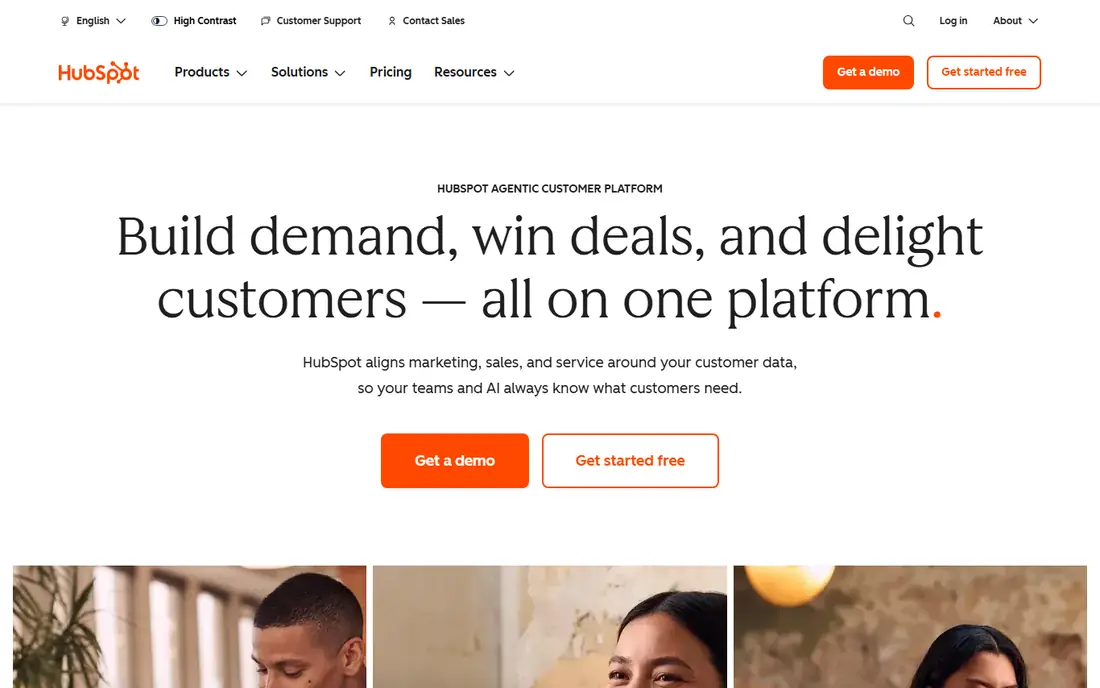
HubSpot suits teams that already run marketing, sales, and service in HubSpot and want attribution without a new data project. Contacts, deals, campaigns, and revenue already live in the CRM, so attribution reports can show which campaigns touched a deal and how revenue breaks down by channel. Free tools cover basic marketing, while paid Marketing Hub tiers add deeper reporting, with Starter listed from around 15 dollars per month per seat and Professional and Enterprise far higher.
The limit is depth. Complex B2B journeys with many contacts per account, custom models, and product usage data may need Dreamdata or HockeyStack instead. HubSpot attribution also improves with clean CRM habits, since messy deal stages and missing campaign links weaken any report. For a HubSpot house, though, it is the fastest path to credible attribution.
- Attribution built on the CRM
- No separate integration for HubSpot users
- Free tools to start
- Advanced attribution needs higher tiers
- Less deep than dedicated B2B tools for complex cycles
- Pricing stacks with seats
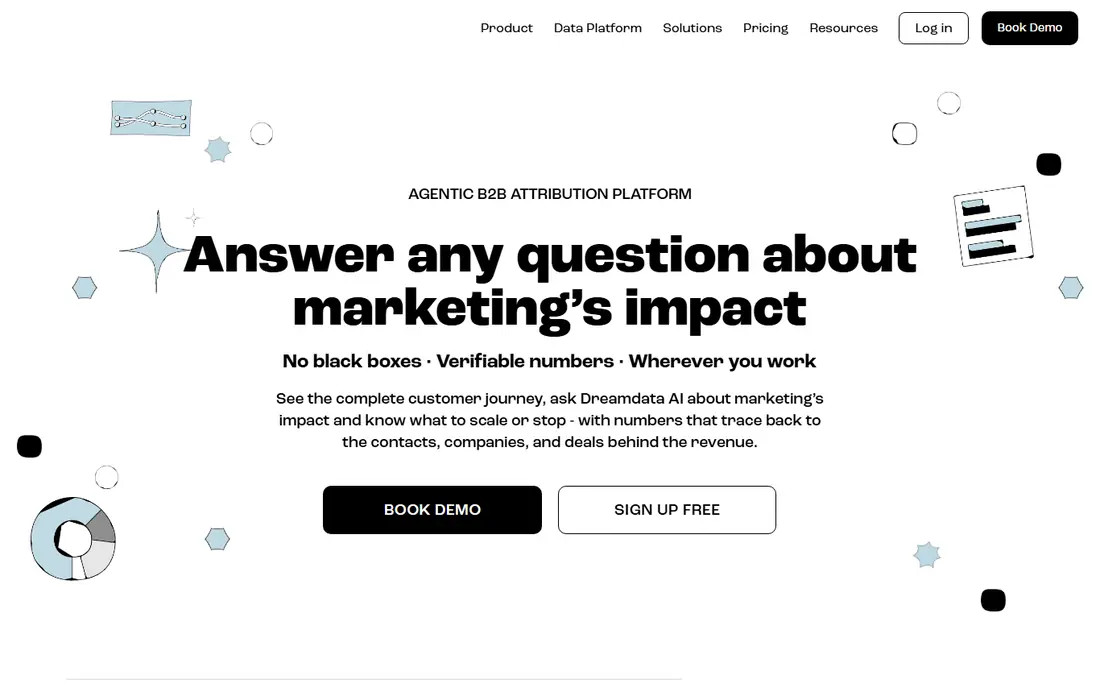
Dreamdata is built for B2B SaaS teams that need to prove which touches moved pipeline and closed revenue across a long cycle. It stitches touchpoints from multiple contacts in one account into a single deal journey, which matters when a demo request follows months of ads, content, and sales calls from different people. A free plan gives small teams an entry point, while larger use is quote based.
Setup discipline is the price of that depth. CRM stages, ad costs, and website tracking must be clean, or the model will reflect messy inputs. Dreamdata also fits B2B far better than a simple online store, where Triple Whale or Northbeam will feel faster. For a B2B team tired of last click reports, Dreamdata offers a model you can actually audit.
- Free plan available
- Account based multi touch journeys
- Verifiable data model for B2B SaaS
- Setup needs CRM and ad data discipline
- Pricing by quote for larger use
- Less suited to simple ecommerce
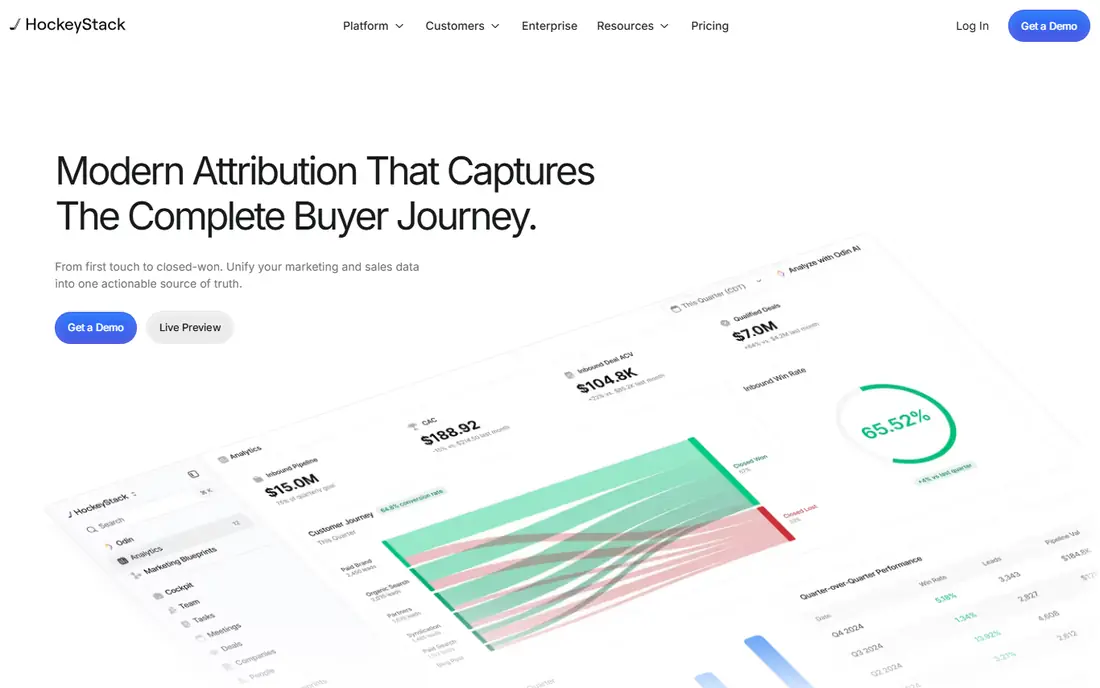
HockeyStack aims to be one source of truth for B2B revenue teams, linking marketing touches, product usage, and closed won deals in a single view. That combination helps teams answer whether a campaign drove real revenue or just signups, and lift reports compare exposed accounts with unexposed ones for a rough causal check. For SaaS teams where product usage signals buying intent, that link is valuable.
Pricing is quote based, and implementation needs clean CRM, product, and ad data to work well. Smaller teams with short cycles may not need that depth, and the setup time can outweigh the benefit. For a B2B revenue team that wants marketing, product, and sales data in one attribution story, HockeyStack is a strong shortlist pick.
- One view from first touch to closed won
- Product usage plus marketing data
- Lift and journey reporting
- Pricing by quote
- Implementation needs data work
- Smaller teams may find it heavy
Ruler Analytics suits lead generation businesses where the sale happens offline, by phone, or after a form, not in a shopping cart. It tracks calls, forms, and live chats back to the click and campaign that produced them, then links those leads to CRM revenue, so a team can see which channels produce customers, not just leads. Multi touch models help when a lead touches several channels before converting.
Pricing is quote based, with some listings reporting entry around 400 dollars per month, so small firms should get a firm quote early. CRM integration also needs care, since revenue linking fails if deal stages are inconsistent. For agencies and lead gen teams, Ruler offers a clearer revenue picture than web analytics alone.
- Ties calls, forms, and chats to revenue
- Multi touch models for lead gen
- Offline conversion support
- Pricing by quote, with entry reported around 400 dollars in some listings
- Setup needs CRM links
- Less ecommerce focused
Triple Whale is purpose built for direct to consumer brands on Shopify, and that focus shows in its dashboard. Ad spend from Meta, TikTok, and Google sits beside orders, profit, and attribution in one place, with creative analytics showing which ads actually drive revenue rather than just clicks. Recent listings describe a free tier and paid plans scaling with store revenue, with older tiers from around 129 dollars per month, so check the current pricing page for your store size.
Outside Shopify DTC, fit drops fast. Lead gen, B2B, and offline sales are not its home ground, and modeling for TV or brand spend needs higher tiers or a separate tool. For a Shopify brand spending seriously on paid social and search, Triple Whale gives a usable daily operating view that generic analytics does not.
- Shopify native dashboard
- Ad spend, orders, and profit in one view
- Creative analytics for DTC brands
- Mainly fits Shopify DTC
- Pricing scales with store revenue
- MMM and incrementality need higher tiers
Northbeam suits high spend ecommerce teams that need to move budget between channels with confidence. It combines click based tracking with modeled cross channel analysis, so a brand can see how Meta, Google, TikTok, and other channels interact rather than judging each in isolation. That view helps when last click reports undervalue prospecting channels and overvalue retargeting.
Cost is the barrier. Listings report Starter around 1,500 dollars per month and Professional around 3,500, which puts Northbeam out of reach for small stores. B2B lead teams also gain less, since Northbeam is built for ecommerce media decisions. For a brand with large paid budgets, the budget guidance can pay for itself. For a small store, Triple Whale or GA4 will be enough to start.
- Blends click tracking with modeled spend analysis
- Strong for high spend paid media
- Clear budget guidance
- High entry price in listings
- Quote based for larger teams
- Less B2B lead focus
Wicked Reports appeals to direct response advertisers who want first party, click based attribution tied to real customer value over time. It tracks individual journeys from click to purchase and repeat purchase, which helps advertisers judge a campaign by lifetime value, not just first order revenue. That long view matters for subscription and repeat purchase brands where a cheap first sale can hide a poor customer.
The entry price of 499 dollars per month for the Measure plan puts it beyond hobby stores, and setup needs disciplined tracking and CRM or store links. The interface also prioritizes function over polish. For a direct response team that lives by customer value and needs auditable click journeys, Wicked Reports is a focused, proven choice.
- First party click based attribution
- Strong for direct response and ecommerce advertisers
- Long lookback for customer value
- Entry price at 499 dollars per month
- Setup needs careful tracking
- Interface is more functional than polished
Adobe Marketo Measure, formerly Bizible, is built for large organizations that already run Marketo Engage and Salesforce and need native B2B revenue attribution. Customizable rules based models, account level reporting, and deep Salesforce integration let revenue operations teams tailor attribution to complex sales motions, multi touch journeys, and offline touches. For an enterprise with a mature Salesforce setup, that native fit saves integration work.
Complexity and cost are the trade offs. Pricing is quote based, implementation needs revenue operations expertise, and small teams will find the system heavy. If your stack is not Marketo and Salesforce, Dreamdata or HockeyStack will be simpler. If it is, Marketo Measure is the attribution tool that speaks your CRM language best.
- Native fit for Marketo Engage and Salesforce
- Customizable rules based models
- Enterprise revenue operations depth
- Pricing by quote
- Complex implementation
- Overkill for small teams
How we picked these
We compared official feature pages, pricing listings, and public reviews for model types, CRM and ad integrations, offline tracking, and reporting depth. We favored tools that are actively sold in 2026, cover a clear B2B or ecommerce use case, and show real revenue linking, not just web traffic counts. We did not claim hands on audit of every model, and quote based prices should be confirmed for your data volume and contract terms.
How to choose attribution software that tells the truth
Attribution tools disagree because they model different things, so the buying test should focus on data quality and decisions, not dashboards.
Start from the decision you need to make
List the budget, channel, or campaign decisions you will change based on attribution. If you need to shift paid media budget, Northbeam or Triple Whale fit. If you need to prove B2B pipeline value, Dreamdata or HockeyStack fit. If you need to judge lead quality, Ruler fits. A tool that reports beautifully but does not change a decision is just overhead.
Audit tracking before you buy
Check website tracking, ad cost imports, CRM stages, call tracking, and offline conversion uploads for gaps. A model built on missing CRM data will mislead with confidence. Run a small audit with your own data during a trial, and compare the tool output with closed deals you already know, to see where it matches and where it diverges.
Compare models, not just totals
Ask which model each tool uses by default, whether you can compare first touch, last touch, multi touch, and data driven views, and how it handles view through and offline touches. A tool that only offers last click will flatter retargeting and undervalue prospecting. A tool that offers several models lets you test how sensitive your conclusions are.
Price for data volume and seats
Ask whether pricing scales by tracked revenue, events, contacts, or users, and what happens when you grow. Quote based tools can look similar at entry and differ greatly at scale. Also confirm contract length, implementation cost, and whether write back to ad platforms is included, since that feature changes bidding, not just reporting.
FAQ
What is marketing attribution software?
It is software that connects marketing touches, such as ads, emails, and content, to leads, pipeline, and revenue, so teams can see which channels actually drive results. Models range from simple first or last click to multi touch and data driven models that spread credit across a journey. Good tools also handle offline conversions, such as calls and in person sales, not just online clicks.
Which attribution tool is best for B2B?
Dreamdata and HockeyStack are strong B2B picks, thanks to account level multi touch journeys and revenue linking. HubSpot works well for teams already on HubSpot, while Adobe Marketo Measure suits large Marketo and Salesforce organizations. The best B2B tool depends on your CRM, sales cycle length, and whether product usage data matters to your buying journey.
Which attribution tool is best for ecommerce?
Triple Whale is best for Shopify DTC brands that want spend, orders, and profit in one dashboard. Northbeam suits high spend brands that need modeled cross channel budget guidance. Wicked Reports suits direct response advertisers focused on customer lifetime value. Small stores can start with Google Analytics 4 free, then move to a paid tool when ad spend justifies it.
What is the difference between multi touch attribution and marketing mix modeling?
Multi touch attribution assigns credit to individual touches in a customer journey, using click and CRM data. Marketing mix modeling estimates channel impact from aggregate spend and sales data over time, including offline and brand effects. Many modern tools combine both, but they answer different questions, so check whether your tool offers attribution, modeling, incrementality testing, or all three.
How much does attribution software cost?
Costs range from free for basic HubSpot tools, Google Analytics 4, and Dreamdata and Triple Whale entry tiers, to 499 dollars per month for Wicked Reports and 1,500 dollars or more for Northbeam Starter in recent listings. Most enterprise tools are quote based. Always ask for a total based on your data volume, users, and contract length.
Can attribution software work without a CRM?
It can report web and ad performance without a CRM, but it cannot reliably link marketing to revenue. A CRM, order system, or lead tracker is needed to connect a touch to a deal or purchase, especially for B2B and lead gen. If you lack a CRM, start by fixing lead and deal tracking, then add attribution, or your reports will stay at traffic level.