Best Artificial Turf Companies in 2026: 8 Companies Compared
We compared the best artificial turf companies for homes, sports fields, and play areas, checking product range, warranties, and installer networks today.

- Editor's choice
 FieldTurf
Sports fields
Starts atSee websiteVisit fieldturf.comFull review - Great alternative
 AstroTurf
Sports and school fields
Starts atSee websiteVisit astroturf.comFull review - Also consider
 Shaw Sports Turf
High-use athletic fields
Starts atSee websiteVisit shawsportsturf.comFull review
TL;DR:
- FieldTurf and AstroTurf lead for sports fields, while Synthetic Turf International and Purchase Green lead for residential yards and play areas.
- The company that makes the turf is often not the company that installs it, so check whether your quote covers product, base work, and installation.
- Warranties vary a great deal by product line, so compare the written warranty for fading, wear, and backing failure before you compare prices.
- Sports and pet products use different pile heights, infill, and drainage designs, so a turf made for a lawn is not always the right pick for a field or dog run.
Quick comparison
| Tool | Best for | Starts at | Free plan? | |
|---|---|---|---|---|
| FieldTurf | Sports fields | See website | No | Visit |
| AstroTurf | Sports and school fields | See website | No | Visit |
| Shaw Sports Turf | High-use athletic fields | See website | No | Visit |
 Synthetic Turf International | Residential and commercial yards | See website | No | Visit |
 Purchase Green | Buying turf by the roll | See website | No | Visit |
 TigerTurf | American-made turf products | See website | No | Visit |
 TenCate Grass | Fiber and system technology | See website | No | Visit |
 XGrass | Custom turf systems | See website | No | Visit |
The best artificial turf companies
We compared eight established turf companies across residential, commercial, and sports use, looking at product range, installer networks, and warranty terms.
FieldTurf is the name most often linked with large sports installations, and its scale is a real advantage when a school or club needs a field that will take heavy weekly use. Its systems pair fiber, infill, and shock padding in combinations tuned for different sports, rather than selling one roll for every job. That sport-specific approach helps explain why so many professional and school programs keep choosing it for new fields.
The trade-off is that FieldTurf is built around full projects, not retail sales, so a homeowner will usually work through a dealer or installer rather than ordering direct. Pricing depends on field size, base preparation, and the system chosen, which makes quick price comparisons hard. If you need a sports field that must last under constant play, the project-based model is worth the extra quoting step.
- Very large number of installed fields worldwide
- Systems built for football, soccer, and multi-sport use
- Strong focus on player safety research
- Pricing is quote-based and varies by project
- Mainly a sports product, not a first pick for a small home yard
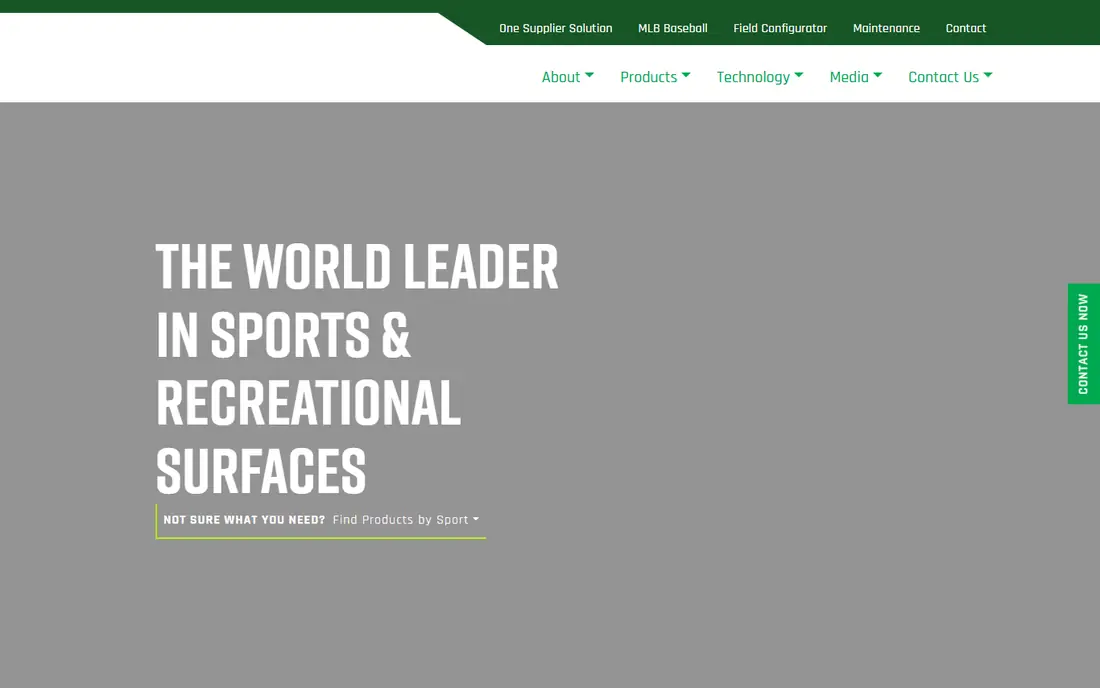
AstroTurf carries one of the oldest names in synthetic turf, and that history shows in a product range that covers baseball, football, soccer, and multi-use fields. Schools like having a single supplier that can handle different field types across a campus, and AstroTurf systems are designed with drainage and consistent ball response in mind. Its installer network also matters, since a field system performs only as well as its base and seams.
The honest catch is that AstroTurf is not set up as a retail shop for homeowners, so small residential jobs are usually better served by a residential dealer. Pricing is project-based, and the final cost depends on site work as much as on the turf itself. For a school or sports facility, though, the depth of its sports range is a clear strength.
- Long history in synthetic sports surfaces
- Wide range of field systems
- Products for baseball, football, and soccer
- Quote-based pricing
- Sports focus means fewer residential product lines
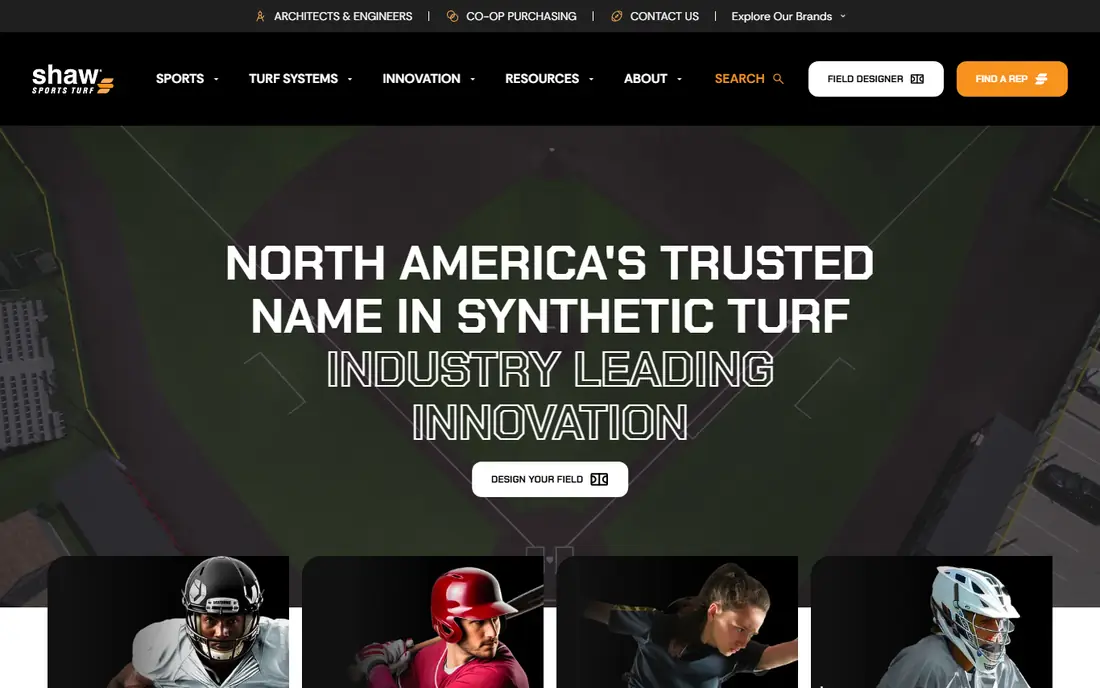
Shaw Sports Turf benefits from its parent company's manufacturing scale, which supports consistent fiber production and testing across product lines. Its fields are built for programs that play and practice on the same surface all week, so durability under cleats and heavy use is a central design goal. Schools and municipalities often value that testing record when they must justify a long-term purchase to a board.
The limitation is scope: Shaw Sports Turf is a sports specialist, so homeowners looking for a putting green or a pet-friendly yard will find a thinner range here than at a residential supplier. Quotes also depend on site conditions and system choice, so expect a site visit before a firm number. For a field that must survive years of daily use, that specialist focus is a plus.
- Backed by a large flooring manufacturer
- Systems for high-traffic fields
- Focus on performance and durability testing
- Pricing is quote-based
- Sports-first range with limited residential options
Synthetic Turf International, often shortened to STI, is a good first stop for homeowners because its range covers the jobs most people actually buy: front yards, backyards, play areas, and putting greens. Its dealer network means most buyers can find a local installer who knows the product line, and that local link matters for base preparation and seaming. The company also holds quality and environmental certifications that many buyers ask about before signing.
The catch is that your experience will depend heavily on the local dealer, since installation quality is not identical everywhere. Prices also vary by product and region, so a quote from one dealer may not match another's. Ask for the exact product name, the written warranty, and references for recent local jobs before you commit, and the STI range itself is broad enough to suit most homes.
- Wide residential and commercial product range
- Large dealer and installer network
- Products for yards, playgrounds, and putting greens
- Quality can vary by local dealer and installer
- Pricing varies by region and product
Purchase Green suits buyers who want to see and compare many turf styles in person, since its network of warehouses and showrooms across the United States is unusually large. Contractors like being able to pick up stock quickly, and DIY buyers can buy rolls and accessories without going through a full design service. The range covers yards, pet areas, sports, and putting greens, so most projects can be supplied from one source.
The downside is choice overload: with so many styles, pile heights, and colors, a buyer without guidance can pick a product that looks right but wears poorly for their use. Installation is also a separate decision in many cases, so the total project cost is not clear from the roll price alone. Visit a showroom with photos and measurements of your space, and ask staff to narrow the range to two or three products for your use.
- Large distributor network with many showrooms
- Wide stock range for fast supply
- Options for DIY buyers and contractors
- Product choice can be confusing without guidance
- Installation is usually arranged separately
TigerTurf appeals to buyers who care where their turf is made, since its products are manufactured in America rather than imported and rebranded. That control over production supports consistent fiber and backing quality, and the range covers sports clubs, schools, yards, and play areas. Buyers who want a domestic supply chain and a direct line to the maker will find that story appealing.
The honest weakness is reach: TigerTurf is less widely known than the biggest sports brands, and local availability can vary. That does not mean the product is weaker, but it does mean you should check installer coverage in your area before planning around it. If a local dealer carries it and can show recent installs, it is a solid alternative to the better-known names.
- Turf manufactured in America
- Products for sports, yards, and play areas
- Focus on quality control at its own plants
- Smaller public profile than FieldTurf or AstroTurf
- Availability varies by region
TenCate Grass is best understood as a technology and manufacturing specialist whose fibers and systems appear in fields and yards around the world. Its work on durable fibers, drainage, and recyclable systems matters for buyers who care about long-term performance and end-of-life handling. Sports federations and large installers often specify TenCate components for that reason.
For a homeowner, the catch is that TenCate is not a simple retail purchase: you will usually encounter its products through a partner brand or installer rather than a direct store. That adds a step to quoting and makes direct price comparison harder. If you are specifying a large sports or commercial project, though, its manufacturing depth is worth asking your installer about.
- Deep expertise in turf fibers and systems
- Products used in sports and home settings worldwide
- Focus on recyclable and durable systems
- More of a manufacturer than a retail brand
- Homeowners usually buy through a partner or installer
XGrass fits buyers with a project that does not match a standard roll, such as a rooftop area, a specialty sports surface, or a play space with unusual drainage needs. Its engineered systems let installers match pile, infill, and padding to the job rather than forcing one product onto every surface. That flexibility is useful for commercial and institutional buyers with specific performance targets.
The trade-off is that custom work takes more quoting time and usually costs more than a standard residential install. Its dealer footprint is also smaller than the largest distributors, so coverage varies by state. If your project is straightforward, a standard residential product may be cheaper and faster, but for a custom brief, XGrass is worth a quote.
- Engineered systems for sports, yards, and specialty uses
- Experience with custom projects
- Products for playgrounds and athletic areas
- Quote-based pricing
- Smaller dealer footprint than the largest residential distributors
How we picked these
We compared official company websites, product ranges, installer and dealer networks, and public project histories, and we favored companies with a long operating record and a clear product line for the use they claim to serve. We checked that each company still operates in 2026 and sells turf systems that fit residential, commercial, or sports use in the United States. Where prices were not published, we wrote See website rather than repeating a third-party estimate.
What to check before you buy artificial turf
Turf is a long-term purchase, so the product name matters less than the full system and the install behind it.
Match the product to the use
A soft, short-pile yard turf will not hold up the same way under soccer cleats, and a sports turf will feel wrong under bare feet in a backyard. Tell the supplier how the area will be used, how many people or pets will use it, and how much sun and rain it gets. Ask for the pile height, infill type, and drainage rate for the exact product quoted, not for the range in general.
Compare the full quote, not just the roll
A complete quote should cover the turf, base preparation, drainage, seams, infill, edging, and cleanup, plus any warranty terms. Base work is where many projects fail, since poor drainage or an uneven base shows up long after the installer leaves. Get at least two quotes that list the same items, and ask each installer for recent local jobs you can view.
Read the warranty in full
Warranties differ on fading, fiber wear, backing failure, and seam failure, and some cover the product only, not the labor to replace it. Ask how long each part lasts, what voids it, and who handles a claim, the maker or the installer. A clear written warranty from a company with a long record is worth more than a vague lifetime claim from a new seller.
FAQ
How long does artificial turf last?
Most quality turf systems last 10 to 20 years depending on use, sun exposure, and maintenance, with sports fields at the shorter end under heavy play. Residential yards with light use often last longer than a school field used daily. Regular brushing, rinsing, and infill top-ups help a system reach the upper end of that range.
Does artificial turf need maintenance?
Yes, though far less than natural grass, since there is no mowing, watering, or fertilizing. Owners should brush high-traffic areas, rinse off pet waste and spills, and clear leaves and debris so drainage stays open. Sports fields also need periodic infill checks and grooming to keep the surface even and safe.
Is artificial turf safe for pets and children?
Most modern turf products are made for pet and play use, with drainage designs that let liquid pass through and fibers that are soft underfoot. Check that the product is rated for your use, ask about infill material, and rinse pet areas regularly to control odor. For playgrounds, confirm that the system includes the right shock padding for the fall height of the equipment.
How much does artificial turf cost?
Costs vary widely by product, site preparation, and region, which is why most companies quote per project rather than publishing a single price. A small flat yard costs far less per square foot in total than a sports field with deep base work and padding. Get itemized quotes for your exact site rather than relying on a national average.
Can artificial turf be installed over concrete?
Yes, in many cases, with a suitable shock pad and drainage layer, which is common for patios, rooftops, and play areas. The pad matters for comfort and safety, and drainage must be planned so water does not pool under the turf. An installer should inspect the concrete for cracks and slope before quoting.
What should I ask an installer before hiring?
Ask for the exact product name, the base and drainage plan, the written warranty, and references for recent jobs in your area. Confirm who handles warranty claims and what the timeline looks like from order to completion. A good installer will welcome those questions and put the answers in writing.