Best API Security Testing Tools in 2026: 8 Tools Compared
We compared the best API security testing tools on API discovery, auth testing, CI use, and price, so teams can find flaws before attackers can find them.
- Editor's choice
 Burp Suite
Manual API and web testing
Starts at$499 per user per yearVisit portswigger.netFull review - Great alternative
 ZAP
Free baseline API scanning
Starts atFreeVisit zaproxy.orgFull review - Also consider
 StackHawk
Developer friendly CI scanning
Starts atSee websiteVisit stackhawk.comFull review
TL;DR:
- Burp Suite leads for manual API testing by security professionals.
- ZAP leads for free, open source baseline scanning and CI use.
- StackHawk and APIsec suit teams that want developer friendly automation and API specific checks.
- Only test APIs you own or have written permission to test, and keep test data out of production.
Quick comparison
| Tool | Best for | Starts at | Free plan? | |
|---|---|---|---|---|
| Burp Suite | Manual API and web testing | $499 per user per year | Free trial | Visit |
| ZAP | Free baseline API scanning | Free | Yes | Visit |
| StackHawk | Developer friendly CI scanning | See website | Free trial | Visit |
 APIsec | Automated API pentesting at scale | See website | Free trial | Visit |
 Invicti | Enterprise web plus API scanning | See website | Free trial | Visit |
 Akto | API discovery plus security testing | See website | Free trial | Visit |
 Postman | API teams adding security checks | See website | Yes | Visit |
 Bright Security | Automated DAST for APIs and apps | See website | Free trial | Visit |
The best API security testing tools
APIs carry sensitive data and business logic, so testing them needs more than a generic web scan. The tools below cover manual testing, automated scans, business logic checks, and CI integration, from free open source options to enterprise platforms.
Burp Suite is a solid choice for Manual API and web testing, and it stands out because it gives experts deep manual control over API requests. Our pick for most people in this group is to test it against one concrete outcome, such as faster turnaround, fewer errors, or clearer reporting, and to judge it on that outcome alone. The product earns its place here because it covers the core job well, it is still actively sold and supported, and its pricing page or vendor page gives a clear starting point for a budget discussion.
The practical test is simple: can a new person pick it up in a week, and can a manager see what is happening without asking for a status report. On that test, this option holds up well for its target buyer, though it still needs a short setup period and a named owner inside your team.
Be clear eyed about the limit: beginners may find the learning curve steep. Plan around it from the start, either by pairing this product with a second tool or by choosing a plan that closes the gap.
- Intercepting proxy
- Scanner
- Repeater and intruder
- Extensions
- Needs expert skill
- DAST edition priced by quote
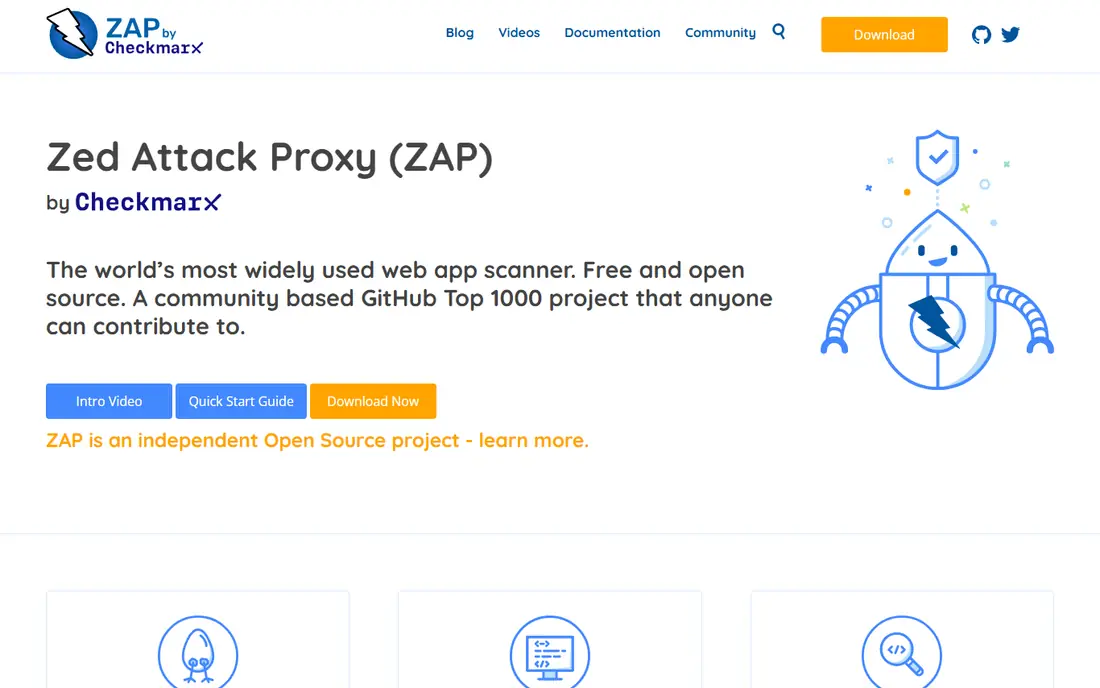
For Free baseline API scanning, ZAP deserves a close look, mainly because it offers a free, capable baseline for API scanning. Our pick for most people in this group is to test it against one concrete outcome, such as faster turnaround, fewer errors, or clearer reporting, and to judge it on that outcome alone. The product earns its place here because it covers the core job well, it is still actively sold and supported, and its pricing page or vendor page gives a clear starting point for a budget discussion.
What we liked in our comparison was the balance between depth and ease of use, plus a support path that does not leave a small team stranded. You should still confirm contract terms, renewal pricing, and data export options before you sign, and ask for a written answer on security and privacy if you handle sensitive records.
The weak spot is that large enterprises may need paid support and reporting. Ask the vendor to show that exact case in a demo, using your own example, before you buy.
- Free open source
- API scanning
- CI automation
- Scripting
- Less depth than paid tools
- Needs setup for complex auth
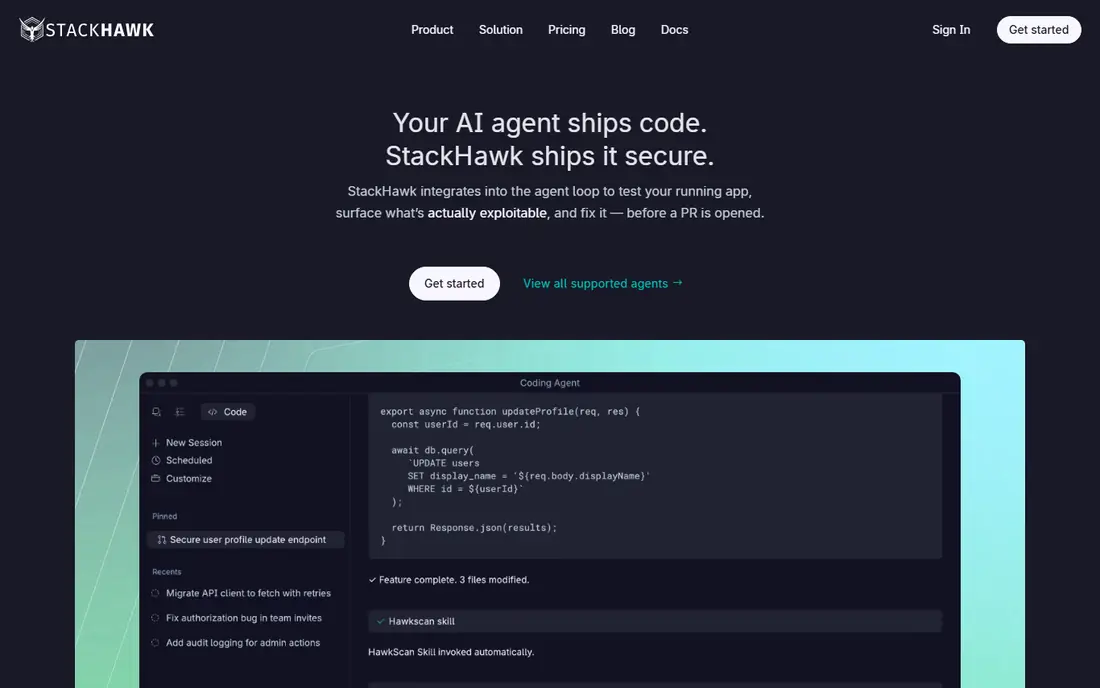
If your priority is Developer friendly CI scanning, start with StackHawk, since it fits scans into developer workflows with clear reports. Our pick for most people in this group is to test it against one concrete outcome, such as faster turnaround, fewer errors, or clearer reporting, and to judge it on that outcome alone. The product earns its place here because it covers the core job well, it is still actively sold and supported, and its pricing page or vendor page gives a clear starting point for a budget discussion.
Buyers often judge this kind of product on the first month, but the real cost shows up in training, upkeep, and the time spent fixing edge cases. This option keeps those costs in check for its intended audience, as long as you keep the setup simple and resist adding every add on at once.
The honest catch is that manual testers may still need Burp Suite alongside it. If that limit touches your main use case, shortlist a different option from this list and compare them side by side on the same task.
- CI integration
- API spec scanning
- Developer focused reports
- Smaller feature set than enterprise suites
- Quote for scale
APIsec suits teams and buyers focused on Automated API pentesting at scale, with a clear strength in that it automates API pentest style checks on a schedule. Our pick for most people in this group is to test it against one concrete outcome, such as faster turnaround, fewer errors, or clearer reporting, and to judge it on that outcome alone. The product earns its place here because it covers the core job well, it is still actively sold and supported, and its pricing page or vendor page gives a clear starting point for a budget discussion.
In day to day use, the value shows up in planning, follow through, and review, rather than in a single flashy feature. The product works best when you set a clear goal at the start, assign one owner to each next step, and check progress on a fixed schedule.
One drawback to weigh is that small teams should check endpoint based pricing first. That trade off is common in this category, and it matters most for buyers who need the missing piece on day one.
- API specific tests
- Scheduled scans
- Pentest style reports
- Quote pricing
- Setup needs good spec coverage
Invicti is a solid choice for Enterprise web plus API scanning, and it stands out because it combines web and API scanning with proof checks. Our pick for most people in this group is to test it against one concrete outcome, such as faster turnaround, fewer errors, or clearer reporting, and to judge it on that outcome alone. The product earns its place here because it covers the core job well, it is still actively sold and supported, and its pricing page or vendor page gives a clear starting point for a budget discussion.
The practical test is simple: can a new person pick it up in a week, and can a manager see what is happening without asking for a status report. On that test, this option holds up well for its target buyer, though it still needs a short setup period and a named owner inside your team.
Be clear eyed about the limit: small teams may find it larger than needed. Plan around it from the start, either by pairing this product with a second tool or by choosing a plan that closes the gap.
- Proof based scanning
- Web plus API coverage
- Enterprise reporting
- Quote pricing
- Enterprise focus and complexity
For API discovery plus security testing, Akto deserves a close look, mainly because it starts with discovery, then tests the APIs it finds. Our pick for most people in this group is to test it against one concrete outcome, such as faster turnaround, fewer errors, or clearer reporting, and to judge it on that outcome alone. The product earns its place here because it covers the core job well, it is still actively sold and supported, and its pricing page or vendor page gives a clear starting point for a budget discussion.
What we liked in our comparison was the balance between depth and ease of use, plus a support path that does not leave a small team stranded. You should still confirm contract terms, renewal pricing, and data export options before you sign, and ask for a written answer on security and privacy if you handle sensitive records.
The weak spot is that mature enterprise reporting needs a careful check. Ask the vendor to show that exact case in a demo, using your own example, before you buy.
- API inventory
- Security tests
- Open source core
- Cloud plans by quote
- Newer vendor than Burp or ZAP
If your priority is API teams adding security checks, start with Postman, since it lets API teams add checks where they already work. Our pick for most people in this group is to test it against one concrete outcome, such as faster turnaround, fewer errors, or clearer reporting, and to judge it on that outcome alone. The product earns its place here because it covers the core job well, it is still actively sold and supported, and its pricing page or vendor page gives a clear starting point for a budget discussion.
Buyers often judge this kind of product on the first month, but the real cost shows up in training, upkeep, and the time spent fixing edge cases. This option keeps those costs in check for its intended audience, as long as you keep the setup simple and resist adding every add on at once.
The honest catch is that dedicated security teams should pair it with a scanner. If that limit touches your main use case, shortlist a different option from this list and compare them side by side on the same task.
- API platform
- Spec linting
- Security checks in workflows
- Not a dedicated security scanner
- Paid tiers for teams
Bright Security suits teams and buyers focused on Automated DAST for APIs and apps, with a clear strength in that it automates dynamic testing for APIs and web apps. Our pick for most people in this group is to test it against one concrete outcome, such as faster turnaround, fewer errors, or clearer reporting, and to judge it on that outcome alone. The product earns its place here because it covers the core job well, it is still actively sold and supported, and its pricing page or vendor page gives a clear starting point for a budget discussion.
In day to day use, the value shows up in planning, follow through, and review, rather than in a single flashy feature. The product works best when you set a clear goal at the start, assign one owner to each next step, and check progress on a fixed schedule.
One drawback to weigh is that manual logic testing still needs expert review. That trade off is common in this category, and it matters most for buyers who need the missing piece on day one.
- AI assisted DAST
- CI integration
- Business logic checks
- Quote pricing
- Depth varies by API type
How we picked these
We compared official product pages, pricing pages, and public documentation, and we checked that each product is still sold and still fits the topic in October 2026. We favored products with a clear use case, a published starting price or a clear quote process, and a realistic path for a small or mid sized team to adopt them. We did not claim hands on testing we did not do, and we left out products that were closed, renamed without a clear successor, or a poor fit for the stated topic. Where a price could not be confirmed on the vendor site, we wrote See website rather than guessing.
How to choose an API security testing tool
Start with your API inventory. You cannot test what you cannot find, so check discovery for REST, GraphQL, and shadow APIs, plus how specs are imported. A tool that imports OpenAPI specs, traffic, and code will cover more ground than one that needs manual setup for each endpoint.
Start with the job, not the feature list
Test authentication and business logic, not just injection. Broken object level authorization, broken access control, and rate limit gaps cause many API incidents, so look for role based replay, token handling, and workflow aware tests. Manual review still matters for logic flaws that automation misses, so pair scans with expert testing for high risk APIs.
Check price, support, and exit options
Check CI fit and reporting. Scans should run in pull requests or nightly builds without slowing releases, and findings should map to code, owners, and fix guidance. Confirm pricing by endpoints, targets, or users, and run a trial against a staging API with realistic auth before you buy.
FAQ
What is the best API security testing software?
Burp Suite suits manual experts, ZAP suits free baseline work, and StackHawk or APIsec suit automated CI testing. The best tools for API security testing depend on team skill and API count.
What is the top API security testing software for CI?
StackHawk, ZAP, and Bright Security all fit CI pipelines with scan configs and reports. Choose the one that imports your specs cleanly and reports in a form developers will act on.
Can I test APIs with a web scanner?
A generic web scanner may find some issues, but API specific tools handle auth, specs, and business logic better. Use both when you can, with API tools as the main check for API endpoints.
Is ZAP really free?
Yes, ZAP is open source and free to use, with community support. Paid support and commercial forks exist, but the core tool costs nothing, which makes it a strong starting point.
How often should APIs be tested?
Test on every major change, plus scheduled scans for production APIs. Continuous testing catches new endpoints and auth changes early, before they reach attackers.