Best Anatomy App in 2026: 8 Apps Compared
Searching for the best anatomy app? We compare 8 anatomy learning apps with 3D models, quizzes, and study tools for students in 2026 for students and teachers.
- Editor's choice
 Complete Anatomy
Medical students and educators
Starts atSee websiteVisit 3d4medical.comFull review - Great alternative
 Human Anatomy Atlas
Detailed gross anatomy reference
Starts at$24.99Visit visiblebody.comFull review - Also consider
 Essential Anatomy 5
Simpler atlas for early students
Starts atSee websiteVisit 3d4medical.comFull review
TL;DR:
- Complete Anatomy and Human Anatomy Atlas are the strongest full 3D atlases for medical students.
- BioDigital Human and Kenhub suit learners who want guided lessons alongside 3D models.
- Essential Anatomy 5 is a simpler, cheaper atlas for students who want clean models without extra courses.
- TeachMeAnatomy is the best text-first companion, with clear articles that explain what the models show.
Quick comparison
| Tool | Best for | Starts at | Free plan? | |
|---|---|---|---|---|
| Complete Anatomy | Medical students and educators | See website | Free trial | Visit |
| Human Anatomy Atlas | Detailed gross anatomy reference | $24.99 | No | Visit |
| Essential Anatomy 5 | Simpler atlas for early students | See website | No | Visit |
 BioDigital Human | Interactive 3D learning in a browser | Free | Yes | Visit |
 Kenhub | Guided anatomy courses and quizzes | See website | Yes | Visit |
 TeachMeAnatomy | Clear written anatomy revision | See website | Yes | Visit |
 3D Organon | Immersive 3D and VR anatomy | See website | No | Visit |
 Muscle Premium | Muscle actions and attachments in depth | See website | No | Visit |
The best anatomy apps
A good anatomy app lets you rotate, peel back, and quiz yourself on real structures instead of memorising flat diagrams. These eight range from full 3D atlases to guided courses for medical students.

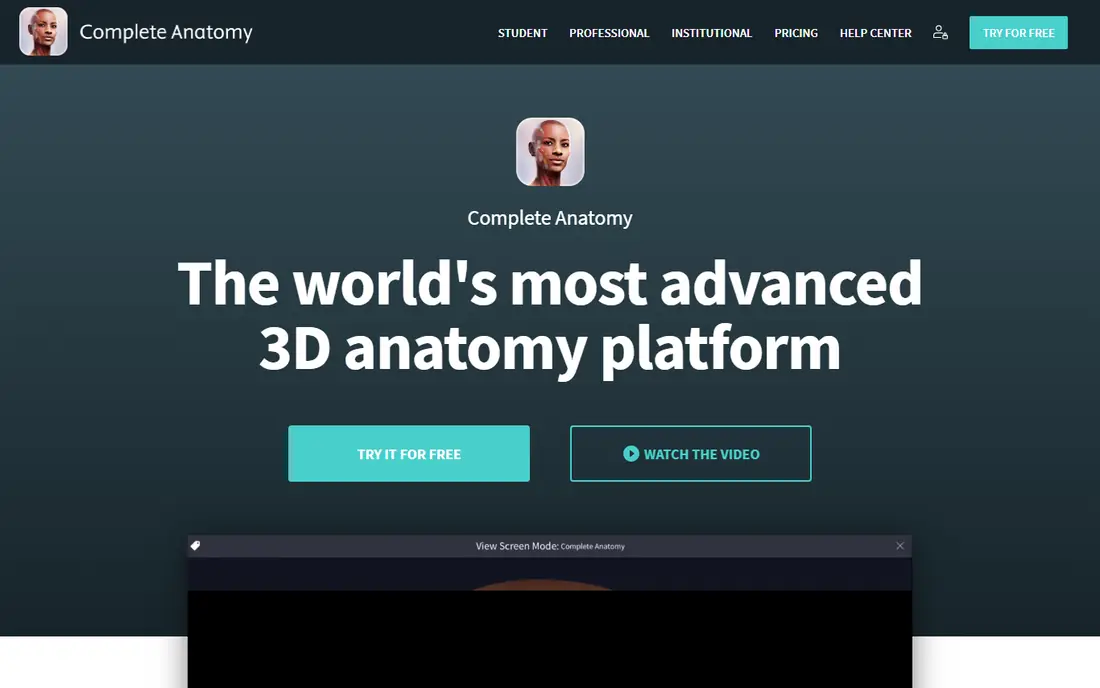
Complete Anatomy, from 3D4Medical and Elsevier, is one of the most complete anatomy platforms available. It offers detailed male and female models, layered dissection, cross-sections, and guided courses that walk students through systems step by step. Educators can also build lectures and share models with a class.
The full version needs a subscription, and the app is large, so a tablet or computer with space is best. Beginners may also feel overwhelmed by the depth at first. For a medical student who wants one serious atlas, it is our top pick.
- Detailed 3D models
- Courses and quizzes
- Cross-sections and AR views
- Full access needs a subscription
- Large download size
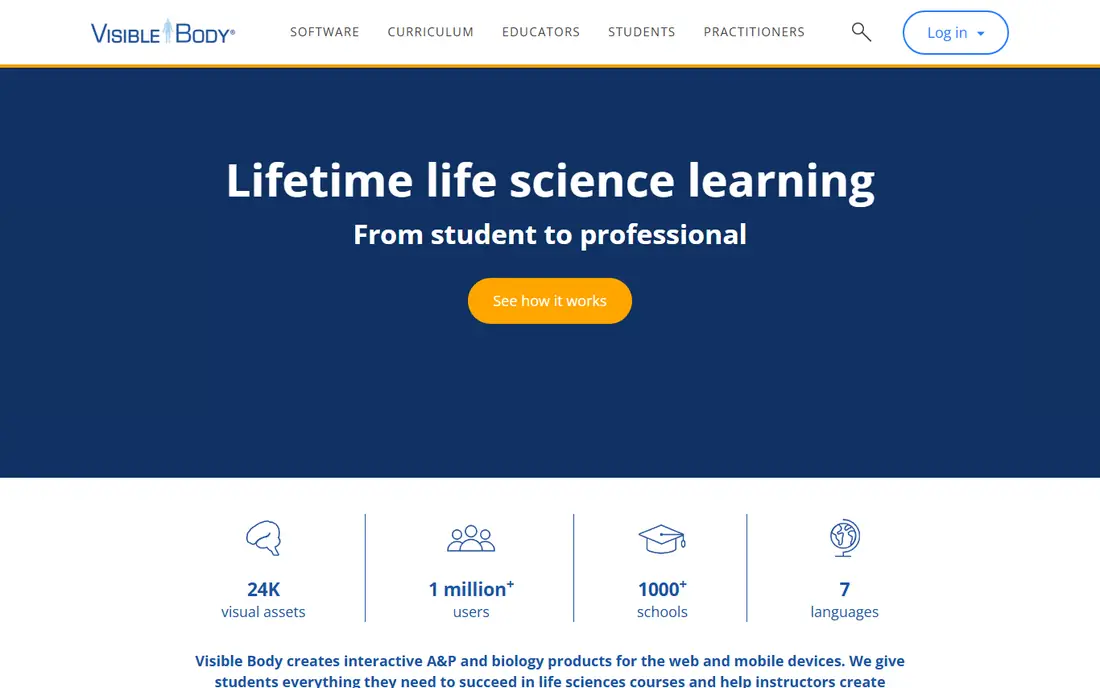
Human Anatomy Atlas by Visible Body is a one-time purchase that gives you full male and female gross anatomy models, plus selected microanatomy views. You can dissect on screen, view cross-sections, use augmented reality, and take 3D quizzes that track your progress. Lab activities help students work through structures in order.
Extra physiology animations and dental content cost more, and the app takes over a gigabyte of storage. That is a fair trade for a reference you own outright, with no subscription to renew each year.
- One-time purchase
- Male and female models
- Dissection quizzes and AR
- Physiology animations need in-app purchases
- Large app size
Essential Anatomy 5 is the simpler sibling of Complete Anatomy, with clean 3D models that are easy to rotate, isolate, and label. It suits first-year students who want a clear atlas for revision without a full course platform. The interface is straightforward, so you spend time learning anatomy, not learning the app.
It has fewer guided courses, quizzes, and advanced views than Complete Anatomy or Human Anatomy Atlas. Senior students may outgrow it. For early study and quick revision, its clarity is a real strength.
- Clean, easy-to-use 3D models
- Good for quick revision
- One-time purchase style
- Fewer courses and quizzes than Complete Anatomy
- Less microanatomy detail
BioDigital Human runs in a browser, which makes it easy to use on a school or library computer without installing a large app. Its interactive models cover body systems in detail, and guided tours explain structures in context. The free tier is genuinely useful for students on a budget.
Some advanced content and team features need a paid plan, and the mobile experience is thinner than the desktop version. If you study mainly on a computer, BioDigital Human is one of the best free starting points.
- Free tier
- Browser-based 3D models
- Guided tours and quizzes
- Advanced content needs a paid plan
- Mobile app is less full-featured
Kenhub pairs anatomy teaching with testing. Its courses, articles, and quizzes are organised by system and region, so you can study in a logical order rather than browsing a model at random. Flashcards and spaced repetition help with long-term recall, which is what exams actually test.
The full library needs a subscription, and its 3D models are not as deep as a dedicated atlas. Kenhub works best alongside an atlas such as Complete Anatomy, not instead of one. For structured study, it is excellent.
- Structured courses
- Quizzes and flashcards
- Clear illustrations and articles
- Full access needs a subscription
- 3D models are less deep than atlases
TeachMeAnatomy is known for clear, well-organised articles that explain anatomy system by system, with clinical notes that show why a structure matters. Students use it to understand a topic before testing themselves in a 3D app. Its diagrams are clean, and the writing avoids unnecessary jargon.
It is text-first, so it cannot replace a 3D atlas for spatial learning. The full question bank also needs a subscription. As a revision companion, though, it is one of the most trusted free resources in medical education.
- Well-written articles
- Clinical notes
- Question bank on paid plans
- Text-first, so 3D models are limited
- Full question bank needs payment
3D Organon offers detailed anatomy models with support for virtual reality, which lets students explore structures at a scale a flat screen cannot match. It is used by schools and training programmes, and multi-user options let a tutor and students explore the same model together.
Full features cost more than a basic atlas, and VR needs compatible hardware. For most individual students, a standard atlas is enough. For schools investing in immersive teaching, 3D Organon is a strong option.
- Detailed 3D models
- VR support
- Multi-user study options
- Pricing is higher for full features
- VR needs compatible hardware
Muscle Premium, also from Visible Body, focuses on muscles: their actions, attachments, innervations, and blood supply, shown with 3D animations. Physiotherapy and sports medicine students often prefer this focus over a general atlas, because it answers the exact questions their exams ask.
Its scope is narrower than Human Anatomy Atlas, so it does not cover every system in the same depth. It is also a separate purchase. If muscles are your priority, that focus is exactly what you want.
- Focus on muscles, actions, and attachments
- 3D animations
- Quiz tools
- Narrower scope than a full atlas
- Separate purchase from Atlas
How we picked these
We compared official feature pages, pricing pages, and app store listings for each product, alongside public reviews and help documentation. We looked for products that are currently available, that truly fit the topic, and that offer a clear strength for a specific kind of user.
We also weighed honest weaknesses, not just headline features. A product that is cheap but hard to use, or powerful but pricey, is only a good pick for the right person, and we say so in each write-up. Prices were checked in October 2026, and where a price varies or is not published, we say See website rather than guessing.
We also checked availability and fit rather than relying on popularity alone. A well-known product that no longer suits the topic, or that has changed its pricing model, was left out, and a smaller option with a clear strength was kept in. That mix is why each list includes both leaders and lesser-known alternatives worth a closer look, and why we recommend trying a free plan or trial first whenever one is offered, so you can judge the real experience before you pay for a full subscription or a long contract.
Finally, we favoured products with clear documentation and a straightforward way to try them, because a strong feature list means little if you cannot test it. If a product looked promising but its pricing or core features could not be verified from its own site or store listing, we marked the price as See website instead of guessing, and we said so plainly in the write-up.
How to choose an anatomy app
Check the model quality and labels
Look for models you can rotate, hide layers on, and label clearly. A pretty model with vague labels will not help in an exam. Check that muscle attachments, nerves, and blood supply are shown where they matter for your course.
Match the app to your course level
First-year students often need a guided atlas with quizzes, while advanced students may want detailed microanatomy and cross-sections. A professional reference app can overwhelm a beginner, and a basic app can frustrate a senior student.
Use quizzes, not just browsing
Reading a model is not the same as learning it. Choose an app with dissection quizzes, flashcards, or spaced repetition, and test yourself regularly. Short daily quiz sessions beat long browsing sessions before an exam.
FAQ
What is the best anatomy app for medical students?
Complete Anatomy and Human Anatomy Atlas are the most popular choices, with detailed 3D models, quizzes, and cross-sections. Kenhub adds guided courses and quizzes that many students use alongside an atlas.
What is the best 3D anatomy app?
Human Anatomy Atlas offers polished male and female models with dissection and augmented reality views. Complete Anatomy is equally strong, with a large model library and course tools. Try both free versions before buying.
What is the best app to learn anatomy for free?
BioDigital Human has a useful free tier, and Kenhub offers free articles and quizzes. TeachMeAnatomy also has free content, though its full question bank needs a subscription.
Can an app replace a textbook or cadaver lab?
No. Apps are a strong study aid, but they do not replace textbooks, lectures, or lab work where your course provides it. Use them to review and test yourself between sessions.
Do these apps work on phones and tablets?
Yes, most run on iOS and Android, and several also run in a browser on a computer. A tablet or laptop gives a better view of detailed models than a small phone screen.