Best AI Voice Mimic for Video Apps in 2026: 9 Apps Compared
We compared the best ai voice mimic for video apps on cloning, consent safeguards, voices and price, so you can dub video lawfully with your own voice.

- Editor's choice
 ElevenLabs
Best overall voice cloning
Starts at$6 per monthVisit elevenlabs.ioFull review - Great alternative
 Murf
Scripted video voiceover
Starts at$19 per monthVisit murf.aiFull review - Also consider
 Resemble AI
Cloning control and detection
Starts atSee websiteVisit resemble.aiFull review
TL;DR:
- ElevenLabs leads on voice quality and cloning, while Murf suits scripted video voiceover with an editor.
- Cloning someone's voice without permission is off limits, and reputable tools require consent verification.
- Credits and minutes are not the same, so compare finished audio minutes for your actual scripts.
- Start with your own voice or a licensed stock voice, and keep consent records for any other voice.
Quick comparison
| Tool | Best for | Starts at | Free plan? | |
|---|---|---|---|---|
| ElevenLabs | Best overall voice cloning | $6 per month | Yes | Visit |
| Murf | Scripted video voiceover | $19 per month | Yes | Visit |
| Resemble AI | Cloning control and detection | See website | No | Visit |
 Descript | Editing video with voice | See website | Yes | Visit |
 WellSaid Labs | Enterprise English voices | See website | Free trial | Visit |
 Respeecher | Film and broadcast voices | See website | No | Visit |
 Cartesia | Real-time voice for apps | See website | Yes | Visit |
 Speechify | Text-to-speech for video | See website | Yes | Visit |
 Fish Audio | Budget multilingual cloning | $15 per month | Yes | Visit |
The best ai voice mimic for video apps
We compared official feature pages, pricing, consent policies and public reviews. Every tool here is for your own voice, a licensed voice, or a voice you have clear permission to use. Cloning someone's voice without permission is off limits. Here are our picks.
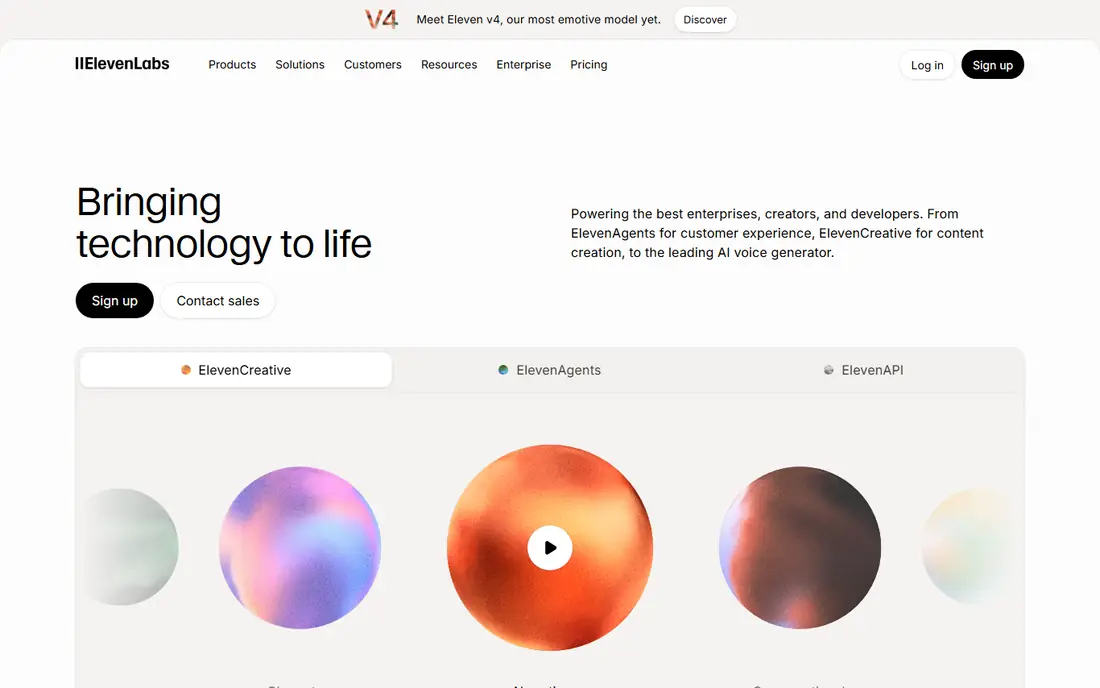
ElevenLabs is our top pick for video creators who need a voice that sounds natural. Instant cloning works from a short sample of your own voice, while professional cloning on higher plans gives a closer match for regular narration. The voice library also offers licensed voices, so you can use a strong voice without cloning anyone.
Consent rules are strict, and that is a good thing. Instant clones require explicit consent, and professional clones are limited to your own voice in our checks. Starter at 6 dollars a month includes a commercial license and instant cloning, while Creator at 22 dollars a month adds professional cloning. Start with the free plan to test pronunciation, then pay when you need commercial use.
- High-quality instant and professional cloning
- Many languages
- Voice library of licensed voices
- Credit system needs tracking
- Free output is non-commercial

Murf suits creators who write scripts first and need a clean voiceover to match video timing. The studio lets you adjust pauses, emphasis and pronunciation, and sync voice to scenes without a separate audio editor. That workflow fits explainer videos, training and YouTube narration better than a raw API.
Creator at 19 dollars a month billed annually includes 24 hours of voice generation per year in our checks, with commercial rights. The free plan offers 10 minutes for testing, without downloads. Murf is less focused on cloning a specific person than ElevenLabs, which makes it a safer default when a licensed stock voice will do the job.
- Editor built for video scripts
- Many voices and languages
- Clear commercial rights on paid plans
- Free plan has no downloads or commercial rights
- Generation is metered in hours per year
Resemble AI appeals to teams that need control over cloning, including consent workflows, watermarking and detection. Its rapid cloning covers many languages, and enterprise options include self-hosting and on-premise deployment. For regulated teams, that governance matters as much as voice quality.
The pricing page is harder to read than rivals, with usage-based rates around a fraction of a cent per second in our checks, plus per-voice charges. Confirm the current rate at checkout, and budget by finished minutes, not by sticker price. Resemble is a governance pick, not the cheapest starter tool, and it suits teams with compliance needs.
- Consent and watermarking features
- Deepfake detection tools
- Self-hosting options for enterprises
- Pricing page now leads with detection products, so confirm TTS rates before buying
Descript is different because it starts with editing, not just voice generation. You edit a transcript and the video follows, and Overdub lets you fix a word in your own recorded voice without re-recording a whole take. That saves hours for podcasters and video creators who revise scripts often.
Overdub is limited to your own voice, with verification steps, which keeps it on the right side of consent. Pricing varies by plan, so check the current page for the tier that includes Overdub and commercial use. Descript suits creators who already edit video and want voice fixes inside the same tool, rather than a standalone voice app.
- Edit video by editing text
- Overdub for your own voice
- Strong podcast and video workflow
- Overdub is for your own voice
- Video editing features can overwhelm pure voice users
WellSaid Labs focuses on clear, consistent English voices for training, e-learning and corporate video. Its voices are legally cleared for business use, which removes the consent risk that comes with cloning a real person. For teams that publish a lot of training content, that consistency and clearance are worth paying for.
The trade-off is access. Larger plans are sales-led, and casual creators will find cheaper self-serve tools here. Use the trial to test voice fit for your scripts, and check whether your volume justifies an enterprise conversation. WellSaid is a safe corporate pick when voice consistency and legal clearance matter most.
- Consistent, legally cleared English voices
- Good for training and e-learning
- Enterprise controls
- Enterprise pricing is sales-led for larger plans
- Less suited to casual creators
Respeecher is a specialist for film, games and broadcast, where voice conversion needs to match an actor's performance closely. Projects go through a consent-based workflow, with rights and approvals handled as part of production. That process suits studios that need a voice match for dubbing, de-aging or post-production.
Casual creators should look elsewhere. Pricing is project-based, with API rates around a few dollars per hour in our checks, and the tool is not built for quick YouTube voiceovers. For professional media work with proper consent and contracts, Respeecher is a respected choice with a clear lawful-use focus.
- High-quality voice conversion for film, games and broadcast
- Consent-based project workflow
- Project-based pricing, not a simple monthly plan
- Not for casual video creators
Cartesia suits builders who need voices inside an app, not just a finished audio file. Its low-latency models work for voice agents, interactive video and real-time narration, and the free tier gives developers room to test. For video apps that respond to users in real time, speed matters more than studio editing features.
The catch is technical skill. Cartesia is an API-first tool, so creators who want a simple script editor will prefer Murf or ElevenLabs. Check the current free credit allowance and per-character rates before building, since real-time use can consume credits faster than batch narration. For developers, it is a strong, modern voice pick.
- Fast, low-latency voices for apps and agents
- Usable free tier for developers
- Good for interactive video apps
- Developer-focused, so non-technical creators face a learning curve
Speechify started as a reading tool, and that strength carries into video work. You can turn scripts and documents into spoken audio quickly, and clone your own voice from a short sample for personal narration. The mobile and web apps make it easy to listen back to a script before recording final video audio.
It is not a full video voiceover studio. Editing, timing and scene sync are lighter than in Murf or Descript, and commercial terms need checking for your plan. Speechify fits creators who want fast, natural text-to-speech for drafts, accessibility and personal projects, with a licensed voice or their own cloned voice.
- Easy text-to-speech and voice cloning for your own voice
- Useful for reading scripts aloud
- Mobile and web apps
- Cloning is best for personal use and reading
- Video studio features are lighter than Murf
Fish Audio is a budget option for multilingual cloning, with Plus at 15 dollars a month billed monthly in our checks, and a lower annual rate. It covers many languages and offers community models, which can help creators working in languages where stock voices are thin. For testing a voice idea cheaply, it is worth a trial.
Quality varies more than on ElevenLabs, since community models differ in training and clarity. Review consent and commercial terms carefully for any model you use, and test with your actual script before committing. Fish Audio suits budget creators who test several voices, but keep your own voice or a licensed voice as the safe default for published work.
- Lower price than ElevenLabs for many users
- Multilingual cloning
- Community voice models with controls
- Quality varies by model
- Commercial terms and consent checks need careful review
How we picked these
We compared official feature pages, pricing pages, consent and lawful-use policies and public reviews, and we excluded tools that had shut down, including PlayHT, which closed at the end of 2025 in our checks. We favored tools with consent verification, watermarking or detection features, and clear commercial terms. Prices change often, so confirm credits, minutes and rights at checkout. Cloning someone's voice without permission is off limits, even for a joke or a parody video, and it can violate platform terms and the law in many places. Use your own voice, a licensed stock voice, or a voice with written consent, and keep that consent on file.
Using a cloned voice lawfully in video
Start by deciding whether you even need a clone. A licensed stock voice often sounds just as good for narration, and it avoids consent paperwork entirely. If you do clone, clone only your own voice, or a voice you have written permission to use, and complete the tool's verification steps honestly.
Keep records and disclose when needed
Save consent forms, license terms and project details for every cloned voice you publish. If a video uses a synthetic voice for a real person, disclose that clearly to your audience where required. That record protects you if a platform or client asks how a voice was made, and it shows good practice to collaborators.
Match the voice to the video
Test pronunciation of names, numbers and technical terms before a full render, since credits are spent on every generation. Adjust pacing and pauses to match cuts, and listen on phone speakers as well as headphones, since most viewers watch on phones. A voice that sounds natural in a studio can sound rushed on a small speaker.
FAQ
Is it legal to mimic someone's voice with AI?
It depends on consent and use, and cloning someone's voice without permission is off limits on reputable tools and illegal in many places. Cloning your own voice, or a voice with written consent, is the lawful path. For narration, a licensed stock voice avoids the issue entirely and is often simpler.
Which AI voice tool is best for video?
ElevenLabs is our top pick for overall quality and cloning, while Murf is best for scripted video voiceover with an editor. Descript suits creators who edit video by editing text, and WellSaid suits enterprise training. Pick by workflow first, then compare finished minutes per month for your script volume.
Can I clone my own voice for free?
Yes, with limits. ElevenLabs offers a free plan with monthly credits for testing, and Speechify and Fish Audio offer free tiers for your own voice. Free output is usually non-commercial, so upgrade to a paid plan before using a cloned voice in published or client video.
Why did PlayHT disappear from lists?
PlayHT, formerly PlayAI, shut down at the end of 2025 after its team was acquired, according to public reports in our checks. Accounts and clones were deleted, so do not pay any site claiming to be PlayHT today. ElevenLabs, Murf and Cartesia are safer current alternatives.
How do I avoid deepfake problems with voice cloning?
Use only your own voice or a licensed voice, complete consent verification, and disclose synthetic voices where required. Avoid mimicking public figures, politicians or private individuals without permission, even for entertainment. Keep consent records, and choose tools with watermarking or detection features when you can.