Best AI Voice Generation Tools in 2026: 9 Tools Compared
Compare the best AI voice generation tools for 2026, from ElevenLabs and Murf to WellSaid, Descript, Cartesia, and developer voice APIs for creators today
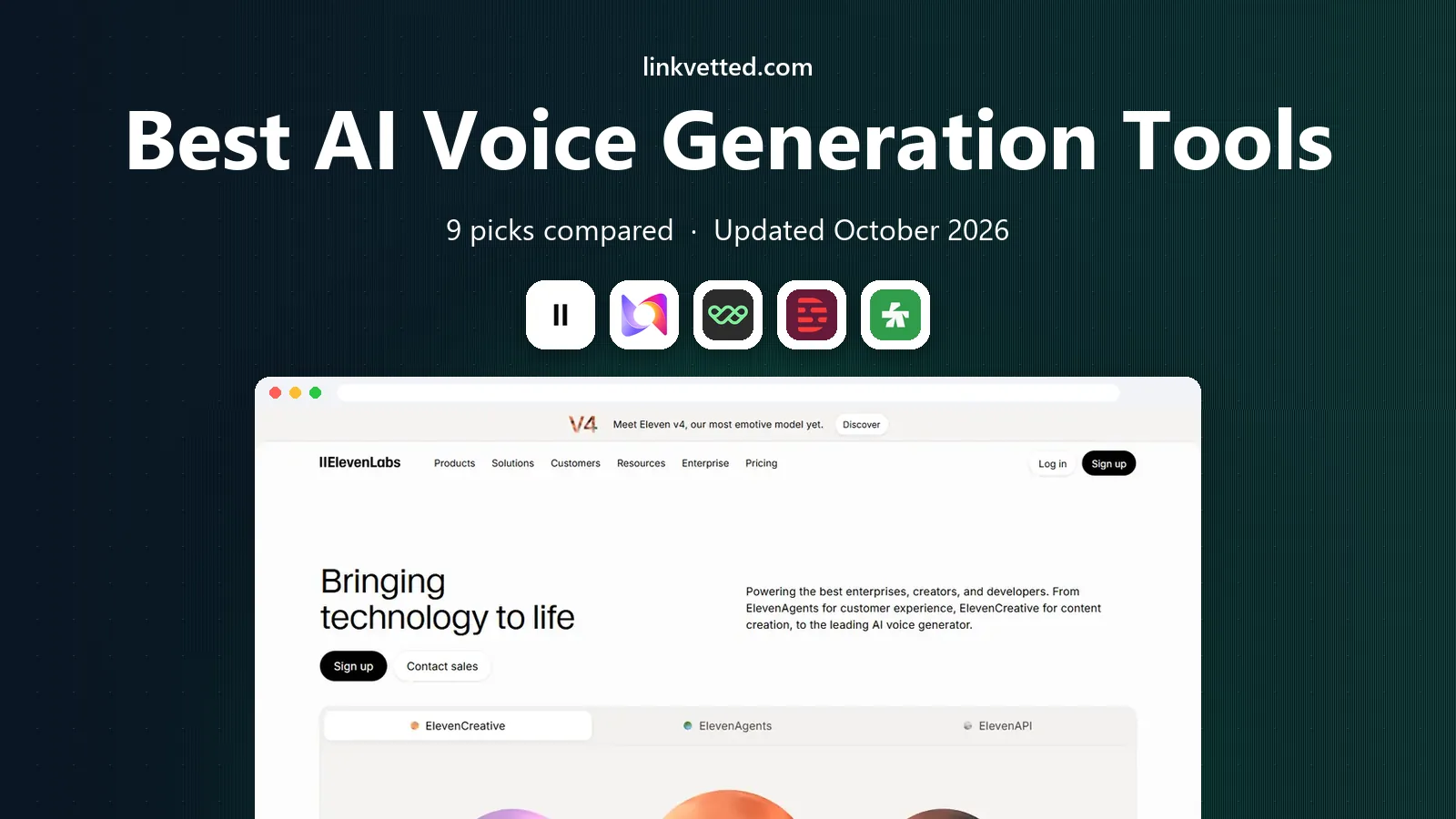
- Editor's choice
 ElevenLabs
Natural voices and cloning
Starts at$6 per monthVisit elevenlabs.ioFull review - Great alternative
 Murf AI
Scripted narration studio
Starts at$19 per monthVisit murf.aiFull review - Also consider
 WellSaid Labs
Consistent brand narration
Starts atSee websiteVisit wellsaidlabs.comFull review
TL;DR:
- ElevenLabs leads on natural voice quality and cloning, while Murf leads on a studio workflow for scripted narration and training videos.
- Voice cloning raises consent questions, so only clone voices you own or have clear written permission to use, and check each vendor's consent rules.
- Pricing models differ sharply: some tools charge per month with character or minute limits, while APIs charge per character or per second of audio.
- For real-time voice agents, low latency matters more than studio polish, which puts Cartesia and developer APIs ahead of narration studios.
- Always listen to samples in your exact language and tone before paying, since quality varies far more by language than marketing pages suggest.
Quick comparison
| Tool | Best for | Starts at | Free plan? | |
|---|---|---|---|---|
| ElevenLabs | Natural voices and cloning | $6 per month | Yes | Visit |
| Murf AI | Scripted narration studio | $19 per month | Yes | Visit |
| WellSaid Labs | Consistent brand narration | See website | Free trial | Visit |
 Descript | Editing with AI voice overdub | See website | Free trial | Visit |
 Cartesia | Real-time voice agents | $5 per month | Yes | Visit |
 Speechify Studio | Voiceover and dubbing studio | See website | Yes | Visit |
 Resemble AI | Cloning and API voice tools | See website | No | Visit |
 Amazon Polly | High-volume developer TTS | See website | No | Visit |
 Microsoft Azure AI Speech | Enterprise speech API | See website | Free trial | Visit |
The best AI voice generation tools
These nine tools cover narration, training, content creation, and developer use, with a note on two popular names that are no longer available.

ElevenLabs is our pick for most people who need AI voices that sound human. The free plan includes 10,000 characters per month, and the Starter plan costs 6 dollars per month, with higher plans adding more characters and commercial rights. Voice cloning, dubbing, and a large voice library make it useful for narration, audiobooks, video voiceover, and character voices.
The main catch is volume pricing. Long audiobooks or always-on voice agents burn credits quickly, and moving up the plan ladder gets expensive. Teams should estimate monthly characters before committing, and test cloning quality on their own voice rather than trusting demo samples. For quality-first narration, ElevenLabs still sets the standard.
- Most natural-sounding voices in this list
- Strong cloning
- Wide language coverage
- Costs climb fast at high volume
- Credit limits need careful tracking
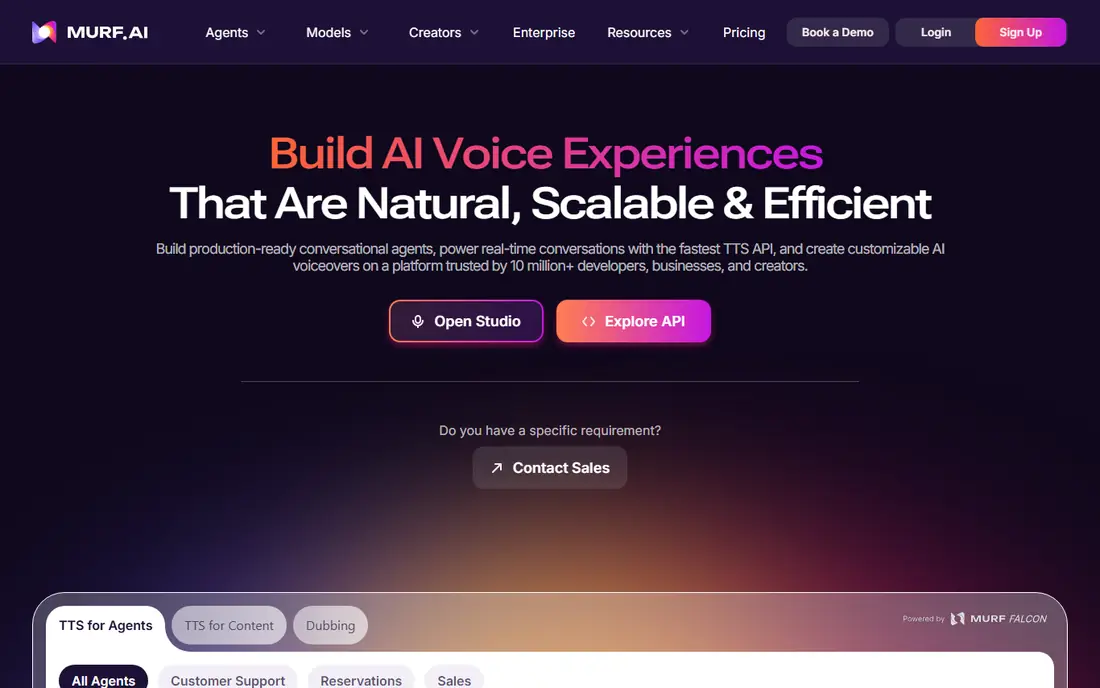
Murf AI suits teams that produce scripted narration on a regular schedule, such as training videos, explainer videos, and e-learning modules. The studio lets editors align voiceover with slides, add background music, and adjust pacing on a timeline, which is faster than exporting audio from a plain text-to-speech tool and editing it elsewhere. The Creator plan costs around 19 dollars per month on annual billing, with minute-based limits that are easy to plan around.
Cloning is mainly an enterprise feature, so teams that need a custom brand voice should check that tier before assuming it is included. Voice quality is very good for narration, though the most natural and expressive reads still come from ElevenLabs. For production teams that value workflow over raw realism, Murf is the better tool.
- Timeline studio with music and slide sync
- Predictable minute-based billing
- Large voice library
- Self-serve cloning is limited
- Raw realism trails ElevenLabs

WellSaid Labs focuses on consistent, professional narration for corporate training and brand content. Its voices are recorded with real voice actors under license, which gives training teams a stable sound across dozens of modules. That consistency matters when a course library grows over years and a changing voice would distract learners.
The library is English-first, with fuller multilingual options on enterprise plans, so global teams should check language coverage before committing. Pricing has changed across plan tiers, so confirm the current starter and team rates on the vendor pricing page. For English training narration where consistency beats variety, WellSaid is a strong choice.
- Consistent, professional English voices
- Brand voice options
- Good for training teams
- English-first library
- Pricing varies by plan and needs checking at checkout
Descript is not a voice library, but it belongs on this list because Overdub solves a real problem for podcasters and video creators. Editors can fix a misspoken word by editing the transcript, and Descript regenerates that line in the speaker's own cloned voice. That saves re-recording sessions and keeps episodes on schedule, especially for shows with tight deadlines.
The catch is scope. Overdub clones only your own voice, with consent checks, so it cannot supply a cast of narrators. Teams that need many voices should pair Descript with ElevenLabs or Murf. Creators who already edit in Descript will find Overdub the fastest way to fix audio without leaving their workflow.
- Text-based audio and video editing
- Overdub fixes mistakes without re-recording
- Good for podcasters
- Voice cloning is limited to your own voice
- Not a general voice library
Cartesia, with its Sonic voices, is built for real-time use: voice agents, phone assistants, and interactive apps where a slow response ruins the experience. Latency is measured in tens of milliseconds, which makes conversations feel natural rather than stilted. The Pro plan starts at 5 dollars per month, with a free tier for testing, and cloning is available on paid plans.
The voice library is smaller than ElevenLabs or Murf, and the product is aimed at developers rather than studio editors. Teams building a voice agent should prioritize Cartesia or a similar low-latency API. Teams producing narration will get more from a studio tool.
- Very low latency for live agents
- Cloning available
- Developer-friendly API
- Smaller voice library than narration studios
- Newer vendor
Speechify Studio is the voiceover and dubbing product from Speechify, separate from the popular Speechify reading app. It offers studio voiceover, dubbing, and avatar video tools, with free studio credits to test voices before paying. That makes it useful for creators who need narration plus dubbed versions of training or marketing videos.
Buyers should be careful at checkout, because Reader pricing and Studio pricing are different products with different limits. Cloning and commercial use also sit on higher tiers. Check that the plan you buy is Studio, not Reader, and confirm the credit allowance for your monthly output.
- Studio voiceover and dubbing
- Large voice library
- Free credits to test
- Easy to confuse with the separate Speechify Reader app and its pricing
- Cloning on higher plans
Resemble AI appeals to developers and teams that need cloning with provenance controls. Its Flex option offers pay-as-you-go text-to-speech, with cloning as a paid add-on, and it provides watermarking and detection tools that help teams prove audio came from their system. That security focus matters for brands worried about misuse of cloned voices.
The studio experience is less polished than Murf or ElevenLabs, so non-technical editors may prefer a studio tool. Clone seat costs also add up for teams with many voices. For API-driven cloning with safety tooling, Resemble is a credible specialist choice.
- Rapid cloning
- Watermarking and detection tools
- Pay-as-you-go Flex option
- Dashboard feels less polished than studio rivals
- Clone add-ons cost extra
Amazon Polly is the workhorse for high-volume, developer-driven text-to-speech, such as IVR systems, reading apps, and accessibility features. Pricing is pay as you go, based on characters processed, which suits variable workloads better than a fixed monthly plan. Language coverage is broad, and AWS reliability is a known quantity for engineering teams.
Voice naturalness varies by language and voice, and Polly is not a studio editor, so teams need developers to integrate it and editors to handle audio elsewhere. For apps that generate a lot of speech programmatically, Polly is often the cheapest reliable option. For hand-crafted narration, a studio tool will sound better with less effort.
- Pay-as-you-go pricing
- Huge language coverage
- Reliable AWS infrastructure
- Neural voices vary by language
- Needs developer setup
Microsoft Azure AI Speech suits enterprises already on Azure that need text-to-speech as part of a larger application. It combines speech synthesis with speech recognition, translation, and custom voice options, under enterprise security and compliance controls. A free tier lets developers test before committing to paid usage.
This is a developer API, not a narration studio, so content teams will need engineering help to use it well. Pricing depends on usage, voice type, and region, so get a quote based on expected characters. For Azure shops building voice into products, it is the natural choice.
- Enterprise security and compliance
- Wide language support
- Speech-to-text plus text-to-speech in one service
- Developer-focused
- Pricing depends on usage tier and region
How we picked these
We compared official pricing pages, vendor documentation, and current availability checks for AI voice tools in October 2026, keeping only tools that work today. We excluded PlayHT and Lovo, because recent availability checks show PlayHT sunset after its acquisition and Lovo is no longer serving a live product, even though both still appear on older lists. We mixed narration studios with developer APIs, because voice generation serves both creators and engineers, and we favored tools with clear consent controls for cloning.
How to choose an AI voice generation tool
Match the tool to the job, and check consent and cost before you record anything important.
Narration or live agent
For narration, audiobooks, and training, choose ElevenLabs, Murf, or WellSaid. For live voice agents, phone assistants, and interactive apps, choose Cartesia, Azure AI Speech, or Amazon Polly, where latency and API pricing matter more than studio editing.
Cloning rules and consent
Only clone a voice with clear written consent from the voice owner, and keep that consent on file. Reputable vendors require consent verification, and some add watermarking to cloned audio. Never clone a public figure, colleague, or customer voice without permission, even for an internal test.
Estimate your monthly volume first
Count characters or minutes for a typical month, then compare plans on that basis, not on the headline price. A cheap plan with a low character limit can cost more than a higher plan once overages kick in. Run a one-month test on real scripts before signing an annual plan.
FAQ
What is the best AI voice generation tool?
ElevenLabs is the best overall AI voice generation tool for natural quality and cloning, starting at 6 dollars per month with a free plan. Murf AI is best for scripted narration teams that want a timeline studio, and Cartesia is best for real-time voice agents that need low latency.
What happened to PlayHT and Lovo?
PlayHT was acquired and its platform sunset, with accounts and clones removed by the end of 2025, according to availability checks in 2026. Lovo filed for bankruptcy in 2026 and its site stopped serving a live product. Lists that still recommend either tool are out of date, and users should migrate any work off them.
Can I clone my own voice with AI tools?
Yes, ElevenLabs, Resemble AI, Descript Overdub, and Cartesia all offer voice cloning, usually from a short recording sample. Vendors typically require a consent statement or verification step to confirm the voice is yours. Cloning someone else's voice without permission can break vendor terms and, in many places, the law.
How much does AI voice generation cost?
Entry plans start around 5 to 6 dollars per month for Cartesia and ElevenLabs, and around 19 dollars per month for Murf on annual billing. Developer APIs charge per character or per second, which can be cheaper at scale or more expensive for long narration, depending on volume. Always estimate monthly characters or minutes before choosing.
Is AI-generated voice good enough for professional narration?
For training, marketing, explainer videos, and many audiobooks, current top tools are good enough that most listeners will not notice the voice is synthetic, provided the script is well written. For high-end audiobook drama or advertising where performance nuance matters most, human voice actors still lead. Listen to samples in your exact use case before deciding.