Best AI Video Making App in 2026: 8 Apps Compared
We compare 8 best ai video making app options for 2026, from Synthesia and HeyGen avatars to Runway, Pictory, and InVideo editing, generation, and pricing.
- Editor's choice
 Synthesia
Corporate training and explainers
Starts at$29 per monthVisit synthesia.ioFull review - Great alternative
 HeyGen
Marketing avatars and translation
Starts at$29 per monthVisit heygen.comFull review - Also consider
 Runway
Creative generative video
Starts at$12 per monthVisit runwayml.comFull review
TL;DR:
- Synthesia and HeyGen suit avatar explainers and training, while Runway suits creative generative clips and B-roll.
- Pictory and Lumen5 suit turning text and blog posts into social video, while Descript suits editing recorded video by text.
- Credits, watermarks, and export limits shape real cost, so check free plan limits before you commit to a workflow.
- AI output still needs a human edit for accuracy, pacing, and brand fit, especially for client work.
Quick comparison
| Tool | Best for | Starts at | Free plan? | |
|---|---|---|---|---|
| Synthesia | Corporate training and explainers | $29 per month | Yes | Visit |
| HeyGen | Marketing avatars and translation | $29 per month | Yes | Visit |
| Runway | Creative generative video | $12 per month | Yes | Visit |
 Pictory | Blog posts to social video | $25 per month | Free trial | Visit |
 InVideo | Prompt to finished video drafts | $20 per month | Yes | Visit |
 Lumen5 | Blog to video for social teams | See website | Yes | Visit |
 Descript | Editing recorded video by text | $16 per month | Yes | Visit |
 Kapwing | Social video editing and captions | $16 per month | Yes | Visit |
The best ai video making app
We compared official feature pages, pricing pages, and app store listings to build this list, and we focused on tools that work today and fit the topic closely. Use the comparison table to narrow the field, then read the write ups for the two or three options that match your needs best.

For teams weighing Synthesia, the fit depends on daily workflow more than on a feature list. Synthesia turns scripts into avatar videos in many languages, which suits training teams that need consistent presenters across many lessons. That focus matters because a tool that tries to do everything often makes its core job harder to find, while a focused tool keeps the daily path clear.
Synthesia works best when you set it up around one real project first. Add your team, import a small set of real items, and run a full week of work before you judge it. That trial will reveal gaps in permissions, integrations, and exports that a demo will not show.
The honest catch with Synthesia is in its limits, so read the cons above as a checklist, not a warning to avoid it. Every tool here trades depth for simplicity or breadth for focus, and Synthesia is no exception. If those limits touch your core workflow, pick a different option. If they touch only edge cases, Synthesia can still be the right pick, especially when its strengths match your main job.
- Many avatars
- Multilingual scripts
- Consistent presenters
- Avatar feel can be stiff
- Free plan has limits

If you want marketing avatars and translation, HeyGen is worth a close look, because it centers that job in its design. HeyGen focuses on realistic avatars and translation, which suits marketers who need short presenter videos and localized versions fast. That focus matters because a tool that tries to do everything often makes its core job harder to find, while a focused tool keeps the daily path clear.
Pricing deserves a second look before you commit to HeyGen. Check what the free plan actually includes, what happens when you hit limits, and whether guests, viewers, or extra seats change the bill. Annual billing often lowers the monthly rate, but it also locks you in, so start monthly when you can.
Our view on HeyGen is balanced: it earns its place for marketing avatars and translation, but it will not suit every team or every project. Test it against your real constraints, such as budget, team size, and existing tools, before you buy. A short pilot with clear success measures will tell you more than any review, including this one, so use the free plan or trial to prove the fit.
- Realistic avatars
- Voice cloning options
- Translation
- Free plan limits videos
- Longer videos need paid plans
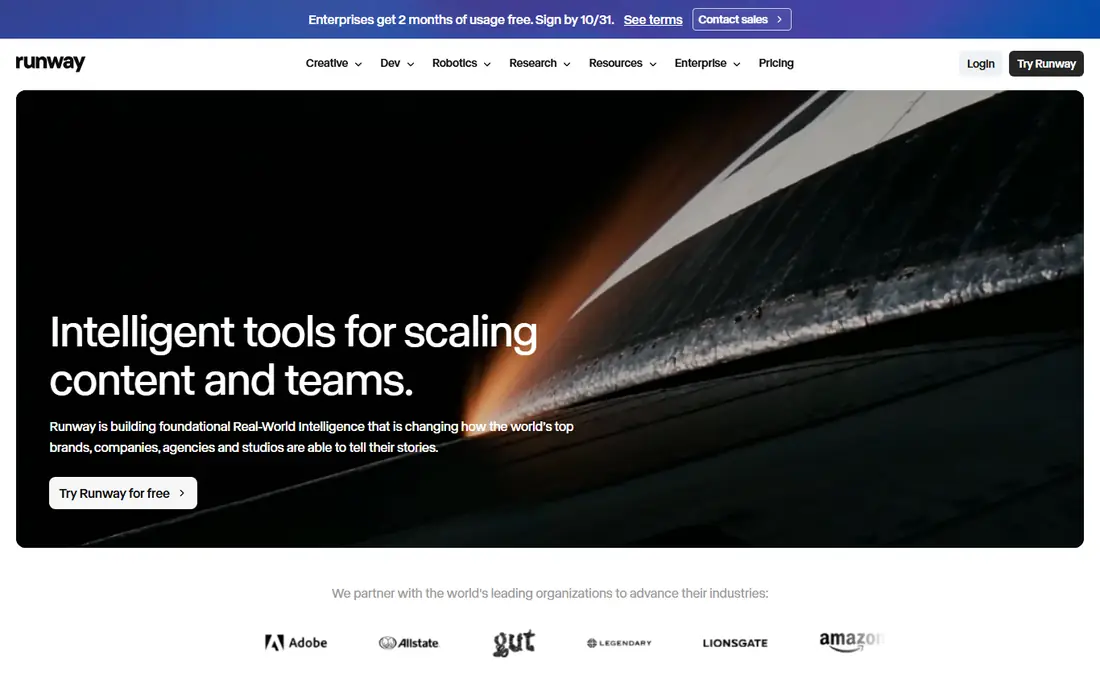
Our pick for creative generative video is Runway, and the reason is practical rather than flashy. Runway generates creative clips from text and images, with camera and style controls that suit ads, B-roll, and short form creative work. That focus matters because a tool that tries to do everything often makes its core job harder to find, while a focused tool keeps the daily path clear.
A practical test for Runway is to hand it to the least technical person on your team and watch how long a basic task takes. Clear labels, search, and templates help new users succeed, while hidden settings and jargon slow adoption.
Choose Runway when creative generative video is your priority and its limits are acceptable for now. Revisit the choice as your team grows, since needs change and pricing changes with them. Keep your data exportable, document your setup, and review the tool each quarter. That habit keeps a good pick from turning into a costly default.
- Strong generative models
- Camera control
- Editing tools
- Credits run out fast
- Output needs curation
Pictory stands out for blog posts to social video, especially when you need a tool that stays simple under real use. Pictory turns articles and scripts into finished social videos with stock footage, voiceover, and captions, which suits content teams repurposing text. That focus matters because a tool that tries to do everything often makes its core job harder to find, while a focused tool keeps the daily path clear.
Pictory works best when you set it up around one real project first. Add your team, import a small set of real items, and run a full week of work before you judge it. That trial will reveal gaps in permissions, integrations, and exports that a demo will not show.
The honest catch with Pictory is in its limits, so read the cons above as a checklist, not a warning to avoid it. Every tool here trades depth for simplicity or breadth for focus, and Pictory is no exception. If those limits touch your core workflow, pick a different option. If they touch only edge cases, Pictory can still be the right pick, especially when its strengths match your main job.
- Fast text to video
- Stock footage
- Captions
- Stock footage can feel generic
- Trial only, no free plan
When prompt to finished video drafts is the main job, InVideo earns its place by doing that job with fewer detours. InVideo builds video drafts from prompts or scripts, with stock media and timeline editing that suit marketers who need fast first cuts. That focus matters because a tool that tries to do everything often makes its core job harder to find, while a focused tool keeps the daily path clear.
Pricing deserves a second look before you commit to InVideo. Check what the free plan actually includes, what happens when you hit limits, and whether guests, viewers, or extra seats change the bill. Annual billing often lowers the monthly rate, but it also locks you in, so start monthly when you can.
Our view on InVideo is balanced: it earns its place for prompt to finished video drafts, but it will not suit every team or every project. Test it against your real constraints, such as budget, team size, and existing tools, before you buy. A short pilot with clear success measures will tell you more than any review, including this one, so use the free plan or trial to prove the fit.
- Prompt based drafts
- Stock library
- Timeline editing
- Credits vary by model
- Drafts need editing
Teams that need blog to video for social teams often land on Lumen5, since it keeps that workflow front and center. Lumen5 turns blog posts into social videos with templates and brand kits, which suits social teams that need consistent, on brand clips quickly. That focus matters because a tool that tries to do everything often makes its core job harder to find, while a focused tool keeps the daily path clear.
A practical test for Lumen5 is to hand it to the least technical person on your team and watch how long a basic task takes. Clear labels, search, and templates help new users succeed, while hidden settings and jargon slow adoption.
Choose Lumen5 when blog to video for social teams is your priority and its limits are acceptable for now. Revisit the choice as your team grows, since needs change and pricing changes with them. Keep your data exportable, document your setup, and review the tool each quarter. That habit keeps a good pick from turning into a costly default.
- Simple blog to video
- Templates
- Brand kits
- Generative depth is limited
- Paid features vary
Descript is a strong match for editing recorded video by text, with a setup that rewards a short trial. Descript lets you edit recorded video by editing its transcript, with captions and filler removal that suit podcasters and talking head creators. That focus matters because a tool that tries to do everything often makes its core job harder to find, while a focused tool keeps the daily path clear.
Descript works best when you set it up around one real project first. Add your team, import a small set of real items, and run a full week of work before you judge it. That trial will reveal gaps in permissions, integrations, and exports that a demo will not show.
The honest catch with Descript is in its limits, so read the cons above as a checklist, not a warning to avoid it. Every tool here trades depth for simplicity or breadth for focus, and Descript is no exception. If those limits touch your core workflow, pick a different option. If they touch only edge cases, Descript can still be the right pick, especially when its strengths match your main job.
- Text based editing
- Captions
- Filler removal
- Generative video is limited
- Learning curve for audio tools
For social video editing and captions, Kapwing offers a focused path that is easy to test before you commit. Kapwing suits social teams that need fast editing, captions, and resizing, with AI helpers for clips and subtitles in a browser editor. That focus matters because a tool that tries to do everything often makes its core job harder to find, while a focused tool keeps the daily path clear.
Pricing deserves a second look before you commit to Kapwing. Check what the free plan actually includes, what happens when you hit limits, and whether guests, viewers, or extra seats change the bill. Annual billing often lowers the monthly rate, but it also locks you in, so start monthly when you can.
Our view on Kapwing is balanced: it earns its place for social video editing and captions, but it will not suit every team or every project. Test it against your real constraints, such as budget, team size, and existing tools, before you buy. A short pilot with clear success measures will tell you more than any review, including this one, so use the free plan or trial to prove the fit.
- Fast social editing
- Captions
- Resizing for platforms
- AI generation is limited
- Free exports watermarked
How we picked these
We started with official homepages, pricing pages, and app store listings, and we kept only products that exist today and truly fit the topic. We checked free plans, entry paid prices, and core features on vendor pages, and we used See website where a price could not be verified at the time of writing. We favored a mix of well known leaders and smaller options, and we noted honest limits for each pick rather than listing only strengths.
How to choose an AI video making app
Start with the video you need to make. Avatar tools are best for training and explainers with a presenter on screen. Generative tools are best for short creative clips and B-roll. Text to video tools are best for turning articles into social clips. Editors such as Descript and Kapwing are best when you already have footage and need captions, cuts, and resizing. Picking by output type avoids paying for a tool that makes the wrong kind of video well.
Check credits, resolution, watermarks, and commercial use terms next. Free plans often watermark exports or cap minutes, and credit costs vary by model and length. Test the same script in two tools and compare voice quality, lip sync, pacing, and how much editing you still need to do. For client work, confirm you can use the output commercially and that voices and avatars meet consent and disclosure rules.
FAQ
What is the best AI video making app?
Synthesia suits training, HeyGen suits marketing avatars, Runway suits creative clips, Pictory suits blog to video, and Descript suits editing recorded video. The best pick depends on whether you need avatars, generated footage, or editing.
Can AI video apps make videos for free?
Yes, with limits. Synthesia, HeyGen, Runway, InVideo, Lumen5, Descript, and Kapwing offer free plans or trials, but exports often carry watermarks or minute caps. Paid plans remove watermarks and add credits.
Are AI avatar videos realistic?
They have improved a lot, but viewers can still spot AI presenters in longer videos, especially in hand movement and emotion. Short, scripted explainers work best, and a human review pass helps catch odd phrasing or timing.
Can I use AI video for YouTube and social media?
Yes, many creators do, but check each tool for commercial use terms and platform rules on AI disclosure. Original scripts, good editing, and accurate claims matter more than the tool you choose.
What is the difference between Synthesia and Runway?
Synthesia creates avatar presenters speaking a script, which suits training and explainers. Runway generates new footage from text or images, which suits creative clips, ads, and B-roll. Many teams use both for different video types.