Best AI Tools for Marketing in 2026: 9 Tools Compared
We compared the best AI tools for marketing on content, SEO, email, social, and automation, so small teams can pick tools that match real jobs and budgets.
- Editor's choice
 Jasper
On-brand long-form marketing copy
Starts atSee websiteVisit jasper.aiFull review - Great alternative
 Copy.ai
Short copy and repeatable workflows
Starts atSee websiteVisit copy.aiFull review - Also consider
 HubSpot
All-in-one CRM and marketing automation
Starts atFreeVisit hubspot.comFull review
TL;DR:
- Jasper suits teams that need on-brand long-form copy at volume.
- HubSpot suits teams that want CRM, email, and automation in one place.
- Semrush and Surfer SEO suit teams where search traffic drives results.
- Canva and Buffer suit small teams that need fast visuals and social publishing.
Quick comparison
| Tool | Best for | Starts at | Free plan? | |
|---|---|---|---|---|
| Jasper | On-brand long-form marketing copy | See website | Free trial | Visit |
| Copy.ai | Short copy and repeatable workflows | See website | Free trial | Visit |
| HubSpot | All-in-one CRM and marketing automation | Free | Yes | Visit |
 Semrush | SEO and competitive research | See website | Free trial | Visit |
 Surfer SEO | Optimising articles for search | See website | Free trial | Visit |
 Canva | Fast campaign visuals and design | Free | Yes | Visit |
 Buffer | Social publishing across channels | Free | Yes | Visit |
 ActiveCampaign | Email and sales automation | See website | Free trial | Visit |
 Mailchimp | Email marketing for small businesses | Free | Yes | Visit |
The best AI tools for marketing
AI marketing tools work best when each one has a clear job. One tool may write drafts, another may plan SEO content, and a third may run email automation. We compared official pricing pages, feature pages, and public documentation, and we grouped the picks below by the job they actually do.

Jasper is the strongest pick for teams that publish a lot of marketing copy. It learns a brand voice, offers templates for blogs, ads, and email, and helps teams move from brief to draft faster, though every draft still needs a human check for accuracy. The honest catch is worth weighing. No permanent free plan. Pick this one if on-brand long-form marketing copy is your main need, and check the free plan first to see whether it covers your usual use.
- Brand voice training
- Templates for blogs, ads, and email
- Campaign workflows
- No permanent free plan
- Output still needs editing and fact-checking
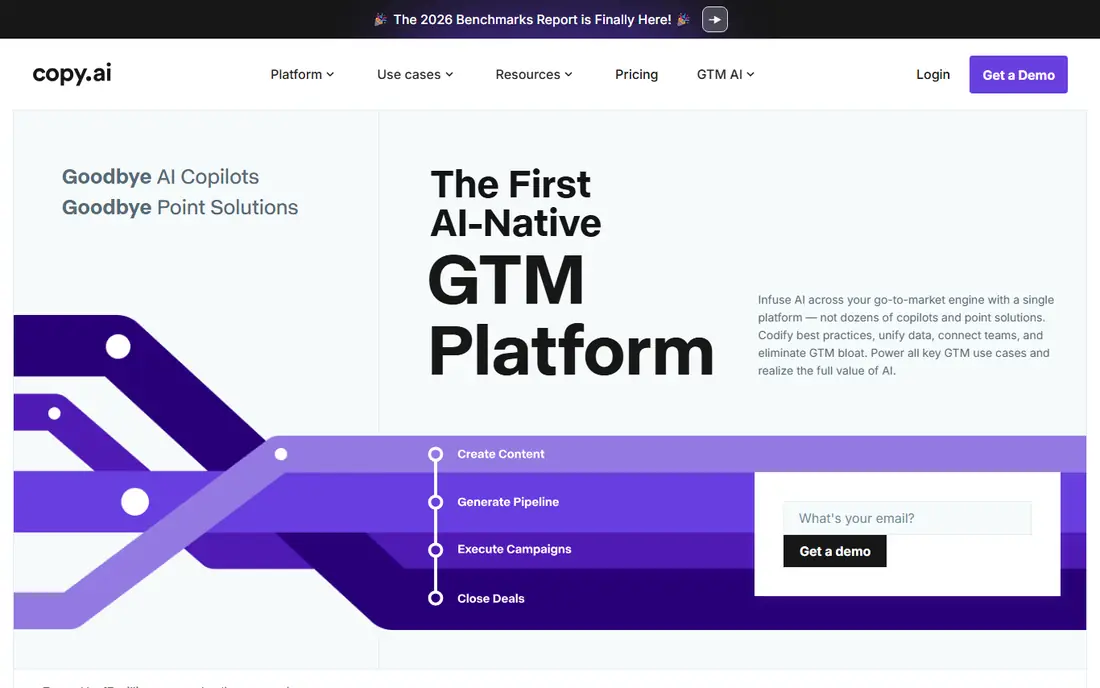
Copy.ai shines when the same copy job repeats every week. Its workflows turn a brief into social posts, emails, or product copy in a repeatable way, which helps small teams that need volume without starting from a blank page each time. The honest catch is worth weighing. Long-form output can feel generic without editing. If you try it and miss a feature, compare the next option before paying, because strengths differ more than marketing suggests.
- Workflow automation for repeatable copy tasks
- Short-form templates
- Team workspaces
- Long-form output can feel generic without editing
- Pricing tiers change often
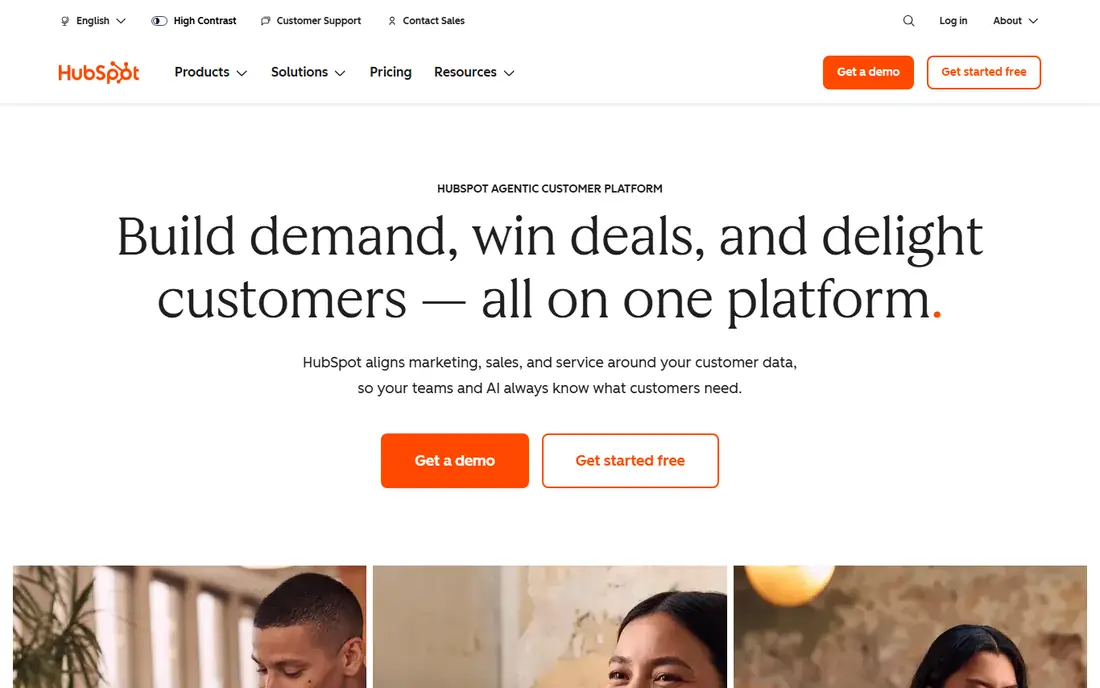
HubSpot is the pick when marketing, sales, and customer data need to live together. Its free tools cover CRM basics, while paid tiers add email automation, lead scoring, and AI drafting, all tied to the same contact record rather than scattered across apps. The honest catch is worth weighing. Paid tiers rise quickly for larger teams. It is worth a short trial with real work, not just a demo, so you can judge whether it fits your daily routine.
- Free CRM tools
- Email, automation, and lead scoring
- AI features under Breeze
- Paid tiers rise quickly for larger teams
- Setup takes time
Semrush is the research tool behind many content plans. It shows which keywords competitors rank for, where a site has technical problems, and how content performs over time, which helps teams choose topics with a real chance to rank. The honest catch is worth weighing. Price is high for solo users. Start with the free or trial version, and upgrade only when you hit a limit that actually slows you down.
- Keyword research and site audits
- Content briefs and tracking
- Competitor insights
- Price is high for solo users
- Free account has hard limits
Surfer SEO focuses on one job and does it well: making a draft stronger for search. Its editor scores a draft against top-ranking pages, suggests terms and structure, and helps writers improve an article before publishing, rather than guessing after the fact. The honest catch is worth weighing. Does not replace keyword research. For most people, the deciding factor will be fit, not feature count, so weigh the catch above as carefully as the strengths.
- Content editor with on-page scoring
- Keyword and structure guidance
- SERP analysis
- Does not replace keyword research
- Best value comes with regular publishing
Canva is the fastest route from idea to a usable social graphic or presentation. Its templates and AI tools help non-designers produce clean visuals quickly, and brand kits keep colours and fonts consistent across a small team. The honest catch is worth weighing. AI output needs brand review. Use it for a week with your normal tasks, then decide whether the trade-offs are acceptable for the price.
- Large template library
- AI design tools in Magic Studio
- Brand kits on Pro
- AI output needs brand review
- Not a replacement for professional design on complex work
Buffer suits small teams that need social publishing without a heavy platform. It schedules posts, keeps a simple content calendar, and shows basic performance, which covers the daily social job without the cost of an enterprise suite. The honest catch is worth weighing. Analytics are basic next to dedicated tools. If the catch above is a deal-breaker, the next pick may suit you better, even if it looks less polished at first glance.
- Scheduling for several social channels
- Simple analytics
- AI writing help
- Analytics are basic next to dedicated tools
- Free plan limits channels
ActiveCampaign is a strong choice for email-first teams that want real automation. Its builder handles welcome sequences, behaviour-based follow-ups, and lead scoring, and predictive sending helps time emails when contacts are more likely to open them. The honest catch is worth weighing. Learning curve for complex automations. Check current pricing before you commit, because plans and free tiers change, and promotions can distort the comparison.
- Visual automation builder
- Predictive sending
- CRM and scoring features
- Learning curve for complex automations
- No permanent free plan
Mailchimp remains an easy entry point for email marketing. Its builder and templates help a small business send a clean newsletter quickly, and the free plan lets new lists test email before paying, though larger lists should compare per-contact costs. The honest catch is worth weighing. Costs rise with list size. A short, honest trial is the best test here, since daily use reveals friction that a feature list cannot show.
- Easy email builder and templates
- Audience tools
- Basic automation
- Costs rise with list size
- Advanced automation sits on higher tiers
How we picked these
We compared official feature pages, pricing pages, app store listings, and public documentation for each product, rather than relying on a single review or ranking. We checked that each product exists, fits the topic, and is available in October 2026, and we used See website wherever a price depended on plan, region, or enrolled amount and could not be verified cleanly. We also weighed fit over feature count. A long list of features means little if the core job is awkward, and a cheaper plan means little if it blocks the feature you need most. That is why each pick above names a best use and an honest weakness, so you can match the tool to your situation instead of chasing the highest-rated name.
How to build a small AI marketing stack
Start with the bottleneck, not the trend. If writing takes the most time, a copy tool helps first. If traffic is the problem, an SEO tool matters more. If follow-up is the problem, email automation will do more than another content generator. Buying all three at once usually leads to unused seats.
Next, check output quality and editing time. AI drafts still need a human editor for facts, tone, and brand voice. A tool that produces clean first drafts saves time, while a tool that needs heavy rewriting may cost more in staff time than it saves in subscription fees.
Finally, watch pricing models. Some tools charge per seat, some per credit, and some by contacts or channels. Estimate your monthly volume before you buy, and use free plans or trials with a real campaign, not a demo prompt, so you can judge the output on your own content.
A final check is worth doing before you pay or commit. Read the current pricing page, confirm the free plan or trial terms, and check whether the features you need are included at the tier you plan to buy. Prices, free tiers, and platform support change over time, so a quick check on the vendor site on the day you sign up can prevent an unwelcome surprise, a missing feature, or a plan that costs more than you expected. If you are unsure, start with the free option and move only when you need more.
FAQ
What are the best AI marketing tools for small business?
For small teams, Canva, Buffer, and Mailchimp offer low starting costs and free plans. HubSpot suits teams that want CRM and automation together, while Jasper suits teams that publish a lot of content.
What is the best AI tool for digital marketing content?
Jasper and Copy.ai suit marketing copy, while Surfer SEO suits search-optimised articles. The best choice depends on whether you need brand copy, short-form copy, or SEO content.
Do AI marketing tools replace marketers?
No. They speed up drafting, research, and repetitive tasks, but strategy, fact-checking, editing, and customer judgment still need people. Treat output as a first draft.
What is the best AI marketing automation software?
HubSpot and ActiveCampaign suit lifecycle automation, including lead scoring, email sequences, and personalisation. ActiveCampaign is often cheaper for email-first teams, while HubSpot suits teams that need CRM depth.
Is there a free AI marketing tool?
Yes. Canva, Buffer, HubSpot, and Mailchimp all offer free plans with limits. Free plans suit testing and small volumes, but larger campaigns usually need a paid plan.