Best AI Tools for Email Marketing in 2026: 8 Tools Compared
Compare the best AI tools for email marketing in 2026, from Klaviyo and Mailchimp to Brevo and Kit, with pricing, free plans, and automation strengths.
- Editor's choice
 Klaviyo
Online stores and purchase-based segments
Starts at$20 per monthVisit klaviyo.comFull review - Great alternative
 Mailchimp
General email marketing
Starts at$13 per monthVisit mailchimp.comFull review - Also consider
 ActiveCampaign
Detailed automation
Starts at$15 per monthVisit activecampaign.comFull review
TL;DR:
- Klaviyo and Omnisend lead for online stores, because purchase data drives their segments and automated flows.
- Brevo offers the most generous free starting point for small senders, with 300 emails per day and a large contact allowance.
- ActiveCampaign suits teams that want detailed automation logic, while Mailchimp suits general marketers who want a familiar all-round tool.
- Kit is the strongest pick for creators and newsletter writers, with a free plan that covers up to 10,000 subscribers.
- AI features help most with drafting, subject lines, and send timing, but they do not replace a clear offer and a clean list.
Quick comparison
| Tool | Best for | Starts at | Free plan? | |
|---|---|---|---|---|
| Klaviyo | Online stores and purchase-based segments | $20 per month | Yes | Visit |
| Mailchimp | General email marketing | $13 per month | Yes | Visit |
| ActiveCampaign | Detailed automation | $15 per month | Free trial (14 days) | Visit |
 HubSpot | Email plus CRM in one system | $20 per seat per month | Yes | Visit |
 Constant Contact | Small businesses and events | $12 per month | Free trial (30 days) | Visit |
 Brevo | Low-cost sending at scale | $9 per month | Yes | Visit |
 Omnisend | Small online stores | $16 per month | Yes | Visit |
 Kit | Creators and newsletters | $39 per month | Yes | Visit |
The best AI tools for email marketing
AI now sits inside most email platforms, helping with drafts, subject lines, audience segments, and send times. The tools below differ in how far that help goes, and in who they are built for. We compared official feature pages, pricing pages, and public documentation to build this list.

Klaviyo is built around store data, and that focus shows in its AI tools. It can predict churn risk and expected purchase timing, then turn those predictions into segments for welcome series, abandoned cart emails, and post-purchase follow-ups. For a Shopify or WooCommerce store, that connection between browsing, buying, and emailing is the main reason to pay more than a basic sender charges.
The catch is price growth. Klaviyo charges by active profiles, so a list that grows through discounts and giveaways can push the bill up before revenue follows. Small stores should start on the free plan, clean inactive contacts early, and test one or two flows before building a large automation library.
- Deep store integrations
- Predictive segments
- Strong automated flows
- Costs rise quickly with active profiles
- Learning curve for new users
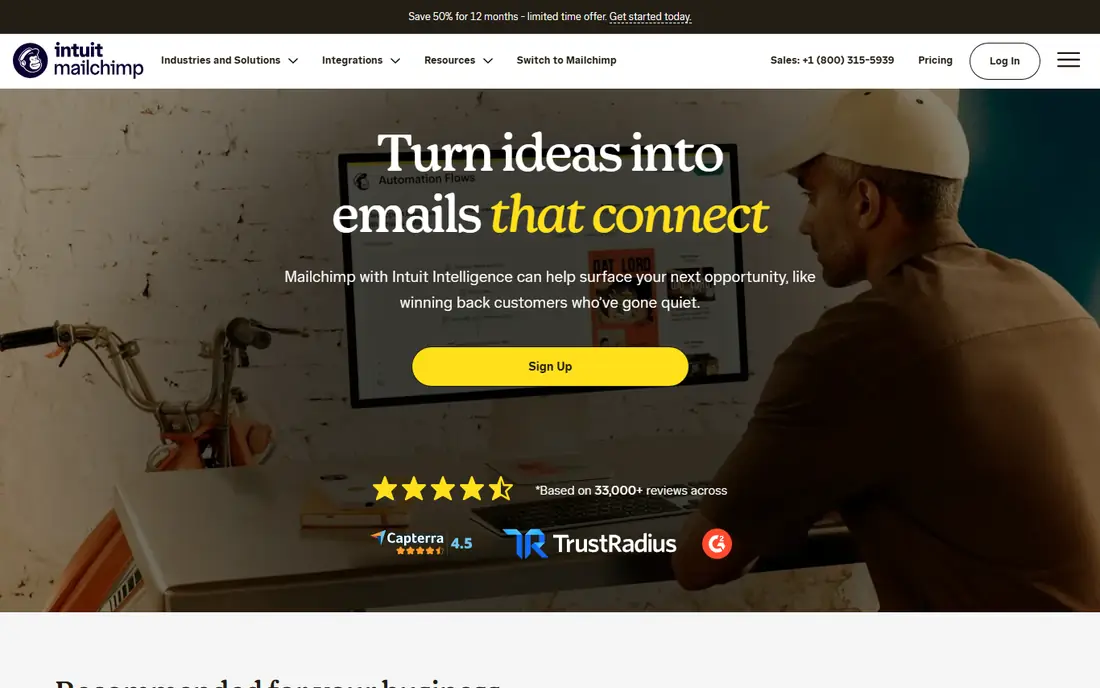
Mailchimp remains the default choice for many small businesses because it covers the basics well. Its AI assistant can draft campaign copy, suggest subject lines, and help with send-time choices, while templates and a drag-and-drop builder keep design work simple. It also connects to a long list of stores, booking tools, and CRMs, which matters when email is only one part of a wider marketing setup.
The free plan covers 250 contacts and 500 sends per month, so it works as a trial rather than a long-term home for a growing list. Paid plans start at $13 per month for 500 contacts. Businesses that only send a monthly newsletter may find cheaper tools, but teams that want one tool for campaigns, landing pages, and basic automation will find Mailchimp easy to learn.
- Wide template library
- Many integrations
- Familiar interface
- Free plan is small
- Pricing rises with contacts
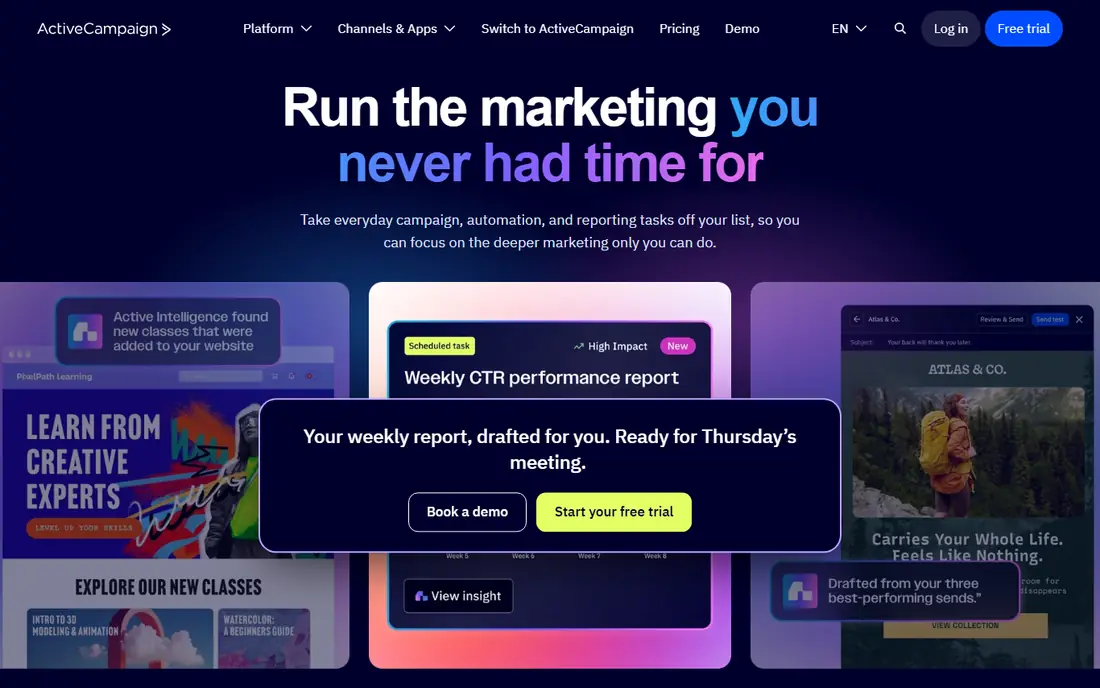
ActiveCampaign is the pick for teams that think in workflows rather than single campaigns. Its automation builder supports branching based on opens, clicks, purchases, site visits, and deal stages, and its AI tools can help draft content and summarise customer activity. That depth suits business-to-business teams and service businesses with longer sales cycles.
The trade-off is setup effort. A simple newsletter does not need this much structure, and new users can spend weeks building flows they never use. Paid plans start at $15 per month for 1,000 contacts when billed annually, with a 14-day trial. Start with one welcome sequence and one re-engagement flow, then add complexity only where the data shows a gap.
- Flexible automation builder
- Strong CRM features
- Detailed reporting
- No permanent free plan
- Setup takes time
HubSpot appeals to teams that want email, sales, and customer records in one place. When a contact opens an email, visits a page, or books a meeting, that activity lands on the same record a sales rep sees, which makes follow-up easier and reduces duplicate data entry. Its AI tools can draft emails, summarise records, and help with subject lines and content ideas.
Pricing needs careful reading. The free plan includes a CRM and 2,000 emails per month with HubSpot branding, while Marketing Hub Starter starts at $20 per seat per month. Teams should check how marketing contacts are counted before committing, because a large imported list can change the bill. For companies already using HubSpot for sales, the email add-on is often the simplest choice.
- Free CRM included
- Email tied to contact records
- Strong reporting
- Costs grow with seats and contacts
- Some AI features sit on higher tiers
Constant Contact targets local businesses, nonprofits, and event organisers who want to send good-looking emails without learning a complex platform. Its AI tools can draft copy and subject lines, and its templates cover announcements, promotions, and invitations. Event registration, surveys, and social posting sit alongside email, which suits teams that run workshops, fundraisers, or seasonal sales.
Automation is the weak spot. Welcome emails and simple series work fine, but branching journeys and ecommerce triggers are thinner than on Klaviyo or ActiveCampaign. Paid plans start at $12 per month, with a 30-day trial. It is a sensible pick when ease of use matters more than advanced automation.
- Simple editor
- Event and survey tools
- Helpful support
- Automation is basic
- No permanent free plan
Brevo stands out on value because it charges mainly by emails sent rather than by contacts stored. The free plan allows 300 emails per day with a large contact allowance, and paid plans start at $9 per month for 5,000 emails. That model suits businesses with big lists that send infrequently, such as a monthly newsletter or seasonal promotions.
The platform also covers SMS and WhatsApp messaging, plus transactional email for order confirmations and password resets. Design flexibility is more limited than Mailchimp, and some users will miss deeper ecommerce reporting. For budget-conscious senders, though, Brevo is hard to beat on the monthly bill alone.
- Free plan allows 300 emails per day
- Pricing by sends, not contacts
- SMS and WhatsApp options
- Design tools are simpler
- Some AI features need paid plans
Omnisend gives small stores much of the Klaviyo playbook at a lower starting price. Pre-built flows cover welcome emails, abandoned carts, browse abandonment, and post-purchase messages, and the editor keeps campaign setup quick. Email and SMS can run in the same flow, which helps stores that want to reach shoppers on two channels without buying two tools.
The free plan covers 250 contacts and 500 emails per month, so growing stores will move to paid plans soon. Paid plans start at $16 per month for 500 contacts. Larger stores that need predictive analytics and deeper segmentation may still prefer Klaviyo, but for a store finding its feet, Omnisend offers a strong balance of price and automation.
- Ready-made ecommerce flows
- Email plus SMS
- Simple setup
- Free plan is small
- Reporting is lighter than Klaviyo
Kit, formerly ConvertKit, is built for writers, podcasters, and course creators who grow an audience around content. The free plan covers up to 10,000 subscribers with broadcasts, landing pages, and forms, though automations and branding removal sit on paid plans. Paid plans start at $39 per month for 1,000 subscribers. That free ceiling makes Kit the easiest low-risk start for a new newsletter.
The style is deliberately plain. Templates favour clean text over heavy graphics, which suits newsletters but may disappoint brands that want rich product layouts. Automation covers sequences and visual flows for creators, yet it lacks the store depth of Klaviyo or Omnisend. If the list itself is the business, Kit deserves the first look.
- Free plan up to 10,000 subscribers
- Simple automation
- Paid newsletter tools
- Not built for complex ecommerce
- Design options are plain
How we picked these
We compared official pricing pages, feature pages, and app documentation for leading email platforms, then filtered for tools with clear AI drafting or optimisation features and a current free plan or trial. We favoured tools that are actively sold in the United States in October 2026 and that cover distinct audiences, from stores to creators to general small businesses. Prices shown are entry-level list prices and rise with list size, seats, or sending volume, so readers should confirm the current price for their own list before buying.
What to check before you choose an AI email tool
Start with list size and sending frequency, because those two numbers drive most bills. A platform that looks cheap at 500 contacts can become costly at 10,000, while a send-based plan like Brevo can save money for infrequent senders. Check whether unsubscribed or inactive contacts count toward the limit, and clean the list before importing it.
AI features worth testing
Test drafting, subject line suggestions, and send-time optimisation on real campaigns, not demo copy. Good AI output still needs editing for tone, accuracy, and legal claims, especially for health, finance, or discount offers. Check whether AI features are included in the plan you intend to buy, since some vendors gate them behind higher tiers.
Deliverability and consent
Ask how the tool handles bounces, spam complaints, and unsubscribe requests, and use double opt-in for lists built from forms or events. Avoid buying email lists, since purchased contacts damage sender reputation and can lead to account suspension. A smaller engaged list will outperform a large cold list on almost every measure that matters.
FAQ
What are the best AI email marketing tools?
The best choice depends on the business. Klaviyo and Omnisend suit online stores, ActiveCampaign suits detailed automation, HubSpot suits teams that want email with a CRM, and Kit suits creators and newsletters.
What is the best AI email marketing platform for ecommerce?
Klaviyo is the strongest ecommerce pick for stores that use predictive segments and revenue reporting, while Omnisend offers similar flows at a lower starting price for smaller stores.
What is the best AI email marketing software for small businesses?
Brevo offers strong value for small businesses with its free plan and send-based pricing, while Mailchimp and Constant Contact offer simpler editors for teams that send occasional campaigns.
Is there a free AI email marketing tool?
Yes. Brevo, Mailchimp, Omnisend, HubSpot, and Kit all offer free plans, though each limits contacts, sends, or features. ActiveCampaign and Constant Contact offer trials instead of permanent free plans.
Do AI email tools write the whole campaign for me?
AI tools can draft copy, suggest subject lines, and help with segments and timing, but the final message still needs human review. Check claims, pricing, and links before sending, and keep the tone consistent with the brand.
How much does AI email marketing cost?
Entry prices in this list run from $9 to $39 per month, but the real cost depends on list size, seats, and sending volume. Always price the plan at the current list size, not just the advertised starting price.