Best AI Tools for Competitor Analysis in 2026: 9 Tools Compared
The best ai tools for competitor analysis compared: Semrush, Ahrefs and more, with pricing, strengths and limits for smarter rival research in 2026 today.
- Editor's choice
 Semrush
All-round search and rival research
Starts at$139.95 per monthVisit semrush.comFull review - Great alternative
 Ahrefs
Backlinks and keyword gaps
Starts atSee websiteVisit ahrefs.comFull review - Also consider
 Similarweb
Traffic and audience estimates
Starts atSee websiteVisit similarweb.comFull review
TL;DR:
- Semrush and Ahrefs remain the deepest sources for search and backlink data, but they cost far more than a small team may need.
- Similarweb is the better pick when traffic estimates and audience overlap matter more than keyword lists.
- Social listening tools such as Brand24 and Mention catch mentions and sentiment that search tools miss.
- AI summaries help you read faster, but always check the underlying data before acting on a rival claim.
Quick comparison
| Tool | Best for | Starts at | Free plan? | |
|---|---|---|---|---|
| Semrush | All-round search and rival research | $139.95 per month | Yes | Visit |
| Ahrefs | Backlinks and keyword gaps | See website | No | Visit |
| Similarweb | Traffic and audience estimates | See website | Yes | Visit |
 Brand24 | Mentions and sentiment tracking | See website | Free trial | Visit |
 SpyFu | Rival ads and keywords on a budget | See website | Yes | Visit |
 Crayon | Sales and product change alerts | See website | No | Visit |
 Klue | Battlecards for sales teams | See website | No | Visit |
 Mention | Simple media and social listening | See website | Free trial | Visit |
 Visualping | Website change alerts | See website | Yes | Visit |
The best ai tools for competitor analysis
We focused on tools that track rivals in search, traffic, ads, social mentions or product changes, and that use AI to summarise or surface what changed.

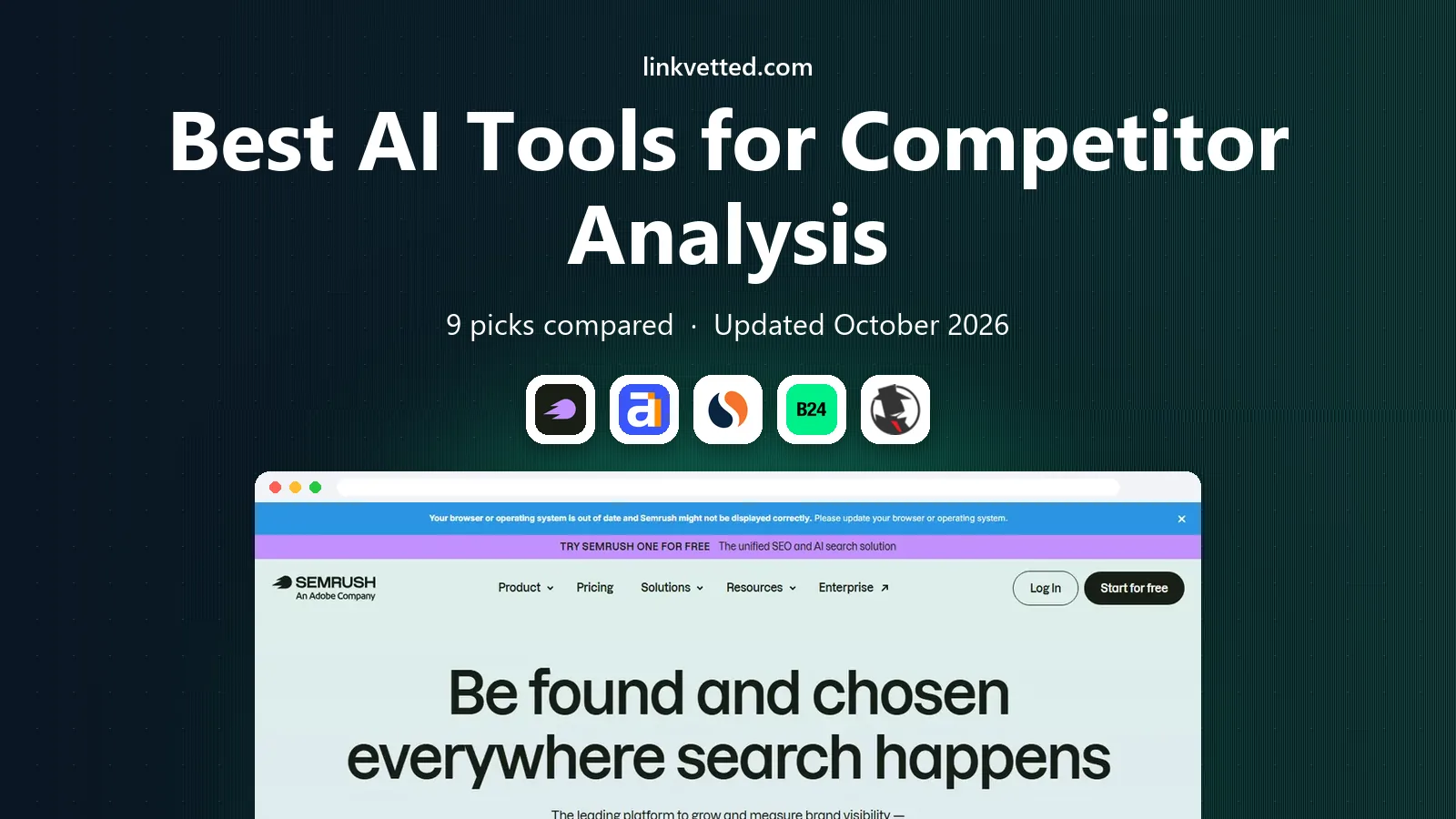
Semrush is the broadest tool in this list. Enter a rival domain and you can see its top keywords, estimated traffic, backlinks, ad copy and content gaps in one report. For a marketing team, that breadth saves time, because one subscription replaces several smaller checks. The AI visibility toolkit on newer plans also tracks how brands appear in AI answers, a useful extra as search habits change.
The price is the main barrier. Pro starts at $139.95 per month, and Guru at $249.95 adds historical data and content tools that many teams will want. The interface is dense, and new users can spend a week learning where each report lives. Still, if rival research is a weekly job, Semrush gives the most complete picture in one place.
- Deep keyword, backlink and ad data
- Traffic analytics
- Historical data on higher plans
- High monthly price
- Large interface takes time to learn
- Add-ons raise the bill
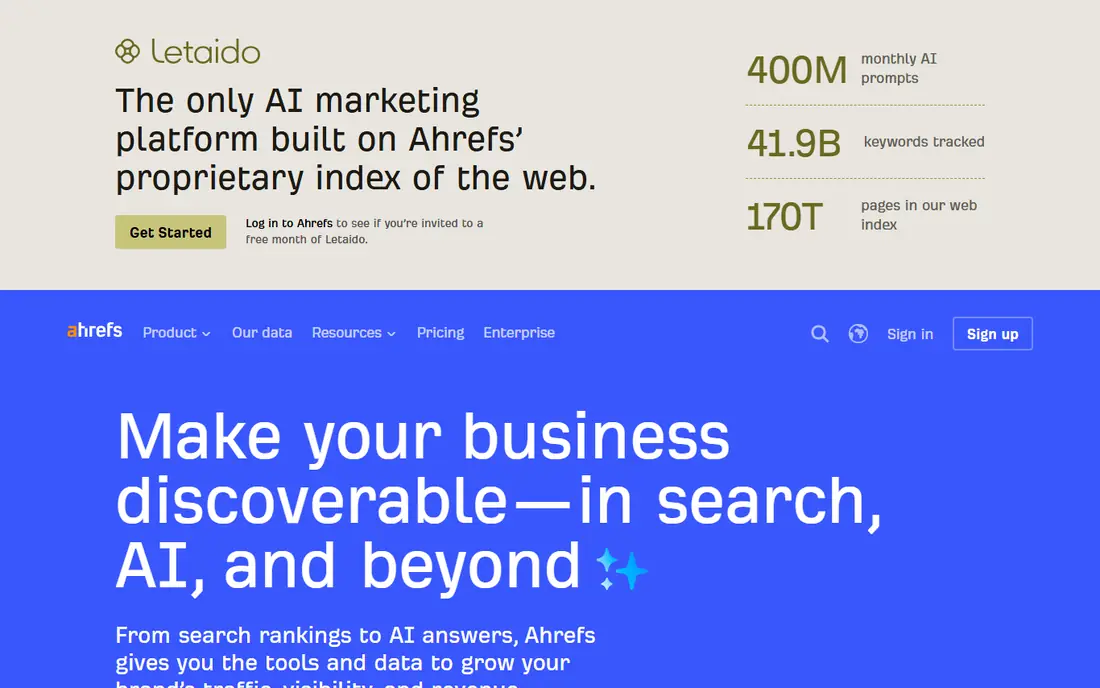
Ahrefs is our pick when backlinks and content gaps matter most. Its Site Explorer shows which sites link to a rival, which pages earn those links, and which keywords a rival ranks for that you do not. That gap view turns rival research into a concrete writing list. The interface is cleaner than many rivals, so a small team can learn it quickly.
The downside is access. There is no full free plan, and Starter limits mean a team tracking many rivals or keywords will need a higher tier. Ahrefs also covers less ad and social data than Semrush. For search-led teams, though, its backlink depth and clear reports are hard to beat.
- Strong backlink index
- Clear content gap reports
- Fast, focused interface
- No free plan for full reports
- Higher tiers needed for large tracking limits
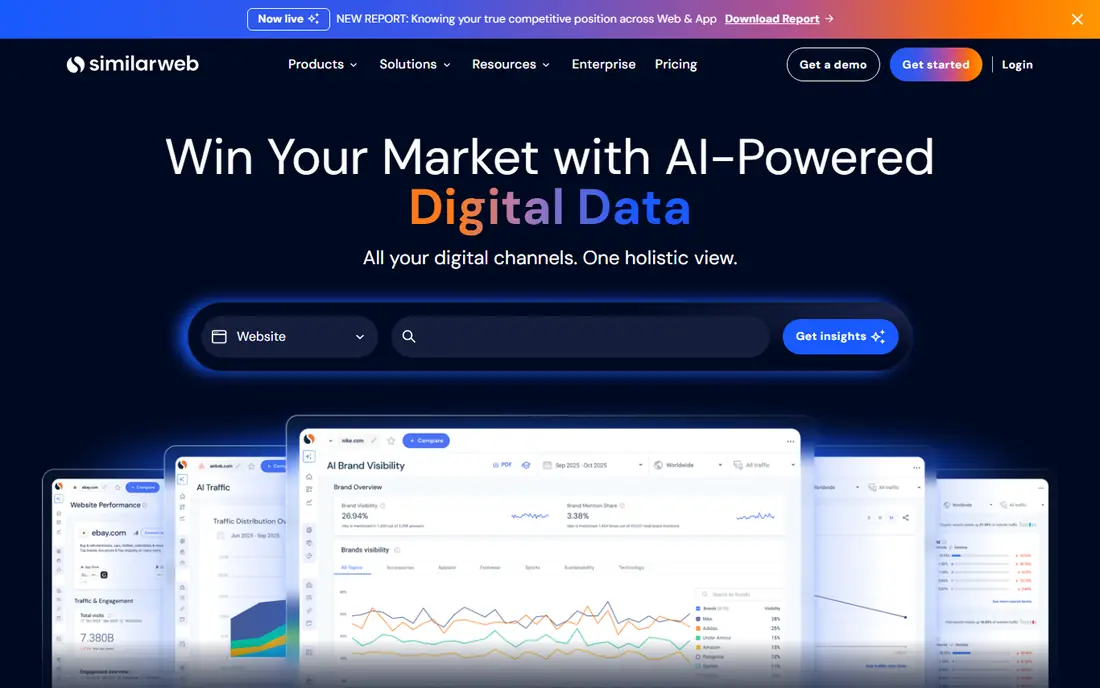
Similarweb answers a different question from Semrush: how much traffic does a rival get, and where does it come from. Its channel breakdown shows search, social, direct, referral and paid shares, while audience data shows geography and interests. That view helps a team decide whether a rival wins through search, social or partnerships, rather than guessing from keyword counts alone.
Treat every number as an estimate. Similarweb models traffic from panels and other sources, so figures for smaller sites can be thin or noisy. The free tier gives a useful taste, but detailed reports sit behind paid plans. Used as a directional guide, not a precise count, it adds context that keyword tools alone miss.
- Traffic and channel estimates
- Audience and geography data
- App data on higher plans
- Estimates, not exact counts
- Full data needs a paid plan
- Small sites may show little data
Brand24 watches the web for mentions of a brand, product or topic, then groups them by reach, sentiment and source. That makes it useful for spotting a rival launch, a press story or a complaint trend early. Alerts land by email, so a small team does not have to check a dashboard all day. AI summaries help scan a busy week of mentions faster.
Sentiment is the weak spot. Automated scores misread sarcasm, mixed reviews and industry jargon, so a human should review important mentions before responding. Common names also create noise that needs careful keyword filters. With clean filters and regular review, Brand24 is a practical listening tool for the price.
- Tracks mentions across web and social
- Sentiment and reach estimates
- Alert emails
- Sentiment scores need manual review
- Noisy results for common brand names
SpyFu suits a small business that wants rival ad and keyword insight without a large subscription. Type in a rival domain to see its paid keywords, ad copy history and organic keywords, plus an estimate of its ad spend. That history shows whether a rival runs the same ads for months, which often signals a winning message, or changes copy often, which may signal testing.
It does not match Ahrefs on backlink depth or Semrush on breadth, and smaller markets may show thinner data. For the core job of learning what rivals bid on and rank for, though, SpyFu gives a clear, affordable view. Start with the free tier to check coverage for your own market before paying.
- Rival ad history and keyword lists
- Lower cost than larger suites
- Easy domain comparison
- Less backlink depth than Ahrefs
- Data freshness varies by market
Crayon focuses on change, not just a snapshot. It watches rival websites, pricing pages, job posts, reviews and news, then flags what moved and why it might matter. AI summaries turn a long list of changes into a short brief a sales or product team can read in minutes. Battlecard links and CRM connections help sales teams use that insight in live deals.
Pricing is quote-based, which puts it out of reach for many solo users and small teams. It also works best when someone owns the output and turns alerts into action, or the feed becomes noise. For a team that loses deals to the same rivals again and again, Crayon turns scattered rival news into a usable routine.
- Tracks rival website, pricing and messaging changes
- AI summaries
- Salesforce links
- Quote-based pricing
- Best value for larger sales and marketing teams
Klue helps sales teams answer the rival question in the room: why should a buyer pick us over them. Battlecards hold positioning, proof points, pricing notes and talk tracks, while curated news feeds keep those cards current. Win-loss interviews add reasons buyers actually chose a rival, which is more useful than traffic data alone for a sales leader.
The catch is upkeep. Battlecards go stale fast if no one updates them after a rival launch or price change, and quote-based pricing means a small team may struggle to justify it. Klue fits best where sales enablement is already a job, not a side task. In that setting, it turns rival research into material a rep can use on a call.
- Battlecards and win-loss insight
- Curated rival news
- Good for enablement teams
- Quote-based pricing
- Needs upkeep to stay accurate
Mention is a simpler listening tool than Brand24 for some teams, with a clean setup for brand names, rival names and topics. Alerts arrive as mentions appear, and reports show volume, sources and top posts over time. That simplicity helps a small marketing team that wants to know when a rival is talked about, without learning a large research suite.
Depth is the trade-off. Sentiment and influencer analysis are less detailed than in enterprise listening tools, and plan limits on mentions and alerts matter if you track many terms. For a focused watchlist of a few rivals and your own brand, Mention gives a clear, low-friction view of the conversation.
- Easy setup for brand and rival terms
- Alerts and reports
- Social and web coverage
- Analysis depth is thinner than larger listening suites
- Limits vary by plan
Visualping fills a gap the other tools miss: exact page changes. Point it at a rival pricing page, homepage or careers page, and it alerts you when text, images or layout change, with a visual comparison. That is how a team catches a price rise, a new plan name or a messaging shift on the day it happens, rather than in a monthly report.
It is not a research suite on its own. It gives no traffic, keyword or backlink data, and frequent checks on many pages use credits quickly. Paired with Semrush or Similarweb, Visualping adds a timely alert layer that turns slow rival research into a habit of noticing change early.
- Alerts for page changes
- Visual comparison of before and after
- No code needed
- Not a full research suite
- Frequent checks use credits fast
How we picked these
We compared official feature and pricing pages, public reviews and documented data sources, and kept tools that track rivals in at least one clear area: search, traffic, ads, mentions, product changes or website changes. We favoured tools with a free plan or trial where possible, and we noted where pricing is quote-based instead of inventing a figure. We did not claim hands-on testing; our view rests on published features and widely reported limits.
How to use rival data without copying rivals
Start with one question, such as which rival wins search traffic or which rival message appears in ads month after month. Gather data from two sources before you act, because each tool models or samples data in its own way. Then turn the finding into your own test, such as a better article, a clearer pricing page or a stronger sales answer, rather than copying a rival page.
Set a review rhythm that fits your team. A weekly mention scan, a monthly search gap check and a quarterly traffic review will catch most important moves without creating a daily feed no one reads. Keep notes on what changed and what you did about it, so rival research becomes a record of decisions, not just a pile of reports.
FAQ
What are the best ai competitor analysis tools for small business?
SpyFu, Brand24 and Visualping give useful rival insight at lower cost than full suites. Semrush or Ahrefs make sense once rival research is a weekly job and you need deeper search data. Start free where possible and check coverage for your own market first.
Are AI competitor analysis tools accurate?
They are useful guides, not exact counts. Traffic figures are estimates, sentiment scores can misread tone, and keyword data depends on each tool index. Use two sources for important claims and check a rival page directly before you act.
What is the best ai competitor analysis tool for SEO?
Semrush and Ahrefs lead for SEO rival work, with Semrush broader on ads and traffic and Ahrefs stronger on backlinks and content gaps. Similarweb adds traffic context that helps you judge whether a search gap is worth chasing.
How much does competitor analysis software cost?
Costs range from free tiers and low-cost tools to several hundred dollars per month for full suites, plus quote-based pricing for sales tools such as Crayon and Klue. Check the vendor pricing page, since add-ons and seat counts change the total fast.
Can competitor analysis tools track social media rivals?
Yes, in part. Brand24 and Mention track mentions and social posts, while Similarweb shows social traffic shares. For detailed social performance, pair a listening tool with a social analytics tool rather than relying on one report.
How often should I check competitors?
Check mentions weekly, search and ad gaps monthly, and traffic and positioning quarterly. Set alerts for pricing and homepage changes so important moves reach you at once, instead of waiting for a scheduled review.