Best AI Tool for Precise Image Editing Sunglasses in 2026: 8 Tools Compared
Compare the best ai tool for precise image editing sunglasses in 2026, for clean product photos, true colours, reflections and sharp frame detail with care.

- Editor's choice
 Adobe Photoshop
sellers and designers who need full manual precision for sunglasses photos
Starts atSee websiteVisit adobe.comFull review - Great alternative
 Adobe Lightroom
photographers who need consistent colour and batch edits for sunglasses sets
Starts atSee websiteVisit adobe.comFull review - Also consider
 PhotoRoom
sellers who want fast, clean sunglasses cutouts on mobile or web
Starts atFreeVisit photoroom.comFull review
TL;DR:
- Precision means control over masks, edges and colour, not just a one-click filter, so check masking and local adjustment tools first.
- Keep frame shape, lens tint and logo detail unchanged when you change a background, and compare the edited photo with the original pair.
- Reflections need care, because removing a reflection can also remove depth, while keeping a harsh glare can hide lens detail.
- For a store, batch editing and consistent sizing matter as much as one perfect photo, so test a full set before choosing.
Quick comparison
| Tool | Best for | Starts at | Free plan? | |
|---|---|---|---|---|
| Adobe Photoshop | sellers and designers who need full manual precision for sunglasses photos | See website | Free trial | Visit |
| Adobe Lightroom | photographers who need consistent colour and batch edits for sunglasses sets | See website | Free trial | Visit |
| PhotoRoom | sellers who want fast, clean sunglasses cutouts on mobile or web | Free | Yes | Visit |
 Pixelcut | mobile sellers who want quick product edits and templates | Free | Yes | Visit |
 Claid.ai | stores with large catalogues who need bulk, consistent sunglasses edits | See website | Free trial | Visit |
 Pebblely | brands who want styled scene backgrounds for sunglasses photos | Free | Yes | Visit |
 Flair.ai | creative teams who want canvas control over sunglasses scenes | Free | Yes | Visit |
 Magic Hour | users who want prompt-based precise edits for sunglasses photos | Free | Yes | Visit |
The best AI tools for precise image editing sunglasses
We interpret this topic as AI image editing tools suited to precise product edits for sunglasses photos, such as background changes, reflection control and colour accuracy. Sunglasses are a hard product to photograph, because frames are small, lenses reflect light, and a colour shift can make a buyer receive a different tint than expected. The tools below help with those exact problems, from full manual control to fast batch edits for a store.
Adobe Photoshop
Best for: sellers and designers who need full manual precision for sunglasses photos

Adobe Photoshop remains the precision standard for product photos, because its selection, masking and layer tools let you edit one part of a sunglasses photo without touching the rest. You can mask the frame, adjust lens colour locally, clean a reflection with clone and healing tools, and keep the original file as a separate layer, which gives a level of control no one-click app can match.
It fits a designer, photographer or serious seller who edits many product photos and needs exact control over edges, colour and reflections. The catch is time and cost, because Photoshop needs a subscription and practice, so a seller with a small catalogue may get faster results from a product-focused tool and reserve Photoshop for hero images.
- Precise masking and selection
- Local colour and reflection control
- Layer editing
- Subscription cost
- Steep learning curve for beginners
Adobe Lightroom
Best for: photographers who need consistent colour and batch edits for sunglasses sets
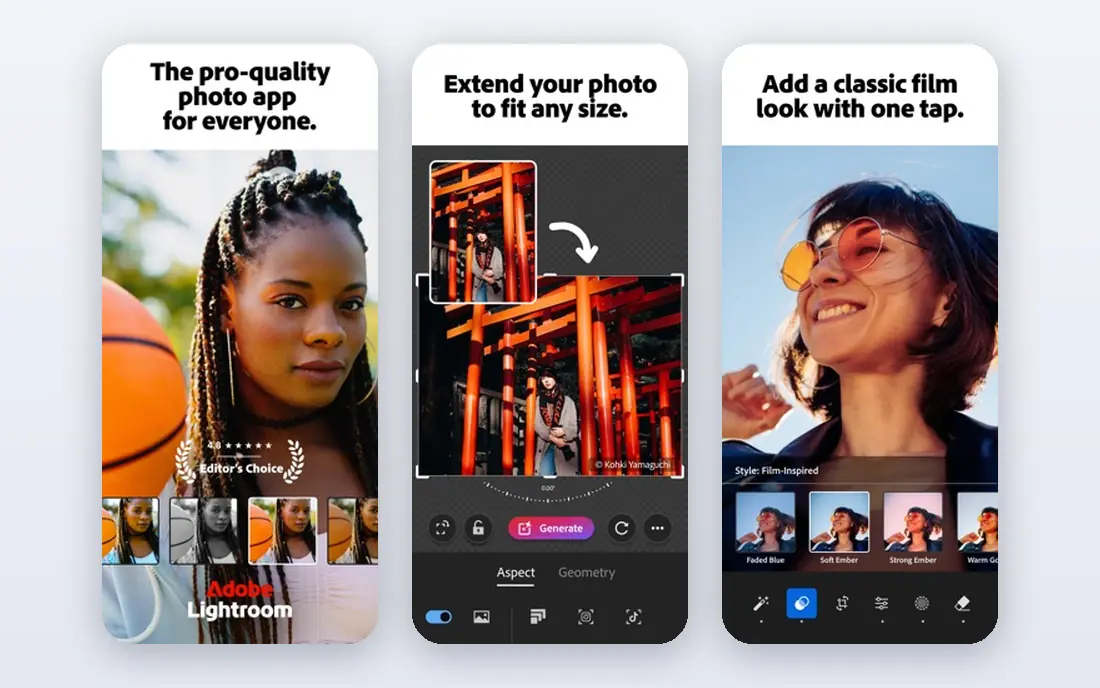
Adobe Lightroom is the colour-first companion to Photoshop, and it shines when a sunglasses set needs the same tint, exposure and white balance across many photos. You can apply a preset to a whole shoot, adjust lens tint and frame colour with local masks, and export consistent sizes for a store, all without changing the original files.
It fits a photographer or seller who shoots a full sunglasses range in one session and needs every pair to look consistent in the same store grid. The catch is background work, because Lightroom is weaker than Photoshop or a product tool for background replacement, so pair it with a background tool when a clean white or scene background is required.
- Colour and tone controls
- Batch presets
- Non-destructive editing
- Less suited to background replacement
- Masking is lighter than Photoshop
PhotoRoom
Best for: sellers who want fast, clean sunglasses cutouts on mobile or web
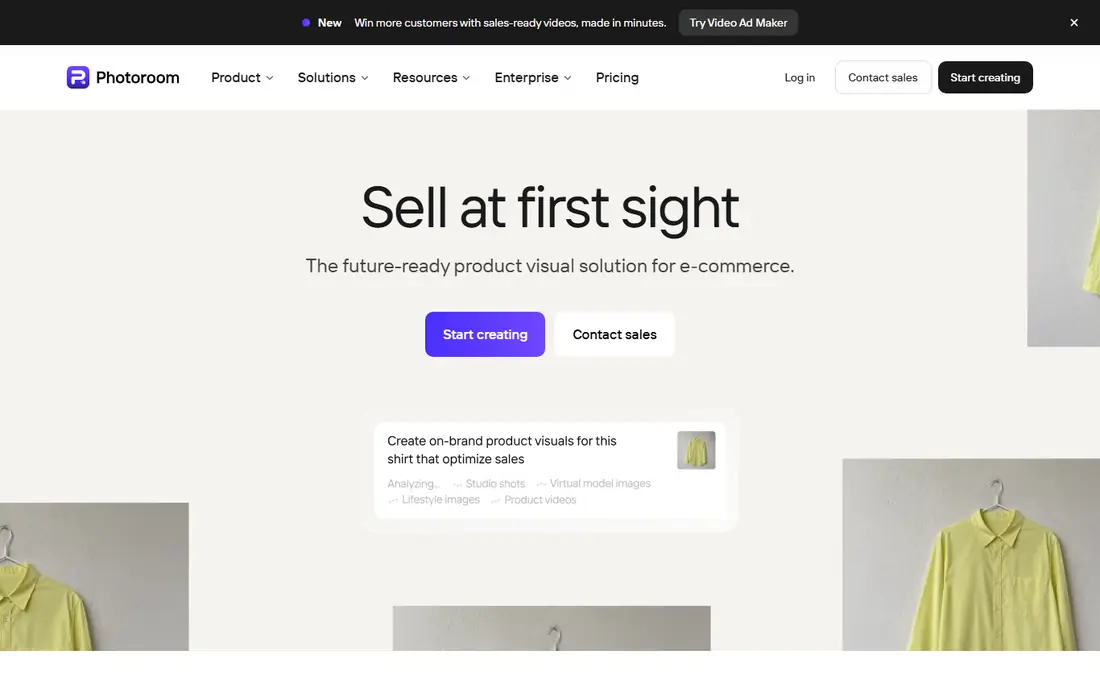
PhotoRoom is built for speed, and that shows when you need a clean sunglasses cutout for a marketplace listing in minutes. You snap or upload a photo, PhotoRoom removes the background, adds a clean or AI-generated scene, and exports with a realistic shadow, which suits a reseller or small store with many pairs to list.
It fits a mobile-first seller who values turnaround over manual pixel control, and who needs consistent marketplace images fast. The catch is edge quality, because thin frames, clear lenses and reflective arms can produce rough edges, so zoom in on every frame edge and lens outline before publishing.
- Fast background removal
- AI backgrounds
- Batch export and realistic shadows
- Free exports carry a watermark
- Fine frame edges need checking
Pixelcut is a mobile-first product editor that covers the common sunglasses listing jobs, from background removal to scene backgrounds and sizing. You can cut out a pair, place it on a clean or lifestyle background, adjust size for a marketplace or social feed, and export in bulk, all from a phone.
It fits a seller who photographs stock on a phone, lists on marketplaces, and needs a fast, repeatable workflow without a desktop editor. The catch is precision, because mobile masking can struggle with thin metal frames and reflections, so check the final image at full size and redo tricky pairs in a desktop tool if needed.
- Background removal
- AI backgrounds
- Templates and batch tools
- Free tier limits features
- Precision is lower than desktop editors
Claid.ai
Best for: stores with large catalogues who need bulk, consistent sunglasses edits
Claid.ai is built for catalogue scale, which matters when a store must edit hundreds of sunglasses photos to the same standard. You can process images in bulk, with background removal, enhancement and consistent sizing, and use an API to fit the workflow into a store pipeline, which saves hours compared with editing one pair at a time.
It fits an ecommerce team with a large eyewear catalogue, a marketplace seller with regular new stock, or a brand that needs every listing image to match. The catch is per-image control, because bulk processing trades fine manual control for speed, so set a quality check sample for each batch and re-edit any pair where frame colour or lens detail shifts.
- Bulk background and enhancement processing
- API options
- Consistent output
- Less hands-on control per image
- Pricing suits larger catalogues
Pebblely
Best for: brands who want styled scene backgrounds for sunglasses photos
Pebblely focuses on styled product scenes, which helps a sunglasses brand move beyond a plain white background for social and campaign images. You upload a product photo, choose or describe a scene, and Pebblely places the pair in a styled setting while keeping the product as the focus, with themes you can reuse for a consistent brand look.
It fits a brand or creator who needs campaign-style sunglasses images for Instagram, ads or a lookbook, without a full studio shoot. The catch is accuracy, because an AI scene can shift reflections or background light in a way that changes how a lens looks, so compare the result with the real pair and keep the hero listing photo more neutral.
- AI scene backgrounds
- Reference styling
- Product-focused templates
- Free tier limits generations
- Scene realism varies by prompt
Flair.ai gives a creative team a canvas to build a sunglasses scene, with product cutouts, props and models arranged by hand rather than by a single prompt. You can place a pair, adjust its position and size, add scene elements, and control composition, which suits a campaign image where the exact arrangement matters.
It fits a design team that wants more control than a one-click scene generator, but still wants AI help with cutouts and scene elements. The catch is time, because a canvas workflow takes longer than a one-click tool, so use Flair for hero and campaign images, and a faster batch tool for everyday listings.
- Canvas scene building
- Product cutouts
- Model and prop placement
- Learning curve for canvas workflow
- Free tier limits output
Magic Hour
Best for: users who want prompt-based precise edits for sunglasses photos
Magic Hour offers prompt-based editing with several AI models, which lets you describe a precise change, such as a background swap or a reflection fix, in plain words. You upload a sunglasses photo, describe the edit, and choose a model suited to product work, with inpainting for local fixes and background changes for listing or campaign use.
It fits a seller or creator who wants to try a specific edit quickly, compare models on the same photo, and iterate without learning a full desktop editor. The catch is consistency, because AI models can shift lens tint, frame colour or logo detail, so always compare the edited photo with the original pair and keep the unedited file as your source of truth.
- Prompt-based image editing
- Inpainting and background changes
- Multiple AI models
- Output varies by model
- Colour accuracy needs checking
How we picked these
We compared official feature pages, pricing notes and editing capabilities for each tool, plus product photography guides from 2026. We gave weight to masking precision, background control, reflection handling, colour accuracy and batch workflow for product photos. We did not claim hands-on photo shoots, and we left out tools that only added sunglasses filters to portraits with no product editing control.
How to edit sunglasses photos precisely without misleading buyers
Keep the product unchanged, change only the scene
A background change, a shadow fix or a glare reduction is fair editing. Changing frame shape, lens tint, logo or proportions is not, because the buyer will receive a different pair than the photo shows.
Check colour on a calibrated screen and in daylight
Lens tint and frame colour shift easily under AI edits and different screens. Compare the edited photo with the real pair in daylight, and note the tint name in the listing text as well as the photo.
Zoom in on edges, arms and hinges
Thin frames, hinges and temple arms reveal rough masking first. Check every edge at full size, especially where a clear or metal frame meets a light background.
Use one neutral hero photo plus styled extras
Keep the first listing photo clean, neutral and accurate, then add styled scene photos after it. That order gives buyers a true view first and a lifestyle view second.
FAQ
What is the most precise AI tool for sunglasses product photos?
Adobe Photoshop offers the most precise control, with masking, layers and local colour tools for frames, lenses and reflections. Product tools like PhotoRoom and Claid.ai are faster for bulk listings, but with less manual control.
Can AI change a sunglasses background without changing the product?
Yes, when the tool masks the product well and you check the result. Compare frame shape, lens tint and logo detail with the original photo, and re-edit any pair where those details shift.
How do I remove glare from sunglasses lenses?
Use a local edit tool to reduce glare on the lens area only, or use a dedicated glare repair feature where available. Keep some natural reflection for depth, and avoid rebuilding lens detail that was never in the original photo.
Should I use AI scene backgrounds for marketplace listings?
Use a plain white or neutral background for the main marketplace photo, because many marketplaces require it. Use AI scene backgrounds for extra images, social posts and campaign pages.
What size and format should sunglasses photos be?
Square images suit many marketplaces, while portrait ratios suit social feeds and close-up detail shots. Export at high resolution, check the file on a phone as well as a desktop, and keep the original photo for future edits.