Best AI Search Visibility Checking Software in 2026: 8 Tools Compared
Compare the best AI search visibility checking software for 2026, with daily prompt tracking and pricing, so you can see how AI answers present your brand.
- Editor's choice
 Otterly.AI
Cheapest daily tracking
Starts at$29 per monthVisit otterly.aiFull review - Great alternative
 Peec AI
Agencies and SEO teams
Starts at$95 per monthVisit peec.aiFull review - Also consider
 Profound
Enterprise visibility programs
Starts atSee websiteVisit tryprofound.comFull review
TL;DR:
- AI search visibility software checks the answers given by ChatGPT, Perplexity, Gemini and Google AI features, not just classic search rankings.
- Otterly.AI is the cheapest entry point here, while SE Ranking and Semrush suit teams that already pay for an SEO suite.
- Peec AI and Profound are the strongest picks for agencies and enterprises that need competitor tracking across many prompts.
- A free trial on your own prompts tells you more than any demo, because answer quality varies by topic and brand.
Quick comparison
| Tool | Best for | Starts at | Free plan? | |
|---|---|---|---|---|
| Otterly.AI | Cheapest daily tracking | $29 per month | Free trial | Visit |
| Peec AI | Agencies and SEO teams | $95 per month | Free trial | Visit |
| Profound | Enterprise visibility programs | See website | Free trial | Visit |
 Scrunch | Monitoring plus site audits | $250 per month | Free trial | Visit |
 AthenaHQ | Broad engine coverage | Free | Yes | Visit |
 SE Ranking AI Visibility | Most prompts under $100 | $99 per month | Free trial | Visit |
 Semrush AI Visibility Toolkit | Teams already on Semrush | $99 per month | Free trial | Visit |
 Rankscale | Budget multi-engine checks | $20 per month | Free trial | Visit |
The best AI search visibility checking software
AI search visibility checking software answers a simple question: when someone asks an AI assistant about your topic, does it mention you, cite you, or recommend a competitor instead? The tools below run your prompts through the main AI answer engines on a schedule, then track mentions, citations and share of voice over time.
Otterly.AI is where we would start if the budget is small and the goal is learning. You set up a prompt list, and the tool checks it daily across ChatGPT, AI Overviews, Perplexity and Copilot, showing whether your brand appears and which competitors appear instead. The interface is plain and quick to learn, which matters when one person is doing this work alongside everything else.
The limit is prompt count, and it arrives sooner than most buyers expect. Brand terms, product comparisons and local questions add up, and 15 prompts cover a narrow business well but not a broad one. If you outgrow the entry plan, compare the next tier against Rankscale before renewing, since the price jump may change the value calculation.
- Low entry price
- Daily checks on the main engines
- Unlimited seats
- Only 15 prompts on the entry plan
- Gemini, AI Mode and Claude cost extra as add-ons
Peec AI fits an SEO team that already thinks in prompts rather than keywords. The workflow is familiar: add prompts, add competitors, watch daily results, and export a report that a client can understand. Unlimited seats make it practical for agencies, because account managers and clients can view the same dashboard without a per-seat bill.
The three-engine limit on the entry plan is the main compromise. Most teams want at least ChatGPT, AI Mode and Perplexity together, and adding Gemini or Copilot means choosing which engine to drop or paying for a higher plan. That is manageable if you plan the engine list in advance, and it is a smaller problem than a tool that hides its engine list until after signup.
- Unlimited seats
- Prompt-level competitor tracking
- Covers AI Mode, AI Overviews, ChatGPT, Gemini, Copilot and Naver
- Entry plan covers three engines at a time
- No free plan, only a trial
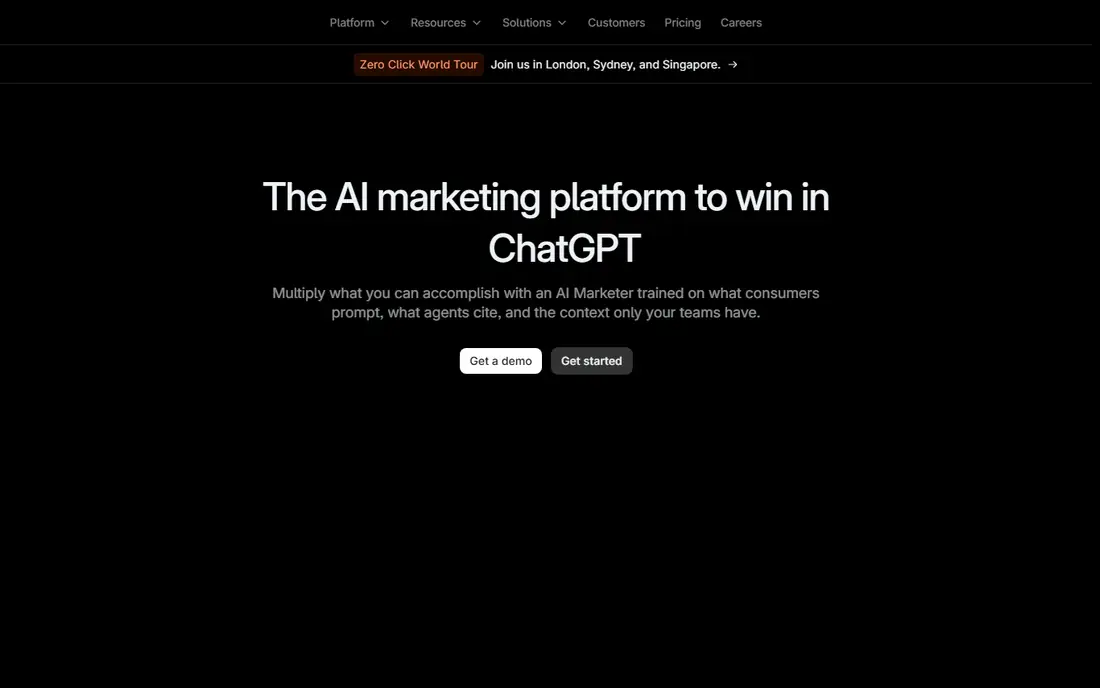
Profound is the enterprise end of this market, and it shows in both coverage and price. On enterprise plans it tracks up to nine answer engines, including ChatGPT, Gemini, AI Overviews, AI Mode, Claude, Copilot, Grok and DeepSeek, and it links AI crawler visits to your own analytics. That lets a large team connect visibility changes to traffic changes, which is the question senior leaders actually ask.
Smaller teams should not feel they are missing out by skipping it. The trial gives a useful taste, but the full program is priced and built for organisations with a formal buying process and a team to act on the findings. If that describes you, Profound is the strongest shortlist candidate here. If not, a cheaper tool will give you the same headline answer for your core prompts.
- Widest engine coverage in this list on enterprise plans
- Crawler analytics
- Content agents that suggest fixes
- Quote based pricing
- Heavier setup than a small team needs
Scrunch is for a team that wants the tracker to explain why a page is not being cited, not just report that it is not. Its audit side looks at how AI systems read your pages and flags structure and clarity problems, which gives a content team a concrete job list. Prompt tracking across ChatGPT, Perplexity, AI Overviews and Copilot runs alongside that audit work.
The price is the honest barrier. At $250 per month, Scrunch only makes sense if someone will work through the audit findings each month. A team that only wants a mention count should choose Otterly.AI or Rankscale and spend the saved money on content. A team with a large content library and a person to act on audits will get more value from Scrunch than from a tracker alone.
- AI-focused site audits alongside prompt tracking
- Clear readability guidance
- Covers the main engines
- High entry price
- 125 prompts may feel low at this price for very large prompt lists
AthenaHQ is the easiest way to test AI search visibility checking before spending anything. The free tier provides credits for real checks across ChatGPT, Perplexity, AI Overviews, Gemini and Copilot, so you can see how your brand is described in actual answers. Paid plans widen the engine list to 11, which is broader than most rivals.
The step from free to paid is large, and the credit system rewards careful planning. Checking a long prompt list daily will burn credits fast, while a shorter list checked weekly will last far longer. Use the free tier to learn which prompts matter, then size the paid plan around that shortlist rather than buying the biggest plan on day one.
- Free tier with real credits
- 11 engines on paid plans
- Optimisation guidance included
- Paid plans start at a much higher price than the free tier
- Credit math needs care
SE Ranking is the value pick for a team that wants a lot of prompts without a large bill. The AI visibility module gives you 200 prompts at a price where most rivals give you 15 to 50, and it covers the engines that matter most, including AI Mode. Because it sits inside a full SEO platform, you also get classic rank tracking and site audits in the same subscription.
The trade-off is focus. A dedicated AI tracker such as Peec AI gives a cleaner AI-only report, while SE Ranking asks you to learn a broader suite. That is fine if your team already uses SE Ranking or plans to use its other tools. If you only want AI visibility and nothing else, a dedicated tool may feel simpler, even with fewer prompts.
- 200 prompts on the entry plan
- Covers ChatGPT, Gemini, AI Mode, Perplexity and AI Overviews
- Sits inside a full SEO suite
- AI visibility is one module in a larger tool, so the interface is busier
- Prompt depth varies by plan
Semrush is a sensible choice only in one situation: your team already pays for Semrush. In that case the AI Visibility Toolkit adds prompt tracking to a suite you already know, with reporting that fits existing client reports. The engine coverage includes the main AI answers, and the daily tracking is easy to set up for a brand and its competitors.
As a standalone purchase, the math is weaker. Twenty-five prompts at $99 per month is expensive next to SE Ranking, and a team buying Semrush just for AI tracking would be better served by a dedicated tool. Buy it for the integration, not for the prompt count, and check whether your Semrush plan already includes the toolkit before paying for an add-on.
- Integrates with the wider Semrush suite
- Covers ChatGPT, Google AI, Gemini and Perplexity
- Familiar reporting for SEO teams
- 25 prompts on the entry add-on
- Only good value if you already pay for Semrush
Rankscale is the cheapest way to check a brand across many AI engines. It lists ChatGPT, Gemini, Perplexity, Claude, DeepSeek, Mistral, Grok, Copilot and more, which is wider coverage than tools costing several times as much. For a small team or a freelancer, that breadth at $20 per month is hard to ignore.
The caution is the same as with any small vendor in a fast-moving category: test it hard during the trial. Run your real prompts, compare the recorded answers with what you see in the apps, and check how clearly it explains its credit use. If it passes that test, it is excellent value. If you need long-term vendor stability and deep support, a larger tool is the safer spend.
- Very low entry price
- Wide engine list including Claude, DeepSeek, Mistral and Grok
- Credit based plans
- Smaller vendor with thinner public documentation
- Credit limits need checking before you scale up
How we picked these
We compared official pricing and feature pages for software that checks AI search visibility, and we kept only tools that run editable prompts through real answer engines and report brand mentions, citations or share of voice. We excluded generic rank trackers that do not check AI answers, and we favoured tools with a trial or free tier so you can test them on your own prompts. Prices change often in this category, so confirm the current plan on the vendor site before buying.
How to choose the right AI search visibility tool
Start by listing the questions that lead to money for your business, such as product comparisons, "best" lists and problem questions, and count them honestly. That count decides your plan more than any feature list. A tool with 15 prompts is fine for a narrow business and useless for an agency with ten clients, while a tool with 200 prompts is wasted money if you only track 20 questions.
Then check engine coverage on the exact plan you would buy, not on the homepage. Some tools list an engine as covered while reserving it for a higher tier or an add-on. Finally, decide who will act on the results. A tracker alone helps a team that already writes content regularly. A tool with audits or optimisation agents helps a team that needs the next step spelled out. Buy the one that matches the team you have, not the team you wish you had.
Questions to ask on a trial
Ask each vendor how often prompts are checked, whether failed checks are counted, how far back historical data goes, and how reports can be shared with people who do not log in. Ask what happens to your data if you cancel, and whether you can export prompt history. The answers to those five questions separate a serious tool from a pretty dashboard faster than any feature list.
FAQ
What is the best AI search visibility checking software?
Otterly.AI is the best starting point for a small budget, Peec AI suits agencies, SE Ranking suits teams that want many prompts cheaply, and Profound suits enterprises. The best AI search visibility checking tools share one trait: they let you test them on your own prompts before you pay for a year.
What is the best AI search visibility checking tool for a small team?
Otterly.AI and Rankscale are the strongest small team options, because both start at a low monthly price and cover the main engines. AthenaHQ is also worth trying, since its free tier shows real results before any payment. Keep the prompt list short at first and grow it only when the reports prove useful.
How many prompts do I need to track?
Most small businesses need 20 to 50 prompts covering brand terms, product comparisons and common customer questions. Agencies need far more, because each client needs a separate list, which is why per-client workspaces and unlimited seats matter more than a low headline price. Start small, then expand the list based on which prompts change most often.
Do AI visibility tools track Google AI Mode and AI Overviews?
Many do, but coverage depends on the plan, so check the plan page rather than the marketing headline. Peec AI, Profound, SE Ranking and AthenaHQ all cover Google AI features on at least some plans, while Otterly.AI offers AI Mode as an add-on. If Google AI answers drive your traffic, confirm that coverage before you subscribe.
Can these tools show what competitors are doing?
Yes, competitor tracking is a core feature of most tools here. You add competitor brands to the same prompt list, and the tool shows how often each brand appears and is cited in the same answers. That comparison is often more useful than your own score alone, because it shows which competitor is winning the answer and why.
Is AI search visibility checking software worth paying for?
It is worth paying for if AI answers influence your sales or enquiries, and if someone will act on the findings each month. If no one will change content based on the reports, a free tier or a short trial will teach you enough. Pay for a subscription when the reports change what your team publishes.