Best AI Sales Tools in 2026: 8 Tools Compared
Compare the best AI sales tools for prospecting, outreach, and pipeline growth for your team. We cover HubSpot, Apollo, Gong, Clay, and more, with prices.
- Editor's choice
 HubSpot Sales Hub
CRM plus sales AI in one place
Starts atFreeVisit hubspot.comFull review - Great alternative
 Salesforce Sales Cloud
Large teams and deep customization
Starts atSee websiteVisit salesforce.comFull review - Also consider
 Apollo
Prospecting and outbound sequences
Starts atFreeVisit apollo.ioFull review
TL;DR:
- Apollo is our pick for most small sales teams, because it combines a large contact database, sequences, and AI research in one seat.
- HubSpot Sales Hub suits teams that want CRM, sequences, and reporting together, with a genuinely useful free tier to start.
- Gong is the strongest choice for call and deal insight, but it is priced for teams that already have steady pipeline to analyze.
- Clay stands out for building targeted lead lists from many data sources, while Pipedrive offers the simplest AI-assisted pipeline for small teams.
Quick comparison
| Tool | Best for | Starts at | Free plan? | |
|---|---|---|---|---|
| HubSpot Sales Hub | CRM plus sales AI in one place | Free | Yes | Visit |
| Salesforce Sales Cloud | Large teams and deep customization | See website | No | Visit |
| Apollo | Prospecting and outbound sequences | Free | Yes | Visit |
 Outreach | Structured sales engagement at scale | See website | No | Visit |
 Salesloft | Cadence and pipeline management | See website | No | Visit |
 Gong | Call insight and deal intelligence | See website | No | Visit |
 Clay | Targeted lead lists and enrichment | Free | Yes | Visit |
 Pipedrive | Simple AI-assisted pipeline | $14 per user per month | Free trial | Visit |
The best AI sales tools
The best AI sales tool depends on where your pipeline breaks down. Some teams need more leads, others need better follow-up, and others need to know why deals stall. The tools below cover each of those jobs.
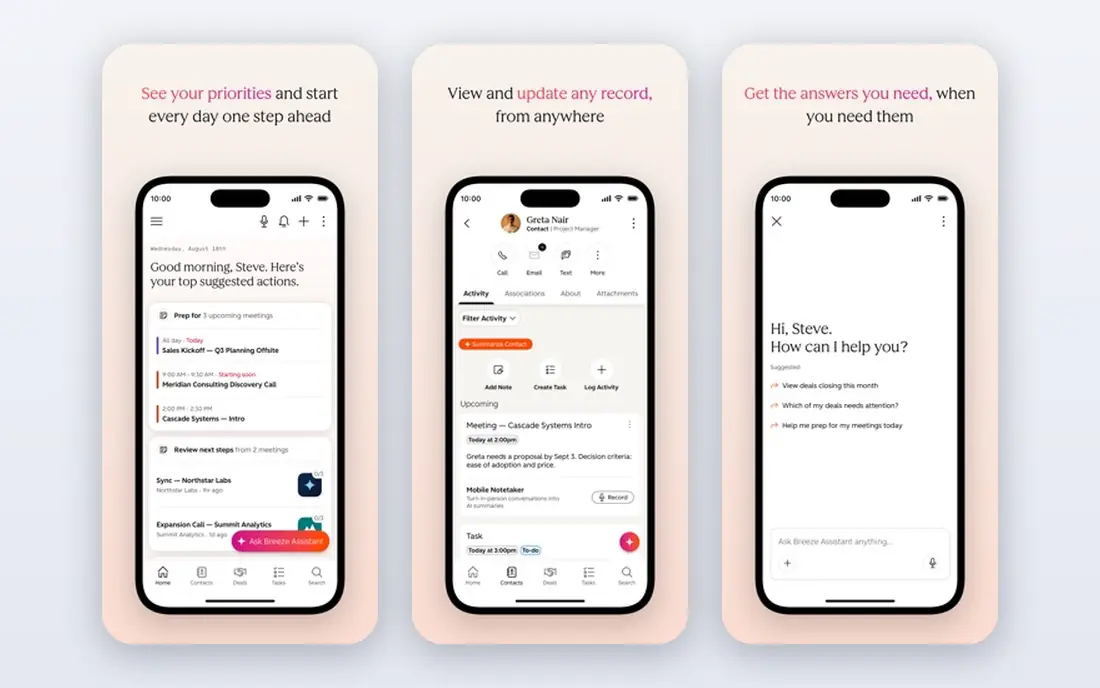
HubSpot Sales Hub is the easiest all-round pick for a team that wants AI help without stitching five tools together. Contacts, deals, email templates, sequences, and reports live in one system, so AI summaries and prospecting help draw on real pipeline data rather than a separate list. The free tier is enough for a solo seller or a very small team to get organized.
The price story changes at Professional, listed at $100 per seat per month, with Starter at $20 per seat per month. Professional also carries a $1,500 onboarding fee and a five-seat minimum in recent pricing summaries, so small teams should price the full first year, not just the headline seat rate. If you already use HubSpot for marketing, the shared data makes Sales Hub a natural step.
- Free CRM to start
- Email sequences, meeting scheduling, and pipelines included
- AI features grow with paid tiers
- Professional tier jumps in price and needs a seat minimum
- Onboarding fee applies at higher tiers
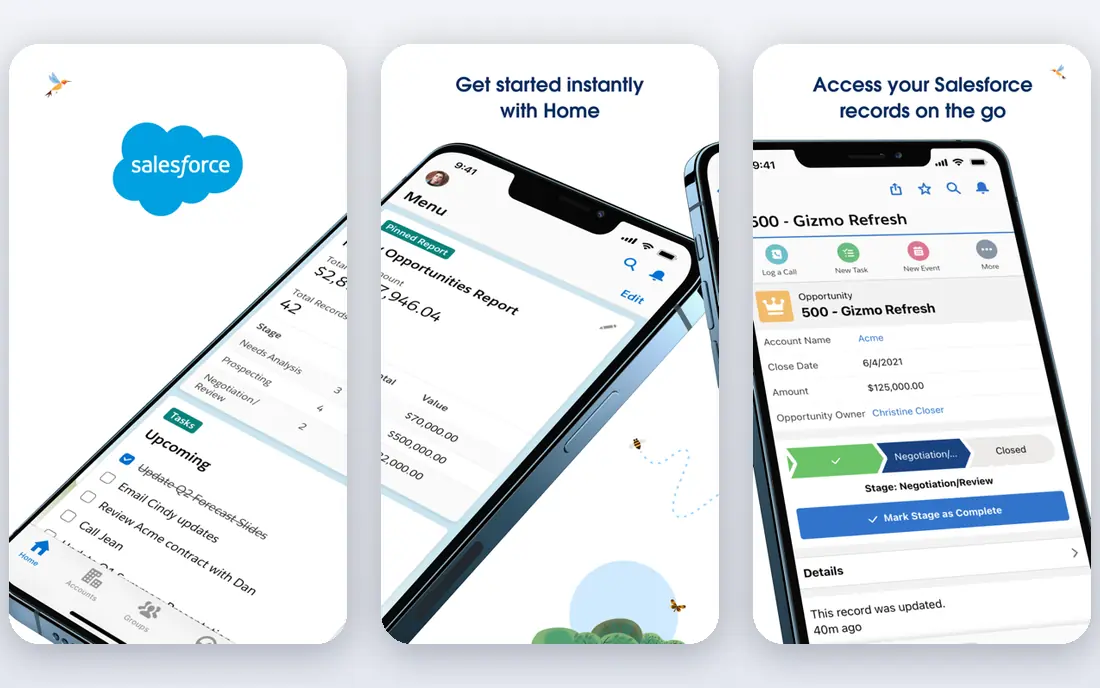
Salesforce Sales Cloud remains the default for larger sales organizations that need custom objects, approval flows, territory rules, and reporting that smaller CRMs cannot match. Einstein AI adds lead scoring, opportunity insight, and activity capture on top of that structure, which helps managers spot stalled deals and forecast with more than gut feel.
The trade is effort and cost. Salesforce rewards teams with a dedicated admin and a clear process, and it can frustrate a five-person team that just wants to send sequences. Get a written quote for the edition, AI add-ons, and implementation help before you compare it with simpler tools on this list.
- Deep customization and reporting
- Large integration ecosystem
- Einstein AI across sales workflows
- Pricing is quote-led for many teams
- Setup can be heavy without an admin
- Smaller teams may find it overbuilt
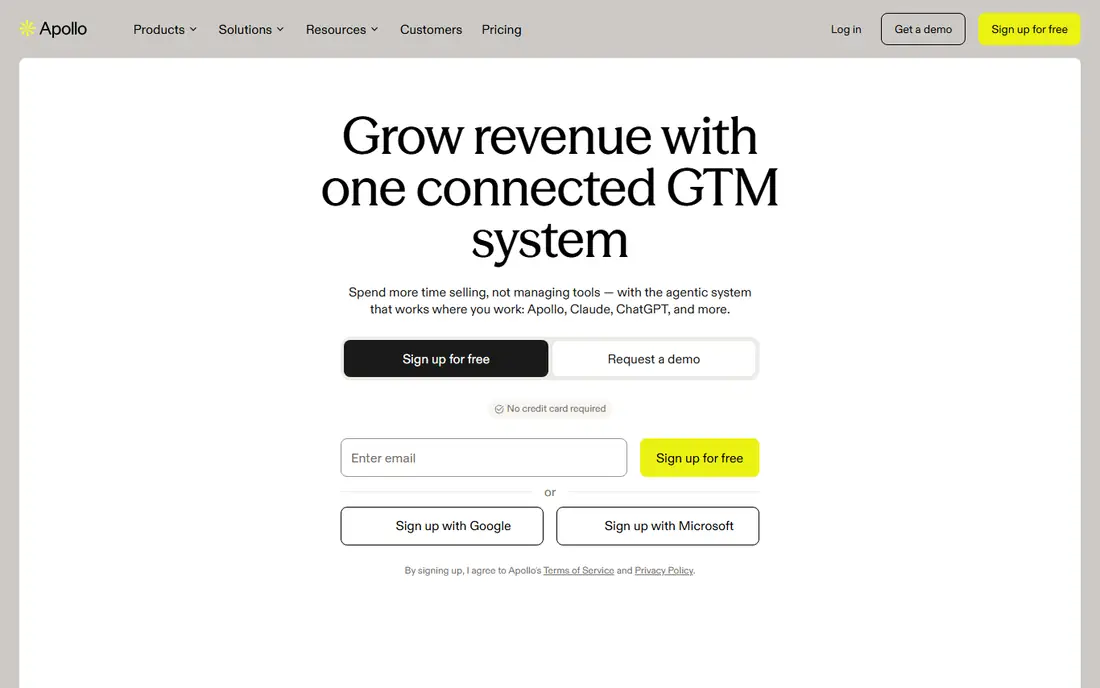
Apollo is our pick for most small sales teams because it answers the first sales question: who do we contact next. You can search contacts and companies, verify emails, build a list, and put that list into an email sequence without exporting to another tool. Paid plans start at $49 per user per month billed annually for Basic, with Professional at $79 and Organization at $119.
Credit limits are the part to watch. Phone numbers, enrichment, and AI research draw down credits, and unused credits do not roll over on many plans. Apollo still wins for lean outbound teams, because it replaces a separate database, sequencer, and dialer, but check coverage in your niche before you pay for a full team.
- Large contact database plus sequences and dialer in one tool
- Free plan for light prospecting
- Clear paid tiers
- Credits expire and can run out fast on heavy phone work
- Data accuracy varies by niche
Outreach is built for teams that run structured, multi-channel outreach every day. Sequences combine email, calls, and tasks, managers can see reply rates and step performance, and AI features help with prioritization and meeting follow-up. For an SDR team with a defined playbook, that structure turns busywork into a repeatable process.
Outreach is not a casual tool. Pricing is not published as a simple self-serve rate, and the product works best when your CRM data is clean and your sequences are planned in advance. Small teams should compare it with Apollo or HubSpot first, and only move to Outreach when volume and team size justify a dedicated engagement platform.
- Strong sequences, task management, and analytics
- Built for multi-step outreach
- Good governance for larger teams
- Quote-based pricing
- Can feel heavy for a solo seller
- Needs clean CRM data to work well
Salesloft competes directly with Outreach on cadence-based selling, and many teams choose between the two. Its strength is the daily workflow: reps open a prioritized list, work through calls and emails, log outcomes, and move to the next step without hunting through tabs. Managers get visibility into activity, pipeline, and coaching moments in one place.
Like Outreach, Salesloft is priced by quote, so you should compare total cost, contract length, and included AI features before signing. It suits teams that already have a CRM and want a dedicated layer for outreach, rather than teams looking for an all-in-one CRM replacement.
- Clear cadence builder
- Strong call and email workflow
- Useful coaching and analytics features
- Quote-based pricing
- Overlapping features with a CRM can confuse buyers
- Setup takes planning
Gong is the best AI sales tool for understanding what actually happens in conversations. It transcribes calls and meetings, flags risks such as competitors, pricing objections, or missing next steps, and helps managers coach from real examples instead of memory. For teams with steady call volume, that insight often matters more than another prospecting list.
Gong is not a prospecting tool, and it will not fix a thin pipeline on its own. Pricing is by quote and typically suits established teams rather than a brand-new startup. If your deals stall after good first calls, Gong is worth a demo. If you have few calls to analyze, fix lead flow first.
- Records and analyzes calls, emails, and meetings
- Surfaces deal risks and next steps
- Strong coaching tools
- Quote-based pricing
- Value depends on call volume
- Needs team buy-in on recording
Clay is different from a CRM or sequencer. It helps you build a precise list, enrich it with job, company, and contact data from many providers, and use AI to research and score each row. That makes it powerful for account-based selling, event follow-up, and niche markets where a generic database returns weak results.
Clay rewards users who like spreadsheets and data work. If you want a simple list to email tomorrow, Apollo is faster. If you want a carefully filtered list with verified signals, Clay gives you more control, but budget time to learn its credit system and test a small batch before you enrich thousands of rows.
- Combines many data sources into one enriched list
- Flexible formulas and AI research
- Free tier to test
- Credit and usage model takes time to understand
- Can feel technical for non-data users
- Output quality depends on sources
Pipedrive is the calm pick for small teams that want AI help without a heavy platform. Deals move across a visual pipeline, activities and follow-ups stay visible, and the AI sales assistant surfaces deals that need attention. Essential pricing starts at $14 per user per month billed annually in recent vendor summaries, which keeps it affordable for a growing team.
Pipedrive will not match Salesforce on customization, and its AI is more of a helpful assistant than a full revenue intelligence system. That is the point. For teams that need a clear pipeline, reliable reminders, and light AI guidance, Pipedrive is often the tool reps actually use every day.
- Visual pipeline is easy to learn
- AI sales assistant helps with follow-up and deal insight
- Good value for small teams
- Less deep than Salesforce for complex enterprise needs
- Some AI features sit on higher tiers
- Reporting is simpler
How we picked these
We compared official product and pricing pages, public feature documentation, and recent vendor pricing summaries for tools that use AI for prospecting, outreach, pipeline management, or deal insight. We favored tools with a clear sales use case and a current product, and we left out generic chatbots and tools that only add AI writing to an unrelated app. Where pricing is quote-based, we say so rather than invent a number.
How to choose the best AI sales tool for your team
Start with the bottleneck. If you lack leads, prioritize Apollo or Clay. If follow-up is inconsistent, prioritize HubSpot, Pipedrive, Outreach, or Salesloft. If deals stall late, prioritize Gong. Buying a tool for a problem you do not have is the fastest way to waste a subscription.
Check data, credits, and contract terms
Read the credit model, seat minimums, and renewal terms before you buy. A low seat price can hide credit costs, onboarding fees, or an annual commitment that locks in a team that has not yet proven the tool. Run a two-week pilot with real prospects, measure replies and meetings booked, and only then roll it out to the full team.
Protect trust while you automate
AI outreach works best when it helps a human, not when it replaces judgment. Keep personalization honest, respect opt-outs, and review AI-written messages before they go out. A fast sequence that damages your domain reputation or annoys prospects will cost more pipeline than it creates.
FAQ
Which AI sales tool is best?
Apollo is the best starting point for most small teams, because it covers prospecting, sequences, and basic AI research in one seat. HubSpot Sales Hub is better if you need a full CRM, while Gong is better if you already have pipeline and need deal insight. The best tool is the one that fixes your current bottleneck.
What are the best AI tools for sales teams?
The strongest set is Apollo for prospecting, HubSpot or Pipedrive for pipeline, Outreach or Salesloft for structured engagement, Clay for targeted lists, and Gong for call insight. Most teams need two or three of these, not all of them, and buying the full set at once usually creates overlap.
Do AI sales tools replace salespeople?
No. They handle research, drafting, scheduling, and follow-up reminders, but trust, discovery, and closing still depend on people. The best results come when reps use AI to prepare better and follow up faster, then handle the conversation themselves.
Which AI sales platform is the best for small businesses?
HubSpot Sales Hub and Pipedrive are the friendliest for small businesses, thanks to free or low-cost starting tiers and simpler setup. Apollo also works well for a small outbound team, especially when lead generation is the main gap.
Are AI sales tools worth the cost?
They are worth it when they measurably increase meetings, replies, or pipeline without adding hours of admin. Track cost per meeting booked and time saved per rep during a pilot, and compare that with the seat and credit cost before you renew.