Best AI Recruitment Platforms in 2026: 9 Tools Compared
Compare the best AI recruitment platforms in 2026, from sourcing and screening to scheduling, with pricing, strengths and honest limits for teams. today.
- Editor's choice
 Paradox
High volume conversational hiring
Starts atSee websiteVisit paradox.aiFull review - Great alternative
 HireVue
Video interviews and assessments at scale
Starts atSee websiteVisit hirevue.comFull review - Also consider
 Eightfold AI
Enterprise talent intelligence and skills matching
Starts atSee websiteVisit eightfold.aiFull review
TL;DR:
- No single platform covers every hiring job well, so pick the tool that fixes your biggest bottleneck, usually sourcing, screening, or scheduling.
- Paradox is strongest for high volume hourly hiring, while Eightfold and Phenom suit large employers with complex talent needs.
- Workable, Manatal, and SeekOut give smaller teams usable AI features without an enterprise contract.
- AI scores should support a human decision, not replace it, and teams should check bias, privacy, and local hiring rules before rollout.
Quick comparison
| Tool | Best for | Starts at | Free plan? | |
|---|---|---|---|---|
| Paradox | High volume conversational hiring | See website | No | Visit |
| HireVue | Video interviews and assessments at scale | See website | No | Visit |
| Eightfold AI | Enterprise talent intelligence and skills matching | See website | No | Visit |
 Phenom | Talent experience, career sites, and chat | See website | No | Visit |
 Workable | Small and mid-size hiring with AI help | $299 per month | Free trial | Visit |
 Manatal | Budget AI applicant tracking | $15 per user per month | Free trial | Visit |
 SeekOut | AI sourcing for technical and hard to fill roles | $149 per month | Free trial | Visit |
 hireEZ | Outbound sourcing and automated outreach | See website | Free trial | Visit |
 Beamery | Talent CRM and workforce planning | See website | No | Visit |
The best AI recruitment platforms
AI recruitment tools now help with sourcing candidates, screening applications, scheduling interviews, and running assessments. The best choice depends on your hiring volume, your existing applicant tracking system, and how much human review you want to keep in the process.
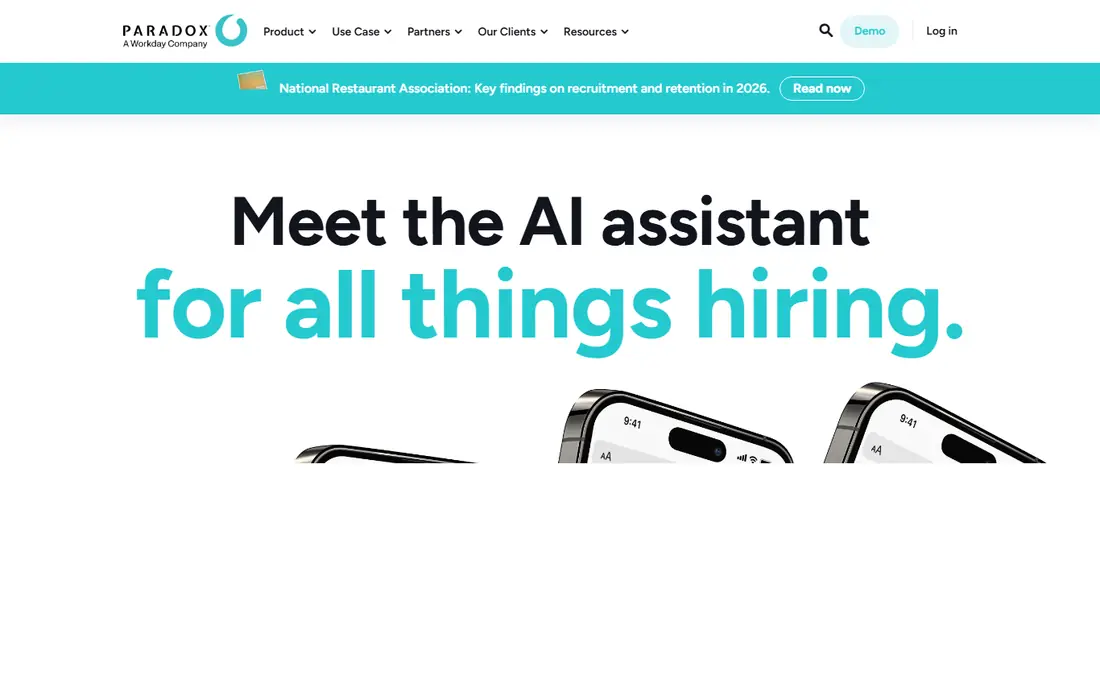
Paradox, known for its Olivia assistant, is built for employers who hire hundreds of frontline workers. Candidates can apply, answer screening questions, and book an interview through text or chat, without waiting for a recruiter to reply. That speed matters in retail, hospitality, health care, and logistics, where good candidates often take the first offer they get.
The assistant handles the repetitive middle of hiring. It answers common questions, checks basic qualifications, and moves candidates to the next step. Recruiters then spend their time on interviews and decisions, rather than chasing calendars and unread emails.
Paradox is priced for larger employers, and smaller teams may find the quote out of reach. It also works best when the hiring process is fairly standard. For complex, senior, or highly specialized roles, a human led process will still do most of the work.
- Conversational assistant works by text and chat around the clock
- Fast screening and scheduling
- Strong for hourly roles
- Enterprise pricing by quote
- Less suited to small teams with a few hires a year
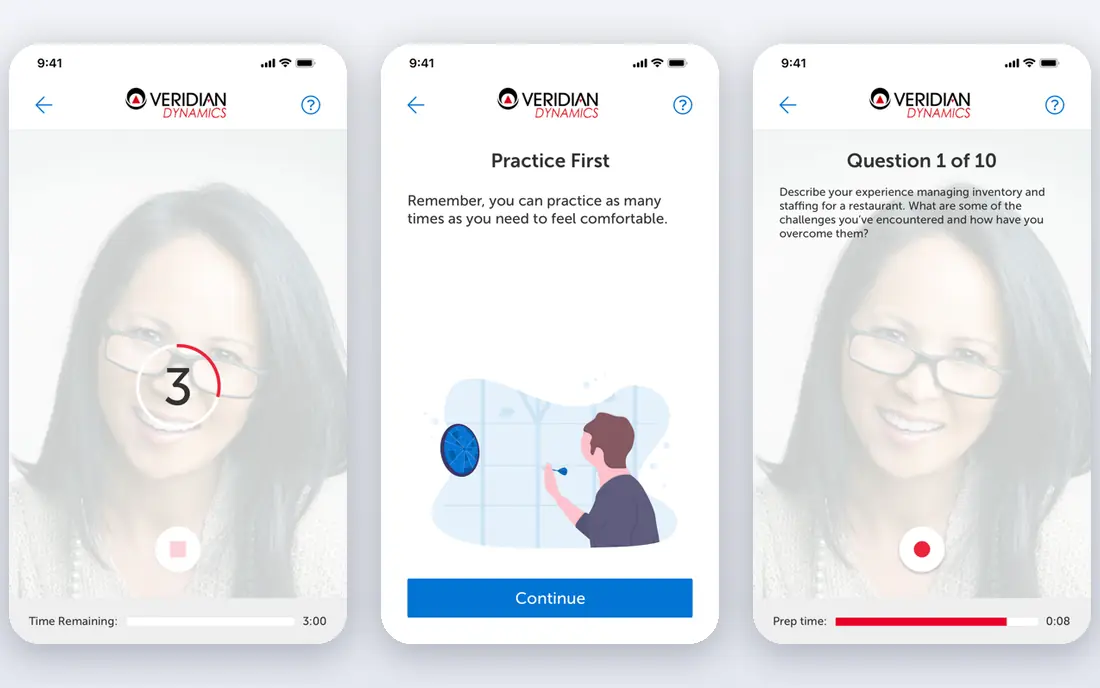
HireVue helps large employers screen many applicants in a consistent way. Candidates record answers to set questions, complete assessments, and move through a structured process that gives hiring teams comparable material for each person. That consistency is the point, and it helps reduce the variation that comes from different interviewers asking different questions.
The platform also supports live interviews, scheduling, and integrations with major applicant tracking systems. For campus hiring and high volume professional roles, it can cut weeks from the early screening stage. Hiring teams get a shared record to review, rather than relying on one interviewer's notes.
The trade is candidate experience and cost. Some candidates dislike recorded video interviews, so employers should explain the process clearly and offer a human contact. Pricing is enterprise level and quoted per customer, so small teams should look at lighter tools first.
- Structured video interviews and assessments
- Consistent questions for every candidate
- Strong enterprise integrations
- Pricing is quote only and enterprise level
- Candidates may dislike recorded interviews
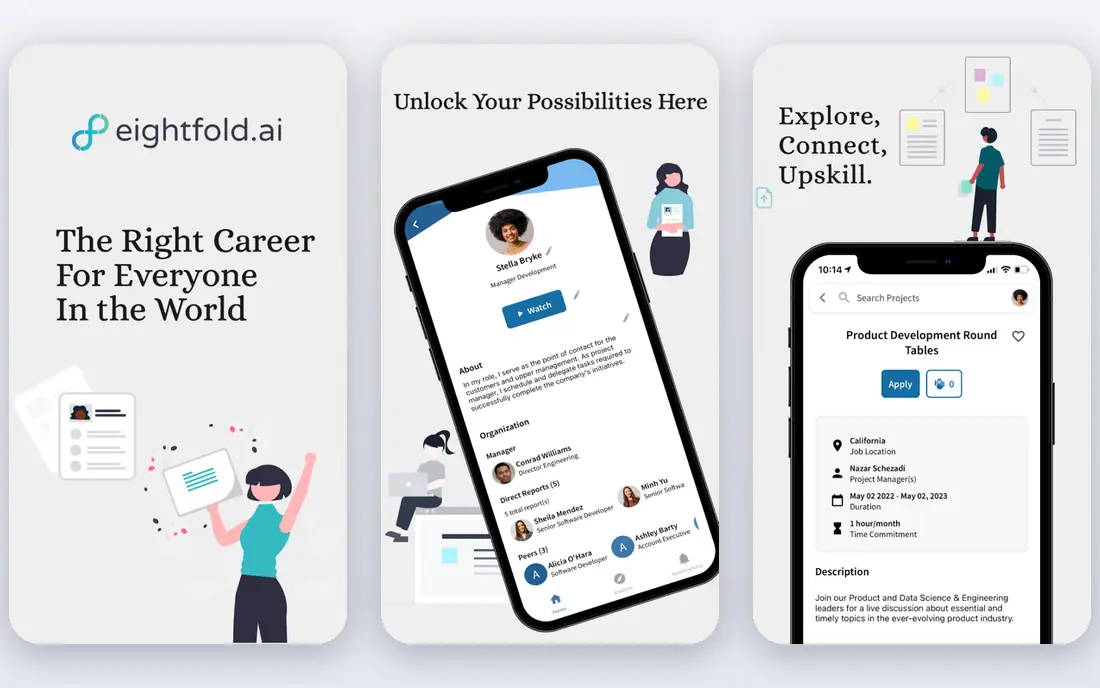
Eightfold AI treats hiring as a talent intelligence problem. It builds profiles from resumes, applications, and employee data, then matches people to roles based on skills and career paths rather than job titles alone. That helps large employers find internal candidates, spot skill gaps, and plan future hiring.
The platform also supports career sites, candidate relationship tools, and analytics for workforce planning. For a company with thousands of employees and many open roles, that breadth can replace several separate tools. Recruiters get ranked shortlists, and managers get a clearer view of the talent already inside the company.
Setup is a serious project, and pricing reflects the enterprise focus. A small team will not use most of what Eightfold offers, and the implementation effort may outweigh the benefit. For large, complex employers, it is one of the most capable AI recruitment platforms available.
- Skills based matching across applicants and employees
- Talent insights for planning
- Deep enterprise integrations
- Enterprise pricing and longer setup
- More than most small teams need
Phenom focuses on the candidate side of hiring. Its career site tools personalize job recommendations, its chatbot answers questions and screens applicants, and its scheduling tools move candidates forward without long email chains. For large employers, that experience can improve application completion rates.
Behind the scenes, Phenom connects career site visitors, applicants, and employees in one talent experience platform. Recruiters can run campaigns, build talent pools, and track which sources produce hires. That view helps teams spend their recruiting budget on channels that actually work.
Phenom is priced for mid-size and large employers, and it works best as part of a wider talent plan. A company that just needs an applicant tracker will find it too broad. A company rebuilding its employer brand and career site will get more from it.
- Personalized career site experience
- Chatbot screening and scheduling
- Strong analytics
- Enterprise pricing by quote
- Best value when paired with a full talent strategy
Workable is the most practical all round choice for many growing companies. It is a full applicant tracking system with job posting, pipeline management, team collaboration, and AI features for sourcing, screening, and writing job descriptions. A small hiring team can run the whole process in one place.
The AI agent can help with job intake, candidate screening, and shortlisting, though some of that work uses credits, so costs can grow with volume. Workable also includes onboarding and basic HR tools, which helps companies too small for a separate HR system. The 15 day trial is long enough to run a real vacancy through the system.
Pricing starts at 299 dollars a month for smaller companies and rises with headcount, with higher tiers bundling extras such as texting and video interviews. That is a real budget line for a small business, but it is far more accessible than an enterprise platform.
- Full applicant tracking plus AI sourcing and screening
- Posts to many job boards
- 15 day trial
- AI agent features use credits
- Price rises with company headcount
Manatal is a good pick for small teams and agencies that need AI help without a large contract. At 15 dollars per user per month on annual billing, it is one of the cheapest tools on this list. It covers job posting, candidate pipelines, AI matching, and social profile enrichment in a clean interface.
The AI features are practical rather than flashy. Manatal scores candidates against a role, pulls in public profile details, and helps recruiters find similar profiles. For a team hiring a few roles a month, that is enough to save real time on screening.
Manatal will not match the sourcing depth of SeekOut or the talent intelligence of Eightfold. Its candidate database and analytics are lighter, and large employers will outgrow it. For budget conscious teams, it is a strong starting point.
- Low starting price
- AI candidate matching and profile enrichment
- Easy to learn
- Less deep than enterprise tools
- Sourcing data is more limited
SeekOut is a sourcing tool for recruiters who hunt for candidates rather than waiting for applications. Its index covers a large number of public profiles, and its AI search lets recruiters describe a role in plain terms and get ranked matches. Technical filters, diversity signals, and contact details help with hard to fill engineering, research, and specialist roles.
The self serve Recruit Core plan, at 149 dollars a month on annual billing, makes SeekOut accessible to smaller teams for the first time. It includes contact credits and exports, with a trial that needs no credit card. Higher tiers add more seats, credits, and integrations, but those are custom priced.
SeekOut is not a full applicant tracking system, so most teams will pair it with an ATS. Outreach is mainly by email, and contact data quality varies by profile. For sourcing depth, though, it is one of the best AI tools for recruiters in this list.
- Large profile index with AI match scoring
- Strong technical filters
- Self serve entry plan
- Higher tiers are custom priced
- Outreach is mainly email based
hireEZ, formerly Hiretual, aggregates profiles from many public sources into one searchable database. Recruiters can run AI powered searches, build outreach sequences, and track replies without jumping between tools. That outbound workflow suits agencies and in-house teams that need to fill specialist roles quickly.
The platform also offers AI screening, rediscovery of past applicants, and integrations with common applicant tracking systems. Those features help teams reuse candidates they already know, rather than starting every search from scratch. For high volume sourcing, that reuse saves time and money.
Pricing has varied across plans and third party listings, so confirm the current plan directly with hireEZ before budgeting. The interface also takes some learning, and new users should expect a short ramp up period before searches feel fast.
- Large aggregated profile database
- AI sourcing and email sequences
- ATS integrations
- Entry pricing varies by plan and source
- Interface takes time to learn
Beamery is a talent platform for large employers who think in terms of pipelines, not single vacancies. It builds a talent CRM from applicants, employees, and external candidates, then helps teams run campaigns, nurture relationships, and plan for future roles. That long term view is its main strength.
The platform adds skills data and workforce planning tools, so leaders can see where talent gaps are forming and which pools might fill them. Integrations with major HR systems keep profiles current, which matters when a CRM grows to tens of thousands of records.
Beamery is not the right pick for a small team that just needs to post jobs and track applicants. Pricing is enterprise level and quoted per customer, and setup rewards a team with a clear talent strategy. For large employers, it is a strong AI recruitment platform.
- Strong talent CRM and campaign tools
- Skills and workforce insights
- Enterprise integrations
- Enterprise pricing by quote
- Not a simple ATS for small teams
How we picked these
We compared official feature pages, pricing pages, and public reviews for platforms with clear AI features in sourcing, screening, scheduling, or matching. We favored tools that are available in the United States in October 2026 and that cover different team sizes, from budget applicant tracking to enterprise talent intelligence. We also flagged where pricing is quote only, since that changes the buying process.
How to buy an AI recruitment tool without regret
Start with one painful workflow, not a full platform replacement. If screening takes the most time, test a screening tool. If sourcing is the bottleneck, test a sourcing tool. A paid pilot on one real role tells you more than a demo ever will.
Keep a human in the decision
AI scores and rankings are suggestions, not verdicts. Recruiters should be able to see why a candidate was ranked a certain way, override the score, and record the reason. That habit also helps with fairness reviews and legal checks.
Check compliance early
Hiring AI is regulated in some places, and rules differ by location. In the United States, check federal guidance and local laws that may require audits or notices for automated hiring tools. Document what the AI decides, what stays human, and how candidates can ask for a review.
Measure after 90 days
Track time to hire, cost per hire, candidate response rates, and quality of hire before and after rollout. If those numbers do not move, the tool is not earning its fee, no matter how good the demo looked.
FAQ
What is the best AI recruitment platform?
It depends on your hiring volume and team size. Paradox suits high volume hourly hiring, Eightfold and Phenom suit large employers, and Workable or Manatal suit smaller teams. Start with your biggest bottleneck, then shortlist tools built for that job.
What are the best AI hiring platforms for small businesses?
Workable and Manatal are strong starting points, with clear pricing and trials. SeekOut is also worth a look if sourcing is your main problem. Enterprise tools such as Eightfold and Beamery are usually more than a small team needs.
What are the best AI tools for recruiters?
For sourcing, SeekOut and hireEZ lead this list. For screening and scheduling at volume, Paradox and HireVue are stronger. For an all round applicant tracking system with AI features, Workable is the most practical pick for most teams.
Do AI recruitment tools replace recruiters?
No. They handle repetitive work such as sourcing, screening, and scheduling, but interviews, judgment calls, and relationship building still need people. The best teams use AI to shortlist and organize, then let recruiters decide.
Are AI hiring tools fair to candidates?
They can help or hurt fairness, depending on how they are set up. Structured questions and consistent scoring can reduce interviewer variation, but biased training data or poor design can create new problems. Audit outcomes, keep human review, and follow local hiring rules.
How much do AI recruitment platforms cost?
Prices range from about 15 dollars per user per month for Manatal to custom enterprise contracts for Eightfold, Phenom, and Beamery. Workable starts at 299 dollars a month, and SeekOut starts at 149 dollars a month on annual billing. Always confirm whether AI features, credits, and integrations cost extra.