Best AI Image Detection Tools in 2026: 9 Tools Compared
Best AI image detection tools, compared across 9 APIs and platforms for object detection, recognition, and content moderation in 2026, plus safety filters.
- Editor's choice
 Google Cloud Vision AI
Broad image recognition
Starts atSee websiteVisit cloud.google.comFull review - Great alternative
 Amazon Rekognition
AWS image analysis
Starts atSee websiteVisit aws.amazon.comFull review - Also consider
 Microsoft Azure AI Vision
Microsoft image analysis
Starts atSee websiteVisit azure.microsoft.comFull review
TL;DR:
- This article covers image detection in the AI sense: object detection, image recognition, tagging, and content moderation, not camera hardware.
- Google Cloud Vision, Amazon Rekognition, and Microsoft Azure AI Vision lead for broad, production-ready APIs with large model coverage.
- Clarifai, Hive, and Sightengine lead for moderation and custom models, where safety and tailored labels matter most.
- Imagga and Roboflow suit smaller teams, with tagging, training, and deployment tools that are easier to start with.
- Accuracy depends on your images, so test every shortlisted API on your own dataset before committing to one vendor.
Quick comparison
| Tool | Best for | Starts at | Free plan? | |
|---|---|---|---|---|
| Google Cloud Vision AI | Broad image recognition | See website | Free trial | Visit |
| Amazon Rekognition | AWS image analysis | See website | Free trial | Visit |
| Microsoft Azure AI Vision | Microsoft image analysis | See website | Free trial | Visit |
 Clarifai | Custom models and moderation | See website | Yes | Visit |
 Hive Moderation | Content moderation at scale | See website | Free trial | Visit |
 Sightengine | Image and video moderation | See website | Free trial | Visit |
 Imagga | Tagging and categorization | See website | Yes | Visit |
 Roboflow | Training and deployment | See website | Yes | Visit |
 Eden AI | Multi-provider image APIs | See website | Yes | Visit |
The best AI image detection tools
AI image detection means software that looks at an image and identifies objects, faces, text, scenes, or unsafe content, then returns labels, boxes, or scores that another system can act on. It powers photo search, retail catalogs, safety filters, medical imaging support, and factory inspection, among other uses. The tools below cover APIs, moderation platforms, and training tools for that job.
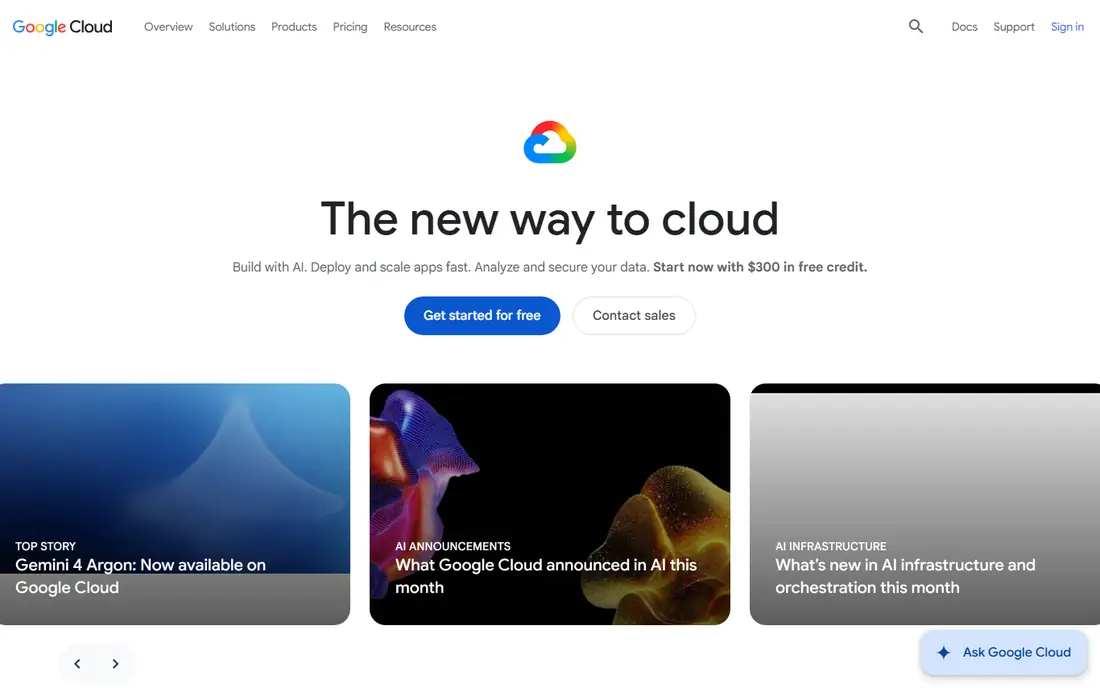
Google Cloud Vision AI is a leading image analysis API, offering label detection, object localization, face detection, text recognition, and explicit content detection in one service. It suits apps that need to tag photos, search images, or moderate uploads at scale, and it integrates well with Google Cloud storage and workflows. Documentation and client libraries are mature, which speeds development.
Costs are usage-based, so high-volume image processing needs a budget model based on your actual image count and features used. Face detection also needs careful policy and consent handling, especially for user photos. For broad, reliable image recognition, Google Vision remains a safe first API to test.
- Broad label, object, face, and text detection
- Strong docs
- Google Cloud integration
- Pay-per-use costs can grow fast
- Face features need policy review
Amazon Rekognition offers image and video analysis, including object and scene detection, facial analysis and comparison, text in images, and content moderation labels. It fits AWS shops that store images in S3 and want detection close to storage, with event-driven workflows through Lambda and other AWS services. Video analysis adds value for media and safety use cases.
Outside AWS, the advantage shrinks, and moderation thresholds need tuning on your own data to avoid over-blocking safe images or missing unsafe ones. For AWS teams, Rekognition is a natural, well-documented choice for production image detection.
- Object, face, and text detection
- Video analysis
- AWS integration
- Best inside AWS
- Moderation tuning needs testing

Azure AI Vision offers image analysis, optical character recognition, face detection, and spatial analysis for retail and workspace scenarios, with integration into Azure storage, search, and AI workflows.
Region availability varies by feature, so check that the models you need are available in your region before building. For Microsoft shops, Azure AI Vision offers a coherent, enterprise-governed route into image detection, with strong compliance and identity controls.
- Image analysis and OCR
- Face and spatial analysis
- Microsoft integration
- Some features are region-limited
- Best inside Microsoft stack
Clarifai is a computer vision platform that offers pre-built models for recognition, moderation, and tagging, plus tools to train custom models on your own labeled images. That custom path matters when off-the-shelf labels do not fit your domain, such as specific products, defects, or brand assets. A free tier helps small teams test models before paying.
Pricing can be complex at scale, since it depends on operations and model use, so budget with a real image volume estimate. Model quality also varies by task, so test Clarifai on your own dataset against Google, Amazon, and Azure before choosing it as your main provider.
- Custom model training
- Many pre-built models
- Moderation tools
- Pricing complexity for large use
- Model quality varies by task
Hive Moderation, from Hive AI, specializes in automated content moderation for images, video, and text, with models for sexual content, violence, gore, and other policy categories. Social apps, marketplaces, and user-generated content platforms use it to filter uploads before they reach other users, often with human review for borderline cases. Speed and accuracy in moderation are its core strengths.
Hive is less of a general object recognition API than Google or Amazon, so teams that need broad tagging should pair it with another provider or choose a broader API. For safety-critical moderation at scale, Hive is a leading specialist, and its models are updated for new abuse patterns.
- Strong moderation models
- Image, video, and text coverage
- API speed
- Moderation focus, not general recognition
- Pricing is quote-led for large use
Sightengine offers moderation APIs for images and video, covering nudity, violence, weapons, drugs, and other policy areas, plus tools to build review workflows for human moderators. It suits startups and mid-size platforms that need a clear, easy-to-integrate moderation layer without building models themselves. Its documentation is direct, and its dashboard helps teams tune thresholds.
The model range is narrower than Google, Amazon, or Microsoft for general recognition tasks, so use Sightengine for moderation first. For that job, its clarity on categories, scores, and review queues makes it a practical choice for teams that must show how moderation decisions are made.
- Clear moderation APIs
- Image and video support
- Workflow tools for review
- Smaller model range than cloud giants
- Large volume pricing needs a quote
Imagga provides auto tagging, categorization, and visual search APIs that help apps organize large image libraries without manual tagging. It can assign descriptive tags, detect colors, and categorize images, which suits ecommerce catalogs, media libraries, and content apps. A free tier lets small teams test tagging on a modest image set.
Custom model depth is thinner than Clarifai or Roboflow, and enterprise governance features are more limited than cloud giants. For straightforward tagging and search, Imagga offers a simple, affordable API that is easy to integrate and easy to explain to non-technical stakeholders.
- Auto tagging and categorization
- Easy API
- Free tier for small use
- Less depth for custom models than Clarifai
- Enterprise features are limited
Roboflow is a platform for building computer vision models, with tools to collect, label, augment, and train datasets, then deploy models for object detection, classification, and segmentation. It suits teams that need a custom detector, such as a factory defect model or a retail shelf model, rather than generic labels. Its hosted and edge deployment options help move a model from training to production.
Roboflow needs labeled data and some machine learning skill, so it is not the fastest choice for a team that only needs generic tagging. For custom object detection, though, its workflow from dataset to deployed model is one of the clearest in this list, and its free tier helps teams learn the process.
- Dataset tools and model training
- Deployment options
- Strong for object detection
- Needs labeled data and ML skills
- Not a simple plug-and-play API for all users
Eden AI provides a single API that routes image detection, OCR, and other AI tasks to multiple providers, including Google, Amazon, and Microsoft, so teams can compare results and switch providers without rewriting integration code. That flexibility helps during evaluation, and fallback routing can improve reliability if one provider has an outage or a rate limit.
Eden AI adds a layer and its own pricing on top of provider costs, so total cost needs careful comparison against direct provider pricing. For teams that want to test several image detection APIs quickly, or need multi-provider resilience, Eden AI is a useful aggregator and comparison tool.
- One API for many providers
- Easy comparison
- Fallback options
- Adds a layer between you and providers
- Provider pricing still applies
How we picked these
We compared official feature pages, pricing pages, and public documentation for image detection APIs and platforms, and we favored products that are actively sold in 2026 and used for object detection, recognition, tagging, or moderation. We included cloud giants, moderation specialists, and training tools, since image detection in practice spans all three, and we stated the AI framing plainly so readers do not confuse this topic with camera hardware.
What to check before you buy AI image detection tools
Start with your own images. Build a test set that reflects real conditions: lighting, angles, occlusions, and edge cases from your actual users or operations. Run each shortlisted API on that set and measure precision, recall, and false positive rate for the labels that matter, not just overall accuracy on a vendor demo set. A model that scores well on stock photos can fail on your factory floor or your user uploads.
Next, check cost at volume. Most APIs charge per image or per feature, so multiply your monthly image count by the features you need, including moderation, OCR, and face analysis if used. Check data handling, retention, and region availability, especially for user photos and face data, and confirm whether images are used for model training. Finally, plan human review for borderline cases, since no moderation or detection model is perfect.
Accuracy and bias
Test accuracy across demographic groups, skin tones, ages, and image types relevant to your use, and watch for systematic errors. Document thresholds and review rules, and retest after model updates, since provider models change over time. For sensitive uses, such as identity or safety decisions, human review is not optional.
Deployment and latency
Check whether you need cloud API, on-device, or edge deployment, and what latency your use case allows. Real-time moderation and factory inspection need faster responses than batch catalog tagging, and that choice affects which tools fit. Roboflow and cloud APIs cover different ends of that spectrum, so match deployment to the job.
FAQ
What are AI image detection tools?
They are APIs and platforms that analyze images to detect objects, faces, text, scenes, or unsafe content, and return labels, bounding boxes, or scores. They are used for photo search, catalog tagging, content moderation, quality inspection, and many other tasks.
Is Google Cloud Vision better than Amazon Rekognition?
Both are strong general APIs. Google Vision suits Google Cloud teams and broad labeling, while Rekognition suits AWS teams and video analysis. Test both on your own images, since accuracy and cost depend on your image types and volume.
Can AI image detection moderate user uploads?
Yes, with human review for borderline cases. Hive and Sightengine specialize in moderation, while Google, Amazon, and Azure also offer explicit content detection. Set thresholds carefully and review appeals, since automated moderation can over-block safe content.
Do I need to train a custom model?
Not always. Generic APIs work for common objects, scenes, and moderation. Train a custom model with Clarifai or Roboflow when your labels are specific, such as product defects, brand assets, or niche objects that generic models do not recognize well.
How much do AI image detection APIs cost?
Most charge per image or per feature, with free tiers or trials for small use. Total cost depends on monthly image volume, features used, and provider, so estimate with your real volume before committing, and check for volume discounts.