Best AI Email Tools in 2026: 8 Products Compared
We compared current options for best ai email tools to help you choose with confidence, covering features, pricing, and who each option suits best in 2026.
- Editor's choice
 Superhuman
Busy professionals who live in email
Starts at$30 per monthVisit superhuman.comFull review - Great alternative
 Shortwave
Gmail users who want AI search and summaries
Starts at$18 per monthVisit shortwave.comFull review - Also consider
 Spark Mail
People with several email accounts
Starts at$10 per monthVisit sparkmailapp.comFull review
TL;DR:
- Superhuman and Shortwave lead for different buyers, so provider, budget, and main job matter more than a single ranking.
- Check the starting price and free plan in the table, since several tools gate their best features behind paid tiers.
- Test two or three finalists with real work before a yearly commitment, because limits on volume, seats, and support show up fast.
- The other keywords for this topic, including best ai email tool and best email ai tools, point to the same core choice: fit for your workflow first, features second.
Quick comparison
| Tool | Best for | Starts at | Free plan? | |
|---|---|---|---|---|
| Superhuman | Busy professionals who live in email | $30 per month | No | Visit |
| Shortwave | Gmail users who want AI search and summaries | $18 per month | Yes | Visit |
| Spark Mail | People with several email accounts | $10 per month | Yes | Visit |
 SaneBox | People who want filtering without a new app | $7 per month | No | Visit |
 Fyxer | Professionals who want drafts ready before they open mail | See website | Yes | Visit |
 Missive | Small teams sharing inboxes | $18 per user per month | No | Visit |
 Canary Mail | Privacy focused Apple and Windows users | See website | Yes | Visit |
 Gmail with Gemini | Google Workspace users who want built-in AI | See website | Yes | Visit |
The best best ai email tools
We compared official feature pages, pricing, app store listings, privacy policies, and public reviews for this guide. The products below are in the same order as the table above, and each one fits a different kind of buyer.
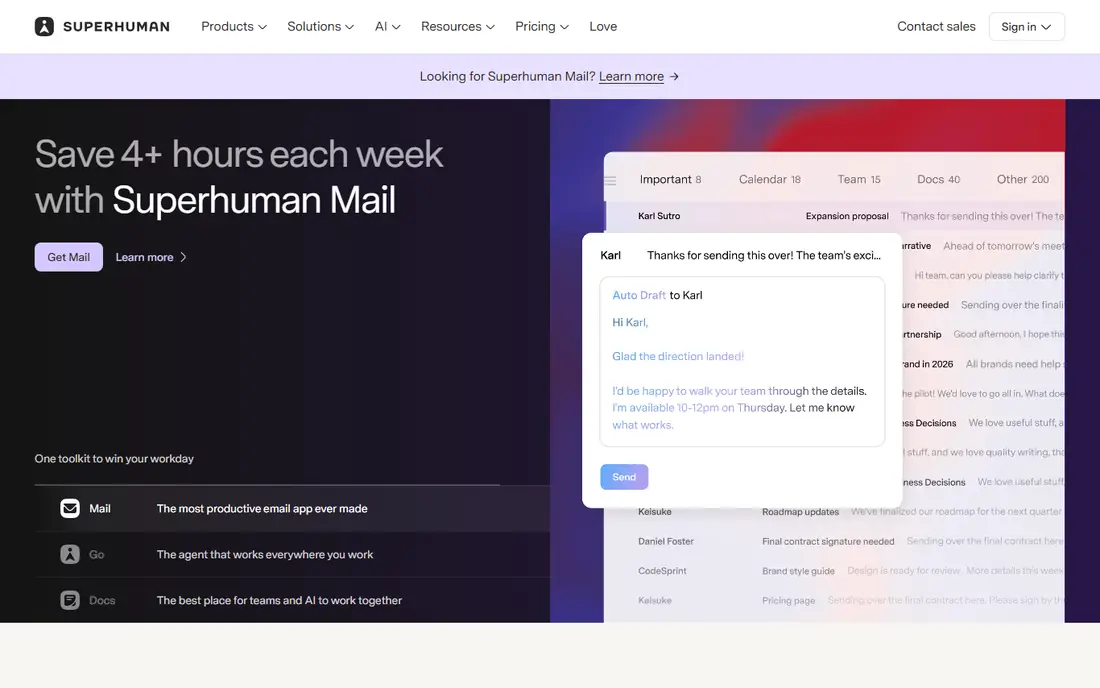
For people who want a clear starting point, this one earns attention first for a specific job rather than for trying to do everything. Superhuman is built for people who process a large inbox every day and want speed above all else. It suits executives, founders, and sales leaders who already use Gmail or Outlook. Its main strength is its keyboard-first design and split inboxes let a heavy user triage mail in focused blocks instead of scrolling through one long list.
The honest weakness is this: the monthly cost is hard to justify for a light inbox, and the full value only appears after learning its shortcuts and workflow. Check that limit before you commit, using a short trial with real work.
- Very fast keyboard workflow, AI drafting and summaries, split inboxes
- Higher price, no free plan, Gmail and Outlook only
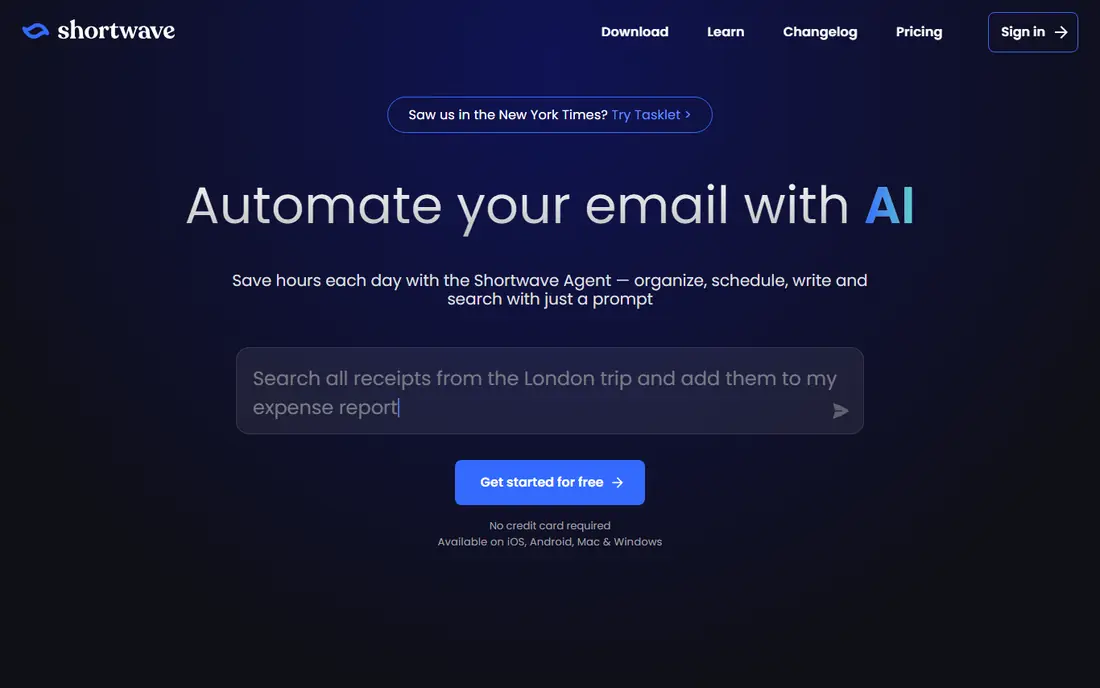
This option stands out when the work is regular and time matters more than having the longest feature list. Shortwave treats Gmail as a searchable workspace, which helps when answers hide in old threads. It suits people who search mail as often as they read new mail. Its main strength is its natural language search and thread summaries make it easier to find a decision, a quote, or a deadline without opening dozens of messages.
The honest weakness is this: Gmail-only support rules it out for Outlook users, and the free tier limits the AI features that make it most useful. Check that limit before you commit, using a short trial with real work.
- Strong AI search over past mail, thread summaries, AI drafting
- Gmail only, paid plans needed for full AI features, pricing has changed often
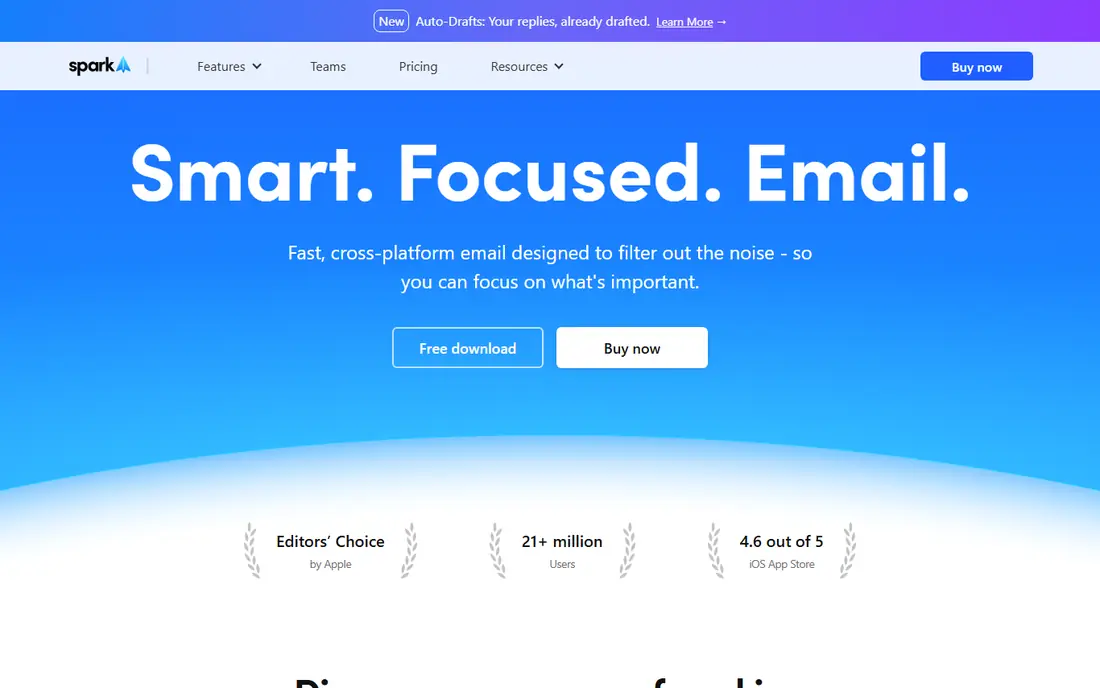
A practical choice for teams that already know their workflow, this product fits best where its main strength lines up with daily tasks. Spark is a good middle ground for people who do not want to manage five inboxes in five apps. It suits freelancers and small teams with mixed accounts. Its main strength is its unified smart inbox and cross-platform apps keep personal and work mail in one place without forcing a provider switch.
The honest weakness is this: the most useful AI help is limited on the free plan, so buyers should check which tier covers the drafting and summary features they need. Check that limit before you commit, using a short trial with real work.
- Unifies Gmail, Outlook, iCloud and IMAP, smart inbox, AI writing help
- Some advanced features sit on higher tiers, team features add cost
We include this one because it solves a narrower problem well, and that focus is often what makes it easier to adopt. SaneBox is different because it works in the background of the app you already use. It suits people who like their current client but hate the noise. Its main strength is its filtering sorts newsletters, notifications, and copied mail into separate folders so the main inbox stays focused on direct messages.
The honest weakness is this: it does not replace an email client or add strong drafting, so buyers who want a new interface should look elsewhere. Check that limit before you commit, using a short trial with real work.
- Works with any email client, header-based filtering, folders for low priority mail
- No full email client, AI drafting is not its focus, price rises with accounts
If budget or simplicity is the main constraint, this is the kind of option that deserves a closer look before paying for a larger platform. Fyxer suits managers and client-facing staff who answer similar mail all day. It works inside Gmail or Outlook, so there is less to relearn. Its main strength is its pre-written drafts can cut the time spent on routine replies, especially when tone and past context are handled well.
The honest weakness is this: draft quality varies by topic and writing style, and some users will still edit most drafts before sending, which reduces the time saved. Check that limit before you commit, using a short trial with real work.
- Pre-drafts replies in Gmail or Outlook, sorting, meeting notes
- Higher price than simple clients, value depends on draft quality for your writing style
This pick suits buyers who need depth in one area and are willing to accept a learning curve in return for that depth. Missive fits support, sales, and operations teams that answer one shared address together. It suits teams that need assignment and internal discussion without leaving mail. Its main strength is its shared inbox, assignment, and comment features make it clear who owns each thread and what has already been answered.
The honest weakness is this: a solo user pays for team features they may never use, and the team needs agreed rules for assignment or threads can still stall. Check that limit before you commit, using a short trial with real work.
- Shared inboxes, team chat around mail, automation and integrations
- Priced for teams, less appealing for one person, setup takes planning
For buyers comparing several similar tools, this one is worth shortlisting because its trade-offs are easy to understand. Canary suits people who care about encryption and control and who use Apple devices or Windows. It offers a familiar mail client with added privacy options. Its main strength is its focus on security and a clean unified inbox appeals to users who want one app for several accounts without giving up privacy controls.
The honest weakness is this: platform differences can surprise buyers, so check the exact feature set for your device before relying on a specific security or AI feature. Check that limit before you commit, using a short trial with real work.
- Privacy and security features, AI summaries, unified inbox
- Some features vary by platform, smaller ecosystem than Gmail or Outlook clients
Our last pick here rounds out the list with a different balance of price, control, and ease of use. For many readers, the simplest option is the one already installed. Gmail with Gemini suits Workspace teams and personal Gmail users who want light AI help without a new subscription. Its main strength is its built-in summaries and drafting help work where mail already lives, which removes setup and keeps attachments, calendar, and Drive close at hand.
The honest weakness is this: it will not match a dedicated client for speed, shared inbox work, or advanced triage, and the strongest features may need a paid Google plan. Check that limit before you commit, using a short trial with real work.
- Already included for many Gmail users, summaries and drafting help, no new app to learn
- AI depth depends on your Google plan, less control than a dedicated client, Google account required
How we picked these
We started with products that exist and work in October 2026 and that truly fit the topic, not products that only mention a related keyword. We compared official feature pages, pricing pages, app store listings, privacy policies, and public reviews, and we left out any price we could not verify, marking it as See website instead. We mixed well-known leaders with strong smaller options so the list is useful for different budgets and team sizes.
We also weighed who each product is really for, one concrete strength, and one honest weakness. A product that is excellent for a large team can be a poor fit for one person, and a low starting price can hide limits on seats, volume, or support. Use the comparison table to narrow the list to two or three options, then test those options with your own files, events, or data before you buy.
How to choose the right option for you
Start with the constraint you cannot change, such as provider, file type, team size, or budget. That single constraint often removes half the list at once. Then rank the remaining options by the one job you do most often, not by the longest feature list, because the tool you use daily matters more than a feature you might use once a quarter.
Next, look at total cost, not just the starting price. Add seats, volume, add-ons, and support, and check whether the free plan covers the feature you actually need. A higher starting price can be cheaper overall if it includes the seats and volume you need, while a low price can rise fast once your team grows.
Finally, run a small pilot. Use real files, real customers, or real data, and set a clear pass mark before you start, such as time saved, errors avoided, or reports delivered on time. If a tool cannot pass that test in two weeks, it is unlikely to pass it in a year, no matter how strong its marketing looks.
FAQ
What is the best option for best ai email tool?
The best choice depends on your main job, budget, and current tools. Start with the table, pick the two options whose Best for column matches your work, and test them with real tasks. A tool that fits your daily workflow will beat a more powerful tool that your team avoids using.
Is there a free option for best ai email tools?
Some options on this list offer a free plan or a free trial, but free tiers usually limit seats, volume, or advanced features. Check the Free plan column in the table, then confirm on the vendor site which features are included, since free plans change more often than paid plans.
How much should I expect to pay for best email ai tools?
Costs vary widely by seats, volume, and add-ons, so use the Starting price column as a guide only. For quote-based tools, ask for a written quote that lists seats, volume limits, support, and renewal terms. That quote is the only price you can compare fairly across vendors.
What should I check before I buy?
Check compatibility with your current tools, data export options, support hours, and contract terms. Also check who owns your data and how you can leave the service. A tool that makes export easy is safer to try, even if it costs a little more at the start.
Can I switch later if I pick the wrong one?
In most cases, yes, but switching costs time and data cleanup, so export a sample early and test it in the new tool. Keep your source files and records outside any single vendor where possible. That habit makes a future switch far less painful.
Sources
https://superhuman.com https://www.shortwave.com https://sparkmailapp.com https://www.sanebox.com https://www.fyxer.com https://missiveapp.com https://canarymail.io https://www.google.com/gmail/about/