Best AI Development Company in USA in 2026: 8 Companies Compared
Compare the best AI development company in USA options for custom AI, agents, and machine learning, from large firms to specialist studios in 2026 today.
- Editor's choice
 LeewayHertz
Enterprise AI agents and LLM systems
Starts atSee websiteVisit leewayhertz.comFull review - Great alternative
 Accenture
Large scale AI transformation
Starts atSee websiteVisit accenture.comFull review - Also consider
 IBM
Regulated industries and governed AI
Starts atSee websiteVisit ibm.comFull review
TL;DR:
- LeewayHertz and large firms suit enterprise projects that need broad AI, data, and integration skills in one engagement.
- Specialist studios such as SoluLab, Markovate, and Simform suit mid market teams that want a focused product team.
- Check production work, not demos, and ask how the firm handles data privacy, model updates, and ongoing support.
- Pricing is usually project based, so get a scoped quote and a written plan for ownership of code, data, and models.
Quick comparison
| Tool | Best for | Starts at | Free plan? | |
|---|---|---|---|---|
| LeewayHertz | Enterprise AI agents and LLM systems | See website | No | Visit |
| Accenture | Large scale AI transformation | See website | No | Visit |
| IBM | Regulated industries and governed AI | See website | No | Visit |
 Cognizant | Large scale enterprise AI and IT | See website | No | Visit |
 SoluLab | Mid market AI and product builds | See website | No | Visit |
 Markovate | Fast startup AI delivery | See website | No | Visit |
 Simform | Cloud native AI product teams | See website | No | Visit |
 10Pearls | Product engineering with AI | See website | No | Visit |
The best AI development companies in USA
Hiring an AI development company is a high stakes choice, because a polished demo is easy to show and a production system is much harder to ship. The firms below range from large consultancies to specialist studios, and the right fit depends on project size, data readiness, and how much internal engineering you have. Ask for production examples, references, and a clear plan for support after launch.
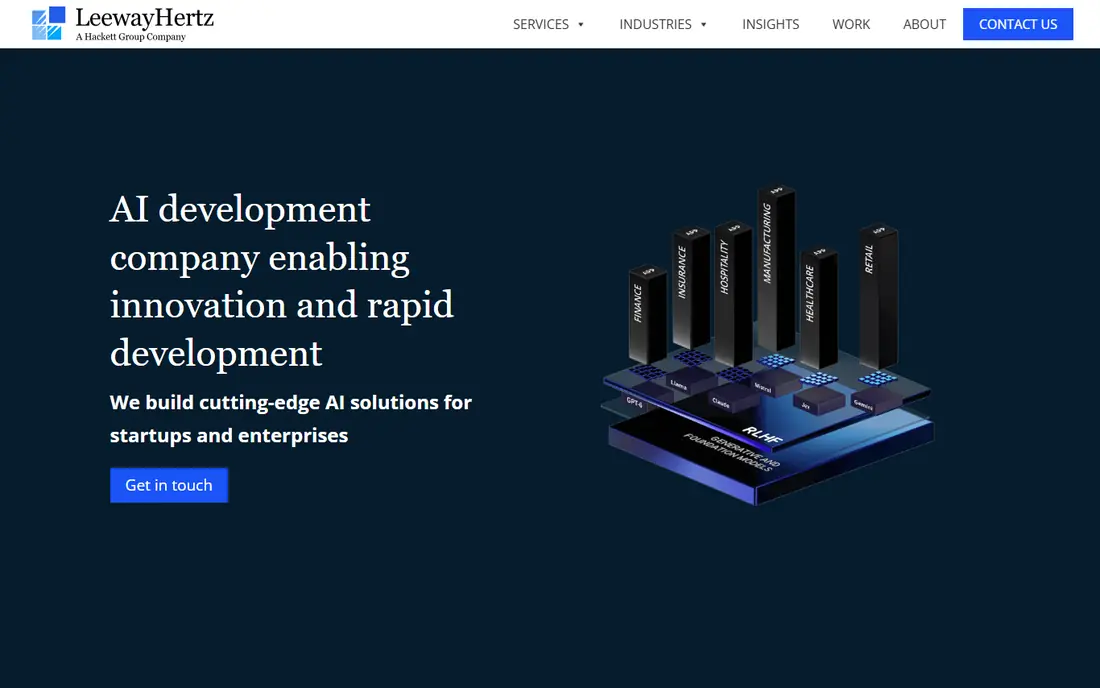
LeewayHertz sits near the top of many US AI lists because it covers agents, language models, and retrieval systems for enterprise clients. It suits companies with complex systems and a technical team that can work alongside the vendor, rather than a team that wants a simple one off chatbot.
On the practical side, LeewayHertz fits best when you value enterprise ai agents and llm systems over a long list of extras you may never open. The vendor pages we checked describe broad ai engineering range in plain terms, and that focus shows in how the offer is presented. If you like a short setup path and a clear next step, this is a sensible place to start your shortlist.
The honest catch is enterprise pricing. That trade off does not make LeewayHertz a poor choice, but it does mean you should confirm it against your own workload, budget, and support needs before you sign up. A short trial, a demo call, or a careful read of the pricing page will usually settle the question quickly.
- Broad AI engineering range
- Agent and retrieval systems
- US presence
- Enterprise pricing
- May be more than a small project needs
Accenture fits large organizations that need AI tied to wider business change, data work, and systems integration. The scale is a strength when many teams and systems are involved, and a drawback when you want a small, fast product team with direct access to builders.
What stands out in day to day use, based on the official feature pages and public reviews we compared, is the emphasis on large scale ai transformation. That emphasis lines up with global scale, which matters more than a long feature list when you are choosing under time pressure. We would still check the current plan details before you commit, since vendors change tiers during the year.
Before you commit, weigh large firm process against what you gain. Every option on this list has a weakness, and the right pick is often the one whose weakness bothers you least. With Accenture, that means checking whether the limitation touches the work you do most often, or only an edge case you can work around.
- Global scale
- Enterprise and public sector experience
- Broad consulting range
- Large firm process
- Small projects may not fit
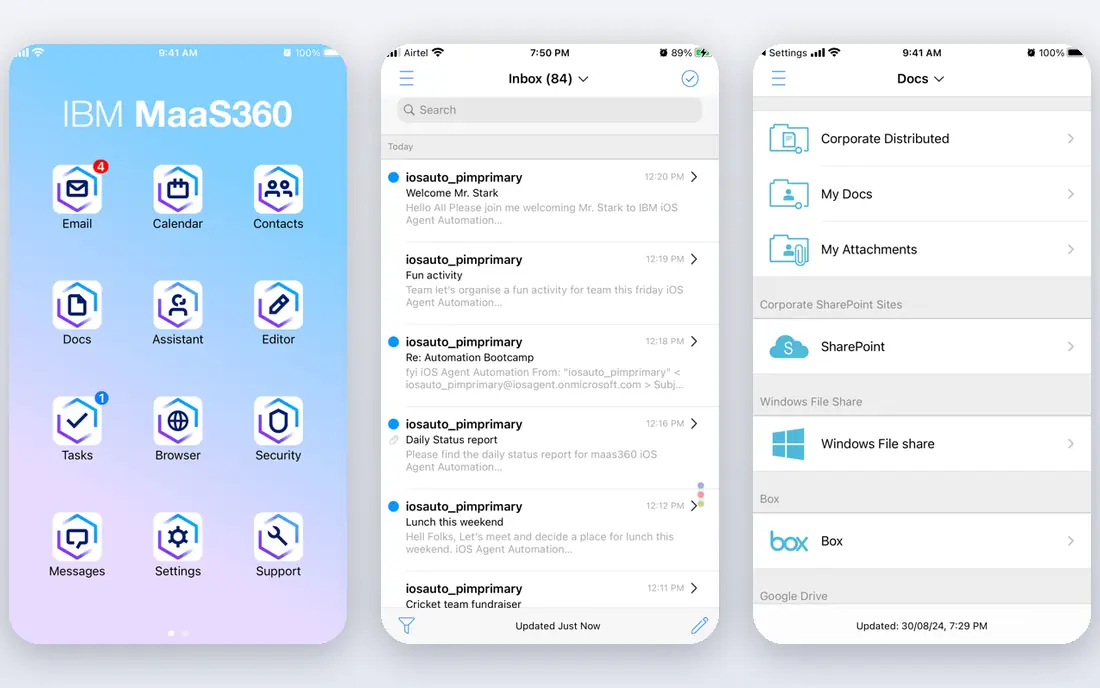
IBM appeals to regulated firms that need governance, audit trails, and control over models and data. The watsonx range gives large teams a platform story, not just a single project, though smaller firms may find the engagement heavier than they need.
For buyers who want a clear reason to choose one name over another, IBM makes its case through regulated industries and governed ai. The published material points to watsonx platform as a central part of the offer, rather than a side note. That clarity helps when you are comparing several options and need to explain the choice to a colleague or a partner.
The main reason to pause is platform and service costs can be high. If that limitation is central to your plans, look at another entry on this list first. If it is minor for your situation, the strengths above may still make IBM the best fit, and you can plan around the gap from the start.
- Watsonx platform
- Governed AI focus
- Enterprise integration
- Platform and service costs can be high
- Sales process can be slow
Cognizant suits enterprises that already run large IT programs and want AI added by a vendor with delivery scale. The key question is team quality for your specific project, so ask who will actually build the work and what they shipped recently.
A useful way to judge Cognizant is to ask whether large scale enterprise ai and it is the problem you actually need solved this month. If the answer is yes, then large delivery teams gives you a concrete reason to keep it on the list. If the answer is no, a simpler or cheaper option may serve you better, even if this name is more widely known.
No option here is perfect, and Cognizant is no exception, because large firm overhead. We include it because its strengths are real for the right buyer, not because it suits everyone. Match the weakness to your own use case, and the decision becomes much easier.
- Large delivery teams
- Enterprise IT and AI range
- Global reach
- Large firm overhead
- Project fit depends on the assigned team
SoluLab fits mid market companies that want a product team, not just advice, and that need AI mixed with a working app or platform. The range covers AI, blockchain, and product work, so it suits firms with a clear product goal and a budget below enterprise consultancy rates.
On the practical side, SoluLab fits best when you value mid market ai and product builds over a long list of extras you may never open. The vendor pages we checked describe ai plus product engineering in plain terms, and that focus shows in how the offer is presented. If you like a short setup path and a clear next step, this is a sensible place to start your shortlist.
The honest catch is smaller scale than large consultancies. That trade off does not make SoluLab a poor choice, but it does mean you should confirm it against your own workload, budget, and support needs before you sign up. A short trial, a demo call, or a careful read of the pricing page will usually settle the question quickly.
- AI plus product engineering
- Web and mobile range
- Mid market focus
- Smaller scale than large consultancies
- Check recent client references
Markovate appeals to startups and growth companies that want to ship an AI feature quickly and learn from real users. The pace is the draw, and the trade off is that larger firms may need more formal governance and documentation than a startup team usually provides.
What stands out in day to day use, based on the official feature pages and public reviews we compared, is the emphasis on fast startup ai delivery. That emphasis lines up with startup friendly delivery, which matters more than a long feature list when you are choosing under time pressure. We would still check the current plan details before you commit, since vendors change tiers during the year.
Before you commit, weigh smaller team against what you gain. Every option on this list has a weakness, and the right pick is often the one whose weakness bothers you least. With Markovate, that means checking whether the limitation touches the work you do most often, or only an edge case you can work around.
- Startup friendly delivery
- AI agents and generative AI focus
- US presence
- Smaller team
- Enterprise governance may need extra care
Simform suits teams building on AWS or Azure who want AI added to a product by engineers who know those clouds well. That cloud alignment helps with deployment and scaling, though firms with strict on premise rules should confirm the approach before signing.
For buyers who want a clear reason to choose one name over another, Simform makes its case through cloud native ai product teams. The published material points to aws and azure native work as a central part of the offer, rather than a side note. That clarity helps when you are comparing several options and need to explain the choice to a colleague or a partner.
The main reason to pause is cloud focus may not suit on premise needs. If that limitation is central to your plans, look at another entry on this list first. If it is minor for your situation, the strengths above may still make Simform the best fit, and you can plan around the gap from the start.
- AWS and Azure native work
- Product engineering range
- Mid market focus
- Cloud focus may not suit on premise needs
- Check team availability
10Pearls fits companies that want design, engineering, and AI in one product engagement, rather than hiring separate vendors. The full team model helps when the product needs more than a model, including user experience, testing, and launch support.
A useful way to judge 10Pearls is to ask whether product engineering with ai is the problem you actually need solved this month. If the answer is yes, then full product teams gives you a concrete reason to keep it on the list. If the answer is no, a simpler or cheaper option may serve you better, even if this name is more widely known.
No option here is perfect, and 10Pearls is no exception, because larger engagement model. We include it because its strengths are real for the right buyer, not because it suits everyone. Match the weakness to your own use case, and the decision becomes much easier.
- Full product teams
- Design plus engineering
- US and global delivery
- Larger engagement model
- Small scoped work may be less of a fit
How we picked these
We compared official pricing pages, feature pages, and app store listings, and we checked public reviews for recurring complaints and praise. We kept only names that exist and work today, in October 2026, and that truly fit the topic, rather than names that only mention the topic in passing. We also favored options with clear pricing or a clear route to a quote, and we noted where pricing depends on your situation, so you can verify the current figure on the vendor site before you buy.
How to choose an AI development company
Start with the problem, not the model
Write down the decision or task you want AI to improve, the data you already have, and how you will measure success. A good vendor will push back if the data is thin or the goal is vague. A vendor that promises a model before it understands your data and workflow is a warning sign.
Check production work and references
Ask for systems running in production, not just demos, and ask how the firm handled failures, model drift, and support after launch. Speak to two recent clients with a similar project size, and ask about timeline slips, communication, and total cost, including support in year two.
Settle data, privacy, and ownership early
Agree in writing who owns the code, prompts, fine tuned models, and training data, and how customer data is stored and protected. Ask about model providers, data retention, and compliance needs for your industry. These terms are much harder to fix after the build is underway.
Price the whole engagement
Project fees are only part of the cost, since hosting, model API fees, monitoring, and updates continue after launch. Ask for a total cost estimate for year one, a support plan, and a clear change process. A fixed scope with a clear exit plan protects both sides when requirements change.
FAQ
### How much does custom AI development cost in the USA?
Costs vary widely by scope, data work, and team size, and most firms quote per project rather than publishing a fixed price. A small scoped agent may cost far less than a multi system enterprise build. Get at least two scoped quotes with the same requirements, so you compare like with like.
### Should I hire a large firm or a specialist studio?
Large firms suit complex, regulated, multi team programs where governance and scale matter. Specialist studios suit focused product builds where speed and direct access to builders matter more. Your internal team size and your tolerance for process should guide the choice.
### What should I ask before signing?
Ask for production examples, named team members, a timeline with milestones, data handling terms, and a support plan. Also ask how the firm tests for wrong answers, bias, and security risks. Clear answers on those points tell you more than a sales deck.
### Do I need my data ready before I hire a firm?
You do not need perfect data, but you do need access to the data that matters and someone who understands it. A discovery phase can test data quality and set realistic goals. If your data is messy or locked in many systems, budget time for cleaning and access work.
### Who owns the AI system after delivery?
Ownership should be set in the contract, covering code, documentation, prompts, and any fine tuned models. Confirm hosting, model provider accounts, and handover training, so your team can run and update the system without depending on the vendor for every small change.