Best AI Cold Calling Software in 2026: 8 Tools Compared
Compare the best AI cold calling software for 2026, from Bland and Synthflow to Retell and Vapi, with consent, compliance, and call quality notes included.

- Editor's choice
 Bland AI
Developer-led outbound calling
Starts atSee websiteVisit bland.aiFull review - Great alternative
 Synthflow AI
No-code voice agents
Starts atSee websiteVisit synthflow.aiFull review - Also consider
 Retell AI
Low latency API voice agents
Starts atSee websiteVisit retellai.comFull review
TL;DR:
- Bland AI and Retell AI suit developer-led teams that want API control and per-minute pricing, while Synthflow suits no-code teams that want visual call flows.
- Vapi is a strong developer platform for custom voice agents, but it needs engineering time to reach production quality.
- Air AI targets full sales calling programs with managed setup, and its pricing is typically quoted rather than self-serve.
- Cold calling rules vary by jurisdiction, and they cover consent, calling hours, do-not-call lists, recording disclosure, and AI identity disclosure in some places.
- Only shortlist tools that support do-not-call suppression, opt-out handling, call recording controls, and CRM logging, and get legal review before a large campaign.
Quick comparison
| Tool | Best for | Starts at | Free plan? | |
|---|---|---|---|---|
| Bland AI | Developer-led outbound calling | See website | No | Visit |
| Synthflow AI | No-code voice agents | See website | Free trial | Visit |
| Retell AI | Low latency API voice agents | See website | Free trial | Visit |
 Vapi | Custom developer voice agents | See website | Free trial | Visit |
 Air AI | Managed AI sales calling | See website | No | Visit |
 Hyperbound | AI sales roleplay and coaching | See website | Free trial | Visit |
 SalesCloser AI | Small business AI closers | See website | Free trial | Visit |
 Lindy | Workflow plus phone agents | See website | Free trial | Visit |
The best AI cold calling software
AI cold calling software uses a voice agent to place outbound calls, qualify a prospect, book a meeting, or follow a scripted conversation. The tools below differ in how much code they need, how they price minutes, and how much compliance support they offer. Note: cold calling rules vary by jurisdiction. Check consent, do-not-call, calling hours, recording, and AI disclosure rules for each place you call, and get legal advice before running a large program.
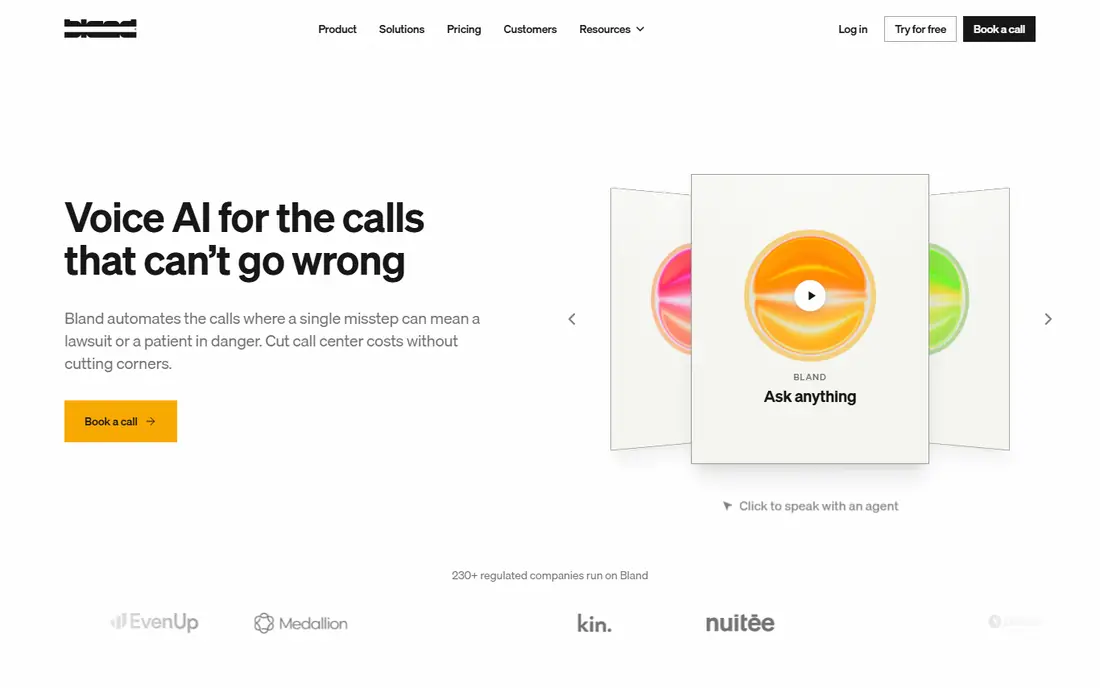
Bland AI is an API first platform for building phone agents that can place and receive calls, follow a conversational path, and log outcomes. Developers define the agent, the voice, the knowledge it can use, and what happens after a call, such as a CRM update or a transfer to a human. That control suits teams with an engineering resource and a clear calling workflow, rather than a team that wants a ready-made dialer.
The weakness is that Bland is not a simple plug and play sales tool. Setup, prompt tuning, and testing take work, and costs depend on minutes, telephony, and optional features, so a pilot budget should be based on real call lengths. For compliance, Bland users still need their own do-not-call suppression, consent checks, and disclosure scripts. Use it when you have developers and a defined use case, not as a first experiment with no technical owner.
- API first voice agents
- Per-minute pricing model
- Multilingual support and voice options
- Needs developer setup
- Per-minute costs add up with long calls and add-ons

Synthflow AI lets non-developers build voice agents with a visual flow, connecting greetings, questions, branching logic, transfers, and CRM actions without writing code for every step. That makes it a good fit for sales and operations teams that want to test an AI caller quickly, adjust scripts from call recordings, and scale a working flow. Integrations with common CRMs and contact center tools help keep call outcomes in the system of record.
The catch is pricing shape. Smaller self-serve options have changed over time, and larger programs move to quoted enterprise terms, so a team should confirm included minutes, overage rates, and any quality or routing add-ons before forecasting cost. Compliance still sits with the buyer: configure do-not-call lists, calling windows, opt-outs, and disclosure language in the flow, and review recordings early to catch awkward or non-compliant phrasing.
- Visual workflow builder
- CRM and telephony integrations
- Trial available to test call quality
- Enterprise pricing for larger programs is quoted
- Advanced quality add-ons can raise the effective per-minute cost
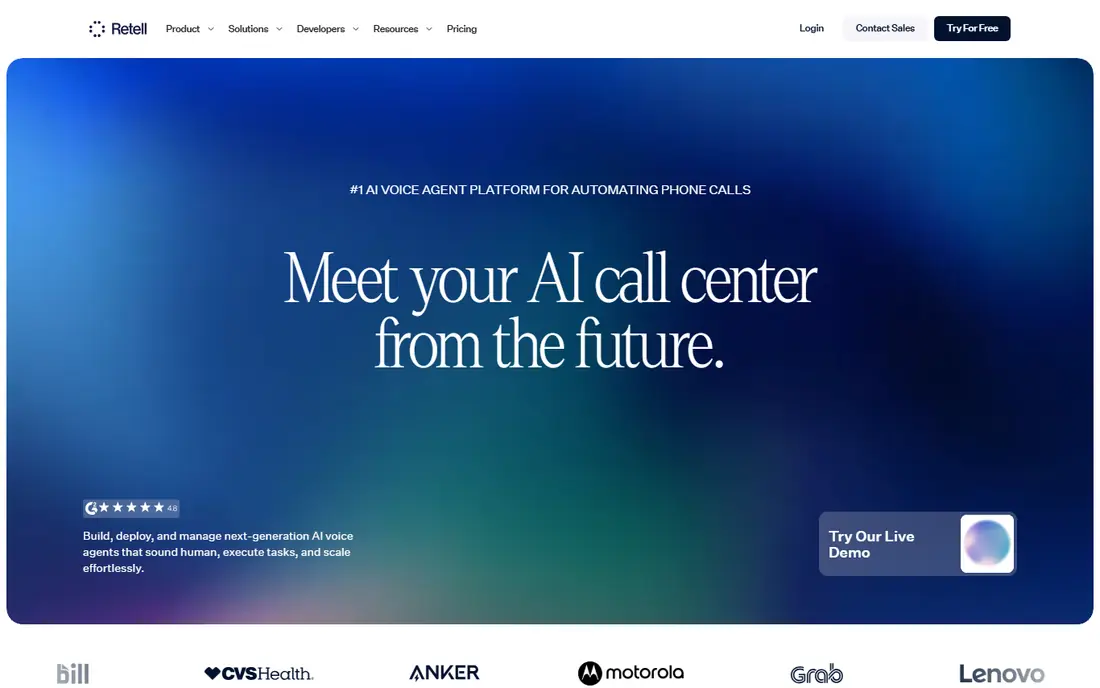
Retell AI is a developer platform for voice agents that emphasizes fast responses and natural interruption handling, two factors that decide whether a cold call feels like a conversation or a recording. Teams can bring their own telephony, choose voices, and build agents for outbound qualification, inbound support, or appointment setting. Its pay-as-you-go shape appeals to pilots, because a team can test with a modest minute volume before committing to a larger plan.
The limit is the same as other API platforms. Retell gives you the voice engine, not a finished sales campaign, so script design, list quality, compliance controls, and CRM logging are still your job. Test interruption handling, silence handling, and transfer behavior on real prospects, not just on internal staff, because prospects react differently to pauses and to AI disclosure statements.
- Low latency voice handling
- No platform fee on basic usage in published comparisons
- Custom voice options
- API first, so it needs engineering
- Telephony and model costs sit on top of the platform rate in some setups
Vapi is a flexible voice agent platform for developers who want control over speech models, language models, voices, and call logic. That flexibility suits product teams building a voice feature into their own app, as well as sales teams with engineering support that want a custom outbound agent. It can handle inbound and outbound calls, transfers, function calls to internal tools, and recording for review.
The downside is effort and cost variability. Because Vapi lets you choose components, the total per-minute cost depends on those choices, and a careless model choice can raise the bill without improving call quality. Compliance controls also need to be built into the agent and the calling list process. Choose Vapi when customization matters more than a ready-made sales workflow.
- Flexible API for custom voice agents
- Bring your own models and voices
- Broad integration options
- Requires engineering and tuning
- Cost depends on model, voice, and telephony choices
Air AI positions itself as a conversational AI for sales calling, with agents that can hold long, human-like sales conversations, handle objections, and book meetings. Unlike API platforms, Air AI leans toward a managed, sales led deployment, which can suit a company that wants an AI calling program without building it internally. That managed angle is also why pricing is usually discussed with sales rather than published as a simple self-serve rate.
The honest catch is fit and cost. Air AI is not a cheap tool to try for a weekend, and a small business with a short list may get better value from a self-serve platform. For a larger sales organization with a clear list, a defined offer, and legal review in place, Air AI is worth a demo, with close attention to consent, disclosure, and do-not-call handling in the managed setup.
- Full sales calling focus with managed setup
- Designed for large outbound programs
- Human-like conversation design
- Pricing is typically quoted and substantial
- Less suited to small, self-serve pilots
Hyperbound is different from the other tools here, because its main job is AI powered sales training, not live prospecting. Reps practice against AI buyers that respond like real prospects, handle objections, and score the conversation. That makes it a useful companion to an AI cold calling program: a team can test scripts, objection handling, and disclosure language in practice before those words reach a real prospect.
The limit is scope. Hyperbound does not replace an outbound voice agent, and a buyer who only wants live cold calls will be disappointed. Use it to train human reps, to test AI scripts safely, and to improve call quality. If live AI calling is the goal, pair it with one of the agent platforms above, and keep the coaching loop running as scripts change.
- AI buyers for realistic sales practice
- Coaching and scoring for reps
- Useful before live AI or human calling
- Not a general outbound dialer
- Value depends on coaching adoption, not just call volume
SalesCloser AI targets small and mid-size businesses that want an AI agent to qualify leads, answer common questions, and book meetings without building a voice platform from scratch. Its sales focused templates shorten setup compared with API only tools, and a trial lets a team hear how the agent handles a real conversation before paying for volume. For a business with a clear offer and a steady inbound or outbound list, that simplicity is appealing.
The weakness is scale and depth. SalesCloser AI has a smaller integration and partner footprint than Bland, Synthflow, Retell, or Vapi, so check CRM, calendar, and telephony links before committing. Compliance is also not automatic: the buyer must still supply do-not-call suppression, calling hours, consent evidence, and disclosure wording. Treat the trial as a compliance test as well as a quality test.
- Sales focused AI agents with booking and qualification flows
- Simpler setup than raw API platforms
- Trial to test fit
- Smaller ecosystem than the leading platforms
- Compliance setup still needs buyer review
Lindy is a broader AI agent and workflow platform that also supports phone agents, which suits teams that want calling tied to other automation, such as lead routing, email follow-up, and CRM updates. A team can build an agent that calls, logs the outcome, and triggers the next step without stitching several tools together. That breadth is useful for small operations teams that need one automation home.
The trade-off is specialization. Lindy is not a dedicated voice platform, so teams that need very low latency, custom voice cloning, or high volume outbound tuning may prefer Retell or Vapi. For moderate volume calling inside a wider workflow, Lindy is a practical, lower friction option, provided compliance controls are configured and tested before live use.
- Phone agents inside broader workflow automation
- Templates for common business tasks
- Lower starting cost than enterprise voice platforms
- Phone calling is one feature among many
- Deep voice tuning is less specialized than dedicated voice platforms
How we picked these
We compared official feature pages, pricing pages, and public documentation, plus public reviews and pricing comparisons, for tools that actually place or support AI driven cold calls. We favored tools available now, with clear voice agent, CRM, or workflow features, and we included a training tool because script quality and compliance practice matter for this category. We did not claim hands-on testing, and we used See website where pricing is quoted or varies by minute and model choices.
Compliance and quality checks before you dial
Cold calling rules vary by jurisdiction, and they are not a footnote. In the United States, federal and state rules cover do-not-call lists, consent for certain calls, calling hours, caller ID, and recording consent, which differs by state. Some jurisdictions also require disclosure when a caller is an AI system. In other countries, consent and data rules can be stricter, so a list that is legal in one place may not be legal in another.
Build a checklist before any campaign. Suppress national and internal do-not-call numbers, honor opt-outs immediately, set calling windows by the prospect time zone, disclose AI identity where required, and record calls only with proper consent and storage controls. Test the agent on edge cases: an angry prospect, a request to stop calling, a wrong number, a voicemail, and a transfer request. Review recordings weekly at first, and pause a script that produces misleading claims, pressure tactics, or unclear disclosure.
What makes a cold call agent sound credible
Short sentences, natural pauses, and a clear reason for calling help more than a long pitch. The agent should state who it represents, why it is calling, and what it wants next, then listen. If a prospect asks for a human, transfer quickly. If a prospect says no, end politely and log the opt-out. A high contact rate with a high complaint rate is not success.
FAQ
What is the best AI tool for cold calling?
The best AI tool for cold calling depends on team skill. Synthflow suits no-code teams, Bland, Retell, and Vapi suit developer-led teams, and Air AI suits managed, larger sales programs. Start with a small pilot and compare contact, meeting, and complaint rates, not just call volume.
What is the top AI cold calling software for small businesses?
For small businesses, Synthflow, SalesCloser AI, and Lindy are the most approachable starting points, because setup is simpler than raw API platforms. Keep volume modest at first, test compliance controls, and confirm total per-minute cost before scaling.
Is AI cold calling legal?
It can be legal, but rules vary by jurisdiction and by call type. Consent, do-not-call lists, calling hours, caller ID, recording consent, and AI disclosure rules all matter. Get legal review for your calling lists and scripts, and do not rely on a vendor claim alone.
How much does AI cold calling software cost?
Most platforms charge per minute, plus telephony and optional model or voice costs, while some charge a platform fee or a quoted enterprise rate. Always model cost at your real average call length, because long calls and transfers change the bill quickly.
Do prospects know they are talking to AI?
That depends on the script and on local rules. Some jurisdictions require AI disclosure, and many buyers expect it as good practice even where it is not clearly required. Disclose early, offer a human transfer, and avoid scripts that imply a human identity.