Best AI Audio Generation Tools in 2026: 8 Tools Compared
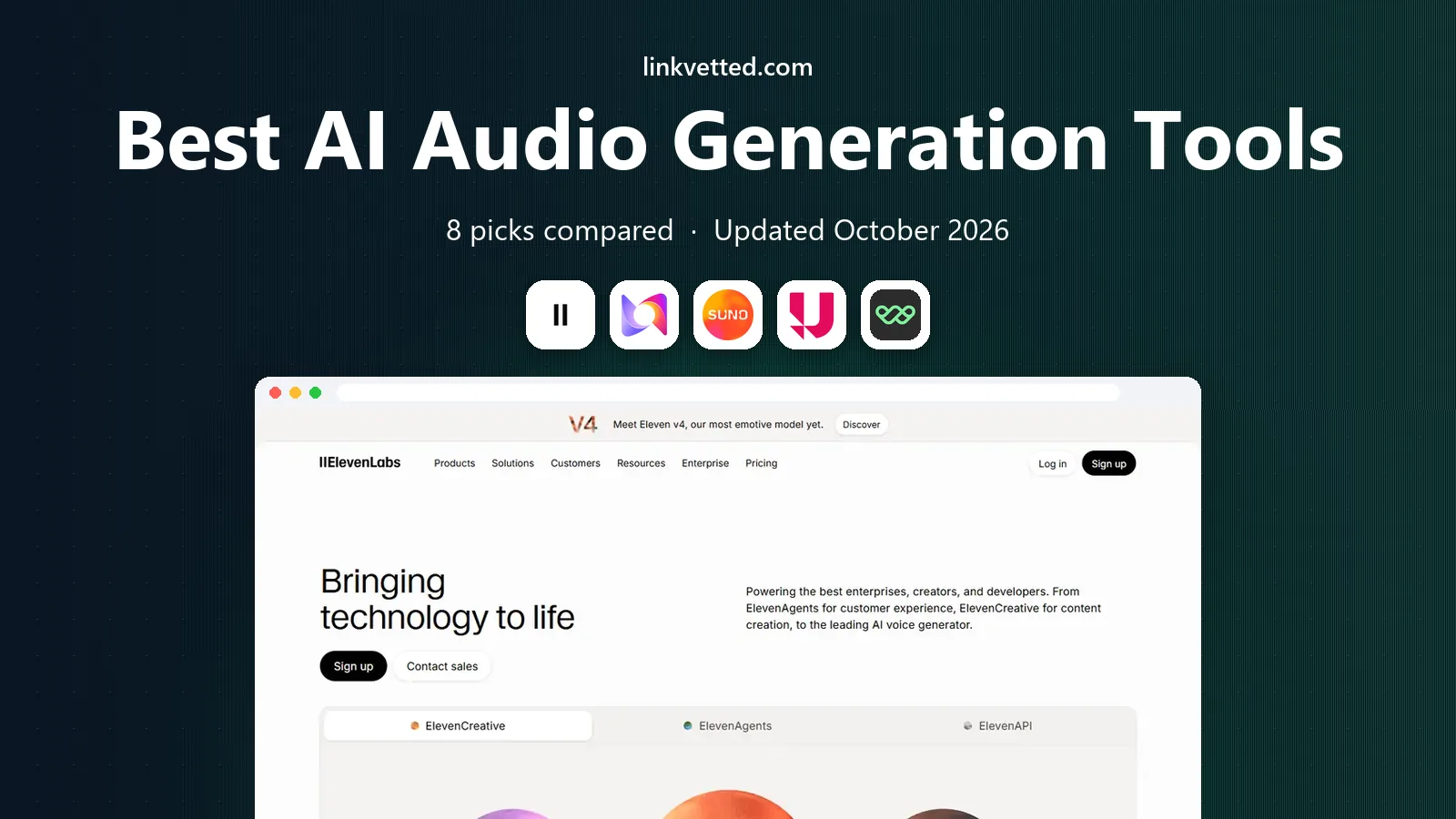
We compared the best ai audio generation tools for voice, narration and music, checking pricing, voice quality and commercial rights before you buy today.
- Editor's choice
 ElevenLabs
Realistic narration and cloning
Starts at$5 per monthVisit elevenlabs.ioFull review - Great alternative
 Murf AI
Scripted video and training voiceover
Starts at$19 per monthVisit murf.aiFull review - Also consider
 Suno
Full songs from text prompts
Starts at$10 per monthVisit suno.comFull review
TL;DR:
- ElevenLabs leads for realistic narration and voice cloning, while Murf AI suits scripted training and video voiceover work.
- Suno and Udio are the clearest picks for full songs, while Soundful and Mubert fit background music and loops.
- Commercial rights vary by plan, so check the licence terms before using generated audio in paid ads or client work.
- Voice cloning needs consent from the voice owner, and responsible tools ask for verification before cloning a real voice.
- Free tiers are useful for testing tone and pacing, but they rarely include commercial downloads.
Quick comparison
| Tool | Best for | Starts at | Free plan? | |
|---|---|---|---|---|
| ElevenLabs | Realistic narration and cloning | $5 per month | Yes | Visit |
| Murf AI | Scripted video and training voiceover | $19 per month | Yes | Visit |
| Suno | Full songs from text prompts | $10 per month | Yes | Visit |
 Udio | Song creation with more control | $10 per month | Yes | Visit |
 WellSaid Labs | Consistent brand narration | $10 per month | Free trial | Visit |
 Resemble AI | API voice cloning | See website | Yes | Visit |
 Soundful | Background music for video | See website | Yes | Visit |
 Mubert | Royalty free music streams | See website | Yes | Visit |
The best ai audio generation tools
AI audio generation covers two very different jobs: turning text into a human sounding voice, and turning a prompt into music. The tools below are grouped by that split, so you can compare voice tools with voice tools and music tools with music tools, rather than judging them all on one scale.
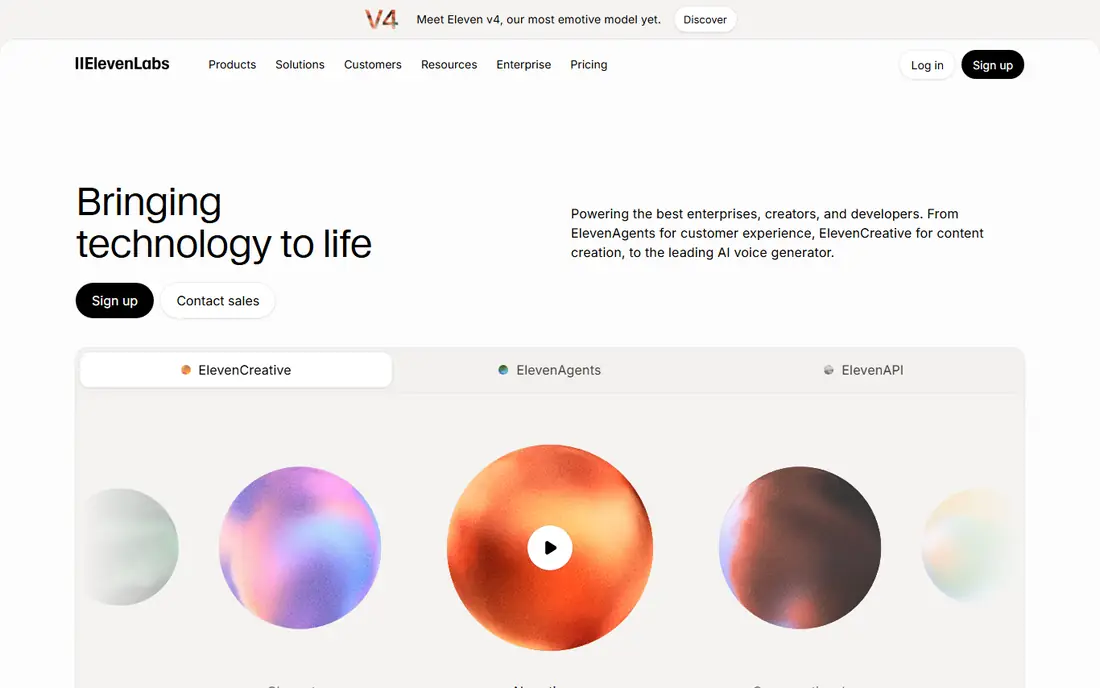
ElevenLabs is the benchmark most voice tools are measured against in 2026. Its voices handle pacing, emphasis and pauses in a way that sounds closer to a recorded narrator than to older text to speech systems. That matters for audiobooks, podcasts and long training narration, where a flat voice quickly loses listeners.
The Starter plan is listed at $5 per month, with a free tier offering a monthly credit allowance for testing. Voice cloning is available from early plans for instant clones, while professional cloning needs a higher tier and verification steps. The main drawback is billing by characters, not minutes, so a long script with many revisions can use credits faster than expected. Test with a real chapter or module before choosing a tier.
- Natural sounding voices in many languages
- Instant and professional voice cloning
- Clear credit based plans
- Character based billing can be hard to predict for long projects
- Professional cloning is gated to higher plans
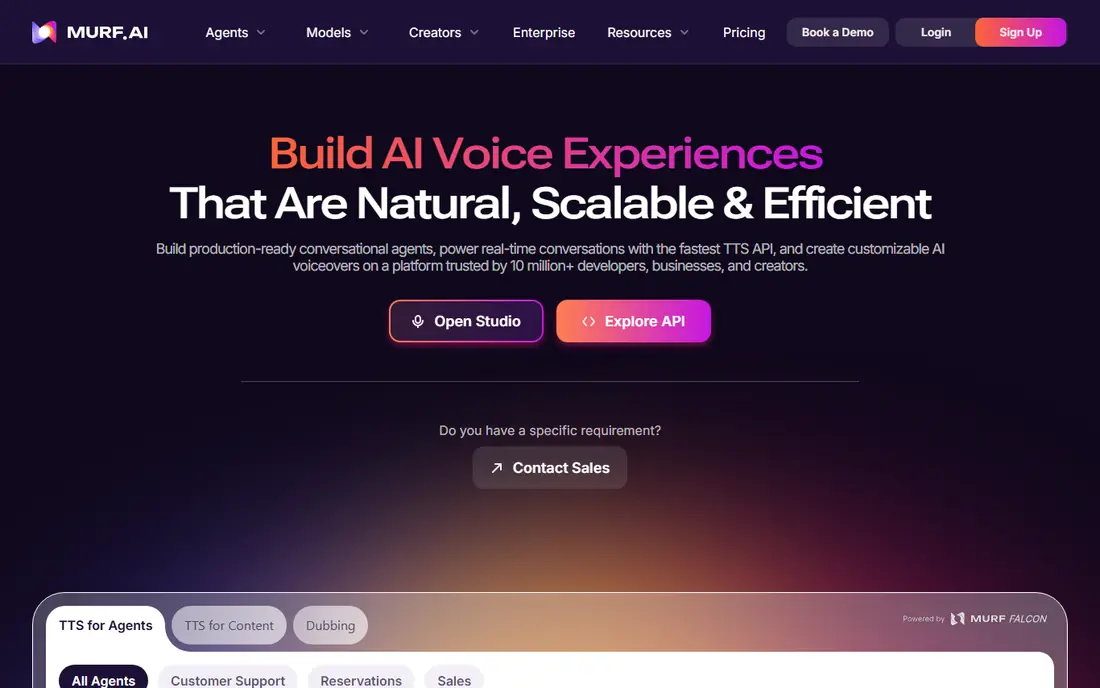
Murf AI is built around a studio workflow, not only a voice engine. You can paste a script, pick a voice, adjust pitch and pauses, and line the narration up with slides or video clips in the same editor. For training teams and course creators, that combined workflow saves time compared with generating audio in one tool and editing it elsewhere.
Pricing is based on minutes of generated audio, with creator plans starting around $19 per month on annual billing. A limited free tier lets you test voices, though commercial downloads need a paid plan. The trade off is voice realism: Murf voices are clear and professional, but for an audiobook or a dramatic narration, ElevenLabs still sounds more natural to most listeners.
- Timeline studio that pairs voice with slides and video
- Minute based billing is easy to forecast
- Wide voice library
- Voice cloning is mainly an enterprise feature
- Raw realism trails the top voice specialist for long narration
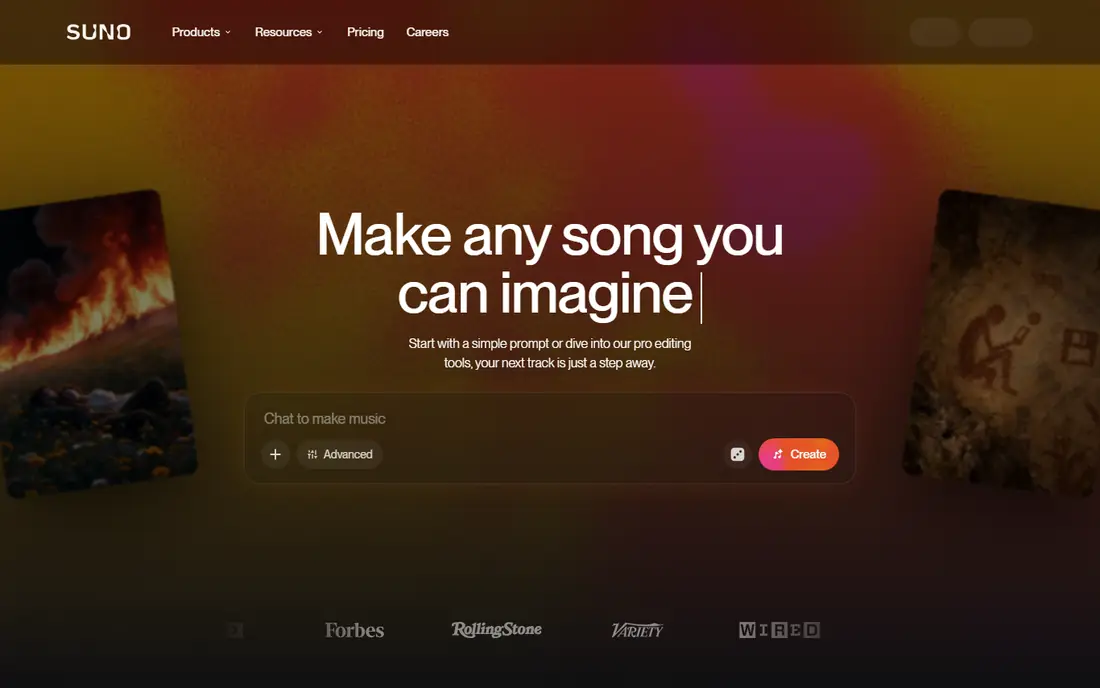
Suno turned AI music from short loops into complete songs. Type a style, a mood and some lyrics, or let the tool draft lyrics, and you get a structured track with verses and a chorus. For creators who need a theme song, a demo or a quick musical sketch, that speed is hard to match with traditional production.
Paid plans start at $10 per month, with a free tier for testing. Commercial use is tied to paid plans, so check the current terms before using a Suno track in a monetised video or a client project. The honest catch is quality control: a first generation often needs lyric edits and several regenerations before it sounds like a finished song rather than a promising draft.
- Creates full songs with vocals from a short prompt
- Simple prompt and lyric editing
- Active community for ideas
- Song structure and lyrics need editing for professional release
- Commercial rights depend on the paid plan
Udio appeals to songwriters who want more control than a single prompt allows. You can extend sections, edit parts of a track and steer the arrangement, which makes it feel closer to a writing partner than to a one shot generator. Vocal quality is a particular strength, especially for pop and electronic styles.
Entry pricing is around $10 per month, with a free tier for testing. Like Suno, Udio is best treated as a drafting and demo tool: the generated track is a starting point, and a finished release usually needs human mixing, mastering and lyric polish. If you only need background music without vocals, a loop based tool below may be faster and cheaper.
- Strong vocal quality for AI music
- More control over sections and edits
- Good for songwriters exploring ideas
- Interface and credit system take time to learn
- Output still needs human mixing for a polished release
WellSaid Labs focuses on a smaller set of polished voices rather than a huge library. That restraint is a benefit for brands: a training series or product explainer series sounds consistent from one module to the next, instead of drifting between voices. The voices are designed for clear corporate and educational narration, not for character acting.
The Starter plan is listed at $10 per month on annual billing, with a trial offering a small number of download minutes. Billing by downloaded minutes, rather than by generations, helps teams that iterate a lot before finalising a script. The limitation is language coverage and custom voice creation, which are fuller on enterprise plans than on self serve tiers.
- Consistent, professional English voices
- Download based billing is easy to understand
- Good for corporate narration
- Language range is narrower than the largest voice platforms
- Custom brand voices need an enterprise plan
Resemble AI suits developers and teams that need voice generation inside their own product. Its API covers text to speech and cloning, and it offers watermarking and detection features that help teams show that audio was AI generated. That provenance focus matters for companies that publish synthetic voices at scale.
A flex plan starts at $0 with pay as you go usage, so small API projects can start without a monthly subscription. The drawback is the creator experience: the dashboard is functional rather than delightful, and cloning seats and add ons can raise the bill. If you need a polished studio for manual narration, Murf or ElevenLabs will feel easier.
- Pay as you go option for API use
- Voice cloning with watermarking and detection tools
- Credits do not expire on the flex plan
- Dashboard feels less polished for non technical creators
- Clone add ons add cost beyond base usage
Soundful is for the common creator problem of needing music under a video without spending hours searching a stock library. Pick a genre and mood, generate a track, and adjust length and intensity to fit the edit. For YouTube videos, ads and social clips, that workflow is faster than commissioning music or editing stock tracks to fit.
A free tier lets you test generation, while paid plans add downloads and licensing options. Because pricing has changed over time, check the current plan page before budgeting. The honest limit is ambition: Soundful tracks work well behind narration, but they are not a replacement for a featured song with vocals and a distinct identity.
- Quick generation of background tracks by mood and genre
- Simple licensing for creators
- No musical skill needed
- Tracks are better for background use than as featured songs
- Pricing and plan details should be confirmed at checkout
Mubert takes a stream based approach to AI music. Instead of generating one fixed track, it can generate an ongoing flow of music in a chosen style, which suits livestreams, apps, games and long background playlists. That makes it useful when you need hours of music without repeating the same loop.
Free access lets you test streams, with paid plans adding commercial licensing and API use. The trade off is control: you steer mood and genre, but you do not shape a verse chorus structure in the way Suno or Udio allow. For background use, that is a fair exchange. For a single featured song, pick a song generator instead.
- Generates continuous music streams and loops
- Royalty free licensing for creators
- API option for apps and games
- Less control over exact song structure
- Best for ambient and background music rather than featured tracks
How we picked these
We compared official pricing pages, product documentation and public feature descriptions for tools that are live in October 2026. We included both voice and music generation, because the main keyword covers both, and we favoured tools with a free tier or trial so readers can test voices and music before paying. We left out tools reported as discontinued in 2026, including PlayHT, even though older lists still mention it, because a recommendation for a closed product would waste a reader's time.
What to check before you buy
Start by separating voice work from music work, then test with your real material. A voice that sounds good on a short demo sentence may sound tiring over a 20 minute module, and a song that sounds fun on first listen may not hold up after mixing.
Voice quality and rights
Listen to a full paragraph, not only a sample phrase, and check how the voice handles numbers, names and pauses. For commercial work, confirm that your plan includes commercial use and that cloned voices were created with consent. Keep a record of the licence terms for client projects, since terms change.
Music licensing and editing
For music, check whether your plan allows monetised use, client work and distribution to streaming services. Song generators usually reserve broader rights for paid plans, while loop and stream tools often use a simpler royalty free licence. Also check whether you can download stems or separate tracks, since that affects mixing.
Billing model
Voice tools bill by characters, minutes or credits, and music tools bill by generations, credits or subscriptions. Those units are not directly comparable. Run a small real project on a free tier or a monthly plan first, count what it actually used, and only then move to annual billing.
FAQ
What is the best AI audio generation tool for narration?
ElevenLabs is our pick for most narration work, thanks to natural pacing and a wide voice library. Murf AI is a strong second choice when you also need a studio that pairs voice with slides or video. Test both with the same script, since voice preference is personal and varies by topic.
Can I use AI generated music commercially?
It depends on the tool and plan. Most song and background music tools allow commercial use on paid plans, while free tiers often limit use to personal testing. Read the licence for your exact plan before using audio in ads, monetised videos or client work, and keep a copy of the terms.
Do I need consent to clone a voice?
Yes, you should only clone a voice with clear permission from the voice owner. Responsible platforms ask for verification, such as a spoken consent phrase, before creating a clone. Cloning a public figure or a colleague without permission can create legal and reputational risk, even if the tool allows it.
Is AI music good enough for a professional release?
It can be a strong starting point, but most professional releases still need human editing, mixing and mastering. Song generators are excellent for demos, sketches and background tracks. For a featured single, treat the AI output as a draft and involve a human producer before release.
How much do AI audio tools cost?
Entry paid plans in this list start around $5 to $19 per month for voice tools and around $10 per month for song generators. Costs rise with usage, because most tools bill by characters, minutes or credits. A monthly plan is the safest first step, with annual billing only after you know your real usage.
What is the difference between text to speech and AI music generation?
Text to speech turns written words into spoken audio, which suits narration, training and podcasts. AI music generation creates melodies, arrangements and sometimes vocals from a prompt, which suits songs and background music. Some platforms cover both, but most are stronger at one job than the other.