Best Affordable Contract Management Software in 2026: 8 Tools Compared
Compare the best affordable contract management software for drafting, signing and renewals, with low-cost plans today that cover the full contract cycle.
- Editor's choice
 PandaDoc
Sales documents and contracts
Starts at$19 per monthVisit pandadoc.comFull review - Great alternative
 Zoho Contracts
Zoho teams on a budget
Starts at$25 per monthVisit zoho.comFull review - Also consider
 Concord
All-in-one for small business
Starts at$499 per monthVisit concord.appFull review
TL;DR:
- PandaDoc is our pick for most small teams because it pairs low per-seat pricing with proposals, contracts, and signing in one flow.
- Zoho Contracts is the best value for teams already using Zoho, with a free plan for up to three users.
- SignWell and DocuSign suit teams that mainly need signing rather than a full contract lifecycle system.
- Affordable does not mean free: check renewal alerts, approval workflows, and repository search before you choose on price alone.
Quick comparison
| Tool | Best for | Starts at | Free plan? | |
|---|---|---|---|---|
| PandaDoc | Sales documents and contracts | $19 per month | Yes | Visit |
| Zoho Contracts | Zoho teams on a budget | $25 per month | Yes | Visit |
| Concord | All-in-one for small business | $499 per month | Free trial | Visit |
 ContractSafe | Simple repository and renewals | See website | Free trial | Visit |
 SignWell | Low-cost signing | $10 per month | Yes | Visit |
 DocuSign | Signing at scale | $10 per month | Free trial | Visit |
 Oneflow | Approvals and signing order | See website | Free trial | Visit |
 Contractbook | SMB automation and tasks | See website | Free trial | Visit |
The best affordable contract management software
Affordable contract tools should do more than collect signatures. The tools below cover drafting, negotiation, approval, signing, storage, and renewal reminders, at prices a small business can defend.

PandaDoc is the most practical low-cost starting point for a sales-led team. Templates, content blocks, and e-signatures let a small team send a polished proposal or contract in minutes, track when a recipient opens it, and collect payment details alongside the signature where needed. CRM integrations with HubSpot and Salesforce keep the document tied to the deal, which reduces copy work and version confusion.
The catch is that deeper approval workflows and advanced analytics sit on higher plans, and per-seat pricing means a large team pays more than a flat-rate tool would charge. For a team of a few people who send standard agreements, the entry plan covers the core work well. PandaDoc is our pick because it balances price, polish, and speed better than most rivals at this level.
- Low entry price
- Proposals, quotes, and contracts in one tool
- CRM integrations
- Advanced approvals need higher plans
- Per-seat pricing adds up for large teams
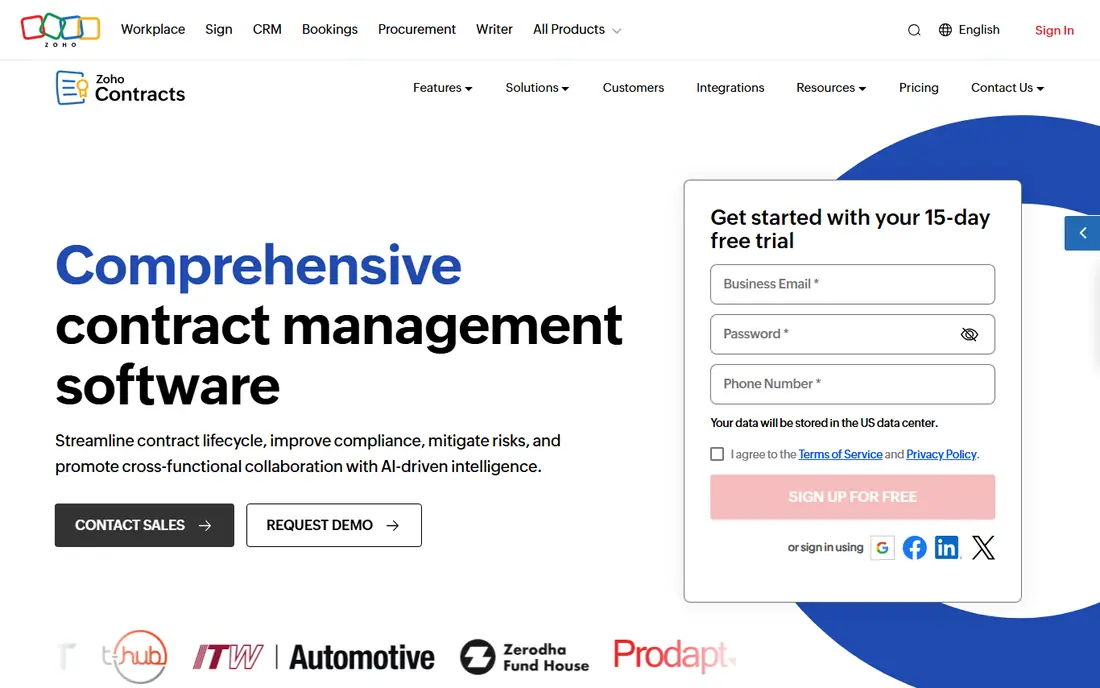
Zoho Contracts is the value leader for a team that already uses Zoho CRM, Books, or other Zoho apps. The free plan covers up to three users, and paid plans start at 25 dollars per user per month on annual billing, with approvals, clause libraries, templates, and a searchable repository. For a small legal or operations team, that is a full contract lifecycle at a fraction of enterprise CLM pricing.
The trade-off is ecosystem fit. Teams outside Zoho still get a capable tool, but they miss the built-in links to Zoho CRM and finance apps that make the system feel connected. The interface is also denser than PandaDoc. If your stack already includes Zoho, Zoho Contracts is hard to beat on price.
- Free plan for up to three users
- Approvals and repository included
- Low per-user price
- Best value inside the Zoho ecosystem
- Interface takes learning
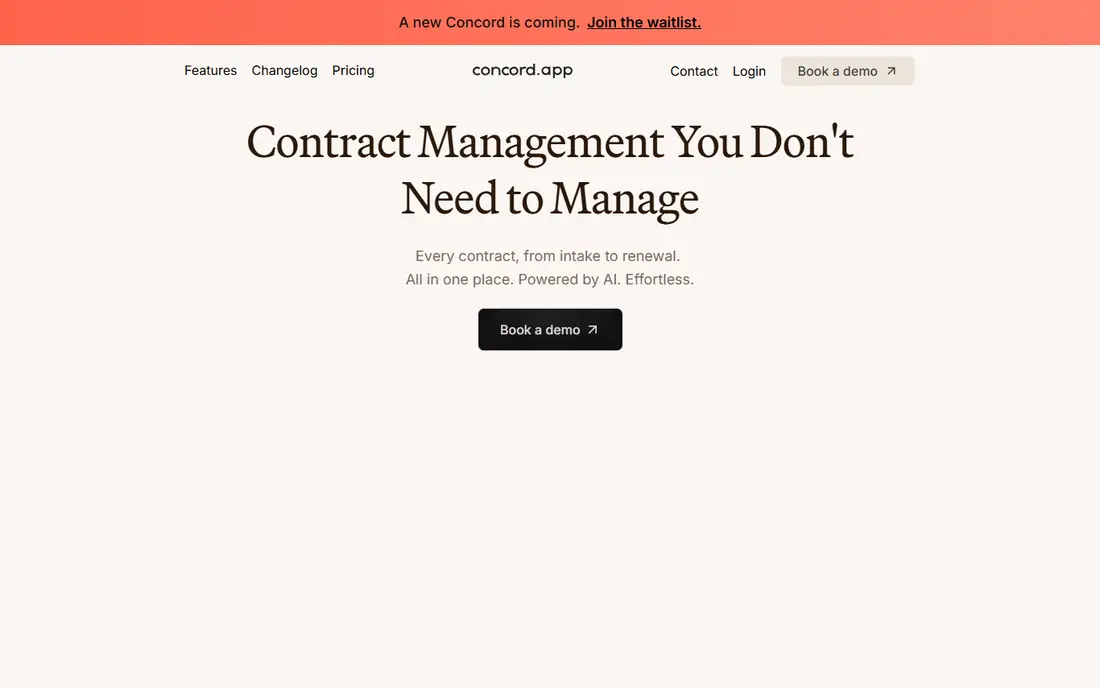
Concord is not the cheapest per month, but it is affordable for what it includes: unlimited documents and e-signatures, real-time negotiation, version control, approvals, and a repository, for a flat monthly price. A team that sends many contracts will find the flat model cheaper than per-seat or per-document pricing, and the published price removes the sales-call guessing game that plagues this category.
The catch is the entry point. At 499 dollars per month, Concord suits a team with regular contract volume rather than a solo founder sending two contracts a month. For that solo user, PandaDoc or SignWell is cheaper. For a growing business that negotiates contracts weekly, Concord offers strong value and a short implementation time.
- Unlimited e-signatures and documents
- Real-time collaboration
- Clear published pricing
- Higher starting price than per-seat tools
- Best for teams with steady contract volume
ContractSafe focuses on the part many small teams neglect: what happens after signing. Contracts are stored in a searchable repository, key dates and renewal alerts are tracked, and unlimited users mean the whole team can access documents without seat math. That simplicity helps a business moving from shared folders to a real system, and setup can be done in days rather than months.
The limit is lifecycle depth. Drafting, redlining, and approval workflows are lighter than in Concord or Zoho Contracts, so a team with heavy negotiation needs may want a fuller CLM. For a team whose main problem is lost contracts and missed renewals, ContractSafe is a focused, affordable fix.
- Unlimited users
- Strong search and renewal alerts
- Simple to learn
- Less drafting and negotiation depth
- Pricing depends on contract count
SignWell is the cheapest way to get legally binding e-signatures without a large contract system. The free plan covers a small number of documents per month, and paid plans start at 10 dollars per month on annual billing. Templates, signing order, reminders, and audit trails cover the basics, and the interface is plain enough that a non-legal user can send a document without training.
The honest limit is scope. SignWell is a signing tool, not a full contract lifecycle platform, so renewal tracking, clause libraries, and complex approvals are thin. Use it when your contracts are already drafted and you mainly need a fast, low-cost way to sign and store them. For that job, it is excellent value.
- Very low entry price
- Free plan with monthly documents
- Simple signing flow
- No full CLM features
- Approvals and repository tools are basic
DocuSign is the name most counterparties already trust, and that familiarity speeds up signing. The entry eSignature plan starts at 10 dollars per month on annual billing, with templates, reminders, and a clear audit trail. Integrations with CRM, storage, and productivity tools are broad, and recipients rarely need help to sign, which cuts follow-up time.
The catch is that DocuSign CLM, the full lifecycle product, is quote-based and priced for larger teams, so a small business should not confuse the low signing price with full CLM cost. For signing alone, DocuSign is a safe, affordable choice. For drafting, negotiation, and renewal management on a budget, PandaDoc or Zoho Contracts gives more for the money.
- Widely recognized by counterparties
- Strong audit trail
- Large integration set
- Full CLM is quote-based and costly
- Per-user pricing adds up
Oneflow suits a team that needs control over who approves and signs, in what order, without enterprise complexity. Contracts live in a clean workspace, templates and clauses are reusable, and signing order and delegation are handled plainly. It is popular with European teams and growing in the US, and it pairs well with CRM tools for sales contracts.
The drawback is pricing transparency. Published plans are not always shown in dollars, so a US buyer needs a quote to compare fairly. The US partner and integration footprint is also smaller than DocuSign or PandaDoc. If approval order matters to your workflow and you are comfortable getting a quote, Oneflow is worth a trial.
- Clear approval and signing order controls
- Clean contract workspace
- Good for European teams
- Pricing is not published in dollars for all plans
- Smaller US presence
Contractbook targets small and mid-size businesses that want automation without an enterprise platform. Workflow triggers can create tasks, send reminders, and move contracts through stages, while native e-signatures and a searchable repository keep the full cycle in one place. For a team that sends repeatable agreements, such as NDAs, service agreements, and supplier contracts, that automation saves steady admin time.
The limit is pricing clarity. Contractbook does not always publish dollar pricing, so comparison requires a demo and a quote. Complex workflows also need careful setup. For a team that values automation and is willing to go through a sales process, Contractbook is a capable, mid-priced option.
- Workflow automations and task tracking
- Native e-signatures
- Repository included
- Pricing is not published in dollars
- Setup takes care for complex workflows
How we picked these
We compared official feature pages, published pricing, free plans, and public reviews for contract tools that a small or mid-size business can afford without an enterprise budget. We favored tools with published or low entry pricing, e-signatures, templates, and a repository, and we noted where full lifecycle features require a quote. Enterprise-only CLM platforms were left out, because their pricing puts them outside the affordable brief for this list.
What to check before you buy
Start with volume and workflow, not price alone. Count how many contracts you send per month, how many need approval, and how many renew each quarter. A team sending two contracts a month needs signing, not a full CLM. A team sending fifty needs templates, approvals, and renewal alerts, and a flat-rate tool may beat per-seat pricing. Test the full cycle in a trial: draft from a template, send for approval, negotiate a change, sign, store, and set a renewal reminder.
Check the repository search, because a contract you cannot find is a contract you cannot enforce. Ask about data export, audit trails, and what happens to signed documents if you cancel. Finally, confirm legal validity in your state and whether counterparties can sign without creating an account, since friction at signing delays deals.
FAQ
What is the cheapest contract management software?
SignWell and DocuSign eSignature both start at 10 dollars per month on annual billing for basic signing, while PandaDoc starts at 19 dollars per seat per month and Zoho Contracts offers a free plan for up to three users. The cheapest option depends on whether you need signing only or a fuller contract lifecycle.
Is PandaDoc good for contract management?
Yes, for small and mid-size sales-led teams. PandaDoc covers proposals, contracts, templates, e-signatures, and CRM links at a low per-seat price. Teams with complex legal approvals or heavy redlining may need Concord, Zoho Contracts, or a dedicated CLM instead.
What is the difference between e-signature software and contract management software?
E-signature software collects legally binding signatures on documents you already drafted. Contract management software adds drafting, templates, negotiation, approvals, storage, search, and renewal alerts across the full contract life, from first draft to renewal or expiry.
Do these tools offer renewal reminders?
Most full tools in this list do, including Concord, ContractSafe, and Zoho Contracts. Signing-only tools offer reminders to sign, which is different from a renewal alert. Check that the tool tracks expiry and renewal dates after signing, not just signing deadlines.
Are electronic signatures legally binding in the US?
Yes, under the federal ESIGN Act and state laws based on the Uniform Electronic Transactions Act, electronic signatures are generally valid for most business contracts, with some exceptions such as certain wills and court filings. Use a tool with a clear audit trail showing who signed, when, and from what device.
Can I migrate contracts from shared folders?
Yes, most tools in this list support bulk import and let you tag contracts with dates, parties, and renewal terms. Plan time to clean up file names and record key dates during migration, because a repository is only useful if search and renewal data are accurate from the start.