Best Accounting Software for Manufacturing Business in 2026: 8 Tools Compared
Find the best accounting software for manufacturing business operations. We compare 8 tools for inventory, job costing, and best project accounting software.

- Editor's choice
 Oracle NetSuite
mid sized manufacturers that need finance and operations together
Starts atSee websiteVisit netsuite.comFull review - Great alternative
 Sage Intacct
finance led manufacturers with complex accounting
Starts atSee websiteVisit sage.comFull review - Also consider
 Acumatica
manufacturers with large teams and varied users
Starts atSee websiteVisit acumatica.comFull review
TL;DR:
- QuickBooks Enterprise suits small manufacturers that need inventory and job costing without a full ERP project, while NetSuite and Acumatica suit larger firms that need operations and finance in one system.
- Inventory accuracy matters more than report polish for manufacturers, because wrong stock counts flow straight into cost of goods sold.
- Project accounting matters for job shops and contract manufacturers, so check job costing, work in progress, and progress billing before you buy.
- Implementation cost often exceeds the first year subscription for ERP tools, so get a written scope for setup, migration, and training.
Quick comparison
| Tool | Best for | Starts at | Free plan? | |
|---|---|---|---|---|
| Oracle NetSuite | mid sized manufacturers that need finance and operations together | See website | No | Visit |
| Sage Intacct | finance led manufacturers with complex accounting | See website | No | Visit |
| Acumatica | manufacturers with large teams and varied users | See website | No | Visit |
 QuickBooks Enterprise | small manufacturers moving up from QuickBooks Online | $1,922 per year | Free trial | Visit |
 Microsoft Dynamics 365 Business Central | manufacturers already using Microsoft 365 | $70 per user per month | Free trial | Visit |
 Sage 100 | manufacturers and distributors that need production planning | $50 per user per month | Free trial | Visit |
 Odoo | manufacturers that want modular ERP at lower cost | See website | Free trial | Visit |
 Epicor Kinetic | discrete manufacturers with complex shop work | See website | No | Visit |
The best accounting software for manufacturing business
We compared 8 tools that fit this topic, using official pricing and feature pages, public documentation, and user facing details that affect daily work. The list below starts with the strongest all round picks and then covers strong options for smaller budgets, specialist needs, and different team sizes.
Oracle NetSuite
Best for: mid sized manufacturers that need finance and operations together
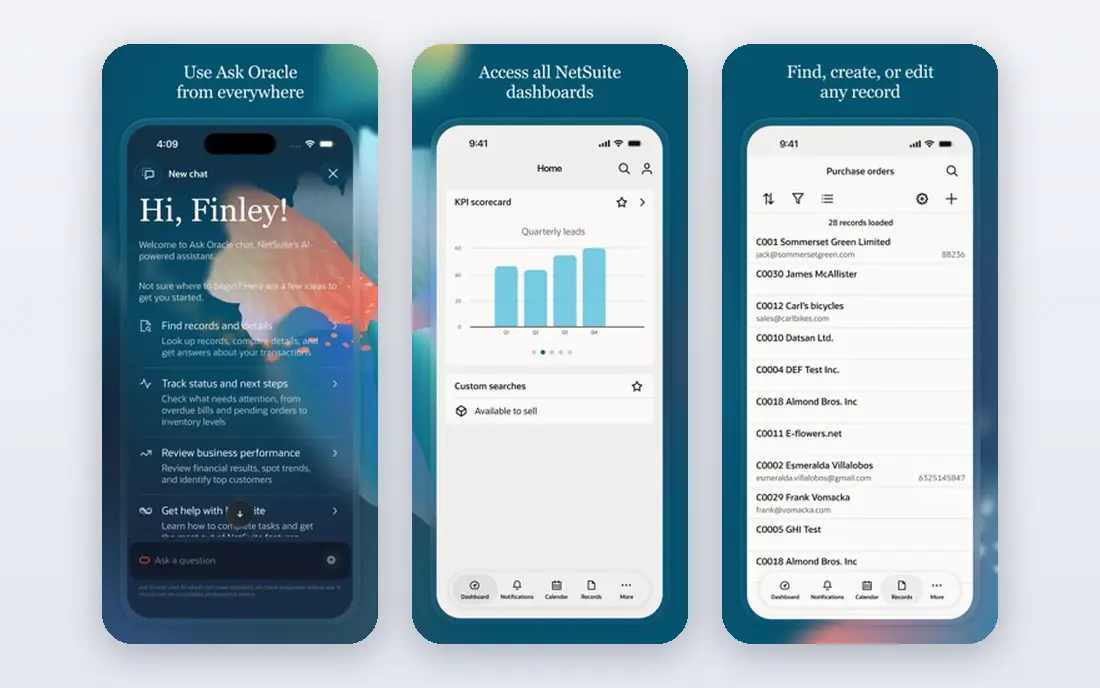
Oracle NetSuite is our pick for mid sized manufacturers that need finance and operations together. NetSuite combines accounting with inventory, order management, and manufacturing, so a growing manufacturer can track a product from raw material to shipped order in one system.
The strengths of Oracle NetSuite are clear from its feature set: financials, inventory, orders, and manufacturing in one cloud system; multi entity consolidation; strong reporting That combination suits buyers who want mid sized manufacturers that need finance and operations together without paying for a much larger system.
The main limits are: implementation is a major project and cost; smaller firms may find it more than they need If those limits touch your daily work, try another tool on this list first. Starting price is See website, with a free plan or trial status of No. Check the current pricing page before you sign, since plans and limits change.
- Financials, inventory, orders, and manufacturing in one cloud system
- Multi entity consolidation
- Strong reporting
- Implementation is a major project and cost
- Smaller firms may find it more than they need
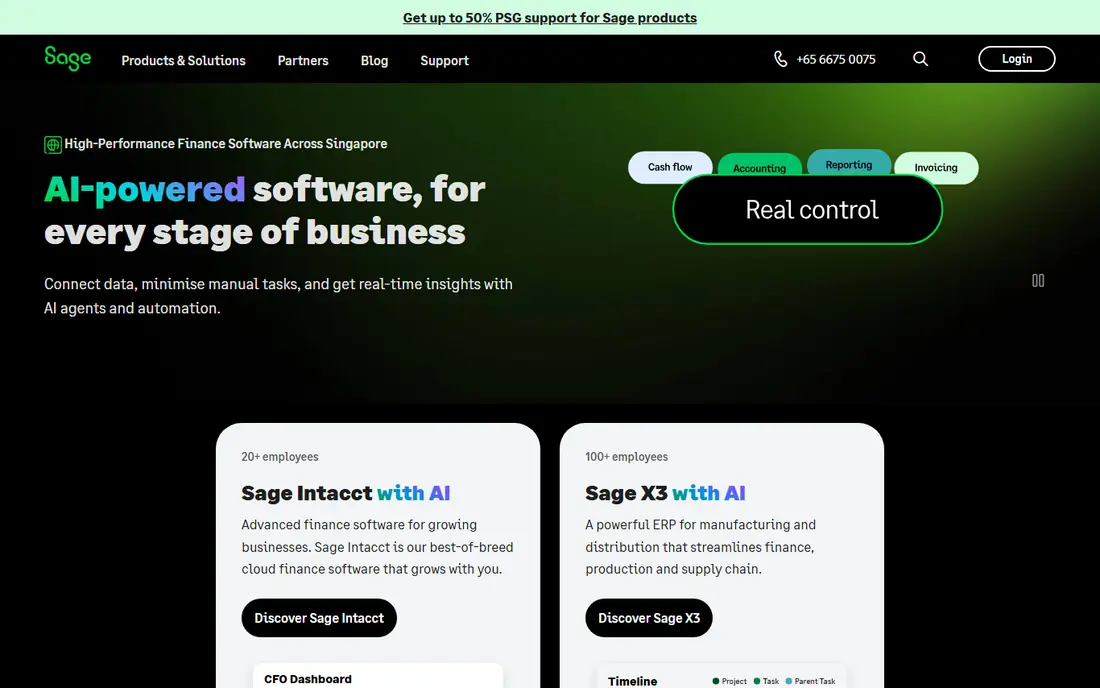
Sage Intacct is our pick for finance led manufacturers with complex accounting. Sage Intacct is a finance first system that suits manufacturers whose main pain is multi entity close, project accounting, and audit ready reporting, with inventory handled through connected tools or modules.
The strengths of Sage Intacct are clear from its feature set: strong multi entity and dimensional reporting; project costing and revenue recognition; cloud based financials That combination suits buyers who want finance led manufacturers with complex accounting without paying for a much larger system.
The main limits are: manufacturing and inventory depth is thinner than full erp rivals; pricing is quoted If those limits touch your daily work, try another tool on this list first. Starting price is See website, with a free plan or trial status of No. Check the current pricing page before you sign, since plans and limits change.
- Strong multi entity and dimensional reporting
- Project costing and revenue recognition
- Cloud based financials
- Manufacturing and inventory depth is thinner than full ERP rivals
- Pricing is quoted

Acumatica is our pick for manufacturers with large teams and varied users. Acumatica charges by resources used rather than per user, which can suit a factory with many occasional users, and it covers manufacturing, inventory, and project accounting in one platform.
The strengths of Acumatica are clear from its feature set: consumption based pricing, not per user; manufacturing, inventory, and project accounting; strong distribution tools That combination suits buyers who want manufacturers with large teams and varied users without paying for a much larger system.
The main limits are: sold through partners, so pricing and implementation vary; setup needs planning If those limits touch your daily work, try another tool on this list first. Starting price is See website, with a free plan or trial status of No. Check the current pricing page before you sign, since plans and limits change.
- Consumption based pricing, not per user
- Manufacturing, inventory, and project accounting
- Strong distribution tools
- Sold through partners, so pricing and implementation vary
- Setup needs planning
QuickBooks Enterprise
Best for: small manufacturers moving up from QuickBooks Online
QuickBooks Enterprise is our pick for small manufacturers moving up from QuickBooks Online. QuickBooks Enterprise adds inventory, advanced pricing, and job costing to the familiar QuickBooks setup, which makes it a practical step for a small manufacturer that is not ready for a full ERP.
The strengths of QuickBooks Enterprise are clear from its feature set: familiar quickbooks workflow; inventory, job costing, and advanced pricing; up to 40 users That combination suits buyers who want small manufacturers moving up from QuickBooks Online without paying for a much larger system.
The main limits are: multi entity and advanced manufacturing planning are limited; desktop based with cloud hosting options If those limits touch your daily work, try another tool on this list first. Starting price is $1,922 per year, with a free plan or trial status of Free trial. Check the current pricing page before you sign, since plans and limits change.
- Familiar QuickBooks workflow
- Inventory, job costing, and advanced pricing
- Up to 40 users
- Multi entity and advanced manufacturing planning are limited
- Desktop based with cloud hosting options
Microsoft Dynamics 365 Business Central
Best for: manufacturers already using Microsoft 365
Microsoft Dynamics 365 Business Central is our pick for manufacturers already using Microsoft 365. Business Central links finance with manufacturing, supply planning, and warehouse work, and it fits well for firms already using Microsoft 365, Teams, and Power BI.
The strengths of Microsoft Dynamics 365 Business Central are clear from its feature set: manufacturing, inventory, and finance in one microsoft system; familiar office integration; premium adds manufacturing That combination suits buyers who want manufacturers already using Microsoft 365 without paying for a much larger system.
The main limits are: manufacturing features need the premium tier; partner led setup can add cost If those limits touch your daily work, try another tool on this list first. Starting price is $70 per user per month, with a free plan or trial status of Free trial. Check the current pricing page before you sign, since plans and limits change.
- Manufacturing, inventory, and finance in one Microsoft system
- Familiar Office integration
- Premium adds manufacturing
- Manufacturing features need the Premium tier
- Partner led setup can add cost
Sage 100 is our pick for manufacturers and distributors that need production planning. Sage 100 is built for manufacturing and distribution, with production management and inventory planning that ties sales orders to material needs and shop work.
The strengths of Sage 100 are clear from its feature set: production management and inventory requirements planning; job costing; customizable workflows That combination suits buyers who want manufacturers and distributors that need production planning without paying for a much larger system.
The main limits are: interface feels older than cloud rivals; advanced features need careful setup If those limits touch your daily work, try another tool on this list first. Starting price is $50 per user per month, with a free plan or trial status of Free trial. Check the current pricing page before you sign, since plans and limits change.
- Production management and inventory requirements planning
- Job costing
- Customizable workflows
- Interface feels older than cloud rivals
- Advanced features need careful setup
Odoo is our pick for manufacturers that want modular ERP at lower cost. Odoo lets a manufacturer start with accounting and inventory, then add manufacturing, quality, and shop floor apps as needed, which keeps the starting cost lower than a full ERP suite.
The strengths of Odoo are clear from its feature set: modular apps for manufacturing, inventory, accounting, and sales; open approach to customization; large app library That combination suits buyers who want manufacturers that want modular ERP at lower cost without paying for a much larger system.
The main limits are: quality depends on the partner and modules chosen; some manufacturers need custom work If those limits touch your daily work, try another tool on this list first. Starting price is See website, with a free plan or trial status of Free trial. Check the current pricing page before you sign, since plans and limits change.
- Modular apps for manufacturing, inventory, accounting, and sales
- Open approach to customization
- Large app library
- Quality depends on the partner and modules chosen
- Some manufacturers need custom work
Epicor Kinetic is our pick for discrete manufacturers with complex shop work. Epicor Kinetic is made for discrete manufacturing, with job costing, scheduling, and shop floor control that reflect how a factory actually plans and tracks work.
The strengths of Epicor Kinetic are clear from its feature set: manufacturing execution, scheduling, and job costing built for factories; strong shop floor tools; industry focus That combination suits buyers who want discrete manufacturers with complex shop work without paying for a much larger system.
The main limits are: narrow focus outside manufacturing; implementation is a specialist project If those limits touch your daily work, try another tool on this list first. Starting price is See website, with a free plan or trial status of No. Check the current pricing page before you sign, since plans and limits change.
- Manufacturing execution, scheduling, and job costing built for factories
- Strong shop floor tools
- Industry focus
- Narrow focus outside manufacturing
- Implementation is a specialist project
How we picked these
We compared official pricing and product pages for accounting and ERP tools used by manufacturers. We kept tools that handle inventory, job costing, and financial reporting, not just general ledger accounting. We weighed inventory accuracy, bill of materials and work order support, project accounting, multi location handling, and total implementation cost, not just subscription price.
What manufacturers should check before buying
Start with your production model. A make to stock firm needs inventory and demand planning. A make to order or job shop firm needs job costing, work in progress, and progress billing, which is where the best project accounting software features matter most.
Inventory, costing, and work orders
Test a full cycle: create a work order, issue materials, record labor, complete the job, and ship it. Check how costs flow to inventory and to cost of goods sold, and how the system handles scrap, rework, and partial shipments. If that cycle is awkward in a demo, it will be painful every day.
Implementation and total cost
Ask for a written implementation scope, data migration plan, and training plan. For ERP tools, implementation often costs as much as or more than the first year subscription. This is not financial advice, and cost and tax treatment vary, so confirm totals with your accountant and your implementation partner.
FAQ
What is the best accounting software for manufacturing business?
The best accounting software for manufacturing business depends on size. QuickBooks Enterprise suits small manufacturers, while NetSuite, Acumatica, and Business Central suit larger firms that need manufacturing and finance together. Sage Intacct suits finance led firms with strong project needs.
What is the best project accounting software for manufacturers?
For job shops, look for job costing, work in progress tracking, estimated versus actual costs, and progress billing. Sage Intacct, Acumatica, and Business Central all offer project accounting, and QuickBooks Enterprise covers basic job costing for smaller firms.
Do manufacturers need ERP or just accounting software?
A small manufacturer with simple inventory may manage with QuickBooks Enterprise or Sage 100. A firm with multi location inventory, production planning, and complex orders usually needs ERP, such as NetSuite or Acumatica, to keep finance and operations in sync.
How much does manufacturing accounting software cost?
Subscription costs range from about $1,922 per year for QuickBooks Enterprise to quoted ERP pricing that can reach tens of thousands per year. Implementation, training, and integrations often add a large first year cost, so ask for a total quote.
Can manufacturing software track inventory accurately?
Yes, if stock counts, work orders, and shipments are entered consistently. Choose a tool with barcode or warehouse support if you handle many parts, and reconcile inventory monthly at first. Poor data entry will hurt any system, no matter how strong its features are.