Best Accounting Software for Hospitality Industry in 2026: 8 Tools Compared
Compare the best accounting software for hospitality industry businesses in 2026, from restaurant and hotel platforms to general ledgers for small operators.

- Editor's choice
 Restaurant365
Multi-unit restaurant groups that want accounting plus operations
Starts atSee websiteVisit restaurant365.comFull review - Great alternative
 M3 Accounting
Hotels and hotel groups that need hospitality accounting
Starts atFrom $400 per monthVisit m3as.comFull review - Also consider
 Inn-Flow
Hotels that want a hospitality-first accounting platform
Starts atFrom $400 per monthVisit inn-flow.comFull review
TL;DR:
- Hospitality-specific tools win on POS, PMS, payroll, and multi-location reporting, not on basic bookkeeping alone.
- General tools like QuickBooks and Xero suit small operators, but they need add-ons for inventory and labor detail.
- Implementation time is a real cost for restaurant and hotel platforms, so plan for onboarding, not just the monthly fee.
- Multi-location profit and loss by site is the report to test first, since it drives most hospitality decisions.
Quick comparison
| Tool | Best for | Starts at | Free plan? | |
|---|---|---|---|---|
| Restaurant365 | Multi-unit restaurant groups that want accounting plus operations | See website | No | Visit |
| M3 Accounting | Hotels and hotel groups that need hospitality accounting | From $400 per month | No | Visit |
| Inn-Flow | Hotels that want a hospitality-first accounting platform | From $400 per month | No | Visit |
 QuickBooks Online | Small hospitality businesses that want a familiar general ledger | From $30 per month | Free trial | Visit |
 Xero | Small to mid-size hospitality businesses that want a clean cloud ledger | From $13 per month | Free trial | Visit |
 Sage Intacct | Mid-size to large hospitality groups that need strong financial control | See website | No | Visit |
 MarginEdge | Restaurants that want cost control without replacing their ledger | From $330 per location per month | Free trial | Visit |
 Hotel Investor Apps | Hotel owners and groups that want ERP plus accounting | From $700 per month | No | Visit |
The best accounting software for hospitality industry
We compared accounting tools used by restaurants, hotels, and hospitality groups, from full restaurant and hotel platforms to general accounting software that pairs with hospitality add-ons. Prices change with locations, rooms, and modules, so confirm a quote for your size. This is general information only and is not financial or tax advice; check tax and reporting rules with a qualified professional for your business.
Restaurant365
Best for: Multi-unit restaurant groups that want accounting plus operations
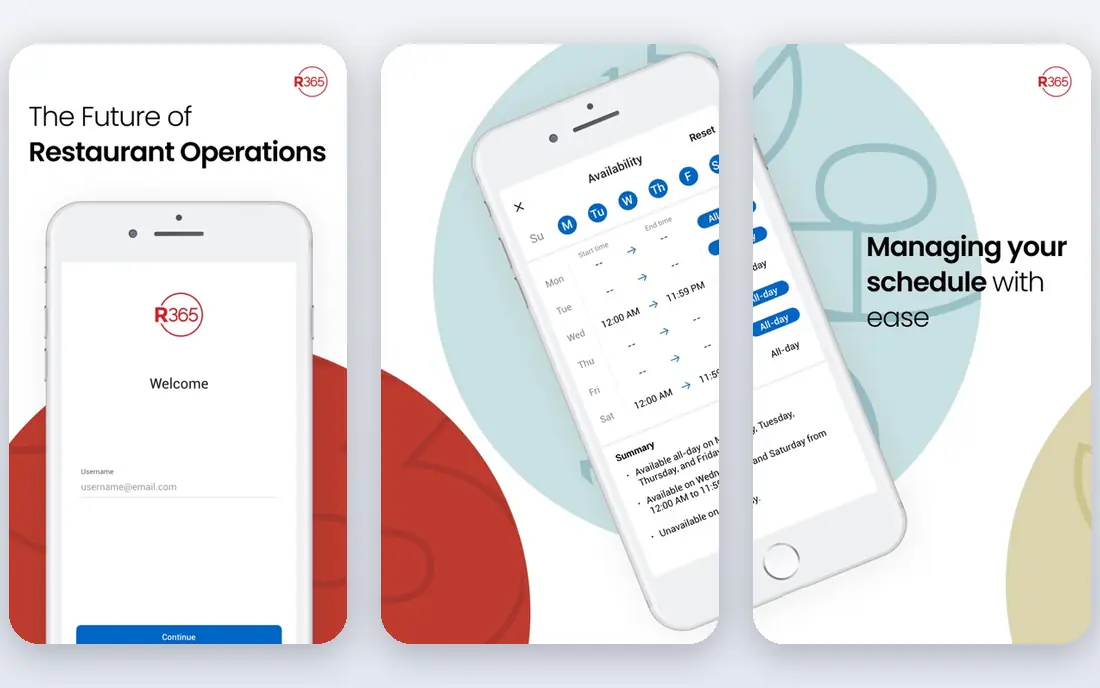
Restaurant365 is the most complete restaurant platform here because it replaces separate accounting software rather than sitting beside it. It combines a restaurant general ledger, accounts payable and receivable, POS sales journals, bank reconciliation, and consolidated profit and loss by location, with inventory and scheduling in the same system.
The commitment is the catch. Implementation commonly runs several weeks to months and often needs an onboarding partner, and starting pricing is roughly 435 dollars or more per location per month. Groups with five or more locations get the most value, while a single restaurant may find it more than it needs.
- Restaurant-specific ledger
- POS daily sales journals
- Inventory, scheduling, and labor in one system
- Implementation can take weeks to months
- Pricing is negotiated and can be high for small groups
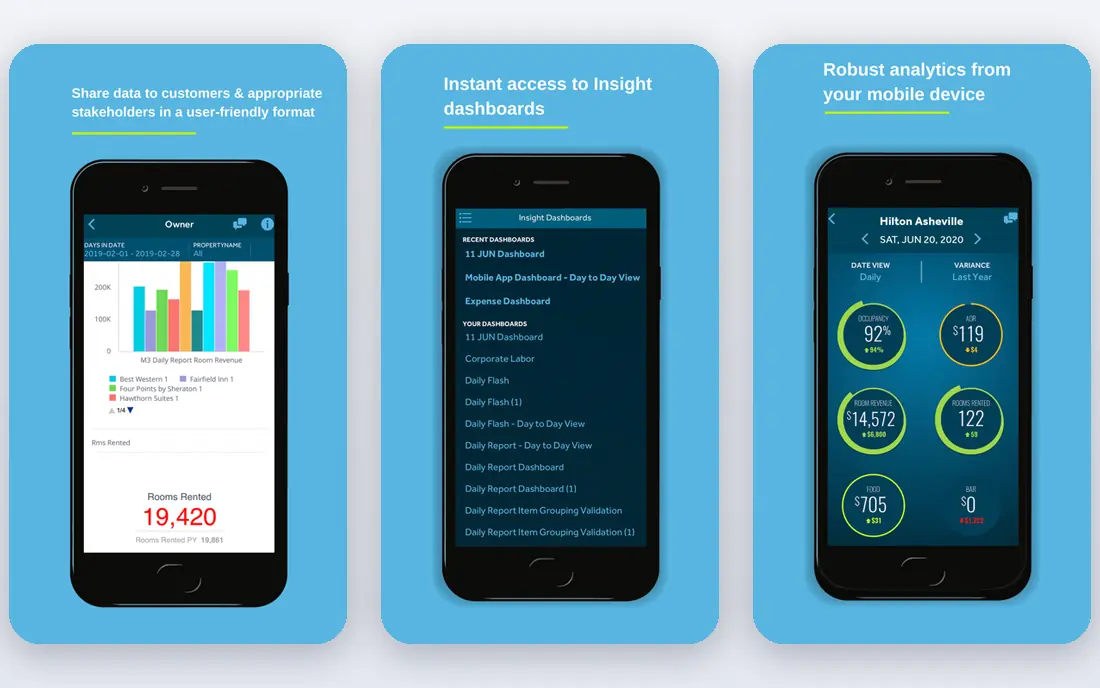
M3 is built for hotels, with accounting, forecasting, budgeting, and reporting shaped around rooms, departments, and portfolios rather than generic business categories. It links to major hotel systems and property management platforms, which helps finance teams avoid retyping PMS data.
The trade-off is scale. Starting pricing is around 400 dollars per month, and the platform suits hotels and groups better than a single small property with simple books. Confirm which PMS and payroll systems are supported for your exact setup before committing.
- Hotel-focused accounting
- PMS and payroll links
- Portfolio reporting for many properties
- Pricing is quote-based for larger portfolios
- Smaller properties may find it more than needed
Inn-Flow positions itself as a hotel accounting platform rather than a general ledger with hotel labels added. It covers accounting, forecasting, budgeting, and reporting for hotel operations, with integrations for common PMS providers that hotels already use.
That focus helps hotels that struggled to bend generic software to departmental reporting and owner needs. The starting price of about 400 dollars per month still puts it above general tools, so smaller properties should compare it against QuickBooks plus a reporting add-on before deciding.
- Hotel-centered accounting and forecasting
- PMS integrations
- Reporting for hotel operations
- Starting price is high for small properties
- Implementation detail needs a vendor quote
QuickBooks Online
Best for: Small hospitality businesses that want a familiar general ledger
QuickBooks Online is the familiar choice for small cafes, bars, and boutique properties, and that familiarity is a real advantage when hiring bookkeepers or working with an accountant. Bank feeds, invoicing, expense tracking, and payroll add-ons cover the basics well.
The limit appears as hospitality complexity grows. POS journals, food cost, labor detail, and hotel departmental reporting need add-ons or manual work. If your monthly close still depends on spreadsheets, a hospitality platform may save more time than the price gap suggests.
- Widely used and easy to staff for
- Bank feeds
- Broad add-on and accountant support
- Lacks hotel and restaurant depth on its own
- Multi-location reporting needs care and add-ons
Xero
Best for: Small to mid-size hospitality businesses that want a clean cloud ledger
Xero suits hospitality operators who want a clean, cloud-based ledger without a heavy setup. Automatic bank imports, invoicing, and expense tools handle daily books, and its app marketplace adds POS, inventory, and payroll options for restaurants and hotels.
The catch is that hospitality depth comes from those add-ons, not from Xero alone. You need to choose and maintain the right combination, and costs add up across apps. For a small operator with one site, that flexibility is a plus. For a group, a single hospitality platform may be simpler.
- Simple cloud accounting
- Bank transaction imports
- Large app marketplace for hospitality add-ons
- Hospitality features depend on add-ons
- Pricing varies by plan and region
Sage Intacct
Best for: Mid-size to large hospitality groups that need strong financial control
Sage Intacct is a cloud financial platform for mid-size to large organizations, with multi-entity accounting, dimensions for location and department, and reporting that suits hospitality groups with complex ownership or franchise structures. It is a strong step up from a small business ledger.
The cost and setup reflect that power. Pricing is quote-based and depends on modules and users, and smaller operators may find the learning curve steep. Hospitality groups should test consolidated reporting and PMS or POS links with their real entity structure before signing.
- Multi-entity and multi-location accounting
- Strong reporting
- Automation for larger finance teams
- Quote-based pricing
- Setup and learning curve suit larger teams better than small operators
MarginEdge
Best for: Restaurants that want cost control without replacing their ledger
MarginEdge takes a different approach from Restaurant365: it automates restaurant back office work and syncs into the accounting system you already run. Invoices arrive by photo, email, or file, line-item data is captured, and finance teams get a daily profit and loss view, usage reporting, and price alerts.
That approach suits restaurants that like their current ledger but hate manual invoice entry and slow cost reporting. Pricing starts around 330 dollars per location per month, with a discount for annual payment. It does not replace your ledger, so budget for both systems together.
- Invoice capture from photo or email
- Daily profit and loss view
- Syncs to QuickBooks, Xero, and Sage Intacct
- Does not replace a general ledger
- Lighter on kitchen inventory depth than a full ERP
Hotel Investor Apps
Best for: Hotel owners and groups that want ERP plus accounting
Hotel Investor Apps combines hotel ERP and accounting, with PMS integrations and reporting aimed at owners and multi-property groups. That combination helps groups that need operational and financial data in one place, including owner statements and portfolio views.
The starting price of about 700 dollars per month makes it a premium choice, and single small hotels may not need the full ERP scope. Larger portfolios should test owner reporting, departmental detail, and PMS coverage for their exact brands and systems before committing.
- Hotel ERP and accounting in one platform
- PMS integrations
- Owner and portfolio reporting
- Premium starting price
- Best suited to larger portfolios rather than single small hotels
How we picked these
We compared official feature pages, pricing pages, and public reviews for each tool, and we checked that each product exists, works today, and truly fits the topic. Where a vendor quotes rather than publishes a price, we say so instead of guessing a number.
We also weighed fit for different team sizes, since the best choice for a solo operator is rarely the best choice for a larger team. That is why the list mixes well-known leaders with smaller options that suit narrower needs, and why each write-up names an honest weakness as well as a strength.
How to choose hospitality accounting software
Start with your operation type. A restaurant group needs POS sales journals, food cost, inventory, and labor scheduling in one view. A hotel needs PMS data, departmental reporting, and owner statements. A single cafe or boutique property can often run well on a general ledger with one or two add-ons.
Map your daily data flow first
List where sales, payroll, invoices, and bank data come from today, and check how each tool imports them. Daily sales journals from the POS and PMS are the most common failure point, so test them with real data before signing.
Test location and department reporting
Ask for a profit and loss report by location, outlet, and department, plus consolidated reporting for the whole group. If that report needs manual spreadsheets every month, the tool is not doing its main job.
Budget for implementation
Larger hospitality platforms often need weeks of setup, chart of accounts work, and staff training. Ask what onboarding includes, what it costs, and who owns the setup. A cheaper monthly fee with weak onboarding can cost more in staff time.
Before you pay, run a short trial with your real work, not a demo dataset. Check setup time, support response, and the total monthly cost at your real user or volume level. A tool that passes that test is far more likely to still suit you in six months than a tool chosen from a feature list alone.
FAQ
What is the best accounting software for a restaurant?
Restaurant365 is the strongest full platform for multi-unit restaurant groups, since it combines accounting, inventory, scheduling, and POS journals. Smaller restaurants often do well with QuickBooks or Xero plus a cost control add-on such as MarginEdge.
What is the best accounting software for a hotel?
Hotel-specific platforms such as M3 and Inn-Flow suit hotels that need PMS links, departmental reporting, and owner statements. Smaller properties can use QuickBooks or Xero if their reporting needs are simple and their PMS exports cleanly.
Do I still need an accountant if I use hospitality software?
Yes, for tax, compliance, and year-end work in most cases. The software handles daily books, invoices, and reporting, but a qualified accountant should review tax treatment, entity structure, and financial statements.
How much does hospitality accounting software cost?
General tools start from about 30 dollars per month, while restaurant and hotel platforms often start from several hundred dollars per location or property per month. Implementation, extra users, and modules can add materially to the total.
Can hospitality software connect to my POS or PMS?
Most hospitality platforms connect to common POS and PMS systems, but coverage varies by vendor and version. Confirm your exact POS or PMS, test the daily sales import, and ask how errors and refunds are handled.