Adpolice Alternatives in 2026: 8 Ad Compliance Tools Compared
Compare 8 Adpolice alternatives for ad compliance, brand protection, and paid search monitoring, including PerformLine, BrandVerity, and The Search Monitor.
- Editor's choice
 PerformLine
Regulated compliance across channels
Starts atSee websiteVisit performline.comFull review - Great alternative
 BrandVerity
Paid search and affiliate compliance
Starts atSee websiteVisit brandverity.comFull review - Also consider
 The Search Monitor
Search and affiliate monitoring
Starts atSee websiteVisit thesearchmonitor.comFull review
TL;DR:
- PerformLine suits regulated teams that need compliance across web, calls, and social channels.
- BrandVerity and The Search Monitor lead for paid search and affiliate compliance.
- Red Points and BrandShield suit brands fighting counterfeits and impersonation.
- Most pricing is quote-based, so request a scoped quote for your channels and volume.
Quick comparison
| Tool | Best for | Starts at | Free plan? | |
|---|---|---|---|---|
| PerformLine | Regulated compliance across channels | See website | No | Visit |
| BrandVerity | Paid search and affiliate compliance | See website | No | Visit |
| The Search Monitor | Search and affiliate monitoring | See website | No | Visit |
 Adthena | Competitive paid search intelligence | See website | No | Visit |
 Red Points | Counterfeit and IP protection | See website | No | Visit |
 BrandShield | Phishing and impersonation protection | See website | No | Visit |
 Marcode | High-frequency search ad monitoring | See website | No | Visit |
 Fintel Connect | Financial affiliate compliance | See website | No | Visit |
The best Adpolice alternatives
Adpolice, known for its BrandProtect product, monitors paid search and affiliate ads for trademark misuse and policy violations. The alternatives below cover the same core job, with different strengths in compliance, brand protection, and competitive intelligence, so you can pick based on whether your main risk is affiliates, paid search, or counterfeits.
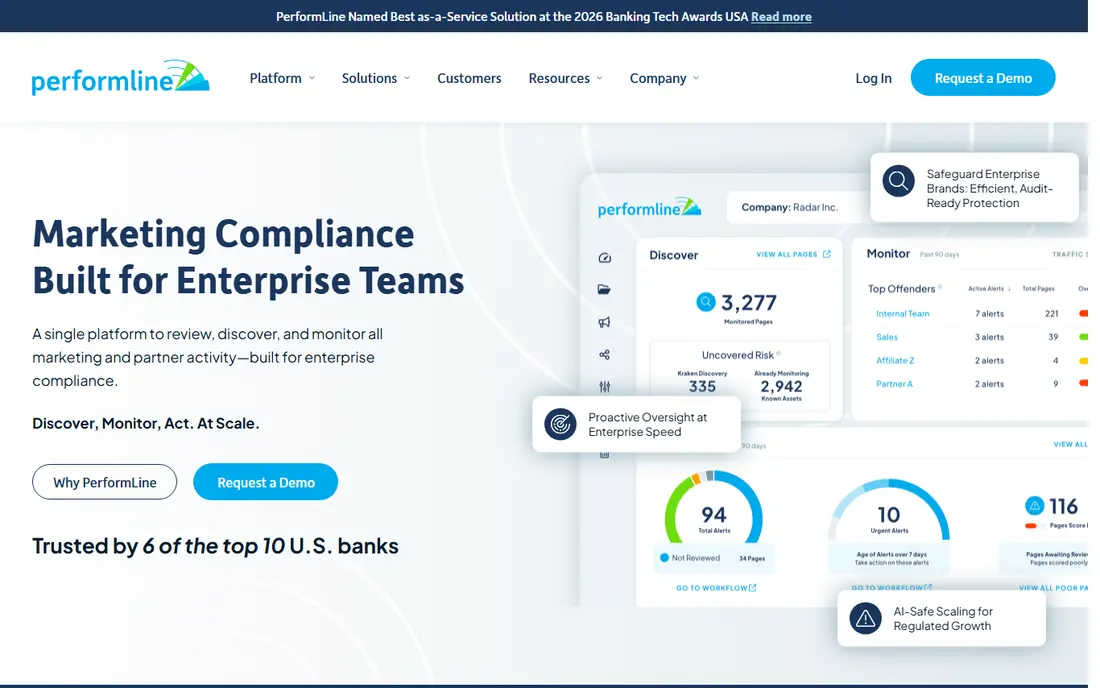
PerformLine monitors marketing across web pages, calls, messaging, and social channels for regulatory compliance, which suits banks, insurers, lenders, and education providers. Its workflows help compliance teams review findings, track remediation, and keep an audit trail for regulators. For a regulated company, that cross-channel view is more useful than a search-only monitor.
The enterprise focus means pricing is quote-based and implementation takes time. PerformLine also overlaps with other tools if your only risk is paid search. If compliance across many channels is your main risk, PerformLine is a leading Adpolice alternative. If paid search is the only channel, a search specialist may be cheaper.
- Monitoring across web, calls, messaging, and social
- Compliance workflows
- Audit trails
- Quote-based pricing
- Enterprise focus can be heavy for small teams

BrandVerity is a narrow specialist for paid search and affiliate compliance, tracking trademark bidding, unauthorized affiliates, and ad hijacking across search engines. Its reports help brand and affiliate managers prove violations and recover lost traffic. For companies that spend heavily on search ads, that focus delivers clear, actionable findings.
The narrow focus is also the limit. BrandVerity does not cover marketplace counterfeits or social impersonation at the depth of a full brand protection suite. Pricing is quote-based. If paid search and affiliates are your main risk, BrandVerity is a strong pick. If counterfeits are the risk, add a marketplace tool.
- Paid search monitoring
- Affiliate compliance
- Trademark bidding detection
- Reporting
- Quote-based pricing
- Search focus means limited marketplace coverage
The Search Monitor tracks paid search ads for trademark misuse, affiliate violations, and competitive activity, with global crawling and historical data. Affiliate managers use it to spot partners who bid on brand terms, hijack URLs, or run non-compliant ads. Its competitive intelligence also shows how rivals structure search campaigns, which helps media teams plan.
The interface can feel data-heavy when you monitor many campaigns, and pricing is quote-based. The Search Monitor also focuses on search, not marketplace or social brand protection. If affiliate compliance is your daily job, it is a top alternative. If you need full brand protection, pair it with a broader suite.
- Trademark and affiliate monitoring
- Competitive search intelligence
- Global ad crawling
- Quote-based pricing
- Interface can feel data-heavy for new users
Adthena uses AI to track paid search activity, showing competitor ads, keywords, and market share across search engines. It helps marketing teams see who bids on brand terms, how ad copy changes, and where budget shifts. For teams that want competitive intelligence alongside compliance monitoring, Adthena adds a strategic layer that pure compliance tools lack.
Adthena is stronger on intelligence than on enforcement workflows, so it may not replace a compliance tool for takedowns and audit trails. Pricing is quote-based. If you want to understand the search market and spot misuse, Adthena is valuable. If you need formal compliance reporting, pair it with PerformLine or BrandVerity.
- AI search intelligence
- Competitor ad tracking
- Market share and keyword insights
- Less compliance enforcement focus
- Quote-based pricing
Red Points detects counterfeits, piracy, and unauthorized use of intellectual property across marketplaces, websites, and social channels, with AI-driven takedowns and legal support. For consumer brands that lose revenue to fake products, that marketplace focus matters more than search monitoring. Its workflows help IP teams prioritize high-impact infringements.
Red Points is less focused on paid search affiliate compliance than BrandVerity or The Search Monitor, and pricing is quote-based. If counterfeits are your main loss, Red Points is a leading pick. If affiliate bidding is the risk, a search specialist will be more direct.
- AI detection across marketplaces and social
- Takedown workflows
- IP enforcement support
- Quote-based pricing
- Less paid search compliance depth
BrandShield protects brands from phishing sites, fake domains, rogue apps, and social impersonation, with monitoring and takedown workflows for security teams. It suits finance, crypto, and large consumer brands where a fake site can harm customers and trust. Its threat view goes beyond ads, covering domains and social channels that ad monitors miss.
The cybersecurity focus may exceed what a marketing team needs, and pricing is quote-based. BrandShield also does not specialize in affiliate compliance. If impersonation and phishing are your main risk, BrandShield is a strong alternative. If affiliate ads are the risk, pick a search compliance tool instead.
- Phishing and fake domain detection
- Social impersonation takedowns
- Threat monitoring
- Quote-based pricing
- Cybersecurity focus may exceed marketing needs
Marcode, also listed as Marcode.ai, offers search advertising intelligence with frequent crawling, competitor tracking, and detection of ad fraud and hijacking. Its high-frequency monitoring helps brands catch short-lived violations that a daily scan might miss. For performance marketers who need fast alerts, that frequency is a real advantage.
Marcode is a smaller vendor than PerformLine or BrandVerity, so enterprise buyers should check support, coverage, and reporting depth during a trial. Pricing is quote-based. If speed of detection matters most, Marcode is worth testing. If you need a large enterprise compliance suite, a bigger vendor may fit better.
- Frequent search ad crawling
- Competitor tracking
- Fraud and hijacking detection
- Smaller vendor than enterprise rivals
- Pricing is quote-based
Fintel Connect focuses on affiliate compliance for banks, fintechs, and financial services, with partner tracking, compliance monitoring, and reporting built for regulated marketing. Its Fintel Check tool automates partner campaign monitoring, which helps compliance teams scale affiliate programs without manual checks. For financial brands, that specialization is valuable.
The finance focus limits general brand use, and pricing is quote-based. Fintel Connect also does not cover marketplace counterfeits. If you run financial affiliate programs, it is a strong Adpolice alternative. If you run a general consumer brand, a broader search or brand protection tool may fit better.
- Affiliate tracking and compliance for finance
- Partner monitoring
- Reporting tools
- Finance focus limits general brand use
- Pricing is quote-based
How we picked these
We compared official product pages and feature descriptions for ad compliance and brand protection tools that monitor paid search, affiliates, or brand misuse in 2026. We favored tools with clear monitoring coverage, enforcement or remediation workflows, and a stated focus on compliance or brand protection. Most pricing is quote-based, so we use See website where the vendor does not publish a rate.
How to choose an Adpolice alternative
Start with the risk. Affiliate and search misuse needs a search monitor. Regulatory marketing risk needs a cross-channel compliance tool. Counterfeits need a marketplace tool, and phishing needs a digital risk tool. Next, check coverage: which search engines, countries, and channels does the tool crawl, and how often? Ask for a trial on your own brand terms, review the alert quality, and confirm takedown or remediation workflows before you sign. Finally, get a scoped quote that lists channels, keywords, and volume, because quote-based pricing varies widely. Keep a record of every alert, the ad copy involved, and the action taken, since that record is what turns monitoring into proof when an affiliate disputes a finding. Review alerts weekly at first, then monthly once the program settles, and share a short summary with marketing and legal so both teams see the same findings, and adjust keyword lists as campaigns change, because a stale list misses new violations and flags old ones. A clear escalation path, from warning to suspension, also keeps enforcement consistent across partners.
FAQ
What does Adpolice do?
Adpolice, through BrandProtect, monitors paid search and affiliate ads for trademark misuse, affiliate violations, and brand bidding. It helps brands find unauthorized ads and recover search traffic.
What is the difference between compliance and brand protection?
Compliance tools focus on regulatory and policy rules for marketing content. Brand protection tools focus on trademark misuse, counterfeits, and impersonation across channels.
Do I need a search monitor if I use Google Ads?
Google Ads controls your own campaigns, but it does not stop affiliates or competitors from bidding on your brand terms. A monitor finds those ads and provides evidence for enforcement.
How fast should monitoring run?
Frequency matters for short-lived violations. Daily scans suit most brands, while high-frequency crawling suits brands with heavy affiliate activity or frequent hijacking.
Why is pricing quote-based?
Ad compliance pricing depends on keywords, channels, countries, and crawl frequency. A scoped quote reflects your monitoring volume, so published prices are rarely comparable.